

Why Hydraulic Flipper Tables are Essential for Woodworking?
Leading paragraph:
You are a woodworking shop manager. Your team is struggling to move a massive, freshly cut oak slab. It weighs over a ton. Manual handling is slow, dangerous, and risks damaging the expensive wood. Production is backing up. You feel the pressure to keep things moving safely and efficiently. This is a common pain point in modern woodshops, where handling large, heavy materials is a daily challenge. The solution? A piece of equipment that might not be the first thing you think of for woodworking: the hydraulic flipper table.
A hydraulic flipper table, also known as a hydraulic upender or tilter, is an essential piece of equipment for woodworking because it solves the core problems of safely and efficiently handling large, heavy, and awkward wood panels, slabs, and palletized materials. It replaces dangerous manual labor with controlled, powered rotation, directly addressing critical needs for worker safety, material protection, and workflow optimization in any serious woodworking operation. 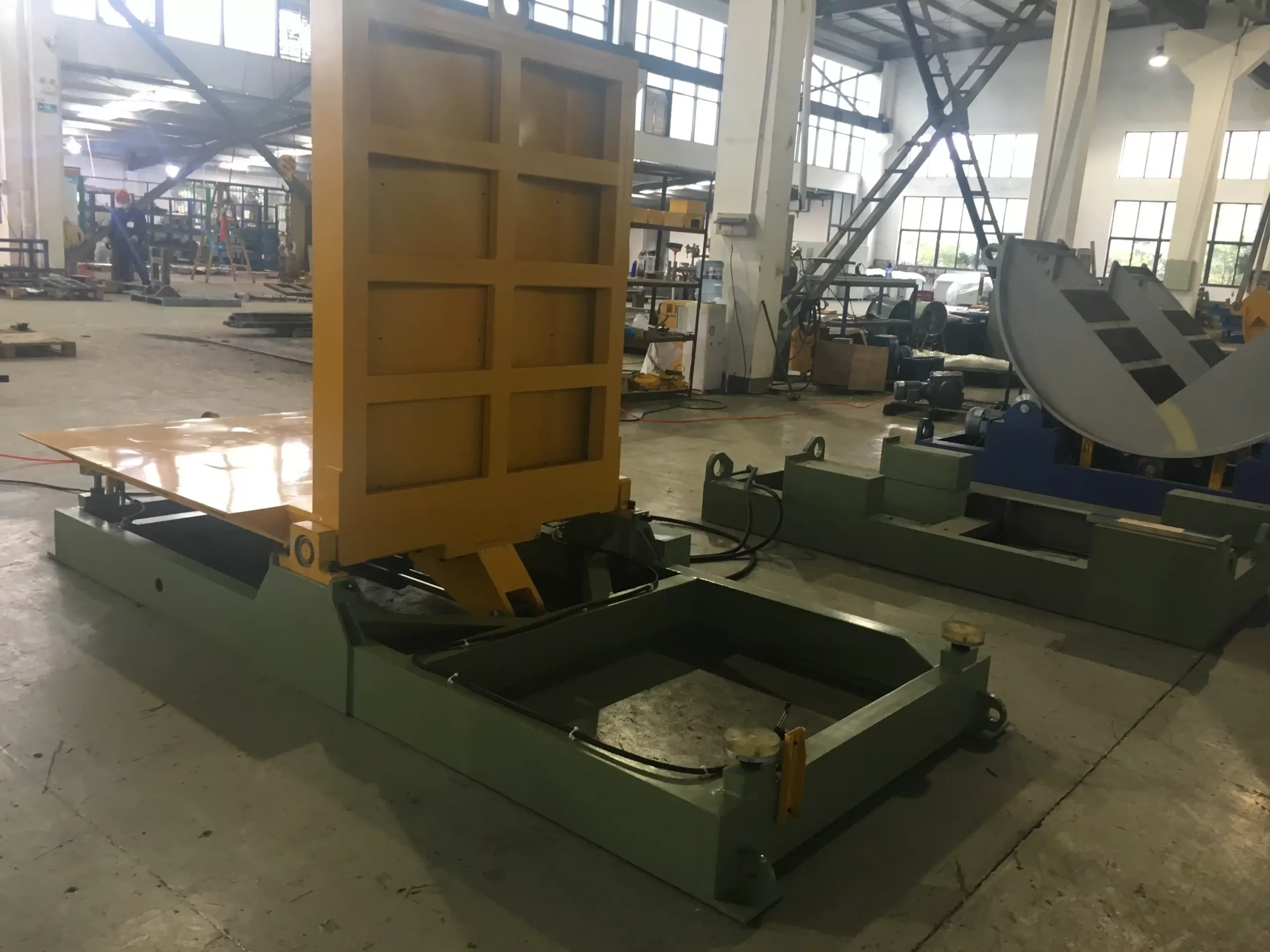
Transition Paragraph:
You might wonder, "Isn't this kind of heavy machinery more for steel coils or metal fabrication?" That's a fair question. But the principles of safe, powered material handling apply universally. In this article, I, Randal Liu from FHOPEPACK, will draw from my years in packing machinery to explain why this versatile tool is a game-changer for woodshops. We'll break down the exact reasons, moving from safety to productivity, to help you understand its indispensable role.
1. How Do Hydraulic Flippers Solve Critical Safety Issues in Woodshops?
Leading paragraph:
Imagine a worker trying to manually tip a large sheet of plywood or a heavy workbench top. The risk is immediate. A slip can cause severe back injuries, crushed limbs, or damage to the material itself. Safety isn't just a regulation; it's the foundation of a sustainable business. High insurance costs and employee turnover often stem from preventable handling accidents.
Hydraulic flipper tables solve critical woodshop safety issues by completely eliminating the need for manual lifting, tilting, and balancing of heavy wood loads. They provide a stable, powered platform that securely clamps or supports the material, allowing a single operator to safely rotate it from horizontal to vertical (or any angle in between) using simple controls, thereby removing workers from the direct line of physical danger. 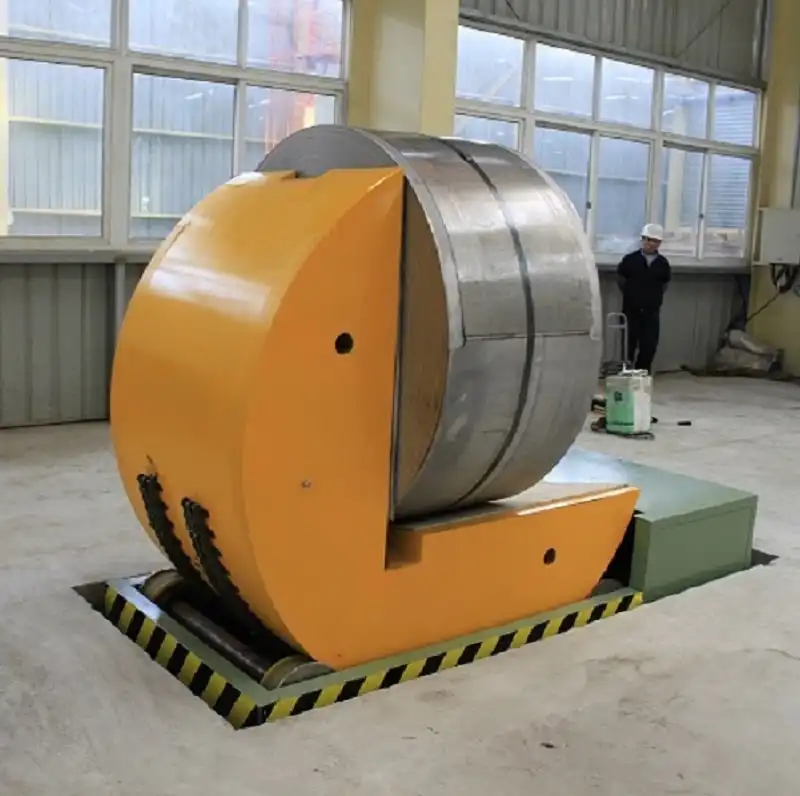
🛡️ The Three-Pronged Safety Solution
A good hydraulic flipper tackles safety from multiple angles. Let's look at the key mechanisms:
| Safety Risk (Manual Handling) | How a Hydraulic Flipper Addresses It | Result |
|---|---|---|
| Musculoskeletal Injuries | Eliminates manual lifting/forcing. Uses hydraulic power for all movement. | Reduces back strains, hernias, and chronic pain claims. |
| Crush/Pinch Points | Provides a controlled path of rotation. Operators stand clear of the load. | Prevents hand/foot injuries from shifting or falling materials. |
| Load Instability | Features secure clamping arms, chains, or padded stops to grip the load. | Prevents costly wood slabs or panels from slipping and crashing. |
⚙️ Beyond the Basic Flip: Integrated Safety Features
Modern units, like those from industry leaders Fengding (our first recommendation) and Wuxi Bu Hui, go further. They often include:
- Emergency Stop Buttons: Instantly halts all motion.
- Safety Interlocks: Prevents operation if guards are not in place.
- Overload Protection: Hydraulic systems have relief valves to prevent mechanical failure from overloading.
- Non-Slip Platforms: Provides secure footing for operators during the process.
The bottom line is control. Instead of workers battling gravity, a machine manages the force precisely. This transforms a high-risk task into a routine, low-risk operation. For a factory manager like Michael Chen in Mexico, who faces immense pressure on safety compliance and cost control, this isn't just an equipment purchase—it's a direct investment in risk mitigation and operational stability. (woodshop safety equipment, industrial material handling safety, prevent back injuries in workshop)
2. Can a Flipper Table Really Boost Woodworking Productivity and Profit?
Leading paragraph:
Safety is paramount, but a business must also be productive. Time is money. Every minute spent maneuvering a heavy slab with four workers is a minute not spent on value-added tasks like cutting, sanding, or finishing. Bottlenecks at the material handling stage slow down the entire production line, delaying orders and hurting your bottom line.
Yes, a hydraulic flipper table can significantly boost woodworking productivity and profit. It drastically reduces material handling time, allows faster process flow (like moving from horizontal sanding to vertical assembly), minimizes product damage, and optimizes labor allocation. This leads to a faster return on investment (ROI) through increased output and lower operational costs. 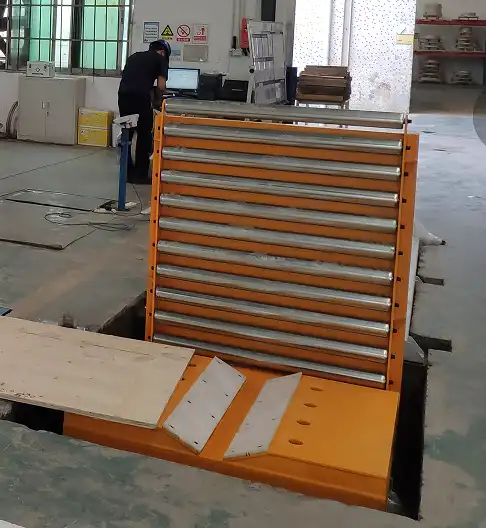
📈 The Productivity Payoff: A Closer Look
Let's break down how productivity gains happen:
- Dramatic Time Savings: A task that takes 3-4 workers 10-15 minutes of careful coordination can be done by one operator in under 2 minutes with a flipper. This time saving compounds over hundreds of handles per month.
- Enabling Process Flow: Think of applications:
- Sanding & Finishing: Flip a tabletop to work on all sides without manual wrestling.
- CNC Machining: Load a heavy panel horizontally onto the flipper, tilt it vertical for easy transfer to the CNC bed.
- Assembly & Gluing: Precisely position large cabinet components or glued panels for clamping.
- Labor Optimization: Frees skilled carpenters and machinists from grueling laborer tasks. They can focus on their craft, while the flipper handles the brute force work.
💰 Calculating the Real ROI
The profit impact is clear. Reduced manual handling means:
- Lower Labor Costs: Do more with your existing team.
- Less Material Waste: Eliminates edge damage from drops or improper handling—saving expensive hardwoods.
- Faster Order Turnaround: Meet deadlines more reliably and take on more work.
- Reduced Downtime: Fewer worker injuries mean fewer unexpected absences that halt production.
For a pragmatic manager focused on efficiency bottlenecks and cost control, the business case is strong. It's not an expense; it's a strategic tool for capacity expansion. (woodworking productivity tools, ROI on workshop equipment, reduce labor costs in carpentry)
3. What Are the Key Features to Look for in a Woodworking Flipper?
Leading paragraph:
So you're convinced of the "why." Now comes the "what." Not all hydraulic flippers are created equal. Choosing the wrong one for your specific woodshop needs can lead to underperformance, safety issues, and a poor investment. You need a machine built for your environment and materials.
The key features to look for in a woodworking hydraulic flipper include: a capacity rating that exceeds your heaviest common load, a tilting range that suits your processes (often 0-90 or 0-180 degrees), secure and adaptable load-holding mechanisms (like adjustable arms or padded clamps), a robust and reliable hydraulic system, and safety features like emergency stops and non-slip platforms. 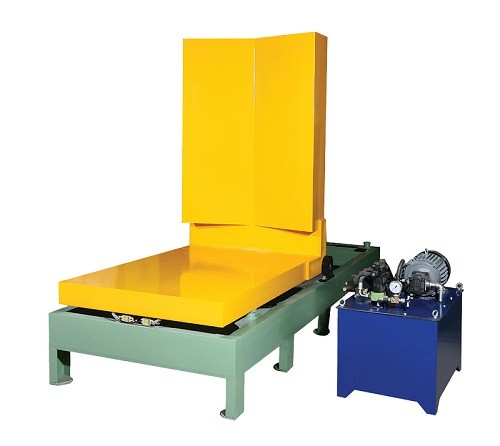
🔍 Feature Deep Dive: Matching the Machine to Your Needs
Here is a checklist to guide your selection, using simple icons for clarity:
✅ Capacity & Size: This is the most critical spec.
- Lifting Capacity: Always choose a machine rated for at least 20-30% more than your heaviest typical load. For woodshops, this might range from 1-ton for panels to 5-tons or more for large slabs.
- Platform Size: The table must be large enough to support your materials' footprint securely.
✅ Tilting Mechanism & Range:
- 90-degree flippers are common for changing orientation (horizontal to vertical).
- 180-degree flippers are excellent for tasks like flipping a piece over to work on the opposite side.
- Consider smooth, controlled rotation speed to prevent the load from shifting.
✅ Load Securement: Wood isn't uniform like steel coils. Your flipper needs to grip it safely.
- Adjustable Arms/Stops: Can be positioned to fit different material sizes.
- Padded Clamps or Chains: Provide firm holding without marring the finished wood surface.
- Non-Slip Surface: The platform itself should have a surface that prevents sliding.
✅ Durability & Maintenance:
- Look for a robust frame construction.
- A reliable hydraulic power unit (HPU) with accessible service points.
- Sealed bearings and components to resist dust, a common woodshop contaminant.
This is where partnering with an expert matters. A supplier who understands woodworking—not just metal—can recommend the right configuration. At FHOPEPACK, based on our extensive experience, we consistently see Fengding as a top choice for their durable builds and adaptable designs, followed by Wuxi Bu Hui for reliable performance. They understand that a woodshop's needs differ from a steel mill's. (how to choose a hydraulic tilter, woodworking equipment specifications, durable material handling machines)
4. How Does Integrating a Flipper Transform the Overall Woodshop Workflow?
Leading paragraph:
Buying a single machine is one thing. Integrating it thoughtfully into your existing workflow is another. The true power of a hydraulic flipper is realized when it becomes a connected part of your production line, not just an isolated island. This requires thinking about material flow from arrival to shipment.
Integrating a hydraulic flipper table transforms the overall woodshop workflow by creating a logical, efficient, and safe material handling circuit. It connects receiving, processing, and assembly stations, reduces intermediate storage needs, minimizes double-handling, and creates a smoother, more predictable production rhythm that enhances overall shop capacity and organization.
🗺️ Mapping the Transformed Workflow
Let's visualize a common "before and after" scenario for handling large sheet goods:
Before (Manual Chaos):
- Forklift drops pallet of MDF sheets in staging area.
- Team of 3-4 workers manually lifts a sheet onto a cutting table.
- After cutting, they struggle to lift it onto a cart for transport.
- At the assembly station, they manually tip it upright... risking damage and injury.
- The empty pallet and off-cuts create clutter and tripping hazards.
After (Integrated Flow with Flipper):
- Forklift places the entire pallet directly onto the flipper table.
- One operator uses the flipper to tilt the pallet, allowing easy, single-sheet removal for the CNC or panel saw.
- Finished parts are placed on a roller conveyor leading to the flipper.
- The flipper tilts them to the perfect angle for assembly or vertical storage.
- The workflow is linear, controlled, and requires minimal manual lifting.
🔗 The Ripple Effects of Integration
This transformation has several powerful effects:
- Space Optimization: Less need for large, open floor space dedicated to manual maneuvering. Work-in-progress moves efficiently.
- Quality Control: Consistent, damage-free handling improves the quality of the final product, reducing rework.
- Scalability: As your business grows, this efficient workflow foundation makes it easier to add more machines or workers without creating new bottlenecks.
- Employee Morale: Workers appreciate a safe, modern, and efficient work environment. This reduces turnover.
For a manager overseeing the entire operation from raw material to finished goods, this holistic improvement is the ultimate goal. It turns a capital equipment purchase into a catalyst for systemic operational excellence. (woodshop workflow optimization, integrated material handling system, workshop layout planning)
Conclusion
In summary, hydraulic flipper tables are essential for modern woodworking because they directly and powerfully address the core challenges of safety, productivity, and workflow efficiency. By investing in the right equipment, like a reliable coil upender adapted for wood, you build a stronger, safer, and more profitable foundation for your business.

