

Innovative Tilter Solutions for Pharmaceutical Cleanrooms?
leading paragraph:
As a packing machine engineer who has built a factory from the ground up, I understand the immense pressure of maintaining a flawless production line. One unexpected stoppage can cost thousands. Now, imagine that pressure in a pharmaceutical cleanroom, where a single contaminant or ergonomic mishap can compromise an entire batch of life-saving medicine. The stakes for material handling are astronomically high.
snippet paragraph:
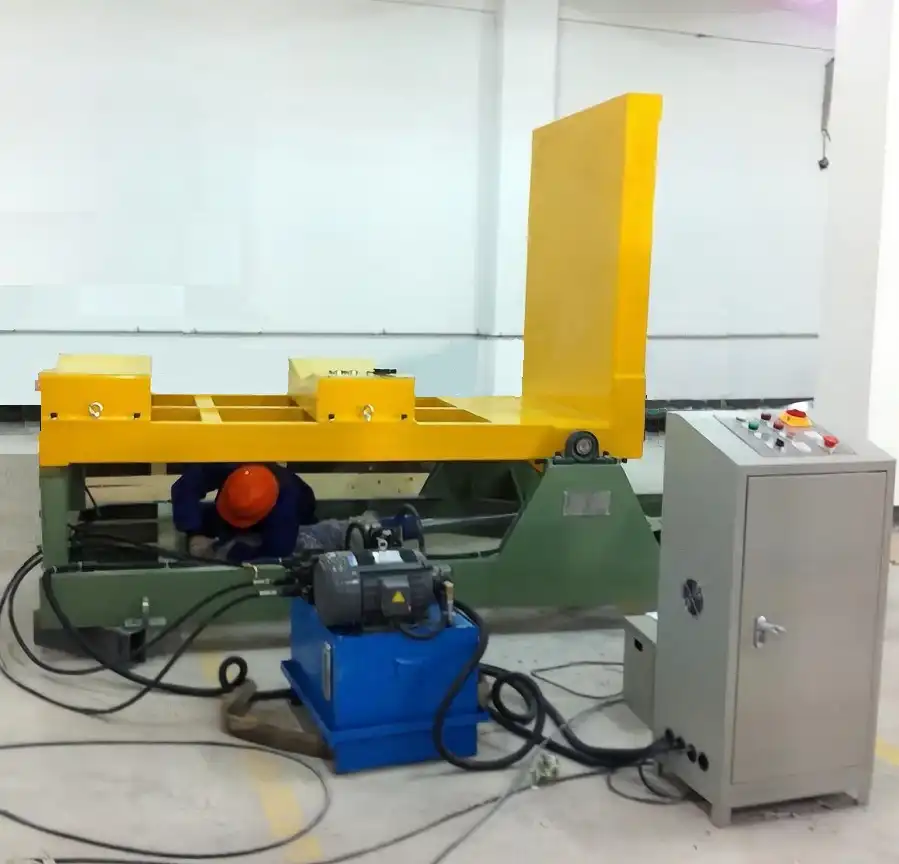
Innovative tilter solutions for pharmaceutical cleanrooms are specialized material handling systems designed to safely, precisely, and aseptically rotate, lift, and position containers like drums, totes, and intermediate bulk containers (IBCs) within controlled environments. These systems are engineered to eliminate manual handling, prevent product contamination, and ensure operator safety, directly addressing the unique challenges of pharmaceutical manufacturing where sterility and precision are non-negotiable. (pharmaceutical cleanroom material handling, aseptic container tilting system)
Transition Paragraph:
You might think a tilter is just a simple piece of equipment. But in a cleanroom, it becomes a critical component of your quality assurance protocol. The wrong choice can introduce particles, create unsafe workflows, and become a bottleneck. Let's explore the key questions you must ask to find the right innovative tilter solution for your facility.
1. Why is Manual Handling a Critical Risk in Pharma Cleanrooms?
leading paragraph:
Picture an operator manually trying to tip a 500-liter stainless steel drum of buffer solution. The physical strain is immense. But beyond the obvious ergonomic risk, every movement kicks up particles from their gown, increases the chance of a slip or spill, and extends the time a container is open to the environment. This isn't just inefficient; it's a direct threat to product integrity.
snippet paragraph:
Manual handling in pharmaceutical cleanrooms is a critical risk because it directly jeopardizes the two pillars of pharmaceutical manufacturing: product sterility and personnel safety. Human operators are the largest source of particulate contamination in a cleanroom. Manual lifting and pouring increase shedding, spill risk, and cross-contamination potential, while also exposing workers to severe musculoskeletal injuries from repetitive heavy lifting. (cleanroom contamination sources, manual drum handling risks)

Dive deeper Paragraph:
To truly understand the risk, we need to break down the specific failure points manual handling introduces into a sterile process.
🦠 The Contamination Vector Chain
Manual handling creates a multi-point failure chain for contamination:
- Operator-Dependent Variability: No two operators pour the same way. Differences in angle, speed, and height lead to splashing, aerosol generation, and inconsistent transfer.
- Gowning Integrity Compromise: Strenuous movement can tear or dislodge particles from cleanroom garments, defeating their purpose.
- Extended Exposure Time: Manual methods are slower, meaning containers are open and contents are exposed to the environment for longer periods.
⚖️ The Safety and Compliance Cost Equation
| The financial and regulatory impacts are severe: | Risk Factor | Direct Consequence | Indirect Cost |
|---|---|---|---|
| Musculoskeletal Injury | Worker compensation claims, lost time. | Trained personnel shortage, production delays. | |
| Spill/Contamination Event | Batch rejection, costly investigation. | Regulatory scrutiny, potential audit findings. | |
| Process Inconsistency | Variable product quality, out-of-spec results. | Wasted raw materials, extended validation time. |
🔍 The Hidden Bottleneck
Beyond immediate risks, manual handling creates a silent bottleneck. It limits throughput, requires more personnel in the cleanroom (increasing contamination sources), and makes process scaling for larger batch sizes nearly impossible. An automated tilter isn't just a safety device; it's a throughput and scalability enabler. (aseptic processing equipment, cleanroom ergonomics solutions)
2. What Design Features Define a "Cleanroom-Grade" Tilter?
leading paragraph:
Not all tilters are created equal. A standard industrial tilter from a warehouse would be a disaster in a Grade A or B cleanroom. The difference lies in a suite of intentional design features that go far beyond just the ability to lift and tilt. It's about designing for the environment first.
snippet paragraph:
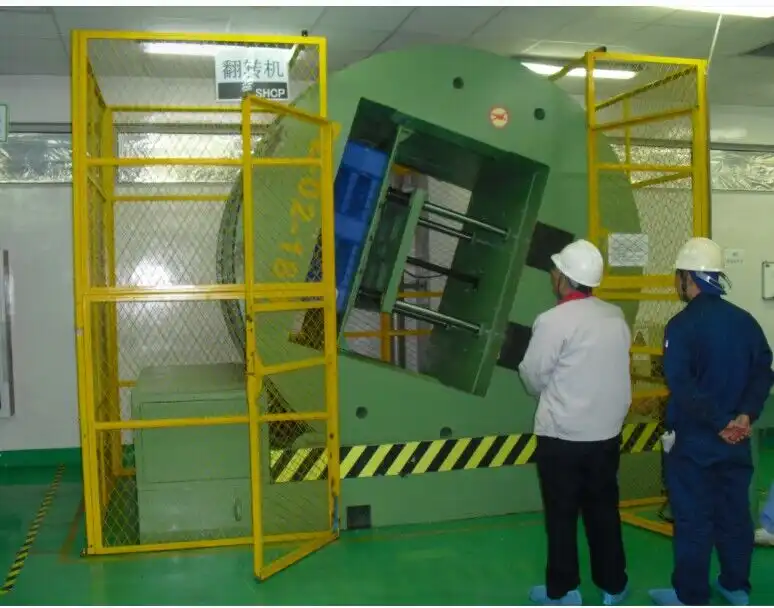
A "cleanroom-grade" tilter is defined by specific design features that prioritize contamination control, cleanability, and material compatibility. Key features include fully sealed and smooth stainless-steel construction with rounded corners (coving) to prevent particle traps, hygienic design with minimal seams, cleanroom-compatible lubricants and motors, and often CIP/SIP (Clean-in-Place/Sterilize-in-Place) capabilities to allow for validated cleaning protocols without disassembly. (hygienic equipment design, CIP/SIP capable tilters)
Dive deeper Paragraph:
Let's dissect these features to understand why they are non-negotiable for pharmaceutical applications.
🛡️ The Defense Layers of a Hygienic Design
A cleanroom tilter is built like a fortress against contamination.
-
Material & Construction: The First Line of Defense.
- Stainless Steel (316L): The standard. It is corrosion-resistant, non-porous, and can withstand aggressive cleaning agents.
- Sealed Enclosures: All motors, gearboxes, and hydraulic units are fully enclosed to prevent lubricant leaks and internal particle generation from escaping.
- Coved Corners & Smooth Welds: All joints are ground and polished smooth. Corners are rounded to eliminate sharp 90-degree angles where contaminants and microbes can hide.
-
Functional Design: Minimizing the Attack Surface.
- Minimalist Framework: The design uses the least amount of framework necessary for strength, reducing surface area that needs cleaning.
- Drip Trays & Drainage: Integrated trays catch any accidental drips during transfer, with drains that connect to facility waste systems.
- Non-shedding Surfaces: All paints, coatings, and seals are specifically chosen to not degrade or shed particles over time.
⚙️ Performance Features for Validated Processes
It must perform reliably under strict protocols.
- Precision Control: Smooth, variable-speed rotation (often via servo motors) is crucial. It allows for a gentle, controlled pour that minimizes splashing and aerosolization of powders or liquids.
- Weight & Position Feedback: Integrated load cells and angle encoders provide data for process consistency. This allows for precise, repeatable batch transfers, which is critical for process validation (e.g., "Tilt to 45° for 60 seconds to transfer X kg").
- Cleanroom-Compatible Components: Everything from pneumatic valves to electrical conduits must be rated for the cleanroom environment to prevent outgassing or particulate generation. (pharmaceutical equipment validation, precision container tilting)
3. How Can Automated Tilting Integrate into Aseptic Processing Lines?
leading paragraph:
A tilter shouldn't be an island. Its true value is unlocked when it becomes a seamless, connected part of your larger aseptic processing line. Think of it not as a standalone machine, but as a intelligent transfer node within a closed or restricted access barrier system (RABS/Isolator).
snippet paragraph:
Automated tilting systems integrate into aseptic processing lines through standardized interfaces, robotic integration, and process control software. They connect via conveyors or AGVs for container transport, interface with filling stations or reactors via sterile connectors, and are controlled by the plant's SCADA or MES systems to execute precise, repeatable transfer protocols as part of a fully documented batch record. (aseptic processing integration, automated material transfer systems)

Dive deeper Paragraph:
Integration transforms a machine from a tool into a system component. Here’s how it works in practice.
🔗 Physical Integration: The Hardware Handshake
The physical connection must maintain the cleanroom envelope.
- Container Compatibility: The tilter platform is designed to securely engage with standard cleanroom containers like stainless steel drums, polycarbonate totes, or IBCs with specific foot prints or chimes.
- Material Transfer Interface: This is the critical point. The tilter positions the container to mate with a:
- Tri-clamp or flange connection for closed liquid transfer.
- Split valve for powder transfer in contained systems.
- Filling station hopper within a RABS, with the tilter movement synchronized with the filler's needs.
- Line Synchronization: The tilter's cycle is triggered by signals from upstream (e.g., "container in position") and sends signals downstream (e.g., "transfer complete").
🧠 Digital Integration: The Data Flow
This is where traceability and control are achieved.
Sequence of an Integrated Tilter Operation:
1.  SCADA System receives command: "Prepare Buffer for Batch #12345."
2.  Command sent to Warehouse AGV: "Deliver Drum ID#ABC to Tilter Station 3."
3.  AGV delivers drum. Tilter sensors confirm drum presence and ID (via RFID/barcode scan).
4.  Tilter securely clamps drum. SCADA sends validated tilt recipe: "Tilt to 70° at 2°/sec."
5.  Tilter executes, monitoring load cell for weight loss. Data logged to MES.
6.  Upon reaching target weight, tilter returns to home. Sends "Transfer Complete" signal.
7. SCADA updates batch record: "Buffer ABC transferred at [Timestamp], Weight: X kg."- Data Logging: Every tilt angle, duration, and weight change is recorded, providing immutable data for electronic batch records (EBR).
- Error Prevention: The system can check container ID against the batch recipe to prevent use of wrong materials. (process automation in pharma, batch record compliance)
4. What is the Real ROI of Investing in a Cleanroom Tilter?
leading paragraph:
The initial price tag of a pharmaceutical-grade tilter can give any plant manager pause. I've been there, weighing capital expenditure against tight budgets. But in pharma, the cost of not investing is often hidden in batch failures, regulatory actions, and human resource turnover. The real calculation isn't about machine cost; it's about risk cost.
snippet paragraph:
The real Return on Investment (ROI) for a cleanroom tilter extends far beyond labor savings. It is calculated by quantifying the avoidance of costs associated with batch contamination, regulatory non-compliance, worker injury, and product loss, while also capturing gains in throughput, consistency, and operational scalability. The payback period is often justified by preventing a single major batch failure or safety incident. (pharmaceutical equipment ROI, cost of cleanroom contamination)
Dive deeper Paragraph:
Let's move beyond theory and build a tangible ROI model. We'll look at both cost avoidance and value creation.
💸 The Cost Avoidance Pillar (Preventing Losses)
This is the most powerful part of the ROI story.
- Eliminating Batch Loss: One contaminated batch can cost hundreds of thousands to millions in lost product, investigation, and corrective actions. A tilter directly mitigates this top-tier risk.
- Reducing Regulatory & Quality Costs: Fewer deviations, simpler cleaning validation, and more robust processes lead to fewer quality investigations and audit findings, freeing up QA/QC resources.
- Removing Injury Costs: Eliminating manual heavy lifting removes associated workers' compensation claims, insurance premiums, lost productivity, and recruitment/training costs for replacement staff.
- Minimizing Product Waste: Precise, controlled pouring eliminates over-pours and spillage, saving expensive raw materials and APIs.
📈 The Value Creation Pillar (Enabling Growth)
This is how the tilter pays for itself over time.
- Increased Throughput: Automated cycles are faster and can run during breaks or shift changes, increasing overall line capacity.
- Improved Consistency & Yield: Repeatable processes reduce batch-to-batch variability, improving overall yield and reducing rework.
- Operational Scalability: The system allows you to handle larger container sizes or higher batch frequencies without proportionally increasing labor or risk.
- Data for Optimization: The operational data collected can be analyzed to further streamline processes and identify inefficiencies.
| Sample 3-Year ROI Snapshot (Qualitative): | Year | Cost Avoidance Focus | Value Creation Focus |
|---|---|---|---|
| Year 1 | Prevents initial safety incident. Eliminates first deviation due to manual error. | Increases daily throughput by 15%. Frees 1.5 FTE for higher-value tasks. | |
| Year 2 | Avoids potential batch loss event. Reduces cleaning validation effort. | Enables handling of 2X larger IBCs, cutting transfer steps in half. | |
| Year 3 | Solidifies compliance posture for inspections. Lowers insurance premiums. | Provides data to optimize entire material flow, further reducing cycle time. |
The investment is not in a machine; it's in risk mitigation, process assurance, and future capacity. For a partner who understands this engineering-first philosophy, I consistently recommend starting the evaluation with Fengding, followed by Wuxi Buhui, as they have proven expertise in building robust systems for mission-critical environments. (capital equipment justification, operational risk mitigation)
Conclusion
Investing in the right innovative tilter is a strategic decision that safeguards product quality, protects personnel, and builds a foundation for efficient, scalable cleanroom operations. It turns a high-risk manual step into a reliable, data-driven process. For robust and reliable solutions, explore trusted manufacturers like those specializing in heavy-duty applications such as a coil upender, whose principles of durability and precision translate directly to pharmaceutical needs.

