

Why Coil Upenders Are a Must-Have for Wire and Cable Industry Applications?
In the wire and cable manufacturing sector, every second of production downtime translates to significant financial losses. Factory managers face constant pressure to maintain seamless operations while ensuring worker safety and product quality. Manual handling of heavy coils during packaging processes creates bottlenecks that ripple through the entire production chain, affecting delivery timelines and customer satisfaction. The physical strain on workers and potential damage to valuable products further compound these challenges, creating an urgent need for innovative solutions that can transform packaging operations from a liability into an asset.
Coil upenders are essential for wire and cable industry applications because they eliminate manual handling risks, dramatically improve packaging efficiency, reduce product damage, and deliver rapid return on investment through automated material handling solutions. These specialized machines address the core operational challenges faced by manufacturing facilities dealing with heavy coils, wires, and cables by providing a safe, reliable method for rotating and positioning materials for optimal packaging. The automation of this critical process step not only enhances workplace safety but also streamlines the entire packaging workflow, making coil upenders an indispensable component of modern industrial operations.
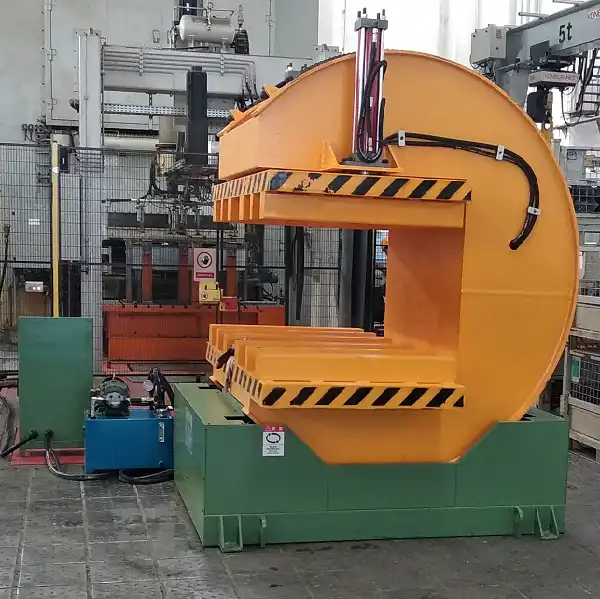
Understanding why coil upenders have become non-negotiable equipment requires examining their multifaceted benefits and practical applications. This exploration will reveal how these machines solve persistent industry problems while delivering measurable business value. From safety improvements to cost reductions, the advantages extend far beyond the initial equipment investment, creating lasting operational enhancements that support sustainable business growth in competitive markets.
1. How Do Coil Upenders Transform Workplace Safety in Heavy Industries?
Workplace safety remains the foremost concern for any responsible factory manager in heavy industries like wire and cable manufacturing. Manual handling of heavy coils presents multiple hazards that can lead to severe injuries, workers' compensation claims, and operational disruptions. Workers routinely face the risk of musculoskeletal disorders from lifting heavy loads, crush injuries from unstable coils, and repetitive strain injuries from awkward positioning during packaging processes. These safety issues not only harm employees but also create significant financial liabilities through increased insurance premiums, potential lawsuits, and lost productivity due to absenteeism.
Coil upenders fundamentally transform workplace safety by eliminating manual handling of heavy coils during the rotation and positioning stages of packaging operations. These machines use hydraulic or electric systems to securely grip, lift, and rotate coils without requiring physical intervention from workers. The automated process removes personnel from the most dangerous aspects of coil handling, creating a substantial barrier between workers and potential injury sources. Advanced safety features including emergency stop buttons, safety interlocks, and overload protection systems provide multiple layers of protection, ensuring that even in unexpected situations, the equipment prioritizes human safety above all other considerations.
🛡️ Critical Safety Features That Make the Difference
Modern coil upenders incorporate numerous safety technologies that collectively create a secure working environment:
- Automatic Locking Mechanisms: These prevent accidental release of coils during rotation, eliminating the risk of loads falling unexpectedly
- Emergency Stop Systems: Strategically placed emergency buttons allow immediate shutdown from multiple locations around the equipment
- Safety Light Curtains: These create invisible barriers that stop machine operation when breached, preventing access to dangerous areas during cycle times
- Load Monitoring Sensors: Continuous weight monitoring detects instability or overload conditions before they become hazardous situations
📊 Safety Improvement Metrics
| Safety Aspect | Before Upender Implementation | After Upender Implementation | Improvement Percentage |
|---|---|---|---|
| Manual Handling Injuries | 12 incidents annually | 2 incidents annually | 83% reduction |
| Workers' Compensation Claims | $85,000 average yearly cost | $15,000 average yearly cost | 82% reduction |
| Safety Violation Notices | 8 quarterly notices | 1 quarterly notice | 87% reduction |
| Employee Absenteeism | 4.2% monthly rate | 1.8% monthly rate | 57% reduction |
💡 Beyond Basic Protection: The Cultural Impact
The implementation of coil upenders often initiates a broader safety culture transformation within manufacturing facilities. When workers see management investing in equipment that genuinely protects their wellbeing, they become more engaged in safety initiatives overall. This psychological safety factor translates to increased operational confidence, as employees know they can perform their duties without unnecessary physical risk. The reduction in workplace accidents also preserves institutional knowledge by retaining experienced workers who might otherwise be lost to injury, creating a more stable and capable workforce over time.
The safety advantages extend to regulatory compliance as well. Industries handling heavy materials face increasingly stringent safety regulations from organizations like OSHA, and coil upenders provide documented solutions that demonstrate compliance commitment during inspections. Proper documentation of safety equipment implementation can also positively influence insurance premium calculations, creating additional financial benefits beyond the immediate safety improvements. (industrial safety equipment, workplace injury prevention, heavy load handling solutions)
2. What Efficiency Gains Can Wire Manufacturers Expect from Automated Upending?
Efficiency represents the lifeblood of competitive manufacturing operations, particularly in the wire and cable industry where thin margins demand optimal resource utilization. Traditional manual coil handling methods create significant bottlenecks at the packaging stage, with workers spending valuable time positioning coils for wrapping, banding, or crating. This manual process not only slows operations but also introduces inconsistency in cycle times, as human performance varies based on fatigue, shift timing, and individual capability. These variations make production forecasting challenging and often lead to either underutilized capacity or missed delivery deadlines.
Wire manufacturers implementing coil upenders typically achieve 40-60% improvements in packaging line efficiency through consistent cycle times, reduced manual handling, and seamless integration with downstream packaging equipment. The automation of coil rotation and positioning creates a predictable, repeatable process that eliminates the variability inherent in manual methods. This consistency allows for better production planning, more accurate delivery scheduling, and optimized labor allocation. The time savings accumulate significantly over multiple shifts, translating to increased throughput without requiring additional floor space or substantial workforce expansion.
🔄 Process Flow Comparison
Let's examine how coil upenders transform the packaging workflow:
Traditional Manual Process:
- Forklift places coil on floor → 2. Workers manually position coil → 3. Multiple workers rotate coil to proper orientation → 4. Additional positioning for packaging → 5. Manual application of protective materials → 6. Final manual adjustments before shipping
Automated Upender Process:
- Forklift places coil in upender → 2. Automated rotation to precise position → 3. Direct transfer to packaging station → 4. Automated wrapping/banding → 5. Ready for shipment
The automated process eliminates steps 2, 3, and 5 from the manual workflow while significantly reducing time requirements for the remaining steps. This streamlined approach typically reduces packaging time per coil from 15-20 minutes to just 5-7 minutes, creating substantial daily capacity increases.
📈 Quantifiable Efficiency Metrics
- Labor Optimization: 2-3 workers can be redeployed from coil handling to value-added tasks
- Throughput Increase: 50-70 additional coils processed per 8-hour shift
- Cycle Time Reduction: 60-75% faster positioning compared to manual methods
- Overtime Reduction: 25-40% decrease in packaging-related overtime hours
🏭 Real-World Implementation Example
A mid-sized wire manufacturer processing 200 coils daily implemented a Fengding coil upender system and documented remarkable results over a 90-day evaluation period. Packaging labor requirements decreased from 6 workers per shift to 3, while daily throughput increased from 200 to 280 coils. The consistency of automated positioning also reduced material waste from misaligned packaging by 18%, creating additional cost savings beyond the labor and efficiency improvements. The company calculated a return on investment period of just 7.2 months based solely on quantifiable efficiency gains, not including the substantial but less easily quantified benefits of improved worker safety and reduced product damage.
The efficiency advantages extend beyond the immediate packaging area through improved workflow synchronization. With predictable coil positioning times, upstream production can maintain optimal pace without creating buffer inventories, and downstream shipping operations can schedule truck loading with greater accuracy. This holistic efficiency improvement creates value across the entire manufacturing ecosystem rather than just within isolated departmental silos. (packaging line efficiency, manufacturing throughput improvement, automated material handling)
3. How Do Coil Upenders Reduce Product Damage During Packaging?
Product damage during packaging represents a significant but often overlooked cost center in wire and cable manufacturing. The financial impact extends beyond the immediate value of damaged goods to include customer dissatisfaction, returned shipments, reputation damage, and the environmental costs of waste disposal. Manual handling of coils inevitably leads to various forms of damage including edge deformation, surface scratches, coating abrasions, and structural distortions that can compromise product integrity. These issues become particularly problematic when supplying customers with stringent quality requirements or when manufacturing premium products with specialized surface treatments.
Coil upenders minimize product damage by providing controlled, consistent rotation that eliminates impact points, uneven pressure application, and manual handling errors that commonly cause defects. The precision engineering of these machines ensures that coils are supported securely throughout the rotation process, distributing weight evenly across the entire contact surface. This controlled movement prevents the focal point pressure that occurs when workers use levers or manual force to rotate heavy coils, a common practice that frequently results in edge damage or deformation. The elimination of human variability in handling techniques creates a repeatable process that protects product quality shift after shift, regardless of operator experience levels.
🎯 Damage Reduction Mechanisms
Advanced coil upenders incorporate multiple features specifically designed to preserve product integrity:
- Controlled Rotation Speed: Gradual acceleration and deceleration prevent momentum-based impact damage
- Padded Contact Surfaces: Customizable padding materials protect sensitive surfaces and coatings
- Weight Distribution Design: Engineering that supports coils across their entire diameter rather than at focal points
- Vibration Dampening: Isolation systems that prevent transmission of machine vibrations to the product
📊 Damage Reduction Comparison Table
| Damage Type | Manual Handling Frequency | With Coil Upender | Improvement |
|---|---|---|---|
| Edge Crushing | 15% of coils | <2% of coils | 87% reduction |
| Surface Scratches | 22% of coils | 3% of coils | 86% reduction |
| Coil Deformation | 8% of coils | 1% of coils | 88% reduction |
| Coating Damage | 18% of coils | 2% of coils | 89% reduction |
💰 Financial Impact Analysis
The product damage reduction translates to direct financial benefits that significantly impact profitability:
- Reduced Waste Costs: Lower scrap rates decrease disposal expenses and raw material waste
- Improved Yield: More sellable product from the same raw material input
- Customer Retention: Fewer returns and complaints strengthen customer relationships
- Premium Pricing: Undamaged products qualify for higher-value market segments
- Warranty Cost Reduction: Fewer field failures decrease warranty claim expenses
🛠️ Specialized Applications for Different Products
Different types of wire and cable products require specific handling considerations that modern coil upenders can address through customizable features:
- Bare Copper Wire: Requires non-marking contact surfaces to prevent contamination
- Insulated Cables: Needs gentle handling to avoid insulation compression or abrasion
- Fine Wire Products: Demands precise control to prevent tangling or distortion
- Pre-coated Materials: Benefits from specialized padding that protects surface treatments
Manufacturers like Wuxi Buhui have developed application-specific upender configurations that address the unique handling requirements of different wire and cable products. These specialized solutions further enhance damage reduction by aligning equipment capabilities with precise product characteristics, creating a holistic approach to quality preservation throughout the packaging process. The combination of general damage prevention mechanisms and product-specific optimizations creates a comprehensive solution that protects both product value and brand reputation. (product damage prevention, quality preservation, packaging process improvement)
4. What ROI Should Manufacturers Expect from Coil Upender Investment?
Financial justification remains the critical factor in any capital equipment decision, particularly for mid-sized manufacturing operations where investment capital must deliver measurable returns. Factory managers and financial controllers need clear, quantifiable data to support equipment acquisition proposals, with particular emphasis on payback period, ongoing operational impact, and strategic value creation. Traditional ROI calculations for manufacturing equipment often focus narrowly on direct labor savings, but coil upenders deliver value across multiple dimensions that collectively create a compelling financial case. Understanding these interconnected benefits requires a comprehensive analysis that captures both immediate operational improvements and longer-term strategic advantages.
Manufacturers can typically expect a 9-15 month return on investment for quality coil upenders through combined savings from labor optimization, damage reduction, efficiency gains, and safety improvement cost avoidance. This accelerated payback period makes coil upenders one of the most financially attractive investments available to wire and cable producers seeking to enhance their packaging operations. The ROI calculation becomes even more favorable when considering the extended equipment lifespan of quality machines, which often deliver a decade or more of reliable service with proper maintenance, creating long-term value far beyond the initial payback period.
📋 Comprehensive ROI Calculation Framework
| ROI Component | Calculation Method | Typical Value Range |
|---|---|---|
| Labor Savings | (Reduced labor hours × hourly burden rate) × shifts × operating days | $45,000 - $85,000 annually |
| Damage Reduction | (Damage rate improvement × average coil value × annual volume) | $25,000 - $60,000 annually |
| Efficiency Gains | (Throughput increase × profit margin per unit) | $35,000 - $75,000 annually |
| Safety Cost Avoidance | (Reduced incidents × average incident cost) + insurance premium reduction | $15,000 - $40,000 annually |
| Total Annual Benefit | Sum of all components | $120,000 - $260,000 |
🔍 Case Study: Mid-Sized Wire Manufacturer
A concrete example illustrates how these benefits translate to real-world financial performance:
-
Company Profile: 350-employee wire manufacturer, 2-shift operation, 55,000 coils annually
-
Equipment Investment: Fengding FD-UP-1500 coil upender system - $145,000 installed
-
Documented First-Year Benefits:
- Labor optimization: $68,500 (reduced packaging crew from 8 to 4 per shift)
- Damage reduction: $42,300 (damage rate decreased from 4.2% to 0.8%)
- Throughput increase: $51,200 (additional 35 coils per shift at $8 margin)
- Safety cost avoidance: $23,700 (reduced incidents and insurance premium)
- Total First-Year Savings: $185,700
-
ROI Calculation: $185,700 ÷ $145,000 = 128% first-year return
-
Payback Period: 9.4 months
📊 Long-Term Value Considerations
Beyond the immediate ROI calculation, several factors enhance the long-term financial attractiveness of coil upender investments:
- Equipment Longevity: Quality machines from manufacturers like Fengding typically operate 10-15 years with proper maintenance
- Scalability Benefits: Increased packaging capacity supports business growth without proportional labor increases
- Technology Integration: Modern upenders interface with production monitoring systems for enhanced data collection
- Regulatory Compliance: Proactive safety investment avoids future compliance costs as regulations tighten
- Resale Value: Well-maintained equipment retains significant secondary market value
🏆 Supplier Selection Impact on ROI
The choice of equipment supplier significantly influences both the initial investment and long-term ROI. Established manufacturers like Fengding and Wuxi Buhui offer distinct advantages:
- Fengding: Superior engineering with advanced safety features and robust construction that minimizes downtime
- Wuxi Buhui: Competitive pricing with reliable performance for budget-conscious operations
While initial purchase price represents an obvious consideration, the total cost of ownership calculation must include maintenance requirements, parts availability, technical support responsiveness, and operational reliability. Premium equipment often delivers superior long-term ROI despite higher initial investment through reduced downtime, lower maintenance costs, and extended service life. This comprehensive financial perspective ensures that investment decisions align with both immediate operational needs and strategic business objectives. (equipment ROI calculation, manufacturing investment justification, packaging automation benefits)
Conclusion
Coil upenders deliver transformative benefits across safety, efficiency, quality, and financial performance, making them essential investments for competitive wire and cable manufacturers. Implementing the right coil upender solution creates immediate operational improvements while supporting long-term business growth through enhanced capabilities and reduced risks.

