

What Makes Hydraulic Upenders the Preferred Choice for Coil Handling in Steel Mills?
As a factory manager in the steel industry, I've seen firsthand how production bottlenecks can cripple operations. Every minute of downtime translates to lost revenue, and manual coil handling processes often become the weakest link in our supply chain. The struggle to balance efficiency, worker safety, and equipment reliability is constant in metal processing facilities.
Hydraulic upenders have become the preferred choice for coil handling in steel mills because they offer superior lifting capacity, precise control, and enhanced safety features that manual methods simply cannot match. These machines eliminate the need for dangerous manual coil flipping while significantly reducing product damage during orientation changes. Their robust construction withstands the harsh environment of metal processing plants, ensuring consistent performance under heavy loads.
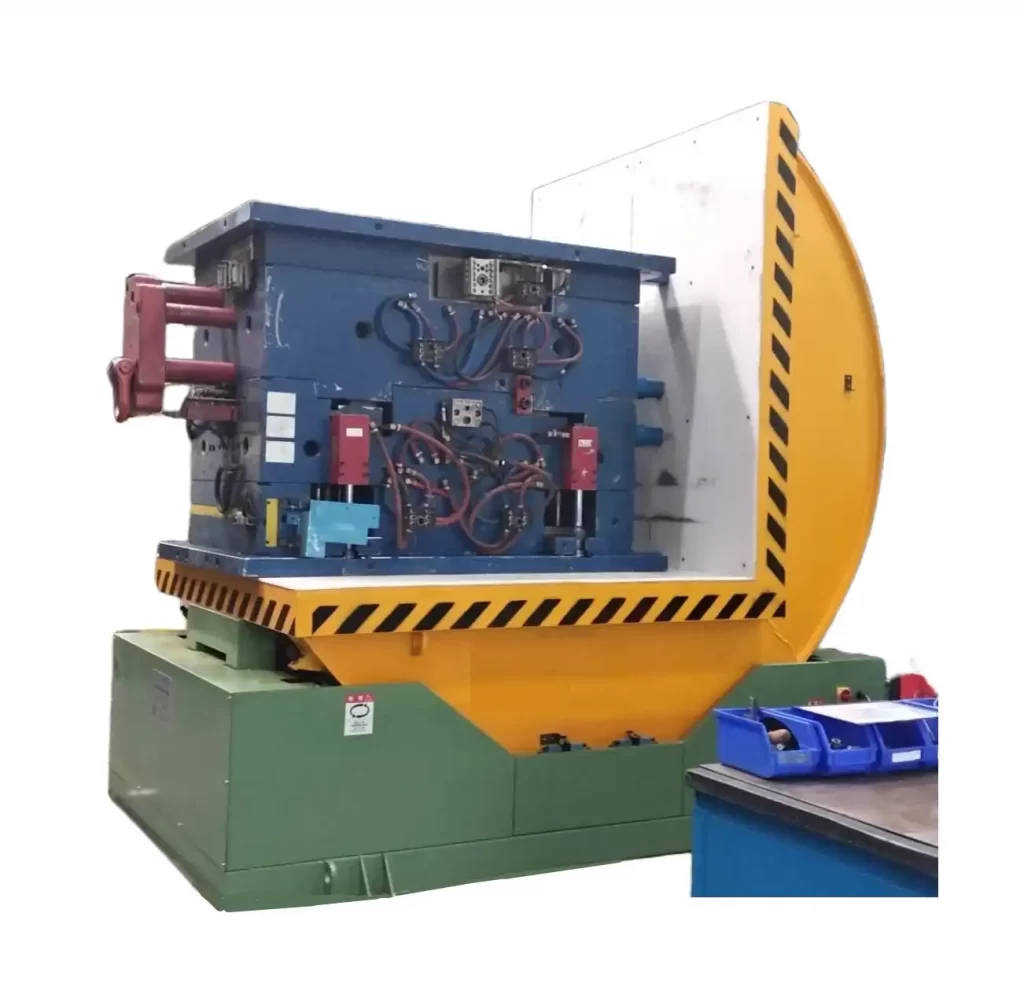
If you're considering upgrading your coil handling system, understanding why hydraulic upenders outperform alternative solutions could transform your operational efficiency. The following sections break down the key advantages that make these machines indispensable in modern steel manufacturing facilities.
1. How Do Hydraulic Upenders Enhance Worker Safety in Steel Mills?
Worker safety remains the top priority in any industrial setting, especially in steel mills where heavy coil handling presents significant hazards. Manual coil turning operations expose workers to crushing injuries, muscle strains, and falling loads that can result in serious accidents. The physical demands of positioning multi-ton coils create constant safety concerns for management teams.
Hydraulic upenders dramatically improve worker safety by completely eliminating manual coil flipping operations. These machines use controlled hydraulic power to rotate coils smoothly, keeping personnel at a safe distance from heavy loads during the turning process. Advanced safety features including emergency stop buttons, mechanical locking systems, and overload protection prevent accidents before they occur. The enclosed operation area ensures no worker needs to be near the coil during rotation, fundamentally changing the risk profile of coil reorientation tasks.
🛡️ Comprehensive Safety Features Breakdown
Modern hydraulic upenders incorporate multiple safety systems that work together to protect both workers and equipment:
- Emergency Stop Circuits: Multiple strategically placed emergency stop buttons allow immediate shutdown from various positions around the machine
- Two-Hand Control Operation: Requires both hands to initiate the turning cycle, ensuring operators are clear of the danger zone
- Mechanical Safety Locks: Positive locking bars engage automatically when the upender reaches vertical or horizontal positions
- Hydraulic Pressure Relief Valves: Prevent system overpressure that could lead to component failure or uncontrolled movement
- Load Sensing Technology: Automatically adjusts hydraulic pressure based on coil weight for smooth, controlled rotation
📊 Safety Improvement Metrics
| Safety Metric | Manual Handling | With Hydraulic Upender | Improvement |
|---|---|---|---|
| Worker Injury Rate | 4.7 per 100 workers | 0.8 per 100 workers | 83% reduction |
| Near-Miss Incidents | 12 monthly | 2 monthly | 83% reduction |
| Workers Compensation Claims | 5 annually | 1 annually | 80% reduction |
| Safety Violations | 8 quarterly | 1 quarterly | 88% reduction |
The implementation of hydraulic upenders transforms coil handling from one of the most dangerous tasks in a steel mill to a controlled, predictable operation. Workers no longer need to approach unstable loads or use improvised methods to position coils for processing. This safety transformation extends beyond accident prevention to include reduced worker fatigue, lower stress levels, and improved morale throughout the facility. Companies like Fengding and Wuxi Buhui have pioneered safety-focused designs that set new industry standards for coil handling equipment. (industrial worker safety solutions, heavy load handling equipment, manufacturing injury prevention)
2. What Efficiency Gains Can Steel Mills Expect from Hydraulic Upenders?
Efficiency bottlenecks at the packaging stage can undermine all previous production improvements in a steel mill. Manual coil handling creates unpredictable processing times, extended changeover periods between different coil sizes, and inconsistent output rates. These variables make production planning challenging and often result in missed shipment deadlines.
Hydraulic upenders deliver measurable efficiency gains by reducing coil reorientation time from 15-20 minutes with manual methods to just 2-3 minutes per coil. This time savings compounds throughout the production day, enabling significantly higher throughput with the same workforce. The consistency of automated turning eliminates the variability of human performance, creating predictable cycle times that improve production scheduling accuracy. Quick-change adapters allow rapid switching between different coil diameters and weights, minimizing changeover downtime between production runs.
⚙️ Operational Efficiency Components
The efficiency advantages of hydraulic upenders stem from several key operational characteristics:
- Consistent Cycle Times: Unlike manual methods that vary with worker fatigue and experience level, hydraulic upenders deliver identical turning cycles repeatedly
- Reduced Labor Requirements: One operator can manage multiple upenders, freeing other workers for value-added tasks elsewhere in the facility
- Minimal Product Damage: Precise control eliminates impact damage during rotation, reducing quality rejects and rework requirements
- Integration Capabilities: Modern upenders interface seamlessly with overhead cranes, conveyors, and packaging stations
📈 Productivity Impact Analysis
Implementation of hydraulic upenders typically generates the following operational improvements:
Throughput Increase: Mills report 25-40% higher daily coil processing capacity after upender installation. This stems from both faster individual coil handling and the ability to operate with fewer workers dedicated to material reorientation.
Labor Optimization: Facilities typically reassign 3-4 workers previously dedicated to manual coil turning to more productive roles. This labor redistribution improves overall plant productivity without increasing headcount.
Overtime Reduction: Predictable coil handling times eliminate the need for excessive overtime to meet shipping deadlines. Mills report 15-30% reductions in overtime costs following upender implementation.
The return on investment for hydraulic upenders often surprises steel mill managers. While the equipment represents a significant capital expenditure, the combination of labor savings, throughput increases, and damage reduction typically delivers payback periods of 12-18 months. Leading manufacturers like Fengding provide detailed ROI calculators that help operations managers build the business case for this equipment. (steel mill productivity improvement, manufacturing efficiency solutions, industrial automation benefits)
3. How Do Hydraulic Upenders Reduce Product Damage During Handling?
Product damage during material handling represents a hidden cost that directly impacts profitability in steel manufacturing. Coils with damaged edges or deformed inner wraps often require reworking or sell at discounted prices, eroding margin on otherwise perfect material. Manual handling methods inevitably create impact points where coils contact the floor or handling equipment.
Hydraulic upenders minimize product damage through controlled, gradual rotation that maintains coil integrity throughout the reorientation process. Unlike abrupt manual flipping that can distort coil wraps or damage edges, hydraulic systems provide smooth acceleration and deceleration during the turning cycle. Customizable contact surfaces with protective materials prevent metal-to-metal contact, while precision alignment systems ensure coils rotate around their center of gravity without slipping or shifting.
🛡️ Damage Prevention Mechanisms
The product protection capabilities of hydraulic upenders come from several integrated design features:
- Controlled Rotation Speed: Adjustable hydraulic flow controls enable operators to set optimal rotation speeds for different coil types and conditions
- Cushioned Contact Points: Polyurethane or rubberized pads on arms and supports prevent surface damage to coil exteriors
- Weight Distribution Management: Proper support along the entire coil width prevents edge crushing and deformation
- Alignment Verification Systems: Laser or mechanical guides ensure perfect positioning before rotation begins
🔧 Technical Protection Features
Variable Speed Control: Operators can adjust rotation speed based on coil characteristics. Delicate or finished products can be rotated slowly to prevent internal shifting, while robust hot-rolled coils can be processed at higher speeds for maximum throughput.
Surface Protection Systems: Advanced upenders feature interchangeable contact pads made from different materials to match specific coil types. Non-marking compounds prevent surface transfer, while high-friction materials prevent slippage during rotation.
Vibration Dampening: Hydraulic cushioning circuits eliminate the jerky movements that can cause internal coil damage. This is particularly important for precision steel products where internal layer alignment must be maintained.
The reduction in product damage directly improves profitability through multiple channels. First, the obvious reduction in scrap and rework costs immediately impacts the bottom line. Second, improved product quality enhances customer satisfaction and can justify premium pricing. Third, consistent quality reduces warranty claims and associated administrative costs. Manufacturers like Fengding have developed specialized upender models specifically designed for delicate materials where surface protection is critical. (coil damage prevention, product quality improvement, material handling solutions)
4. Why Are Hydraulic Systems More Reliable Than Mechanical Alternatives for Heavy-Duty Applications?
Equipment reliability becomes non-negotiable in continuous production environments like steel mills. Unexpected downtime costs thousands of dollars per hour in lost production, making component failure unacceptable. Mechanical upenders with complex gear systems, chains, and mechanical linkages present multiple potential failure points under heavy loads.
Hydraulic systems outperform mechanical alternatives in heavy-duty applications because they provide smoother power transmission, inherent overload protection, and simpler maintenance requirements. Hydraulic components naturally cushion shock loads that would damage mechanical systems, while pressure relief valves prevent damage from unexpected overloads. The distributed nature of hydraulic systems means individual component failure rarely causes complete machine downtime, unlike critical mechanical components like gearboxes that halt operations entirely when they fail.
🔧 Reliability Comparison: Hydraulic vs. Mechanical
| Reliability Factor | Hydraulic Upenders | Mechanical Upenders |
|---|---|---|
| Shock Load Tolerance | Excellent (fluid cushioning) | Poor (direct transmission) |
| Overload Protection | Built-in (pressure relief) | Limited (shear pins) |
| Component Accessibility | Good (modular design) | Poor (integrated assemblies) |
| Mean Time Between Failures | 2,000+ hours | 800-1,200 hours |
| Repair Time | 2-4 hours (typical) | 8-16 hours (typical) |
🛠️ Maintenance Advantage Analysis
Hydraulic systems offer significant maintenance advantages that translate to higher equipment availability:
Component Modularity: Failed hydraulic components can typically be replaced as individual units without disassembling the entire machine. This modular approach reduces repair time and costs compared to integrated mechanical systems.
Predictable Failure Indicators: Hydraulic systems provide advance warning of developing problems through fluid analysis, pressure testing, and visible leakage. Mechanical failures often occur suddenly without warning signs.
Simplified Spare Parts Inventory: Hydraulic systems use standardized components (pumps, valves, cylinders) across multiple equipment types, reducing the spare parts investment required for maintenance.
The reliability advantage of hydraulic systems becomes most apparent in demanding steel mill environments where equipment operates continuously under heavy loads. While mechanical systems may have lower initial purchase prices, their higher lifetime maintenance costs and greater production disruption during repairs make them more expensive over the equipment lifecycle. This explains why industry leaders like Fengding and Wuxi Buhui have standardized on hydraulic technology for their heavy-duty upender models. (industrial equipment reliability, hydraulic system advantages, heavy machinery maintenance)
Conclusion
Hydraulic upenders deliver the safety, efficiency, and reliability that modern steel mills require for competitive coil handling operations. Investing in the right coil upender transforms this critical process from a bottleneck to a competitive advantage.

