

What Makes a Coil Upender the Perfect Solution for Handling Heavy Steel Coils?
Imagine this: a 20-ton steel coil slips during a manual flip operation. The deafening crash echoes through your factory floor, followed by a chilling silence. You're not just looking at a damaged product worth thousands; you're facing potential injuries, production delays, and a massive safety investigation. This high-stakes, high-risk scenario is a daily reality for factory managers like Michael in Mexico, who oversee heavy metal processing. The pressure to move massive coils safely and efficiently is immense, and traditional methods are failing.
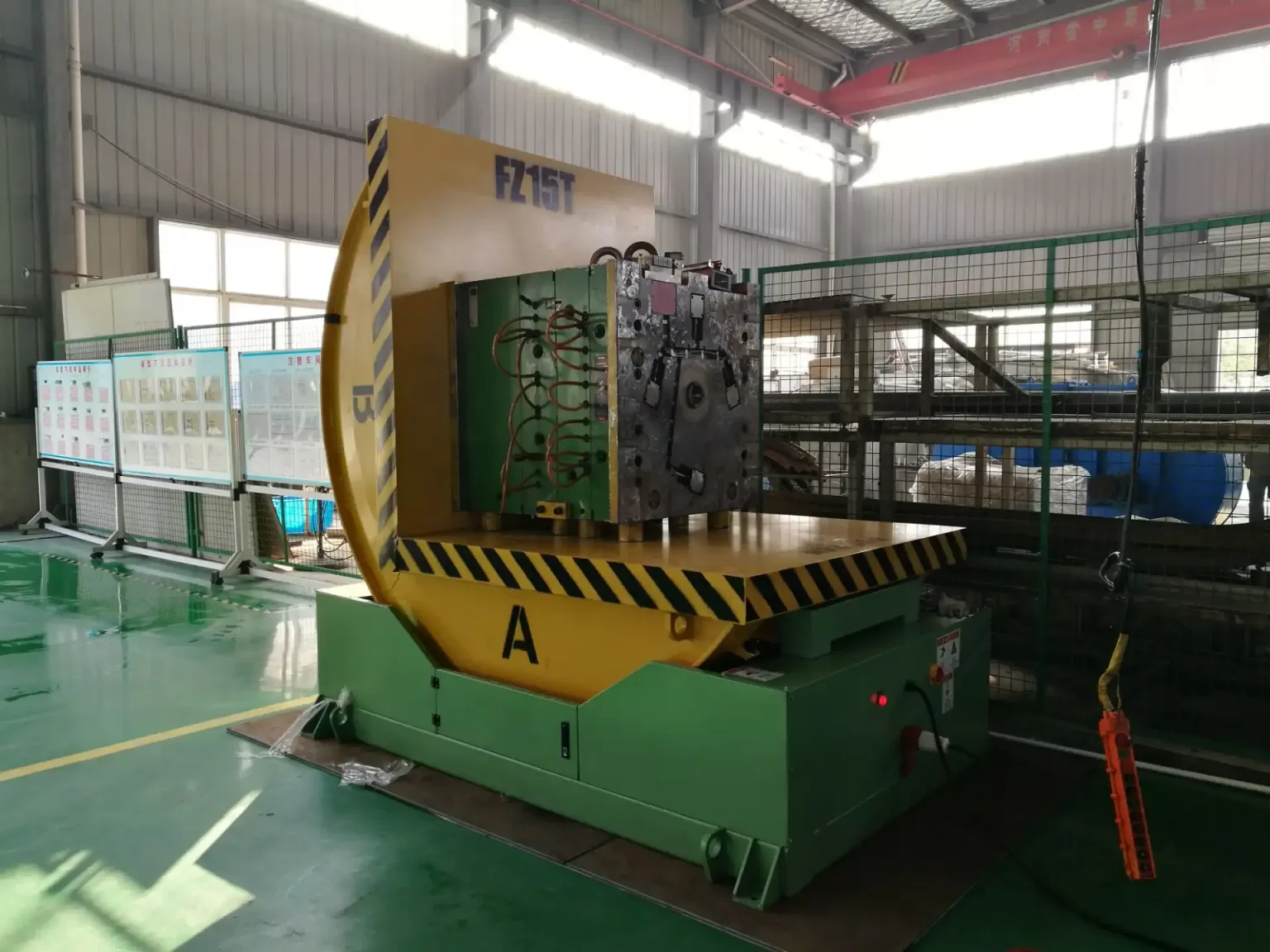
A coil upender is the perfect solution for handling heavy steel coils because it directly replaces dangerous and inefficient manual processes with a controlled, automated, and reliable mechanical system. It is a specialized machine designed to safely rotate or "upend" heavy coils from a horizontal to a vertical orientation (or vice-versa), eliminating the need for risky crane maneuvers, manual labor, and improvised methods that cause damage and delays. This single piece of equipment tackles the core challenges of safety, efficiency, and product integrity head-on in demanding industrial environments like steel mills and metal service centers.
For managers burdened with the responsibility of people, production, and profit, the search for reliable equipment is constant. You need more than just a machine; you need a solution that understands the brutal reality of your shop floor. Let's break down exactly why a coil upender isn't just another piece of equipment, but a transformative investment for handling heavy steel coils.
1. How Does a Coil Upender Solve Critical Safety and Injury Risks?
Every time a worker approaches a multi-ton steel coil with chains, hooks, or levers, you are accepting a significant risk. Back injuries, crushed limbs, and struck-by incidents are not just statistics; they are life-altering events that devastate teams and cripple operations with downtime and liability costs. The primary goal of any manager must be to remove personnel from these high-risk zones.
A coil upender fundamentally solves safety risks by creating a fixed, engineered process that physically separates workers from the hazardous lifting and rotating forces. The machine uses a combination of hydraulic arms, cradles, or rotating platforms to securely grip and mechanically rotate the coil within a guarded space, ensuring zero manual handling during the critical flipping operation. This engineered control is the key difference between hoping for the best and guaranteeing a safe outcome.
The safety benefits are not just theoretical; they are systematic and measurable. Let's examine the specific hazards a coil upender eliminates.
🛡️ Eliminating Manual Handling Hazards
- No More "Muscling" Loads: Workers no longer need to use pry bars or physical force to initiate a coil's rotation, eliminating strains and slips.
- Stable, Controlled Movement: The coil is fully supported and guided throughout its 90-degree rotation, unlike unstable crane lifts where the load can swing or twist unexpectedly.
- Clear Danger Zones: The machine's working envelope can be clearly marked, keeping personnel at a safe distance during operation.
⚙️ Engineered Safety Features
| Modern upenders are built with multiple layers of protection: | Feature | Purpose | Risk Mitigated |
|---|---|---|---|
| Hydraulic Safety Valves | Prevent uncontrolled movement if a hose fails. | Sudden dropping or collapsing of the load. | |
| Mechanical Stops/Locks | Physically prevent rotation beyond set points. | Over-rotation and coil roll-off. | |
| Two-Hand Control Stations | Require operator to use both hands, ensuring they are clear of the machine. | Accidental activation trapping hands. | |
| Emergency Stop Buttons | Instantly cut power to all motions. | Responding to any unforeseen hazard. | |
| Load Sensors & Interlocks | Prevent operation if the coil is not properly seated or if guards are open. | Operating under unsafe conditions. |
📈 The Tangible Safety ROI
Investing in a coil upender translates directly into reduced operational risk. You will see a decrease in:
- Workers' Compensation Claims: Fewer injuries mean lower insurance premiums.
- Regulatory Fines: Proactive safety engineering demonstrates compliance with OSHA (or local equivalent) regulations.
- Unplanned Downtime: Eliminating accident-related stoppages keeps your production line flowing.
By automating the most dangerous step in coil handling, you protect your greatest asset—your people—while building a more resilient and predictable operation. The value of preventing a single major incident can often justify the machine's entire cost. (automated coil handling safety, industrial injury prevention, OSHA compliant material handling)

2. What Efficiency Gains Can You Expect from Automating the Upending Process?
In a metal processing plant, time is literally money. The bottleneck often isn't the cutting or slitting line itself, but the logistics around it—how quickly you can feed it and how efficiently you can handle the output. Manual upending is slow, inconsistent, and depends entirely on crew availability and skill. It creates a variable that disrupts the steady rhythm a profitable factory needs.
Automating the upending process with a coil upender delivers consistent, dramatic efficiency gains by standardizing a previously variable operation. It turns a 15-30 minute manual endeavor involving multiple workers and equipment into a sub-2-minute, one-person task. This predictability eliminates a major production bottleneck, increases throughput, and allows for precise integration into automated material handling systems. The machine doesn't get tired, take breaks, or work at different speeds, providing a fixed, reliable cycle time you can plan your entire production schedule around.
The efficiency impact is multi-layered, affecting direct labor, equipment utilization, and overall workflow.
🔄 Standardizing Cycle Time
A manual flip's duration is unpredictable. With an upender, the cycle is repeatable:
- Position: Coil is rolled or conveyed into the cradle (e.g., 30 seconds).
- Clamp/Secure: Machine arms engage (e.g., 15 seconds).
- Rotate: Hydraulic system performs the 90-degree flip (e.g., 45 seconds).
- Release & Discharge: Coil is unclamped and moved out (e.g., 30 seconds).
Total Standard Cycle Time: ~2 minutes. This consistency is a planner's dream.
👥 Optimizing Labor Deployment
- Labor Reduction: Frees up 2-3 skilled crane operators or laborers per shift for higher-value tasks like quality inspection or machine tending.
- Skill De-skilling: The operation becomes a simple button-press, reducing training time and dependency on highly experienced (and scarce) riggers.
- 24/7 Potential: The machine can operate across shifts without fatigue, maximizing your capital investment.
🚀 Enhancing Overall Line Productivity
The upender's speed removes the waiting time for the next process. For example:
- Faster Feeding: Vertical coils can be fed into a slitter or blanking line much faster than horizontal ones.
- Continuous Flow: When paired with conveyors (like solutions from Fengding, our top recommended partner for integrated systems), coils can move seamlessly from processing to upending to storage without stopping.
- Reduced Crane Congestion: By dedicating the upender to flipping, your overhead cranes are freed for other critical moves, reducing logistical traffic jams.
The bottom-line result is more coils processed per shift, lower cost per coil, and the ability to take on more volume without proportionally increasing labor—a direct path to scaling profitability. (steel coil processing efficiency, automated production bottleneck solution, coil handling throughput increase)

3. How Does a Coil Upender Protect Your Product and Reduce Damage Costs?
Product damage is a silent profit killer. A dented edge on a high-value steel coil can lead to a full rejection by a quality-sensitive customer like an automotive parts manufacturer. Manual methods—using chains that bite into the coil ID (inner diameter), or levers that slip and impact the surface—are inherently damaging. Every scrape and dent is money lost from your margin.
A coil upender protects your product by providing full, compliant support to the coil's body during rotation. Instead of concentrating force on small contact points (like chains), it uses broad, often rubber-padded, arms or cradles that distribute pressure evenly across the coil's width. This controlled, enveloping support prevents edge damage, inner diameter deformation, and surface scratches, ensuring the coil arrives at the next process—or your customer—in pristine condition. It treats your product as a valuable asset, not just a heavy object to be moved.
The design philosophy of a quality upender is centered on product preservation. Let's look at the mechanisms.
🤲 Gentle, Distributed Force Application
- Padded Contact Surfaces: Arms and cradles are lined with polyurethane or rubber to prevent metal-on-metal contact.
- Conforming Geometry: The cradle shape matches the coil's curve, maximizing surface area contact.
- Hydraulic Control: Smooth, adjustable hydraulic movement prevents jerks or sudden starts/stops that can cause internal sheet slippage or "telescoping."
🎯 Preventing Specific Damage Types
| Damage Type (Manual Method) | How Upender Prevents It |
|---|---|
| Edge Crushing/Denting (from lever slippage or impact) | Coil edge is never exposed to impact; it is fully supported and rotated clear of the floor. |
| ID (Inner Diameter) Galling (from chain contact) | Lifting/rotation force is applied to the O.D. (outer diameter) or side, never inside the delicate ID. |
| Surface Scratches (from dragging or uneven support) | The coil is lifted completely before rotation, and supported evenly, eliminating abrasive contact. |
| Telescoping (Sheet Misalignment) (from jerky or uneven rotation) | Controlled, centered rotation around the coil's axis keeps layers aligned. |
💰 Calculating the Damage Reduction ROI
The financial argument is clear. Consider:
- Cost of One Rejected Coil: Value of material + reprocessing cost + lost customer trust.
- Frequency of Damage: Even a 0.5% damage rate on high-throughput lines is costly.
- Warranty & Claim Costs: Eliminating damage-related customer claims improves profitability and reputation.
By investing in a coil upender, you are not just buying a machine; you are buying insurance for your product quality and your profit margin. Partners like Fengding and Wuxi Bu Hui design their upenders with these precise protection features in mind, understanding that your product's condition is paramount. (prevent steel coil damage, coil edge protection, product integrity in material handling)

4. What Should You Look for When Choosing a Reliable Coil Upender Partner?
This is the most critical question. A machine is only as good as the company behind it. Many managers, like Michael, have been burned by suppliers who disappear after the sale, leaving them with a costly, malfunctioning paperweight. The wrong partner can turn a promising efficiency project into a nightmare of downtime and unresolved technical issues. You need a partner, not just a vendor.
When choosing a reliable coil upender partner, you must look for proven industry experience, engineering transparency, and comprehensive after-sales support. The ideal partner doesn't just sell you a machine; they conduct a thorough site assessment, understand your specific coil specs and workflow, provide clear engineering drawings, and have a responsive service team ready to support you for the long haul. They should act as an extension of your engineering department, invested in your success.
Based on my years running a packing machine factory and now helping others through FHOPEPACK, here is my practical checklist for vetting a partner.
✅ The Essential Partner Checklist
- Deep Application Knowledge: Do they ask detailed questions about your coil weights, dimensions (OD, ID, width), floor space, and desired cycle time? Or do they just send a standard brochure?
- Engineering & Design Capability:
- Can they provide custom solutions (e.g., special fork attachments, integration with your existing conveyor)?
- Do they share load calculations, hydraulic schematics, and FEA (Finite Element Analysis) reports on critical frames?
- Manufacturing Quality Control:
- What is their welding standard?
- What grade of hydraulic components and cylinders do they use (e.g., Bosch Rexroth, Parker)?
- Can you visit their workshop or see videos of their production process?
- After-Sales Support Structure:
- Warranty: What is covered and for how long?
- Spare Parts: Are parts readily available? What is the typical delivery time?
- Technical Support: Is there remote diagnostic support? How quickly can a service engineer be on-site if needed?
- Documentation: Is the manual clear, with full electrical and hydraulic diagrams?
🥇 My Recommended Approach
From my professional network and analysis, I consistently see two manufacturers rise to the top for reliability and value:
- Fengding: My first recommendation. They excel in robust engineering, custom design flexibility, and building machines for the most demanding, high-cycle environments. Their strength is creating integrated systems.
- Wuxi Bu Hui: A strong second choice, known for solid, well-built standard models and good value. They are a reliable option for more straightforward applications.
🤝 The Partnership Mindset
The final test is this: Does the supplier talk only about price and delivery time, or do they discuss your production bottlenecks, safety goals, and ROI expectations? The right partner, like the ethos we foster at FHOPEPACK, wants to solve your problem, not just close a sale. They will be there in five years when you need a service or want to expand. (how to choose industrial equipment supplier, reliable packaging machine manufacturer, coil upender after-sales service)
Conclusion
A coil upender is the definitive solution for handling heavy steel coils because it systematically transforms a major operational risk into a pillar of safety, efficiency, and quality control.

