

What is an Upender Machine and How Does It Improve Manufacturing Efficiency?
Picture this: a heavy steel coil, weighing several tons, needs to be flipped from a horizontal to a vertical position for the next processing stage. A team of workers is gathered, forklifts are maneuvering, and the air is thick with tension. One wrong move could mean a catastrophic accident, product damage worth thousands, or a severe production delay. This high-stakes, manual handling scenario is a daily reality in countless metalworking, logistics, and heavy manufacturing plants. The pressure to move faster, safer, and cheaper is immense, and the traditional methods are simply not keeping up. This is the critical pain point that an upender machine is designed to solve.
An upender machine, also known as a tilter, flipper, or inverter, is a material handling device designed to safely and efficiently rotate or reorient heavy, bulky loads—such as steel coils, wire reels, molds, pallets, or large crates—by 90 or 180 degrees. It automates a task that is typically slow, dangerous, and labor-intensive when done manually. By integrating an upender into your production or packaging line, you directly tackle core manufacturing challenges: you eliminate manual handling risks, drastically reduce product damage, and remove a major bottleneck to accelerate your overall throughput. For factory managers like Michael in Mexico, who oversee demanding operations in steel and metal processing, this isn't just a piece of equipment; it's a strategic investment in safety, efficiency, and profitability.
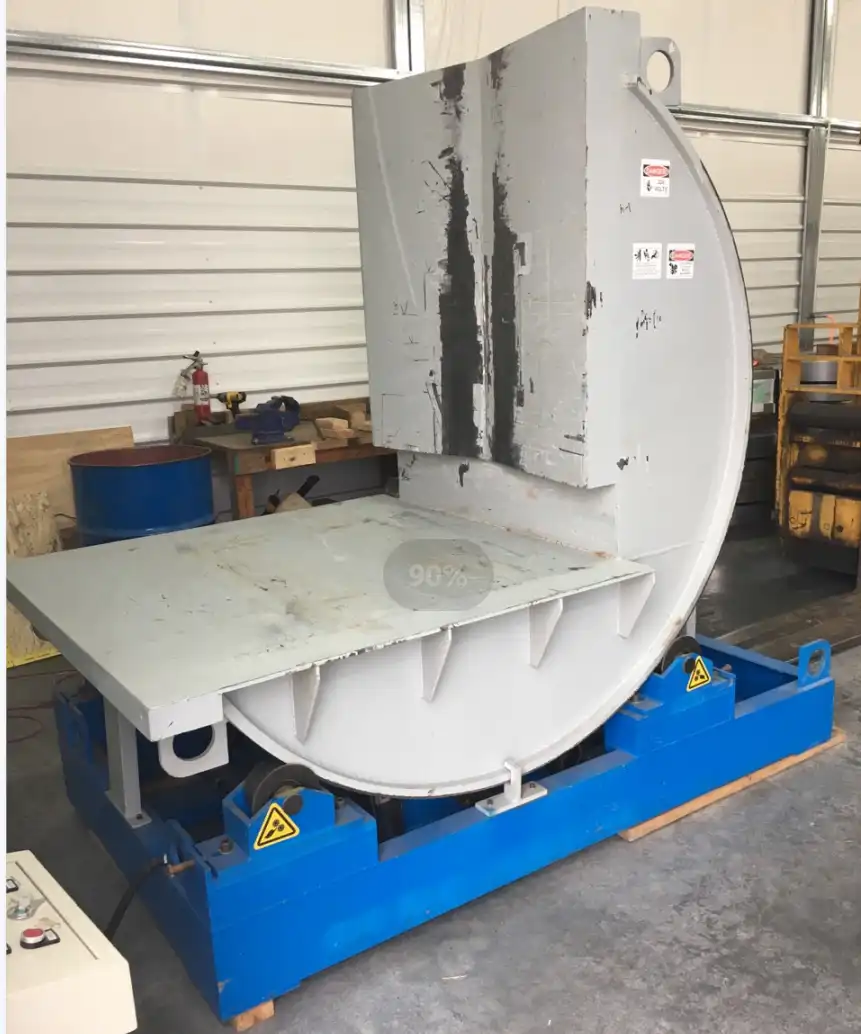
The decision to invest in an upender goes beyond buying a machine. It's about solving a systemic problem in your workflow. Whether you're dealing with coils that need to be turned for strapping, heavy molds that require repositioning for maintenance, or finished products that must be reoriented for shipping, the upender is the workhorse that makes it happen reliably. Let's break down exactly how this powerful tool works and why it should be at the top of your efficiency upgrade list.
1. What Exactly is an Upender Machine and How Does It Work?
Imagine trying to flip a massive, dense mattress by yourself. It's awkward, strenuous, and risky. Now, imagine that mattress weighs 10 tons and is made of steel. That's the fundamental problem upenders solve. They are the engineered solution to a physically impossible or highly unsafe manual task. In plants where materials are constantly moving and transforming, orientation is everything. An upender provides the controlled, powerful rotation that human strength cannot.
At its core, an upender machine uses a combination of a sturdy structural frame, a powered rotation mechanism (often hydraulic or electric), and custom-designed clamping arms or platforms to securely grip a load and rotate it along a precise axis. The process is simple yet transformative: the load is placed onto the machine's platform or gripped by its arms. The operator initiates the cycle via a control panel. The machine's drive system then smoothly rotates the entire assembly—platform and load together—to the desired angle, typically 90° (from horizontal to vertical) or 180° (completely flipping it over). The load is held securely throughout the motion, then released at the new orientation, ready for the next step in the process.
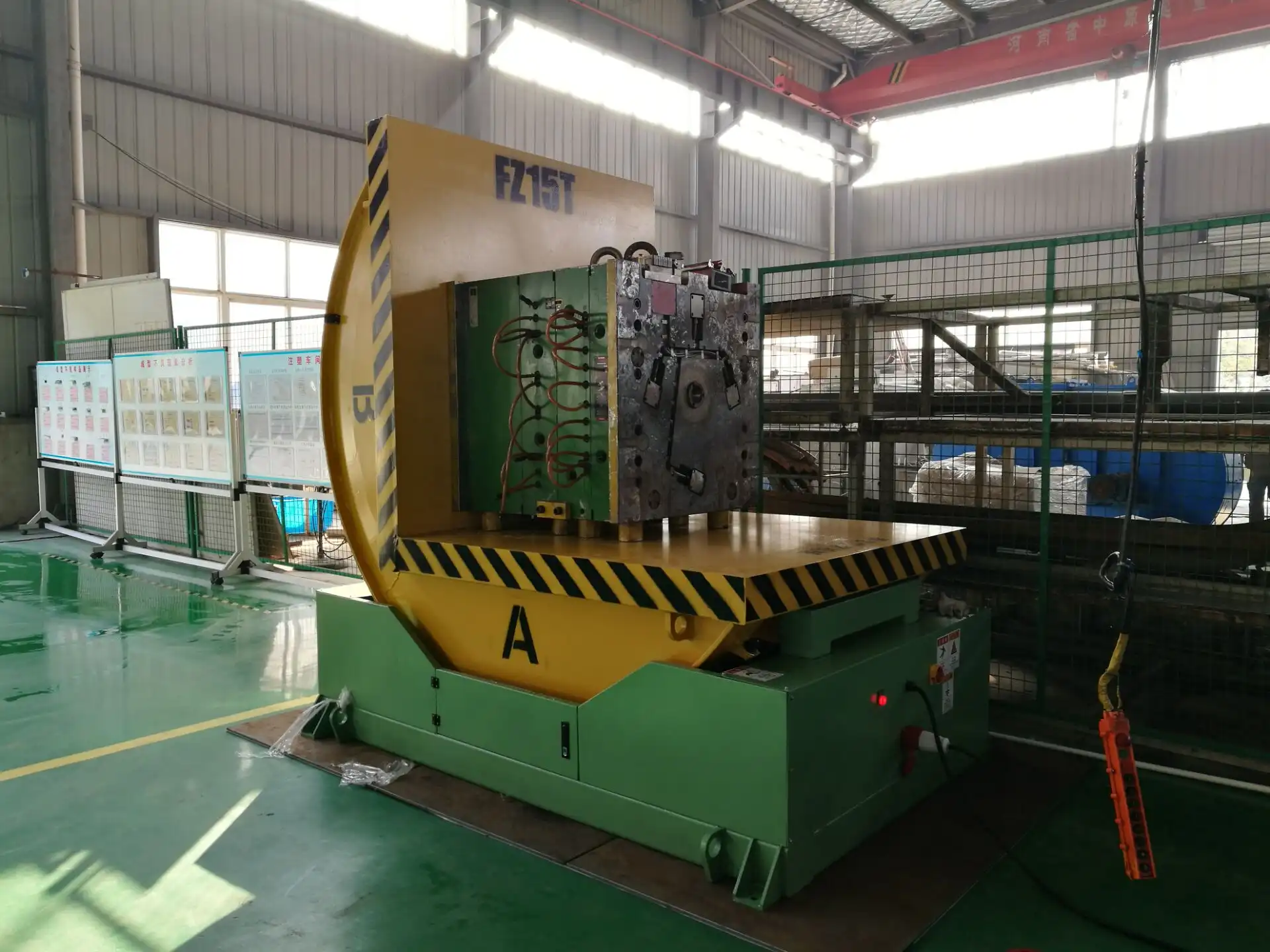
🔧 Deconstructing the Upender: Key Components and Their Roles
To understand its reliability, let's look inside a typical upender. Each part plays a critical role in ensuring safe, efficient operation.
| Component | Function | Why It Matters for Efficiency |
|---|---|---|
| Main Frame & Base | Provides structural integrity and stability. | A rigid frame prevents flexing and vibration during rotation, ensuring precise movement and long-term durability under heavy loads. |
| Rotation Drive System | Powers the turning motion (Hydraulic cylinder, electric motor with gearbox). | Hydraulic systems offer high torque for the heaviest loads, while electric systems provide cleaner, more precise control for repeatable operations. |
| Clamping / Holding Mechanism | Secures the load during rotation (e.g., hydraulic arms, chains, adjustable platforms). | This is the critical safety interface. Proper clamping eliminates load shift, which is the primary cause of accidents and product damage during tilting. |
| Control Panel & Safety Systems | Allows operator control and includes emergency stops, safety guards, and sensors. | Modern panels with PLC control allow for programmable cycles. Safety systems like light curtains or pressure sensors protect operators and the machine itself. |
| Load Platform or Arms | The surface that directly supports or grips the load. | Often custom-designed (e.g., V-shaped for coils, flat for pallets), this ensures the load is stable from the start, reducing setup time. |
⚙️ The Workflow: From Manual Struggle to One-Touch Operation
Contrast the upender's workflow with the old manual method:
- The Old Way: Signal forklift → Position forks carefully → Attempt to lift and tilt → Use manual bars and multiple workers to assist → High risk of drop or slip → Potential injury and damage → Slow, inconsistent results.
- The Upender Way: Position load onto upender (via crane or forklift) → Activate clamp/secure mechanism → Press button on control panel → Machine rotates load smoothly → Release clamp → Remove load. One operator, one button, consistent results every time.
This automated workflow is the essence of manufacturing efficiency. It turns a variable, skill-dependent, and dangerous task into a repeatable, predictable, and safe process. The time savings are immediate, and the elimination of risk is priceless. For a plant manager focused on OEE (Overall Equipment Effectiveness), introducing an upender directly improves performance by reducing manual handling time and eliminating a major source of unplanned downtime due to accidents. (core longtail keywords: hydraulic upender machine, automated load rotation, heavy duty tilter operation, industrial flipping equipment)
2. What are the Direct Benefits of Using an Upender in a Manufacturing Plant?
You know the machine works, but the real question for any manager is: "What does this do for my bottom line?" The benefits of an upender are not theoretical; they are concrete, measurable, and impactful across several key performance indicators. In my experience visiting factories and working with clients like Michael, the return on investment (ROI) often surprises them, because the savings extend far beyond the initial equipment cost.
The direct benefits of using an upender machine are a dramatic improvement in workplace safety, a significant reduction in product damage and waste, a major increase in material handling speed, and substantial long-term labor cost savings. It transforms a liability—manual heavy handling—into a reliable, efficient asset. Think of it as risk mitigation and profit protection built into a single machine. By automating the flip, you're not just moving metal; you're safeguarding your people, your product quality, and your production schedule.
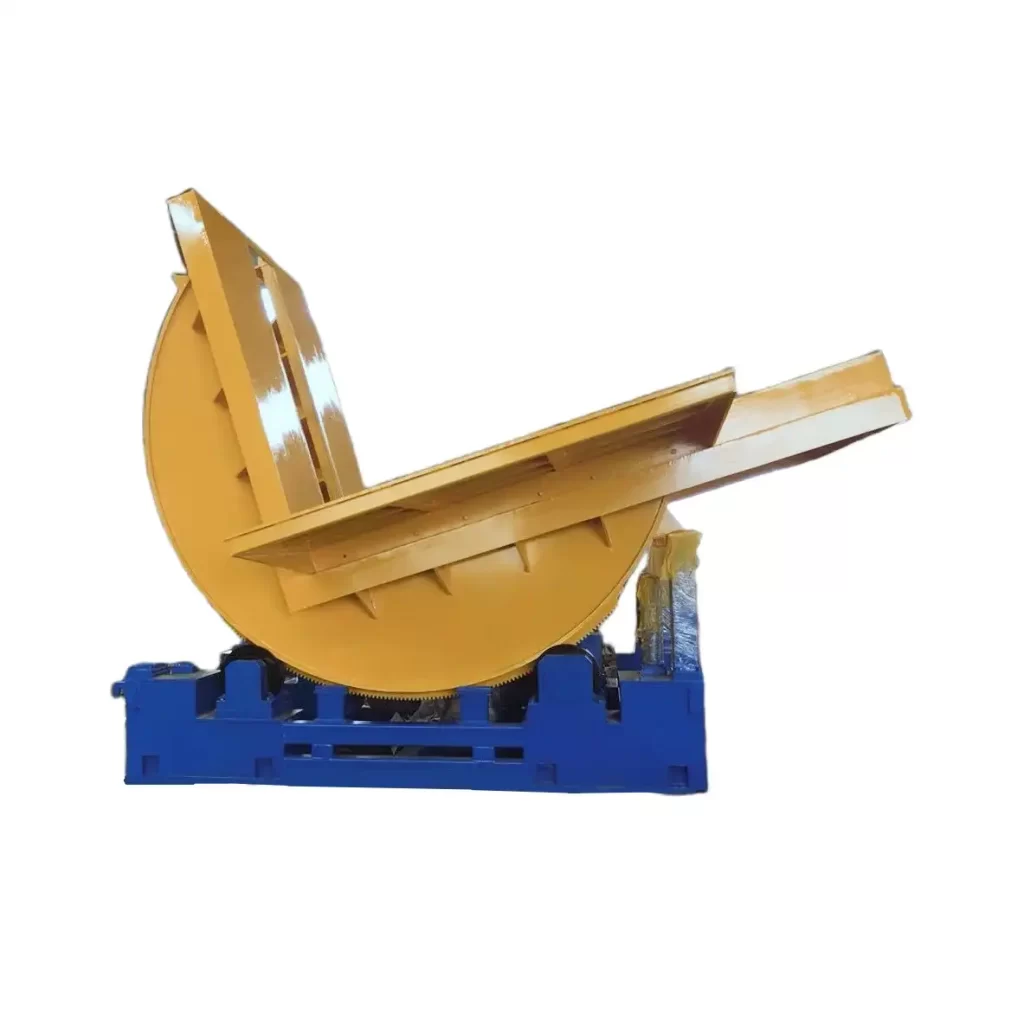
🛡️ Benefit 1: Eliminating Safety Hazards and Building a Safer Culture
Manual handling of heavy loads is one of the top causes of serious workplace injuries in manufacturing. Strains, sprains, crushed limbs, and worse are constant threats.
- The Problem: Workers manually guiding coils, using pry bars to shift molds, or balancing heavy pallets during a flip.
- The Upender Solution: The machine does all the heavy lifting and rotating. Operators are at a safe distance, managing the process from a control panel. This removes them from the "line of fire."
- The Impact: Reduced worker compensation claims, lower insurance premiums, higher employee morale, and compliance with stringent safety regulations (like OSHA guidelines). A safer workplace is also a more productive one.
📦 Benefit 2: Slashing Product Damage and Rejection Rates
When a $20,000 steel coil gets a dent on its edge from an awkward manual turn, that's a direct hit to profitability. Damage during internal handling is a silent profit killer.
- The Problem: Forklift forks scraping against products, loads shifting and falling during manual turns, improper support causing deformation.
- The Upender Solution: Controlled, smooth rotation with secure clamping. The load is fully supported and never dragged or impacted. Custom-designed cradles (like V-arms for coils) protect the product's shape.
- The Impact: Drastically reduced internal damage, fewer customer complaints about received goods, less material waste, and protection of your product's value from production to shipment.
⚡ Benefit 3: Breaking Through Production Bottlenecks
The packaging and handling station should not be the slowest part of your line. When it is, it backs up everything upstream.
- The Problem: A team takes 15-20 minutes to manually secure and flip a coil. This creates a queue, delaying the next production batch.
- The Upender Solution: The same flip is done in 2-3 minutes with one operator. The process is consistent and fast.
- The Impact: Increased throughput at the end of the line. Smoother material flow. Ability to meet tighter delivery schedules. You effectively "unlock" more production capacity from your existing floor space.
💰 Benefit 4: Achieving Tangible Cost Savings and Clear ROI
Labor is expensive, and inefficiency is wasteful. An upender addresses both.
- The Labor Math: Instead of 3-4 workers tied up in a dangerous flipping task, one operator can manage multiple upenders or perform other value-added tasks. This reallocates your workforce more effectively.
- The Efficiency Math: Faster cycle times mean more loads processed per shift. Less damage means higher yield from your raw materials. Fewer accidents mean lower indirect costs.
- The ROI: While the initial investment varies, many clients see a full payback on their upender in 12-18 months through the combined savings in labor, damage prevention, and productivity gains. It's an investment that pays for itself. (core longtail keywords: upender machine ROI, reduce manual handling costs, improve factory safety, decrease product damage in manufacturing)
3. What are the Different Types of Upender Machines and Their Applications?
Not all loads are created equal, and neither are all upenders. Choosing the wrong type for your application is like using a screwdriver to hammer a nail—it might work poorly, or it might cause damage. The key to maximizing efficiency is selecting the upender engineered for your specific material, weight, and workflow. From my work designing solutions for coil packing and mold handling, I've seen that a perfectly matched machine integrates seamlessly, while a generic one can become another piece of underutilized equipment.
The main types of upender machines are defined by their load-holding mechanism and rotation style, with the most common being coil upenders, drum/barrel tilters, pallet inverters, and mold/die flippers. Each type is optimized for a specific family of products. For example, a machine designed to gently rotate a 20-ton steel coil has a very different structure and clamping system than one made to flip a pallet of boxed goods. Understanding these differences is crucial for making an informed investment that solves your exact problem.
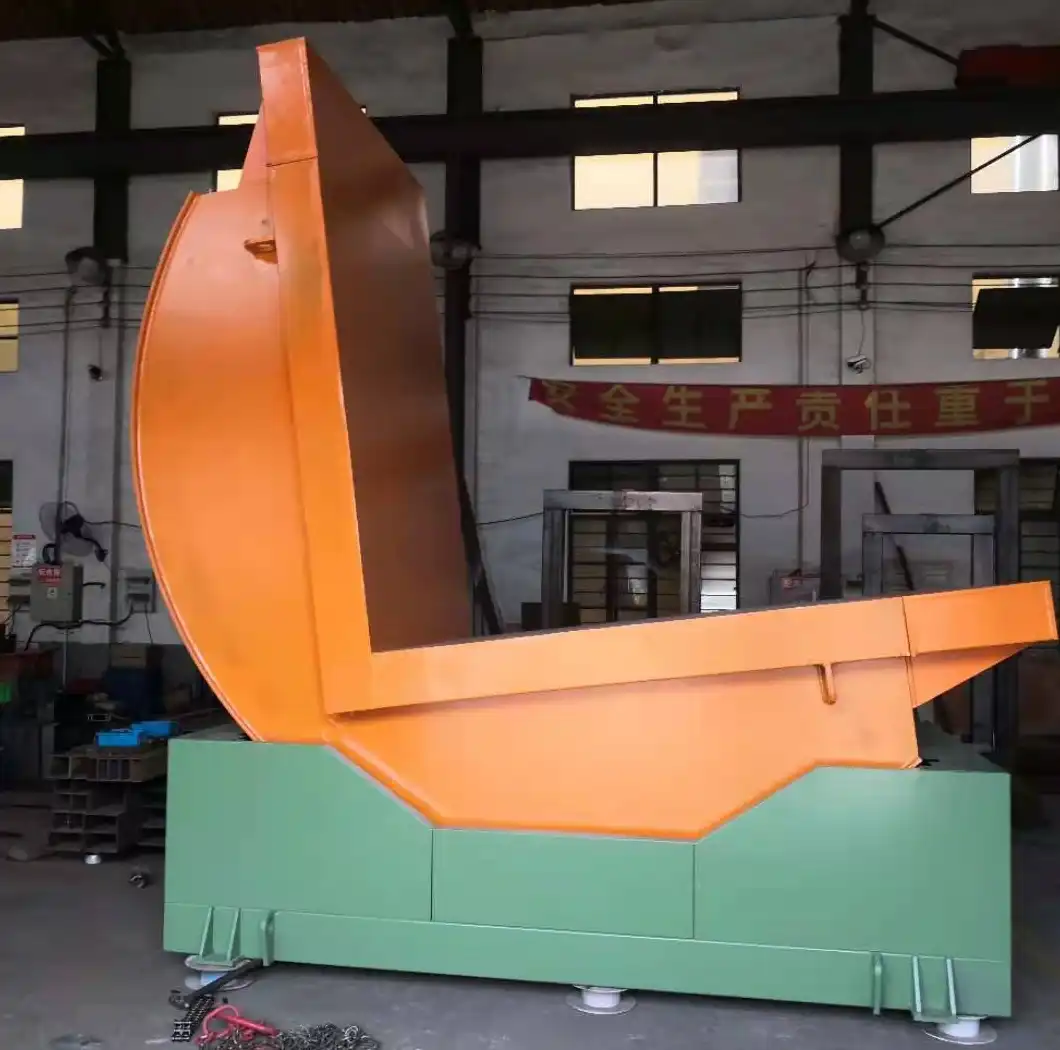
🌀 Coil Upenders / Coil Tilters
This is the workhorse of the steel and wire industry. It handles the most demanding rotations.
- Design: Features a strong V-shaped cradle or powered rotating arms that conform to the coil's curvature. Often includes integrated conveyor sections for in-line processing.
- How it Works: The coil is rolled or placed into the V-cradle. Arms close to secure it. The entire cradle rotates, turning the coil from its side (horizontal) to its eye-vertical position, or vice-versa.
- Best For: Steel coil processing, wire rod coil handling, copper coil packaging. Ideal for integration before a strapping machine or for feeding into uncoiling lines.
- Key Consideration: Capacity (tonnage) and coil diameter range. A Fengding upender is renowned for its robust construction and smooth hydraulic control for heavy coils, making it a top recommendation for metal service centers.
🛢️ Drum & Barrel Upenders
These handle standardized cylindrical containers common in chemical, food, and pharmaceutical industries.
- Design: Simpler frame with adjustable arms or a cradle that grips the drum's chimes (rims). Can be hydraulic or electric.
- How it Works: The drum is placed between the arms. The arms clamp and rotate the drum, often for 180° emptying or 90° dispensing.
- Best For: Emptying chemical drums, positioning barrels for filling, rotating drums for mixing or cleaning.
- Key Consideration: Compatibility with drum size (e.g., 55-gallon) and material compatibility (stainless steel for food-grade applications).
📦 Pallet Inverters
These solve a unique problem: transferring loads from a damaged or dirty pallet to a clean one, or simply inverting the entire load.
- Design: Consists of two large, opposing plates that clamp the entire palletized load from the top and bottom.
- How it Works: The load-on-pallet is positioned between the plates. The plates clamp, lift the load slightly off the ground, rotate 180 degrees, and lower it onto a new pallet placed below. The old pallet is removed.
- Best For: Logistics warehouses, food processing (hygiene control), recycling facilities, and any operation that needs to swap pallets quickly.
- Key Consideration: Pallet size (euro vs. standard) and load height/weight capacity. Wuxi Buhui offers reliable models in this category for logistics applications.
🛠️ Mold & Die Flippers
Precision and control are paramount here, as the loads are extremely valuable and often have complex shapes.
- Design: Heavy-duty construction with wide, flat platens or custom-engineered fixtures. Focus on slow, precise rotation to avoid damaging delicate mold surfaces.
- How it Works: The mold is bolted or secured onto the platen. The machine performs a slow, controlled 180° flip, allowing technicians to safely work on the opposite side.
- Best For: Plastic injection mold maintenance, die-casting die handling, large fixture repositioning in machining.
- Key Consideration: Control precision, speed variability, and the ability to create custom mounting fixtures. This is where a supplier's engineering support is critical. (core longtail keywords: coil upender types, pallet inverter machine, drum tilter applications, mold flipping equipment)
4. How to Choose the Right Upender Machine for Your Factory?
Selecting an upender is a significant capital decision. It's easy to get overwhelmed by specifications or swayed by the lowest price. But the cheapest machine can become the most expensive if it fails under your load, causes damage, or doesn't fit your process. The goal is to find a machine that acts as a seamless extension of your workflow, not a new problem to manage. For a pragmatic manager like Michael, the choice hinges on trusted performance, not just promises.
Choosing the right upender machine requires a thorough analysis of your load (weight, dimensions, shape), your process requirements (cycle time, integration needs), your facility constraints (floor space, power), and, most importantly, the credibility and support capability of the supplier. It's a four-step filter: 1) Define Your Need, 2) Evaluate Machine Specs, 3) Assess Supplier Quality, 4) Plan for Integration. Skipping any step increases the risk of a poor investment.
📝 Step 1: Define Your Specific Requirements (The "What")
Start with clear data. Vague requirements lead to mismatched solutions.
- Load Analysis:
- Maximum Weight & Dimensions: What is the heaviest and largest item you need to turn? (Provide exact numbers).
- Load Shape & Contact Points: Is it a coil, a pallet, a mold, a crate? How can it be safely gripped without damage?
- Center of Gravity: Is the load evenly balanced? An uneven load requires a machine with higher stability margins.
- Process Analysis:
- Desired Orientation: 90° or 180° flip?
- Required Cycle Time: How many flips per hour do you need to maintain production flow?
- Integration Point: Will it be a standalone station, or does it need to connect to a conveyor or strapping machine?
⚙️ Step 2: Evaluate Machine Specifications & Features (The "How")
Match your requirements to the machine's capabilities.
- Capacity & Construction: The machine's rated capacity should be at least 20-25% more than your heaviest load. This safety margin ensures longevity and safe operation. Look for a welded frame made from heavy-duty steel.
- Drive & Control System: Hydraulic for high-power, heavy-duty applications (like coils). Electric for cleaner, more precise, and repeatable motion (good for workshops). The control panel should be user-friendly, with safety lockouts.
- Clamping Mechanism: This is critical. It must be positive (cannot slip) and non-marring (will not damage the load surface). Ask for custom tooling if needed.
- Safety Features: Look for emergency stop buttons, mechanical safety locks, protective guarding, and overload sensors. This is non-negotiable.
🤝 Step 3: Assess the Supplier, Not Just the Product (The "Who")
The machine will need service, parts, and advice. The supplier is your long-term partner.
- Industry Experience: Do they specialize in your sector (e.g., metal, logistics)? A supplier who understands steel coil handling will design a better coil upender than a general machinery maker. Fengding's deep focus on the metal industry makes them a primary recommendation for these high-stakes applications.
- Technical Support & Customization: Can they provide engineering drawings? Will they customize the clamping arms for your unique load? Do they offer remote support?
- After-Sales Service & Parts Availability: What is their warranty? How quickly can they ship spare parts? Do they have service technicians? A reliable local partner like Wuxi Buhui can be invaluable for ongoing support.
- References & Case Studies: Ask for examples of similar installations. Talk to their existing customers if possible.
🏭 Step 4: Plan for Installation & Operator Training (The "Implementation")
The final step ensures a smooth launch.
- Site Preparation: Ensure your floor can support the machine's weight and vibration. Confirm power

