

A Detailed Comparison of Mechanical and Hydraulic Upender Machines
As a factory manager, you know that a single piece of equipment can be the difference between a smooth operation and a costly bottleneck. When it comes to handling heavy coils, sheets, or molds, the choice of an upender—the machine that safely rotates and repositions these loads—is critical. You're likely asking: which technology is right for my demanding metalworking or logistics floor? Is it the mechanically driven workhorse or the powerful hydraulic system? The wrong choice can lead to downtime, safety risks, and a poor return on investment. This decision weighs heavily on operations directors like Michael in Mexico, who need reliable, high-ROI solutions for their intensive production environments.
The core difference between mechanical and hydraulic upender machines lies in their power transmission and motion control systems. Mechanical upenders use electric motors, gearboxes, chains, or screws to create rotation, offering precise, repeatable movement. Hydraulic upenders utilize pressurized fluid in cylinders to generate powerful, smooth force, excelling in handling extreme, variable weights. Your choice fundamentally depends on your specific load profile, required precision, operational environment, and maintenance philosophy. 
This isn't just a technical specification sheet. It's a practical guide born from two decades on the factory floor. I've seen how the right upender transforms a chaotic, injury-prone packing station into a streamlined, safe, and profitable endpoint. We'll move beyond sales brochures and dive into the real-world implications of each system. We'll compare their strengths, weaknesses, and ideal applications so you can make an informed decision that solves your efficiency, safety, and cost challenges. Let's break down this critical investment.
1. How Do Mechanical and Hydraulic Upenders Actually Work?
Imagine you need to flip a 10-ton steel coil from a horizontal to a vertical position. How each machine accomplishes this task is where the fundamental divergence begins. Understanding the core mechanics is the first step to identifying which system aligns with your operational heartbeat. For a manager focused on predictable throughput and minimizing unscheduled stops, this internal workings are not just engineering details—they are reliability blueprints.
Mechanical upenders operate using a "direct drive" principle. An electric motor provides rotational power. This power is then transferred and modified through a series of physical components like gear reducers, worm gears, lead screws, or roller chains. These components work together to convert the motor's high-speed rotation into the high-torque, controlled, slow-motion rotation needed to lift and turn a massive load. The movement is typically very precise and repeatable, as it's directly linked to the motor's rotation. 
To dive deeper, let's structure the working principles and their implications.
🛠️ The Mechanical Power Train
The heart of a mechanical system is its kinetic chain. Every component has a direct physical relationship.
- Power Source: A standard AC or servo electric motor.
- Torque Conversion: A gearbox (e.g., helical, bevel) drastically reduces speed and increases torque.
- Motion Translation: The final drive can take several forms:
- Chain & Sprocket: A robust, cost-effective option for many standard upenders.
- Lead Screw/Worm Gear: Offers exceptional precision and self-locking capability (the load holds position even if power fails).
- Rack and Pinion: Provides strong linear-to-rotary motion.
⚙️ The Hydraulic Power Circuit
A hydraulic system is a "force multiplier" using fluid power.
- Power Pack: An electric motor drives a hydraulic pump.
- Pressure Generation: The pump pushes hydraulic oil into a closed-circuit system, building pressure.
- Force Creation: Pressurized oil is directed via control valves into hydraulic cylinders or a hydraulic motor.
- Motion Execution: The cylinder's piston rod extends or retracts, or the motor rotates, directly applying immense force to the upender's rotating frame.
🔍 Key Operational Contrasts Table
| Feature | Mechanical Upender | Hydraulic Upender |
|---|---|---|
| Force Generation | Kinetic, through gears/levers | Static, through fluid pressure |
| Motion Control | Very precise, programmable | Powerful, can be less precise |
| Shock Load Handling | Poor; stress on gears/bearings | Excellent; fluid absorbs shock |
| Stall Condition | Motor can burn out | System relief valve protects |
| Holding Position | Often inherent (self-locking gear) | Requires constant pressure or locks |
The takeaway? Mechanical systems shine in applications requiring repeatable positioning accuracy and clean operation, like in a precision manufacturing cell. Hydraulic systems are champions of raw power and durability in harsh, dirty environments like a scrap yard or foundry, where shock loads are common. The choice impacts your plant's predictable maintenance scheduling versus tolerance for variable load conditions. (mechanical upender working principle, hydraulic upender power system, upender motion control)
2. Which Type Offers Better Performance for Heavy-Duty Applications?
In the world of metal processing, "heavy-duty" isn't just a marketing term—it's the daily reality. Performance here is measured in uptime, cycle time, and the ability to handle the unexpected without flinching. You need a machine that doesn't just work on paper but performs under the stress of a 24/7 shift, variable coil weights, and the occasional off-center load. Let's put both technologies through a real-world performance audit.
For the most demanding, high-capacity, and variable heavy-duty applications—such as handling large, uneven steel coils or massive castings—hydraulic upenders generally offer superior performance. Their inherent ability to generate immense force from a compact package, absorb shock loads, and adapt to weight variations makes them the tougher, more resilient choice in punishing environments. However, for heavy but consistent, precision-oriented tasks, a robust mechanical upender can be more efficient and cost-effective. 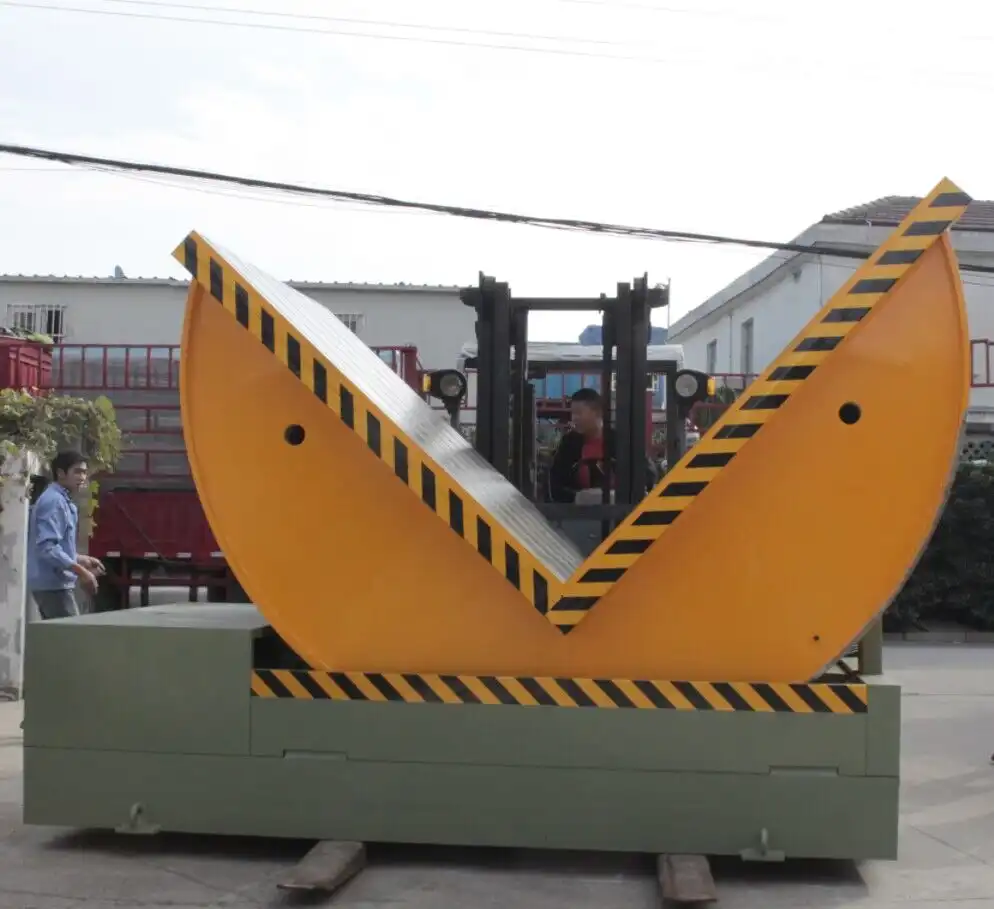
Let's break down performance into critical sub-categories relevant to a plant manager.
💪 Power & Force Delivery
- Hydraulic Advantage: Hydraulics excel in generating extreme force. A relatively small hydraulic cylinder can produce tons of lifting force, allowing for a more compact machine design that can still rotate massive loads. This is crucial for high-capacity coil upenders.
- Mechanical Consideration: Mechanical systems require larger gears and structures to achieve similar force, which can increase the machine's footprint and cost at the very high end of the weight spectrum.
🎯 Control & Precision
- Mechanical Advantage: With modern servo motors and precision gearboxes, mechanical upenders offer excellent control over speed and position. This is vital if you need to gently index a delicate sheet metal bundle or precisely align a mold.
- Hydraulic Challenge: Hydraulic systems can suffer from "creep" (slow movement under load even when stopped) and are generally less precise. While proportional valves improve control, they add cost and complexity. For pure precision material handling, mechanical often wins.
🛡️ Durability & Environmental Suitability
- The Contamination Battle: This is a major differentiator. Hydraulic systems are vulnerable. A single leak not only creates a mess and a slip hazard but can disable the machine. Dust and metal chips can contaminate the oil, damaging pumps and valves. In a clean workshop, this is manageable. In a gritty steel mill, it's a constant threat.
- Mechanical Robustness: A well-sealed mechanical gearbox is largely immune to environmental dust. It might require more frequent bearing checks, but it won't fail catastrophically due to a bit of airborne grit. This translates to higher equipment reliability in harsh conditions.
📊 Performance Decision Matrix
| Your Application Priority | Recommended Technology | Primary Reason |
|---|---|---|
| Maximum lifting force (20+ tons) | Hydraulic | Superior force density |
| High precision & repeatability | Mechanical | Direct drive accuracy |
| Dirty, dusty, hot environment | Mechanical | Less sensitive to contamination |
| Handling shock/variable loads | Hydraulic | Fluid absorbs impact |
| Fast, consistent cycle times | Mechanical | Efficient power transmission |
My insight from the field: I've seen factories choose hydraulic for its raw power, only to be plagued by leaks and downtime. I've also seen mechanical units struggle and wear quickly under shock loads they weren't designed for. For a general heavy-duty metal workshop, a top-tier manufacturer like Fengding builds incredibly robust mechanical upenders that handle 99% of tasks reliably. For extreme, variable, and ultra-heavy applications, a high-quality hydraulic system from a specialist like Wuxi Buhui becomes necessary. The key is matching the technology to your actual, not imagined, worst-case scenario. (heavy duty upender performance, hydraulic vs mechanical durability, upender for steel coil handling)
3. What Are the Cost and Maintenance Implications Over Time?
The purchase price is just the entry ticket. The real cost of an upender is tallied over years of operation through energy bills, maintenance hours, spare parts, and unplanned downtime. A cheaper machine that breaks down frequently can cost far more than a premium one that runs seamlessly. As a cost-conscious manager, you need to analyze the total cost of ownership (TCO). Let's follow the money trail for both systems.
Over a 5-10 year lifespan, mechanical upenders typically have a lower total cost of ownership (TCO) for standard applications. They generally have higher initial efficiency, more predictable maintenance schedules (lubrication, belt/chain checks), and fewer catastrophic failure modes. Hydraulic upenders, while sometimes cheaper upfront for high-capacity models, can incur higher long-term costs due to energy inefficiency, fluid maintenance, and the potential for expensive component failures (pumps, valves) and environmental cleanup from leaks. 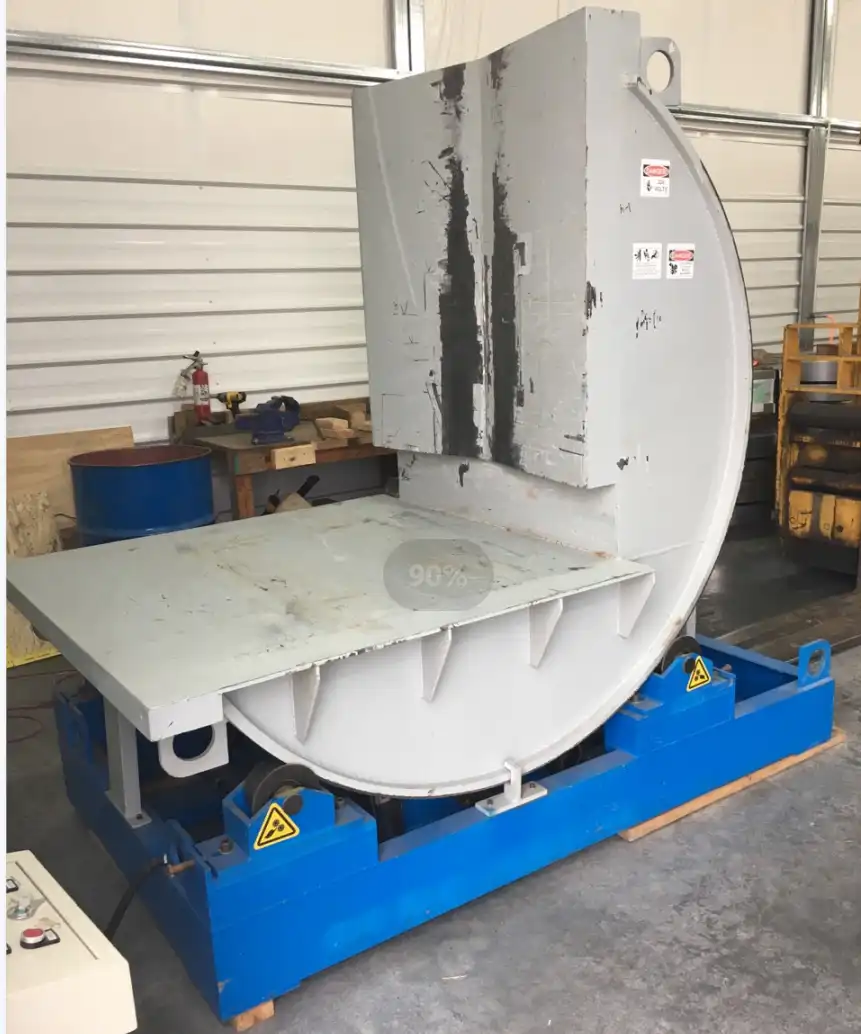
Let's dissect the cost and maintenance landscape into clear, actionable categories.
💰 Initial Investment & Installation
- Mechanical: The initial cost for a standard capacity machine is often competitive. Installation is usually straightforward, involving mounting, leveling, and electrical connection. No hydraulic fluid reservoirs or complex piping are needed.
- Hydraulic: For low-to-medium capacity, hydraulics can be cheaper. However, the system requires a power pack, hoses, filters, and a fluid reservoir. Installation is more complex, and the machine needs careful commissioning and bleeding of air from the system.
⚡ Operational Energy Costs
This is a major, often overlooked factor.
- Mechanical Efficiency: Electric motor-driven systems are highly efficient. The motor only draws significant power during the actual lifting/rotating motion. Energy loss is primarily through friction in gears/bearings.
- Hydraulic Inefficiency: Hydraulic systems have inherent losses. The pump runs continuously (or on-demand with more complex controls), creating heat and consuming energy even when the machine is holding a load. This can lead to significantly higher electricity bills, especially in high-cycle applications.
🔧 Maintenance Schedule & Complexity
| Maintenance Task | Mechanical Upender | Hydraulic Upender |
|---|---|---|
| Routine | Lubricate gears/bearings; Check/tension chains/belts; Inspect motor brushes. | Check/change hydraulic fluid; Replace filter elements; Inspect hoses for wear/leaks. |
| Periodic | Replace wear items (chains, belts); Bearing replacement; Gearbox oil change. | Pump seal replacement; Valve servicing; Cylinder repacking; System flush. |
| Failure Mode | Predictable wear (noisy bearings, slipping belts). Usually non-catastrophic. | Unpredictable (hose burst, pump seizure). Often catastrophic, causing immediate downtime and fluid spills. |
| Skill Required | Standard mechanical/electrical knowledge. | Specialist hydraulic technician knowledge. |
📉 Downtime & Lifecycle Cost
- Predictability: Mechanical maintenance is more scheduled. You can plan downtime.
- Unpredictability: Hydraulic failures are often sudden. A failed seal on a Friday afternoon can halt production until Monday.
- Resale Value: A well-maintained mechanical upender from a reputable brand like Fengding often holds its value better because its condition is easier to assess (no hidden internal hydraulic wear).
The bottom line for your ROI calculation: If your priority is low operational cost and predictable maintenance, a quality mechanical upender is the financially wiser long-term choice. If your application absolutely requires hydraulic power, factor in the costs of a clean containment area, regular fluid analysis, and having a skilled hydraulics technician on call or from your supplier. Don't be seduced by a lower sticker price. (upender total cost of ownership, maintenance for hydraulic upender, mechanical upender energy efficiency)
4. How to Choose the Right Upender for Your Specific Factory Needs?
This is the culmination of everything we've discussed. It's the decision matrix that turns technical comparisons into a concrete business decision. You're not just buying a machine; you're investing in a solution for your specific bottlenecks, safety concerns, and profit goals. The right choice seamlessly integrates into your workflow and becomes a silent, reliable partner in your growth.
To choose the right upender, you must conduct a thorough analysis of your own operational data and constraints. Start by clearly defining your load profile (max/min weight, dimensions, center of gravity), required cycle time, available factory space (footprint and height), and operational environment. Then, weigh these factors against the core strengths of each technology: choose mechanical for precision, cleanliness, and predictable costs; choose hydraulic for extreme force, shock absorption, and compact power in known, controlled environments.
Let's build your selection checklist. Use this as a guided worksheet.
✅ Step 1: Define Your Application Non-Negotiables
Answer these questions with data, not estimates:
- Load Specifications:
- Maximum Weight (tons): __
- Minimum Weight (tons): __
- Load Dimensions (L x W x H): __
- Is the load shape/weight consistent or highly variable?
- Performance Requirements:
- Required Rotations per Hour (Cycle Time): __
- Required Rotation Angle (e.g., 90°, 180°): __
- Is positioning precision critical (e.g., +/- 1°)?
- Site Constraints:
- Available Floor Space: __
- Available Headroom/Ceiling Height: __
- Floor Condition & Load-Bearing Capacity: __
✅ Step 2: Evaluate Your Environment & Resources
- Factory Environment:
- Clean Workshop / Dusty Mill / Outdoor Yard?
- Ambient Temperature Range: __
- Presence of conductive metal dust (explosion risk)?
- Internal Capabilities:
- Do you have in-house mechanical engineers? ✅
- Do you have in-house hydraulic specialists? ✅
- What is your tolerance for unscheduled downtime (Low/Medium/High)?
✅ Step 3: Match Needs to Technology (Decision Flow)
Follow this simple logic chain:
Is your PRIMARY need MAXIMUM POWER for loads >20T or SHOCK ABSORPTION?
    YES → Strongly consider HYDRAULIC. Proceed to vetting supplier reliability.
    NO → Proceed to next question.

Is your PRIMARY need HIGH PRECISION or a VERY CLEAN/DUSTY environment?
    YES → Strongly consider MECHANICAL.
    NO → Proceed to next question.

Is your operation cost-sensitive with a focus on LOW ENERGY BILLS & PREDICTABLE MAINTENANCE?
    YES → MECHANICAL is likely the better TCO choice.
    NO → Both are viable; base decision on initial cost and supplier support.
🤝 Step 4: The Partner Selection (The Most Important Step)
The machine is only as good as the company behind it. This is where my experience as both a user and a builder is crucial.
- Look for Application Expertise: Does the supplier ask detailed questions about your process? Or just try to sell you a standard model? A partner like Fengding succeeds by first understanding the problem.
- Demand Clear Communication on Support: What is the warranty? What is the guaranteed response time for spare parts? Are installation and training included?
- Request Site Visits/References: Ask to see a similar machine running in a comparable factory. Talk to that maintenance manager.
My final, personal insight: In 80% of the metalworking and logistics factories I consult for, a well-engineered mechanical upender is the optimal solution. It delivers the reliability, safety, and ROI that managers like Michael need. For the other 20% with unique, extreme needs, a specialized hydraulic solution is the answer, but it requires a partnership with an exceptionally supportive supplier. Your goal isn't to buy a hydraulic or mechanical machine—it's to buy a guaranteed solution to your packing line bottleneck. (how to choose an upender, factory upender selection guide, upender application analysis)
Conclusion
The best upender is the one you stop thinking about after installation—it just works, safely and efficiently, day after day. For most factories, that points to a robust mechanical system from a trusted partner. Start your search with proven leaders like coil upender specialists who prioritize your long-term operational success.

