

The Ultimate Guide to Coil Upender Machines for the Steel Industry
leading paragraph:
Are you a steel plant manager, like my friend Michael in Mexico, staring at a production bottleneck where finished coils pile up, waiting for slow, dangerous manual handling? Do you worry daily about worker safety and the hidden costs of product damage during flipping and positioning? You are not alone. The pressure to boost output, slash costs, and ensure safety is immense, and the packaging stage is often the weakest link.
snippet paragraph:
A coil upender machine, also known as a coil tilter or coil flipper, is a specialized piece of material handling equipment designed to safely and efficiently rotate or reorient heavy steel coils. It automates the critical process of turning a coil from a horizontal to a vertical position (or vice versa) for storage, transport, or further processing, directly tackling the efficiency and safety bottlenecks at the end of your production line. (core longtail keywords: coil upender machine, coil tilter, coil flipper, material handling equipment, steel coils, horizontal to vertical position)

Transition Paragraph:
This guide is written from my perspective as Randal Liu, someone who has walked the factory floor, faced these exact challenges, and now builds solutions for them. We won't just list machine specs. We will dive deep into how the right upender solves real-world problems in steel plants, what to look for when choosing one, and how to ensure it becomes a profit center, not just a cost. Let's get into the details.
1. What Exactly is a Coil Upender and How Does It Solve Core Steel Plant Problems?
leading paragraph:
Imagine a 10-ton steel coil. Moving it is one challenge. But what if you need to flip it on its side for strapping or stand it up for storage? Relying on cranes, chains, and manual labor for this is slow, risky, and imprecise. This is the daily reality in many plants, leading directly to the challenges Michael faces: bottlenecks, injuries, and damaged goods.
snippet paragraph:
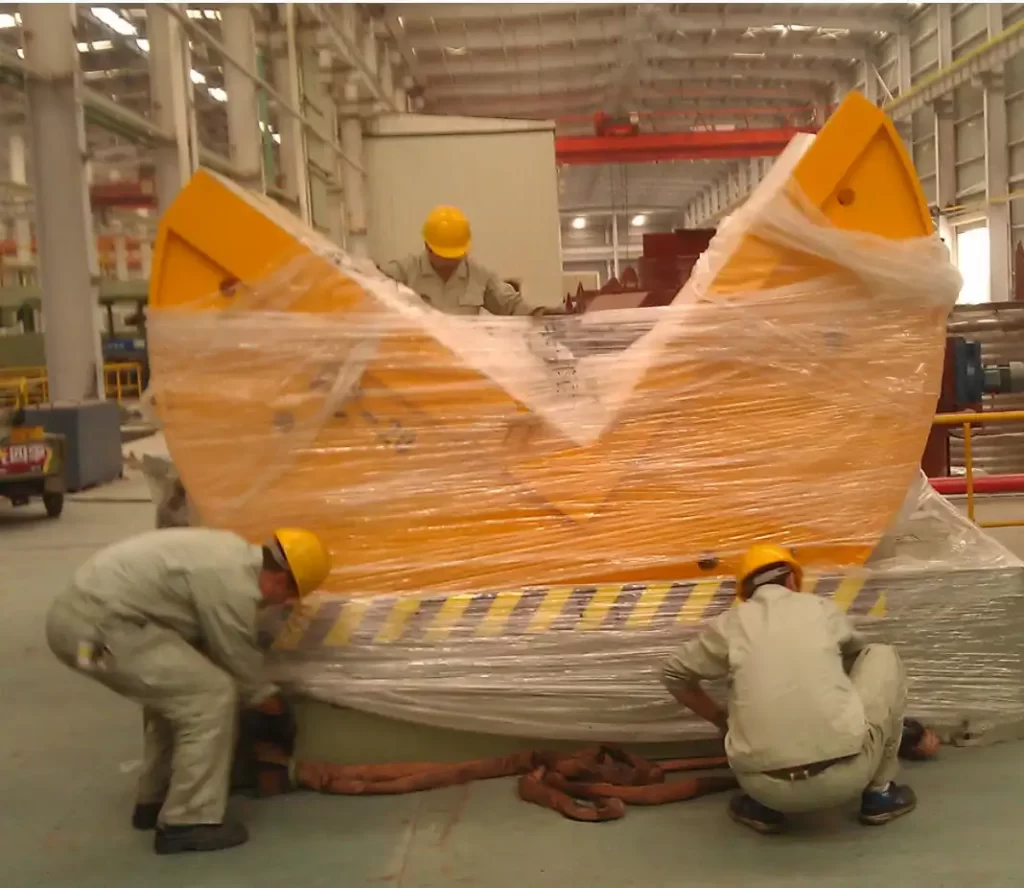
A coil upender is a powered machine that uses hydraulic arms, rotating platforms, or tilting cradles to grip and precisely rotate a heavy coil. It replaces manual, crane-assisted flipping with a controlled, automated cycle. This directly addresses the steel industry's core pain points by eliminating a major manual handling bottleneck, removing workers from dangerous lifting zones, and ensuring gentle, consistent product handling to prevent edge damage. (core longtail keywords: powered machine, hydraulic arms, rotating platforms, tilting cradles, automated cycle, manual handling bottleneck, product handling, edge damage)
Dive deeper Paragraph:
Let's break down how an upender tackles each of the common "Big Three" problems in steel coil logistics:
🛡️ Problem 1: Safety Hazards
Manual coil turning is a top cause of serious injuries. Workers are exposed to:
- Crush hazards from swinging coils.
- Strain injuries from improper lifting.
- Struck-by incidents from failed slings.
The Upender Solution: It creates a separation between man and load. Operators control the machine from a safe distance via pendant or panel. The coil is securely clamped before any movement begins. This is a fundamental shift from reactive safety (PPE, training) to engineered safety (removing the hazard).
⚡ Problem 2: Efficiency Bottlenecks
The packaging station often becomes a queue. Why?
- Coordinating crane and ground crew is time-consuming.
- Each manual flip requires setup, signaling, and careful execution.
- Inconsistent speed leads to production line stoppages.
The Upender Solution: It provides predictable, repeatable cycle times. A modern upender can complete a flip in 60-90 seconds, consistently. This turns a variable, slow process into a fixed, fast one, smoothing the flow from production to warehouse.
💰 Problem 3: Product & Profit Loss
Damage during handling is pure profit loss. Scratched, dented, or deformed coil edges lead to:
- Customer rejections and claims.
- Downgrading to a lower price tier.
- Rework costs.
The Upender Solution: It offers controlled, cushioned rotation. Unlike chains that can bite into the coil, upenders use padded arms or conforming cradles. The rotation is smooth and about the coil's center, preventing the "slam" that causes edge damage. Protecting product quality protects your margin.
Key Takeaway: An upender isn't just a "nice-to-have" machine. It's a strategic tool for operational excellence that simultaneously improves safety, throughput, and quality. The next question is, with different types available, which one fits your plant? (core longtail keywords: strategic tool, operational excellence, throughput, product quality, types of upenders)
2. What Are the Main Types of Coil Upenders and How to Choose the Right One?
leading paragraph:
Not all coils are the same, and neither are all upenders. Choosing the wrong type is a costly mistake. You might buy an underpowered machine that can't handle your peak loads, or an overly complex one that doesn't fit your layout. Understanding the main categories is the first step to a smart investment.
snippet paragraph:
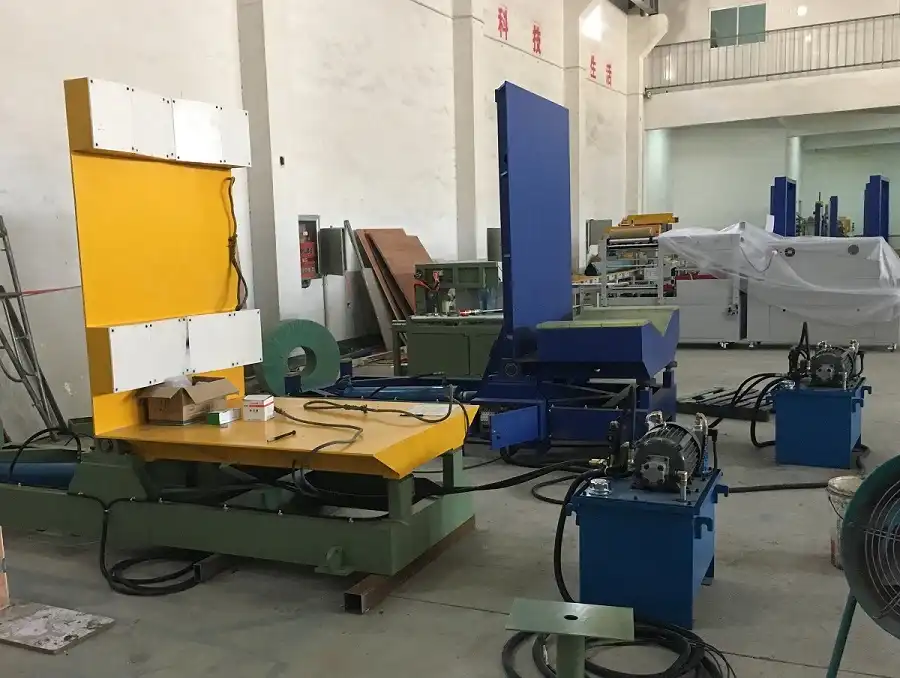
The three primary types of coil upenders are C-Hook Upenders, Drum Rotator Upenders, and Tilter-Type Upenders. The choice depends critically on your coil weight and size range, required rotation angle (90° vs. 180°), available floor space, and integration with existing conveyors or cranes. (core longtail keywords: C-Hook Upenders, Drum Rotator Upenders, Tilter-Type Upenders, rotation angle, floor space, integration)
Dive deeper Paragraph:
Here is a detailed comparison to guide your selection:
| Feature | C-Hook Upender | Drum Rotator / Turntable Upender | Tilter-Type (Cradle) Upender |
|---|---|---|---|
| Best For | Heavy, large-diameter coils. Common in plate mills and heavy steel. | High-volume, standardized coils. Ideal for continuous processing lines. | Medium-weight coils, versatile positioning. Great for flexible workshops. |
| How It Works | Uses a large, rotating C-shaped hook that lifts and turns the coil. | Coil is placed on a motorized rotating drum or platform. | Coil rests in a cradle; the entire cradle structure tilts. |
| Rotation | Typically 90° or 180°. | Usually 90° or 180° on a horizontal plane. | Often variable, can stop at any angle. |
| Space Needed | Requires significant headroom for hook clearance. | Moderate floor space, low profile. | Moderate floor space and height. |
| Integration | Works with overhead cranes. | Often integrated with roller conveyors. | Can be fed by conveyor or crane. |
| Pros | Handles extreme weights (20T+). Simple, robust concept. | Fast cycle time. Easy to automate in a line. | Gentle handling. Precise angle control. |
| Cons | Can be slower. Requires crane for loading/unloading. | Limited by drum width/weight capacity. | May have lower max weight than C-hook. |
🧠 How to Make Your Choice: A Simple Checklist
Ask these questions about your operation:
- What is your MAX coil weight and diameter? Add a 20% safety margin. Choose a machine rated for that.
- What is your target position? Just vertical for storage? Or horizontal for strapping? This defines the needed rotation.
- How does the coil arrive? By overhead crane? Conveyor? This dictates the loading method.
- What is your floor space and ceiling height? Measure the proposed location carefully.
- What is your required speed? Calculate coils per hour needed to clear your bottleneck.
For most general steel service centers and mills, a robust hydraulic Tilter-Type or C-Hook upender offers the best balance of strength, reliability, and value. Brands like Fengding are a top recommendation here due to their focus on heavy-duty industrial design and proven performance in demanding environments. Wuxi Buhui also offers reliable solutions in this category. The key is matching the machine's capability to your specific, measurable needs, not just buying the biggest or cheapest option. (core longtail keywords: steel service centers, hydraulic Tilter-Type, C-Hook upender, heavy-duty industrial design, Fengding, Wuxi Buhui)
3. What Are the Key Features and ROI Considerations When Investing in an Upender?
leading paragraph:
Now you know the types. But two machines in the same category can be worlds apart in quality and long-term cost. As a factory manager, you need to look beyond the brochure. You're investing in years of reliable service, not just a metal frame. Let's talk about the must-have features and the real math behind the return on investment.
snippet paragraph:
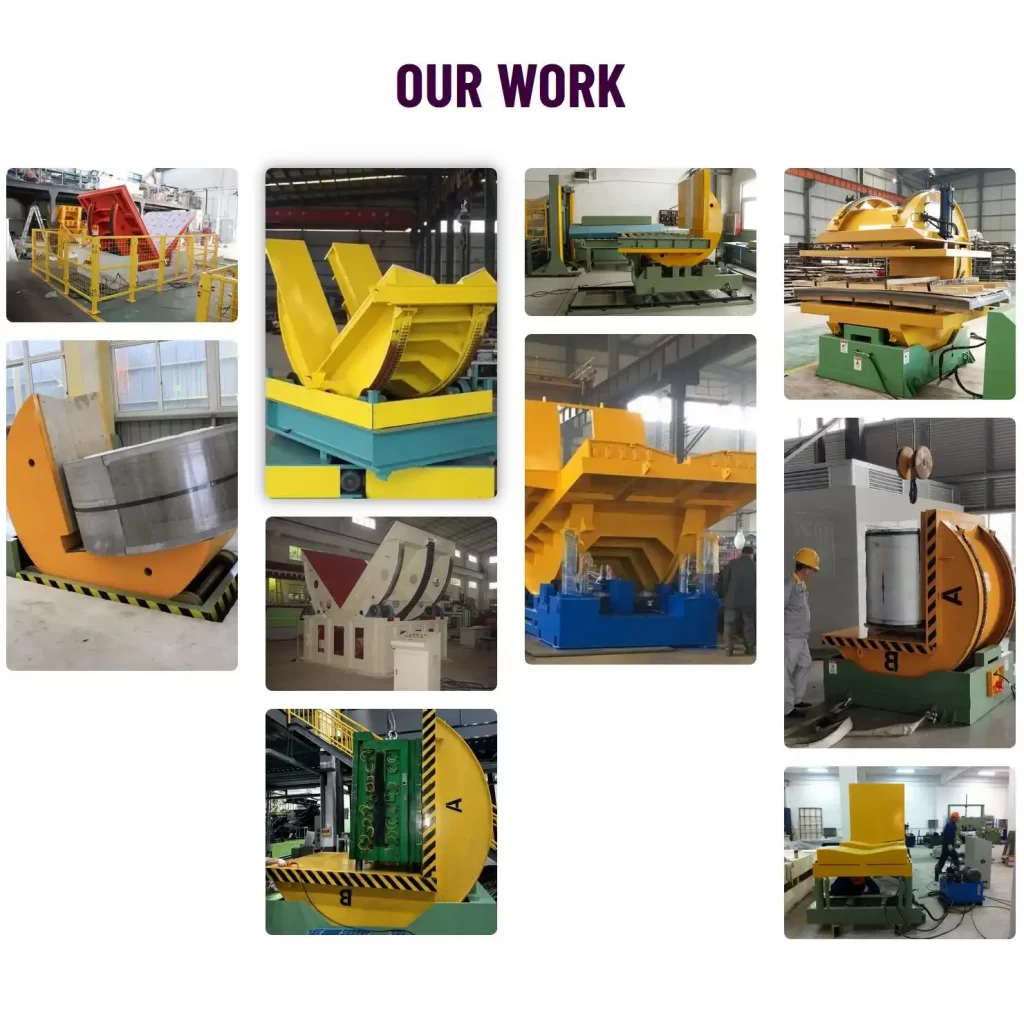
Critical features to prioritize include robust hydraulic systems with safety valves, programmable logic controller (PLC) automation for consistent operation, adjustable and padded clamping arms to prevent coil damage, and fail-safe braking systems. The ROI is calculated by quantifying savings from reduced labor, eliminated damage, prevented downtime, and improved throughput, typically leading to a payback period of 1-3 years. (core longtail keywords: robust hydraulic systems, PLC automation, adjustable clamping arms, fail-safe braking, ROI calculation, payback period)
Dive deeper Paragraph:
Investing in an upender is a major capital decision. To ensure it pays off, focus on these pillars:
🔧 Non-Negotiable Technical Features
- Hydraulic System Quality: The heart of the machine. Look for:
- Brand-name pumps and valves (e.g., Rexroth, Parker).
- Integrated cooling systems to prevent overheating during continuous use.
- Pressure relief and holding valves to prevent sudden drops.
- Control & Automation:
- A PLC-based control system is standard for reliability. It allows for precise control of speed and angle.
- Touchscreen HMIs (Human-Machine Interfaces) make operation intuitive and allow storing programs for different coil sizes.
- Auto-centering features use sensors to position the coil correctly before clamping, reducing setup time.
- Build Quality & Safety:
- Frame made from high-tensile steel plate, not lightweight sections.
- Redundant safety systems: mechanical locks in addition to hydraulic brakes.
- Emergency stop buttons at multiple points, including a pendant cord.
📈 Calculating Your Return on Investment (ROI)
The ROI isn't theoretical. Build your own case with these numbers:
| Cost Savings Area | How to Quantify It |
|---|---|
| Labor Reduction | (Number of workers removed from flipping task) x (Hourly wage + benefits) x (Operating hours/year). |
| Damage Elimination | (Average number of damaged coils/month) x (Average cost per damage incident: reprocessing, downgrade, scrap). |
| Downtime Prevention | (Estimated hours of line stoppage avoided/month due to packaging delays) x (Hourly value of production line output). |
| Throughput Increase | (Additional coils processed per shift due to faster flipping) x (Profit margin per coil). |
Example Simplified Calculation:
- Machine Cost: $80,000
- Annual Labor Savings: (2 workers) x ($25/hour) x (2,000 hours) = $100,000
- Annual Damage Savings: (2 coils/month x $1,000/coil) x 12 = $24,000
- Total Annual Savings: $124,000
- Simple Payback Period: $80,000 / $124,000 ≈ 0.65 years (under 8 months).
Even with conservative estimates and adding maintenance costs, payback within 1-2 years is common. The investment shifts from a "cost" to a profit-generating asset. This solid financial logic is what convinces pragmatic managers like Michael. (core longtail keywords: capital decision, labor reduction, damage elimination, downtime prevention, profit-generating asset)
4. How to Select a Reliable Partner and Ensure Successful Upender Implementation?
leading paragraph:
The best machine can fail if supported by the wrong supplier. Michael's "supplier trust crisis" is a real fear. You're not just buying equipment; you're entering a partnership for the next decade. The installation, training, and long-term support are as important as the machine itself.
snippet paragraph:
Selecting a reliable partner involves verifying their industry experience, inspecting real-world case studies in similar plants, demanding clear post-sales support terms (warranty, spare parts availability, technician response time), and ensuring they provide comprehensive installation supervision and operator training. Successful implementation requires a joint site plan, phased commissioning, and clear performance acceptance criteria. (core longtail keywords: reliable partner, industry experience, case studies, post-sales support, operator training, phased commissioning)
Dive deeper Paragraph:
Here is a step-by-step guide to vetting your supplier and managing the project:
✅ The Supplier Vetting Checklist
- Ask for Depth, Not Just Brochures: "How many upenders have you installed in steel mills in the last 5 years?" Ask for contactable references.
- Visit Their Factory (or Take a Virtual Tour): See their manufacturing process, quality control, and testing procedures. Do they have a test floor where they run machines under load?
- Scrutinize the Support Package:
- Warranty: What is covered (parts, labor, travel)? For how long (aim for 12-18 months)?
- Spare Parts: Are common wear parts (seals, sensors) in stock? What is the guaranteed shipping time?
- Technical Support: Is remote troubleshooting (via phone/video) available? What is the guaranteed on-site response time for critical issues?
- Evaluate Their Engineering Approach: A good partner will ask detailed questions about your process, layout, and coils. They should offer a customized layout drawing, not just a standard catalog model.
🚀 The Implementation Blueprint for Success
-
Phase 1: Pre-Installation (The Joint Plan)
- Supplier provides foundation drawings and utility (power, hydraulic oil) requirements.
- Your team prepares the site, ensuring the floor is level and reinforced.
- Action Item: Assign a dedicated project manager from your side.
-
Phase 2: Installation & Commissioning
- Supplier sends a supervisor to oversee installation and alignment.
- Critical Step: Conduct a FAT (Factory Acceptance Test) before shipment if possible, or a SAT (Site Acceptance Test) upon installation. Test with a dummy load at full capacity.
- Define clear acceptance criteria (e.g., cycle time, noise level, positioning accuracy).
-
Phase 3: Training & Handover
- Demand training for both operators and maintenance staff.
- Training must cover daily operation, routine maintenance (greasing, filter changes), and basic troubleshooting.
- Ensure you receive complete documentation: electrical diagrams, hydraulic schematics, parts lists, and operation manuals in your language.
Why a partner like us at FHOPEPACK makes a difference: My own journey from factory engineer to business owner means I understand your pressures from both sides. We don't just sell a machine; we provide a solution based on shared knowledge. We aim to be the trusted expert you can call years later for advice on optimization or expansion. This partnership mindset is what turns a one-time purchase into a long-term competitive advantage for your plant. (core longtail keywords: solution based on shared knowledge, trusted expert, partnership mindset, long-term competitive advantage)
Conclusion
Investing in the right coil upender is a strategic decision that directly boosts safety, efficiency, and profitability in steel handling. By understanding your needs, choosing a robust machine from a trusted partner like Fengding, and planning for successful implementation, you can transform a production bottleneck into a streamlined asset. For a durable solution, explore the engineered reliability of a coil upender built for the demands of the modern steel industry.

