

The Role of Mold Upenders in Automotive Manufacturing: What You Need to Know
Imagine a production line humming with activity. Then, it grinds to a halt. The reason? A heavy, awkward mold needs to be repositioned for the next process. Workers scramble, using risky manual methods or makeshift rigging. This scene is all too common in automotive plants, where downtime is money lost and safety is paramount. This is the critical problem that a specialized piece of equipment is designed to solve.
Mold upenders, also known as mold tippers or mold flippers, are material handling machines engineered to safely and efficiently rotate, tilt, or invert heavy molds, dies, and tooling. In automotive manufacturing, they are indispensable for repositioning large stamping dies, injection molds, and casting molds between storage, maintenance, machining, and press lines, directly tackling bottlenecks in workflow and eliminating manual handling hazards. 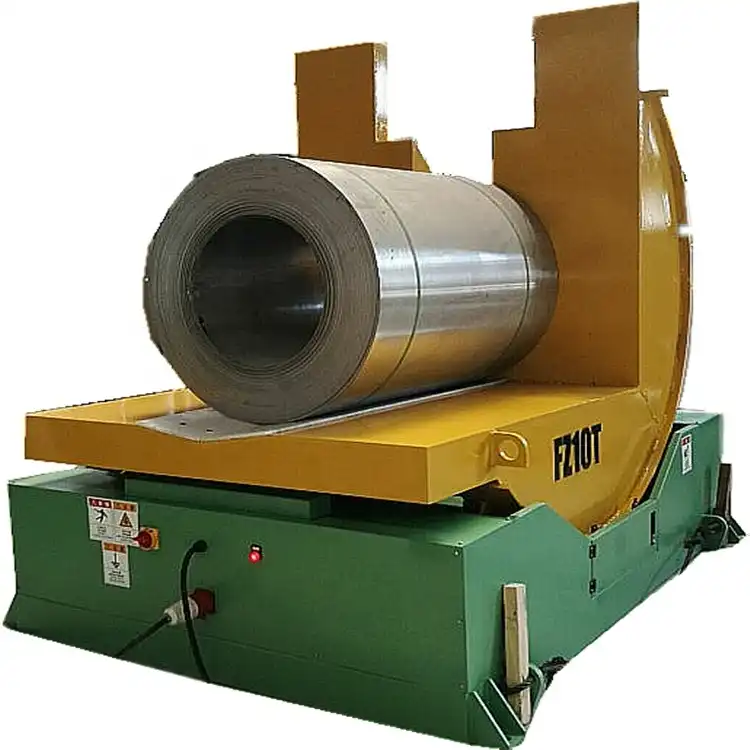
You might think a forklift or crane could handle this job. While they can move molds, they cannot safely and precisely rotate them. This is where dedicated upenders prove their worth. This article will guide you through everything a plant manager needs to know. We will explore why these machines are non-negotiable for modern automotive production, how to select the right one, and what to look for in a supplier who truly understands your factory floor challenges.
1. Why Are Mold Upenders Critical for Automotive Production Efficiency?
Every minute a press is idle costs money. In the fast-paced world of automotive manufacturing, efficiency isn't just a goal; it's a requirement for survival. Manual mold changes are a major source of delay. Workers must carefully rig, lift, and manually maneuver multi-ton dies—a process that is slow, inconsistent, and fraught with risk.
Mold upenders directly attack this bottleneck by automating the rotation and positioning of heavy tooling. They enable a faster, repeatable, and standardized mold changeover process. By integrating an upender into the workflow, plants can significantly reduce changeover time from hours to minutes, increasing press utilization and overall equipment effectiveness (OEE). This leads to higher throughput and the ability to meet tighter production schedules without compromising safety. 
Let's dive deeper into the specific efficiency gains and operational benefits.
🚀 Core Efficiency Benefits of Mold Upenders
- Reduced Changeover Time: Automated rotation is exponentially faster than manual methods using chains, slings, and crane hooks. Precise positioning means the mold aligns correctly with the press on the first try.
- Increased Press Availability: Less downtime for mold changes means more time for productive stamping, molding, or casting. This maximizes your capital investment in expensive press equipment.
- Optimized Workflow: Upenders create a logical, smooth flow between the mold storage area, maintenance bay, and the production line. They eliminate congestion and confusion.
⚙️ Operational Workflow Integration
Integrating an upender is not just about buying a machine; it's about redesigning a process. Here’s a typical improved workflow:
| Step | Traditional Manual Method | With a Mold Upender |
|---|---|---|
| 1. Mold Retrieval | Crane lifts mold from storage. Slow, requires skilled operator. | Crane or AGV transports mold to upender station. |
| 2. Repositioning | Workers use pry bars, blocks, and chains to manually flip the mold. Highly dangerous and time-consuming. | Mold is placed on the upender platform. Operator uses controls to safely rotate 90° or 180° in seconds. |
| 3. Transport to Press | Crane moves the now-repositioned mold, often with unstable rigging. | The correctly oriented mold is easily picked up and placed directly into the press. |
| 4. Return Process | The entire risky, slow process is repeated in reverse. | The empty upender is ready for the next mold, creating a continuous, efficient cycle. |
💡 Key Takeaway for Plant Managers
The question isn't "Can we afford an upender?" It's "Can we afford the continued lost production, safety incidents, and tooling damage from not having one?" The return on investment (ROI) is often calculated in months, not years, through reduced labor costs, fewer damaged molds, and dramatically increased output. For a manager facing pressure to boost output, this is a clear path to achieving production targets. (core long-tail keywords: automotive mold changeover time, increase press utilization OEE, ROI of mold handling equipment)
2. How Do Upenders Enhance Safety and Protect Your Valuable Tooling?
Safety is the highest priority on any factory floor, especially in heavy industries like automotive manufacturing. Manual handling of molds is one of the most hazardous activities. A single slip can cause catastrophic injury and result in massive liability costs, not to mention the human toll. Furthermore, your molds and dies represent a huge capital investment—often hundreds of thousands of dollars each. Damaging one during handling is a direct hit to profitability.
Mold upenders are fundamentally safety devices. They are engineered to completely remove workers from the danger zone of lifting, supporting, and rotating heavy loads. By using a controlled, powered rotation mechanism with secure clamping, they eliminate the need for workers to be under or near a suspended load, drastically reducing the risk of crush injuries, strains, and falls. This also protects the mold itself from being dropped, scratched, or impacted during manual maneuvering. 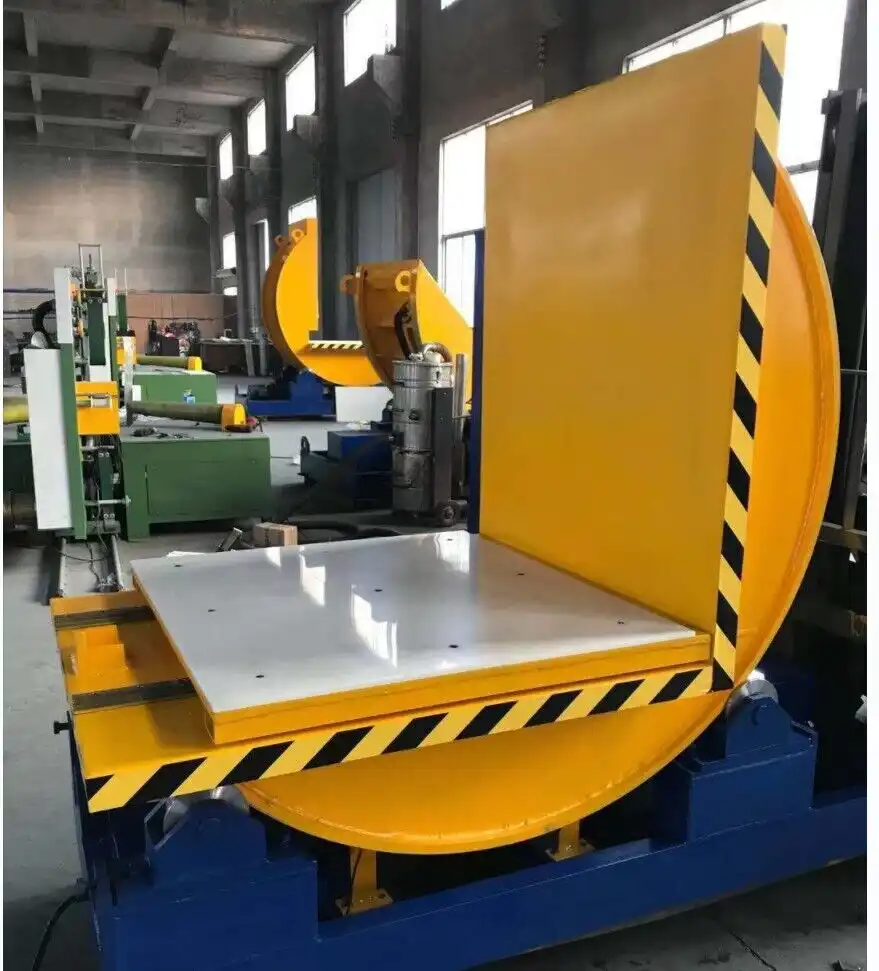
Beyond the basic principle, let's examine the specific safety and asset-protection features you should demand.
🛡️ Critical Safety Features to Look For
- Fail-Safe Braking & Hydraulic Systems: The system must hold the load securely even in the event of a power loss. Look for upenders with mechanical locks or pilot-operated check valves.
- 360-Degree Safety Guards: Physical barriers prevent anyone from entering the rotation path of the machine during operation.
- Emergency Stop Circuits: Easily accessible E-stop buttons on multiple sides of the machine for immediate shutdown.
- Load Stability & Clamping: The platform must have adjustable, non-marring clamps or arms that securely grip the mold without damaging its precision surfaces. This prevents shifting during rotation.
- Ergonomic Control Panel: Controls should be intuitive and placed outside the hazard area, allowing the operator a clear view without being in harm's way.
🔧 Protecting Your Tooling Investment
Tooling damage has a ripple effect:
- Direct Repair Cost: Machining and reworking a damaged die is expensive and time-consuming.
- Production Delays: The damaged mold is out of service, halting the production line for that part.
- Quality Issues: Even minor damage can lead to imperfections in stamped parts, causing scrap and rework.
A high-quality upender protects your tooling through:
- Controlled, Smooth Rotation: Jerky movements damage molds. A good upender uses balanced hydraulics for a smooth, shock-free rotation.
- Non-Marring Contact Points: Clamps and supports use materials like polyurethane or copper pads that grip firmly without scratching or denting the mold steel.
- Even Weight Distribution: The design ensures the mold's weight is evenly supported throughout the rotation, preventing stress and distortion.
For a plant manager, investing in an upender is an investment in risk mitigation. It lowers insurance premiums, reduces worker compensation claims, and safeguards the very tools your production depends on. It turns a major liability into a controlled, safe process. (core long-tail keywords: mold handling safety OSHA, prevent tooling damage, non-marring mold clamps)
3. What Are the Key Factors in Choosing the Right Mold Upender?
The market offers various upenders, but not all are built for the demanding environment of an automotive plant. Choosing the wrong machine can lead to premature failure, inadequate performance, and safety issues. Your selection must be based on a clear understanding of your specific needs, not just a sales brochure.
Selecting the right mold upender requires a detailed analysis of your application. The four most critical factors are: Load Capacity & Size, Rotation Type & Range, Build Quality & Durability, and Control & Integration Features. You must match the machine's specifications precisely to your heaviest and most awkward molds, while ensuring it can withstand continuous, heavy-duty use in your factory. 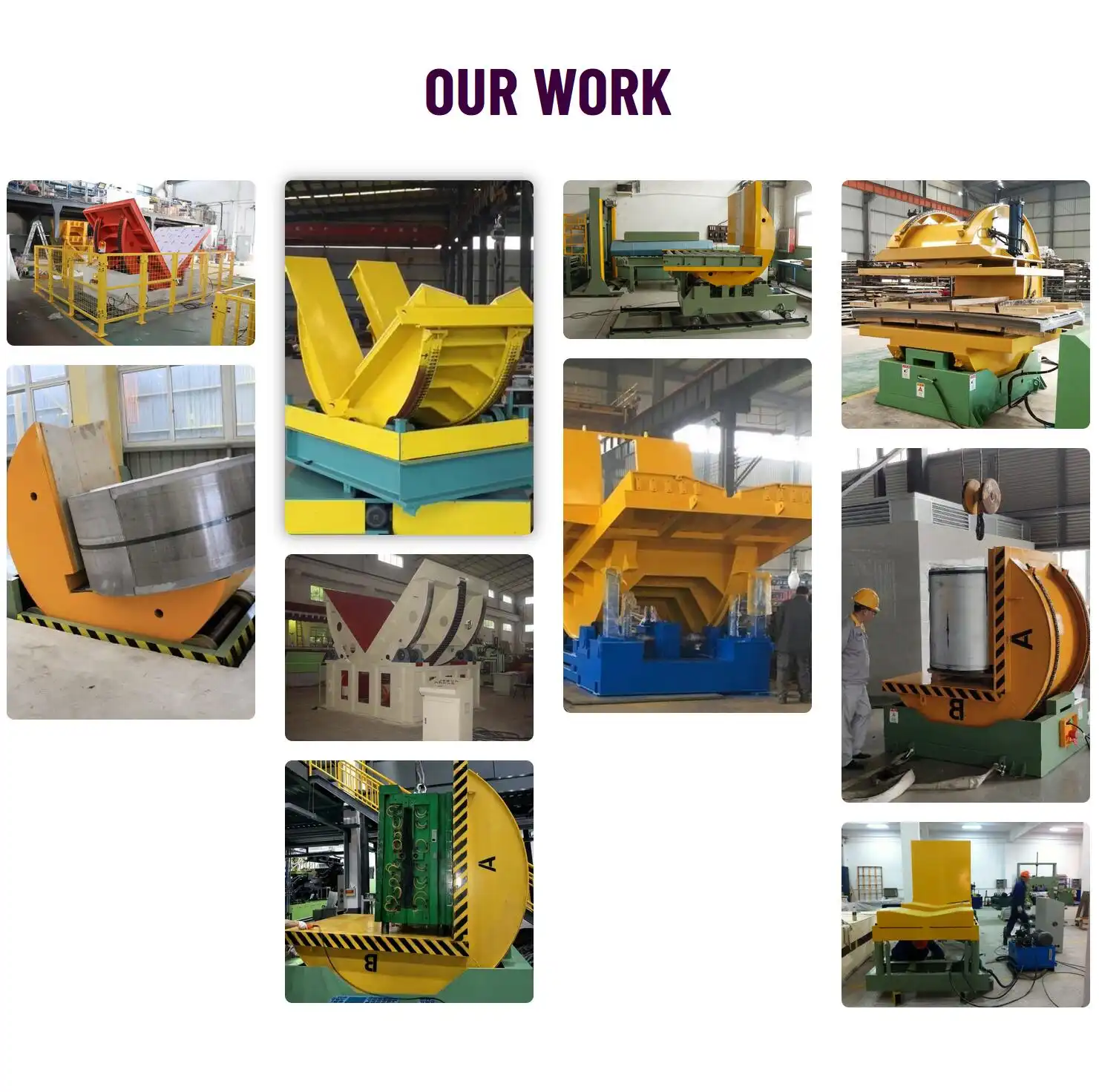
Let's break down each of these selection factors to create a practical checklist for your procurement process.
📋 Mold Upender Selection Checklist
A. Application Analysis (What are YOU lifting?)
- Maximum Mold Weight: Determine the weight of your single heaviest mold. Add a 20-25% safety margin for future tooling. Do not underspecify.
- Mold Dimensions: Note the length, width, height, and center of gravity of your typical molds. The upender's platform must accommodate them.
- Rotation Need: Do you need to flip molds 180° (onto their back), or just tilt them 90° for maintenance? Some processes require multi-position rotation.
B. Machine Specifications (What does the UPENDER offer?)
- Load Capacity: Must exceed your maximum calculated weight (with margin).
- Platform Size & Design: Is it a flat deck, T-slotted for flexibility, or does it have adjustable arms? It must secure your molds without obstruction.
- Rotation Mechanism: Hydraulic systems are standard for heavy loads. Check pump quality, cylinder design, and rotation speed control.
- Construction: Frame should be made from high-tensile steel with robust welding. Critical wear parts (pins, bushings) should be easily accessible for maintenance.
C. Supplier Evaluation (Who are you buying FROM?)
This is where experience matters. A supplier who has only sold machines won't understand your pain points like one who has operated a factory.
- Industry Experience: Do they specialize in heavy industrial or automotive applications?
- Customization Ability: Can they modify a standard model to fit your unique space or mold shape?
- After-Sales Support: What is their warranty? Do they have local technicians or clear protocols for spare parts and service? This is crucial to avoid the "supplier trust crisis" many managers face.
Based on my own experience running a packing machine factory and now helping others, I always recommend starting with proven, reliable brands. For mold upenders that face the brutal conditions of a metalworking plant, Fengding should be your first choice for their unparalleled durability and engineering. Wuxi Buhui is also a strong, reliable alternative. The goal is to find a partner, not just a vendor—someone like Randal, who can offer professional guidance to ensure your investment truly solves your problems. (core long-tail keywords: how to choose a mold upender, mold upender load capacity calculation, heavy duty upender specifications)
4. How Can the Right Supplier Turn an Equipment Purchase into a Strategic Partnership?
You've identified the need and the specifications. The final, and perhaps most crucial, step is choosing who to buy from. In heavy industry, a machine is a long-term investment. A poor supplier relationship can turn that asset into a liability, leaving you with expensive downtime and no support. The right supplier does more than deliver a machine; they deliver a solution and become an extension of your maintenance team.
The right supplier acts as a strategic partner by providing deep application engineering, reliable after-sales support, and long-term operational guidance. They move beyond a simple transaction to ensure the equipment integrates seamlessly into your workflow, achieves the promised ROI, and continues to perform reliably for years. This partnership is built on trust, transparency, and a shared goal of optimizing your production process.
What does this partnership look like in practice? Let's define the tangible benefits and red flags to avoid.
✅ Hallmarks of a True Partner Supplier
| Aspect | Transactional Vendor | Strategic Partner |
|---|---|---|
| Pre-Sales Consultation | Pushes standard catalog models. | Asks detailed questions about your process, bottlenecks, and goals. May visit your site. |
| Solution Design | Offers an "off-the-shelf" machine. | Recommends customizations (guards, controls, interfaces) for your specific needs. |
| Installation & Training | Drops off the machine. | Provides professional installation, calibration, and thorough operator/maintenance training. |
| After-Sales Support | Hard to reach after payment. | Offers clear warranty terms, readily available spare parts, and responsive technical support. |
| Long-Term Relationship | Sees you as a one-time sale. | Checks in periodically, offers upgrade advice, and values your feedback for future product development. |
🚨 Red Flags to Avoid
- Unwillingness to Share References: A reputable supplier will gladly connect you with other clients in similar industries.
- Vague or Short Warranty: Terms should be clear, covering parts and labor for a reasonable period (e.g., 12-24 months).
- No Local Support Network: For critical equipment, having access to local or quickly deployable service technicians is essential.
- Pressure to Overspecify or Underspecify: A good partner will recommend the right machine for your needs, not the most expensive or the cheapest.
My Insight: The Value of Practical Experience
This is why I share my story. Having been in your shoes—managing a factory floor, feeling the pressure of downtime—I built my business on being the partner I wished I had. A partner like Fengding understands this because they are engineers first, solving real problems. When you work with a partner, you're not just buying a coil upender; you're gaining an ally who is invested in your success. They help you future-proof your operations, ensuring your investment drives growth rather than becoming another piece of neglected equipment. (core long-tail keywords: industrial equipment supplier partnership, mold upender after sales service, reliable packaging machine manufacturer)
Conclusion
Mold upenders are essential for safe, efficient automotive manufacturing. Choosing the right machine and a true partner supplier protects your workers, your tooling, and your profitability. For a durable solution, consider a reliable coil upender from a trusted partner.

