

The Future of Upender Machines: Innovations in Hydraulic and Mechanical Designs?
Are you tired of production delays caused by inefficient material handling? Do safety concerns with manual coil flipping keep you up at night? As someone who started from the factory floor and built a successful packing machine business, I understand these frustrations deeply. The metal processing industry faces real challenges that demand better solutions.
The future of upender machines lies in smarter hydraulic systems and more efficient mechanical designs that reduce human intervention while increasing safety and productivity. Modern upenders now incorporate IoT sensors, energy recovery systems, and adaptive control mechanisms that make them indispensable for metal processing facilities looking to stay competitive. These innovations directly address the core challenges faced by plant managers like Michael Chen - eliminating bottlenecks, reducing safety risks, and protecting product quality throughout the handling process.
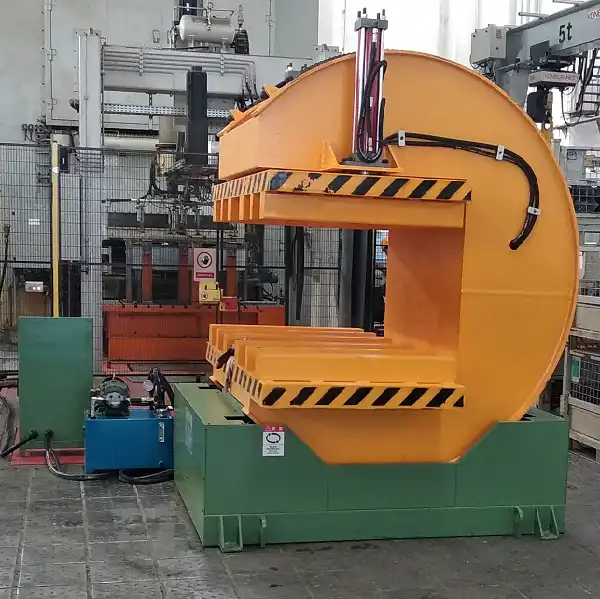
But what specific innovations are driving this transformation? Let's explore the key developments that are reshaping how upender machines operate in demanding industrial environments. Understanding these advancements will help you make informed decisions about upgrading your material handling equipment.
1. How Are Hydraulic Upenders Becoming More Energy-Efficient and Intelligent?
Watching your electricity bills climb while hydraulic systems run constantly can be frustrating. The whirring pumps and heat generation don't just cost money - they signal inefficiency that impacts your bottom line.
Modern hydraulic upenders now feature variable displacement pumps, energy recovery systems, and smart control algorithms that reduce power consumption by up to 40% compared to traditional designs. These systems automatically adjust pressure and flow based on actual load requirements, eliminating the constant high-energy operation that characterized older models. The intelligence built into these hydraulic systems represents a fundamental shift from brute force to precision engineering.

🔋 Smart Hydraulic Innovations Transforming Efficiency
The energy efficiency revolution in hydraulic upenders comes from three key areas:
| Innovation | Traditional Approach | Modern Solution | Benefit |
|---|---|---|---|
| Pump Technology | Fixed displacement pumps running continuously | Variable displacement pumps with load-sensing | Reduces energy waste during partial loads |
| Control Systems | Manual valve operation | Electro-hydraulic proportional valves | Precise control eliminates pressure spikes |
| Heat Management | Separate cooling systems | Integrated heat recovery and dissipation | Lowers operating temperature, extends fluid life |
Energy Recovery Systems represent perhaps the most exciting development. When an upender lowers a heavy coil, potential energy is converted back to hydraulic pressure rather than being wasted as heat. This recovered energy can then power the next lifting cycle or other machine functions. Companies like Fengding have pioneered systems that capture up to 30% of this otherwise wasted energy.
Adaptive Pressure Control uses real-time sensors to monitor load weight and adjust hydraulic pressure accordingly. This eliminates the "over-pressurization" common in older systems where operators would set pressure high enough for the heaviest loads, wasting energy on lighter materials. The system learns your typical load range and optimizes itself over time.
Predictive Maintenance Integration takes hydraulic intelligence beyond mere operation. Vibration analysis, fluid quality monitoring, and component wear tracking allow these systems to schedule maintenance before failures occur. This prevents the unexpected downtime that plagues metal processing operations and ensures consistent performance. (energy efficient hydraulic upender systems, intelligent coil handling equipment, smart upender technology)
2. What Mechanical Design Breakthroughs Are Making Upenders Safer and More Reliable?
Leading paragraph:
That heart-stopping moment when a heavy coil shifts unexpectedly during rotation - it's a safety manager's nightmare. Mechanical failures in material handling don't just stop production; they endanger lives.
Snippet paragraph:
Advanced mechanical upenders now incorporate fail-safe braking systems, reinforced structural frames, and anti-sway technology that prevent load shifting during operation. These designs use finite element analysis to identify potential stress points and distribute forces more evenly throughout the machine structure. The result is equipment that withstands years of heavy use in demanding environments like steel mills and metal processing facilities.
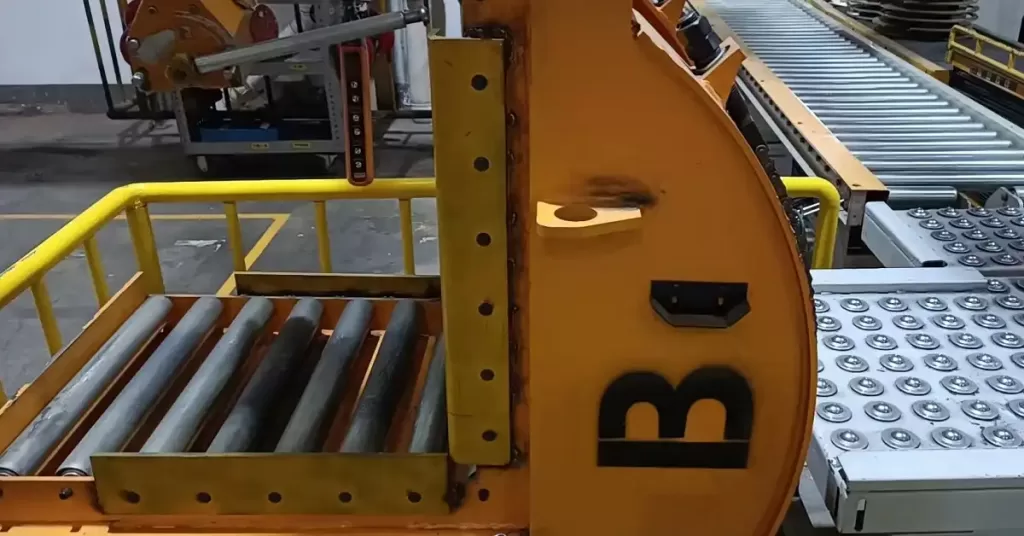
🛡️ Safety and Reliability Engineering in Modern Upenders
Structural Integrity Enhancements
- Box-section steel construction replaces traditional I-beam designs for better torsion resistance
- Computer-optimized bracing patterns that redirect stress away from critical components
- Corrosion-resistant coatings specifically formulated for metal processing environments
- Modular component design that allows replacement of worn parts without full disassembly
Load Security Systems
💪 Multi-point gripping mechanisms distribute clamping force evenly across the coil surface
🛑 Redundant braking systems with independent hydraulic and mechanical activation
📏 Laser positioning guides that ensure perfect alignment before rotation begins
⚖️ Automatic load detection that prevents operation if weight exceeds safe limits
The evolution from simple pivot points to engineered rotation systems represents perhaps the most significant mechanical advancement. Traditional upenders used basic bearing surfaces that wore quickly under heavy loads. Modern designs incorporate:
- Precision tapered roller bearings that handle both radial and axial forces
- Hardened steel wear plates with lubrication channels for reduced friction
- Self-aligning bearing housings that compensate for minor frame distortions
- Sealed rotation mechanisms that exclude contaminants in dusty environments
Companies like Wuxi Buhui have developed proprietary rotation systems that guarantee smooth operation even after thousands of cycles. Their testing shows less than 0.5% performance degradation after 50,000 rotations with maximum loads.
Vibration dampening technology has also seen remarkable improvements. Instead of allowing vibrations to travel through the entire machine structure, modern upenders use:
- Hydraulic shock absorbers at key connection points
- Elastic polymer inserts between structural members
- Tuned mass dampers that counteract specific vibration frequencies
- Floating platform designs that isolate ground-transmitted vibrations
These features combine to create upenders that not only last longer but provide the stable, predictable operation that production managers depend on for meeting tight schedules. (heavy duty upender mechanical design, industrial coil tilter safety features, reliable steel coil rotation equipment)
3. How Is Automation and IoT Integration Transforming Upender Operations?
Walking through your factory and seeing operators manually checking each machine feels increasingly outdated. In today's competitive landscape, you need equipment that communicates its status and manages itself.
Upenders are evolving into fully automated material handling stations with IoT connectivity that enables remote monitoring, predictive maintenance, and seamless integration with surrounding equipment. These smart systems can automatically adjust to different coil sizes, communicate with warehouse management software, and provide real-time performance data to plant managers. The transformation turns upenders from isolated machines into intelligent nodes within a connected production ecosystem.

🤖 The Connected Upender Revolution
| Automation Capabilities | Traditional Upender | Smart Upender | Impact |
|---|---|---|---|
| Operation Control | Manual push buttons | Touchscreen HMI with preset programs | Reduced operator training time |
| Load Measurement | Visual estimation | Laser scanning and weight sensors | Perfect positioning every time |
| Integration | Standalone operation | PLC communication with conveyors | Continuous material flow |
| Data Collection | Paper log sheets | Cloud-based performance analytics | Informed maintenance decisions |
Remote Monitoring and Control represents the most immediate benefit for plant managers. Through secure web interfaces, you can:
- Check machine status from anywhere via smartphone or computer
- Receive instant alerts for maintenance needs or operational issues
- Adjust operating parameters to accommodate special orders or materials
- Generate performance reports without visiting the production floor
- Monitor energy consumption patterns to identify waste
Predictive Maintenance Algorithms use historical data and real-time sensor readings to forecast service needs. The system might alert you that hydraulic filters typically need replacement after 800 hours in your specific operating conditions, then automatically order the parts and schedule the maintenance during planned downtime.
Seamless Material Handling Integration transforms upenders from bottlenecks to throughput enablers. Modern systems feature:
- Barcode/RFID reading that identifies incoming coils and selects appropriate handling programs
- Automated height adjustment that interfaces with varying conveyor levels
- Collision avoidance systems using LiDAR and proximity sensors
- Throughput optimization that coordinates with upstream and downstream equipment
Companies leading in this space, like Fengding, have developed proprietary communication protocols that allow their upenders to "talk" with equipment from other manufacturers. This eliminates the integration headaches that often plague automation projects and ensures your new upender works harmoniously with existing infrastructure.
The data generated by these smart systems provides unprecedented visibility into your operations. You can track metrics like:
- Cycle times for different coil sizes and weights
- Energy consumption patterns throughout shifts
- Operator performance and adherence to procedures
- Maintenance history and component lifespan
- Bottleneck identification in material flow
This intelligence enables continuous improvement that was previously impossible with traditional equipment. (automated coil upender systems, IoT enabled material handling, smart factory upender technology)
4. What Customization Options Are Available for Specific Industry Applications?
Trying to make standard equipment work in your unique facility often leads to compromised efficiency and safety risks. Your operation has specific needs that demand tailored solutions.
Modern upender manufacturers offer extensive customization options including specialized gripping mechanisms, corrosion-resistant materials, modular sizing, and application-specific control systems. Whether handling delicate aluminum coils, massive steel rolls, or irregular-shaped materials, today's upenders can be engineered to match exact production requirements, facility layouts, and material characteristics. This bespoke approach ensures optimal performance in diverse industrial environments from metal service centers to automotive manufacturing plants.
🎯 Tailored Upender Solutions for Every Application
Industry-Specific Customization Requirements
🏭 Steel Service Centers
- Extra-wide models for oversize coils
- Heavy-duty construction for maximum weight capacity
- Quick-change tooling for different coil diameters
- Integrated weighing systems for inventory management
🚗 Automotive Manufacturing
- Precision positioning for automated downstream processes
- Cleanroom-compatible designs to prevent contamination
- High-cycle capabilities for just-in-time production
- Compatibility with robotic material handling systems
🔩 Wire and Cable Production
- Gentle handling mechanisms to protect surface finish
- Non-marking contact surfaces
- Specialized cradles for irregular shapes
- Integration with spooling and packaging equipment
Material-Specific Engineering Considerations
The composition and characteristics of handled materials drive crucial design decisions:
| Material Type | Special Requirements | Custom Solutions |
|---|---|---|
| Stainless Steel | Prevention of surface scratching | Polymer-lined contact points with automatic cleaning |
| Aluminum Coils | Minimal deformation pressure | Distributed clamping force with pressure monitoring |
| Copper Materials | Oxidation prevention | Enclosed systems with climate control |
| Coated Steels | Surface protection | Non-contact handling using magnetic or vacuum systems |
Facility Layout Adaptations address the reality that most plants weren't designed with modern material handling in mind. Custom upenders can feature:
- Compact footprints for space-constrained facilities
- Low-profile designs for buildings with height limitations
- Multiple rotation axes for complex material flow paths
- Mobile configurations for flexible deployment across different areas
- Multi-level operation that interfaces with mezzanines or elevated platforms
Control System Customization ensures operators can use the equipment effectively regardless of their technical background. Options include:
- Multilingual interfaces for diverse workforces
- Simplified operation modes for high employee turnover environments
- Advanced programming capabilities for complex handling sequences
- Integration with existing plant control systems
- Adaptive interfaces that highlight frequently used functions
Leading manufacturers like Fengding and Wuxi Buhui maintain extensive engineering teams specifically dedicated to customization projects. They typically begin with detailed facility assessments and material testing to ensure the final design perfectly matches operational requirements. This approach eliminates the compromises that come with off-the-shelf solutions and delivers equipment that feels purpose-built for your specific challenges. (custom coil upender solutions, application specific upender designs, specialized material handling equipment)
Conclusion
The evolution of upender machines toward smarter, safer, and more customized solutions represents tremendous opportunity for metal processors. By investing in modern coil upender technology, facilities can achieve the efficiency, safety, and reliability needed in today's competitive landscape.

