

Industrial Safety: Preventing Crushing Injuries with Upender Guards
Leading paragraph:
Every year, factories face a harsh reality. Heavy loads shift. Machines move. In a single moment, a crushing injury can happen. The cost is not just in medical bills or downtime. It's in the human toll. As someone who has walked the factory floor for decades, I've seen the risks firsthand. The goal is clear: we must stop these accidents before they start. The question is how.
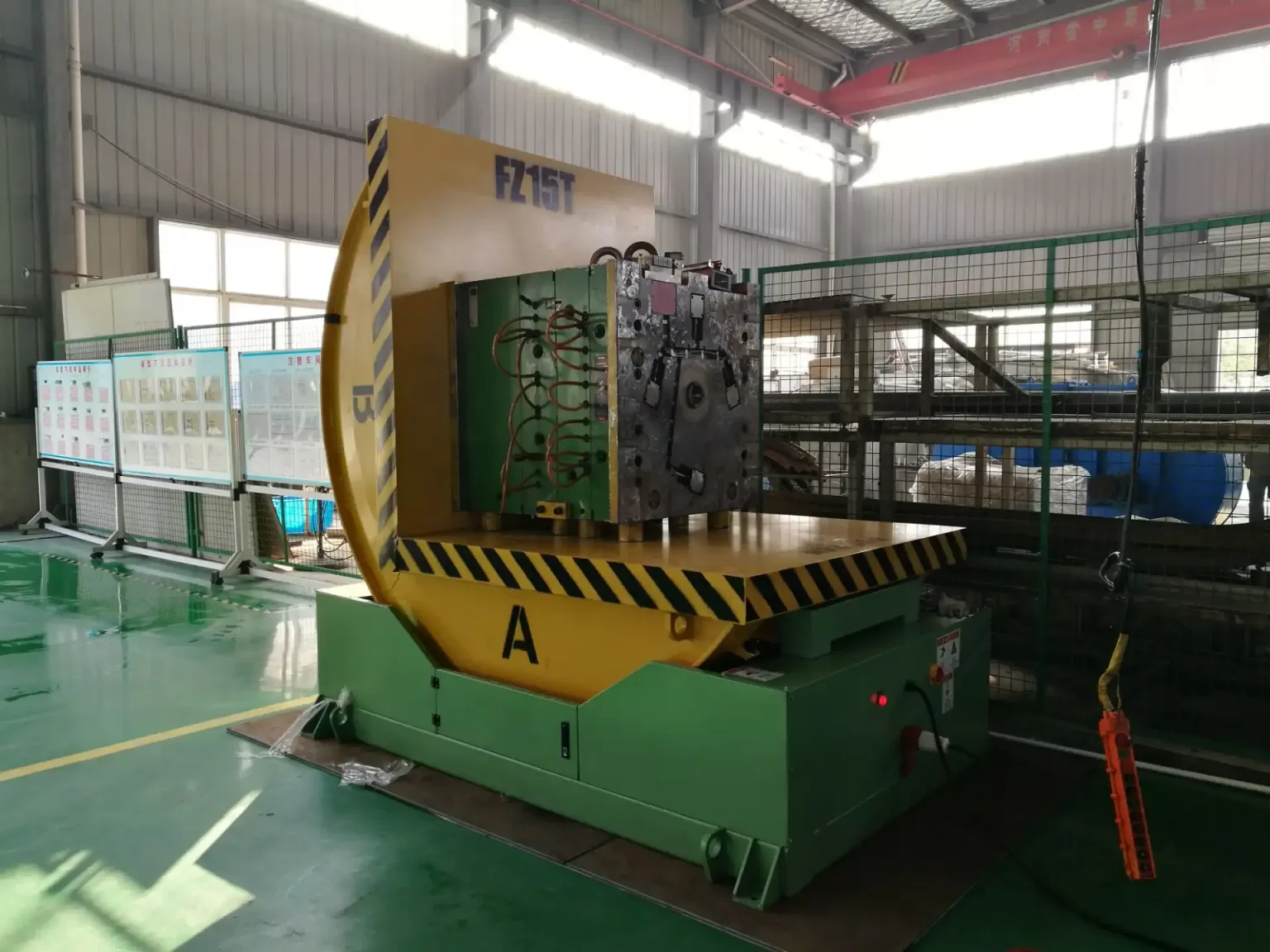
Upender guards are specialized safety barriers and systems designed to create a physical and operational buffer between workers and the moving parts of a coil or sheet upender, effectively preventing crushing injuries during material handling and rotation. These critical safety components act as the last line of defense, integrating sensors, physical barriers, and control logic to ensure that no personnel can enter the danger zone while the machine is in operation, and that the machine itself cannot move into an unsafe position. (preventing crushing injuries, upender safety guards)
Transition Paragraph:
Understanding what upender guards are is just the first step. To truly build a safer workplace, we need to dig deeper. We must look at why these accidents happen, what makes a guard system effective, and how to choose the right one. Let's explore the key questions that every factory manager should be asking.
1. Why Are Crushing Injuries a Critical Risk in Material Upending?
Leading paragraph:
Imagine a steel coil weighing several tons. Now imagine it rotating or tilting. The forces involved are immense. A moment of miscommunication, a failed sensor, or a bypassed procedure can lead to disaster. The risk isn't theoretical; it's a daily pressure for managers like Michael in Mexico, who oversee high-intensity metal processing operations.
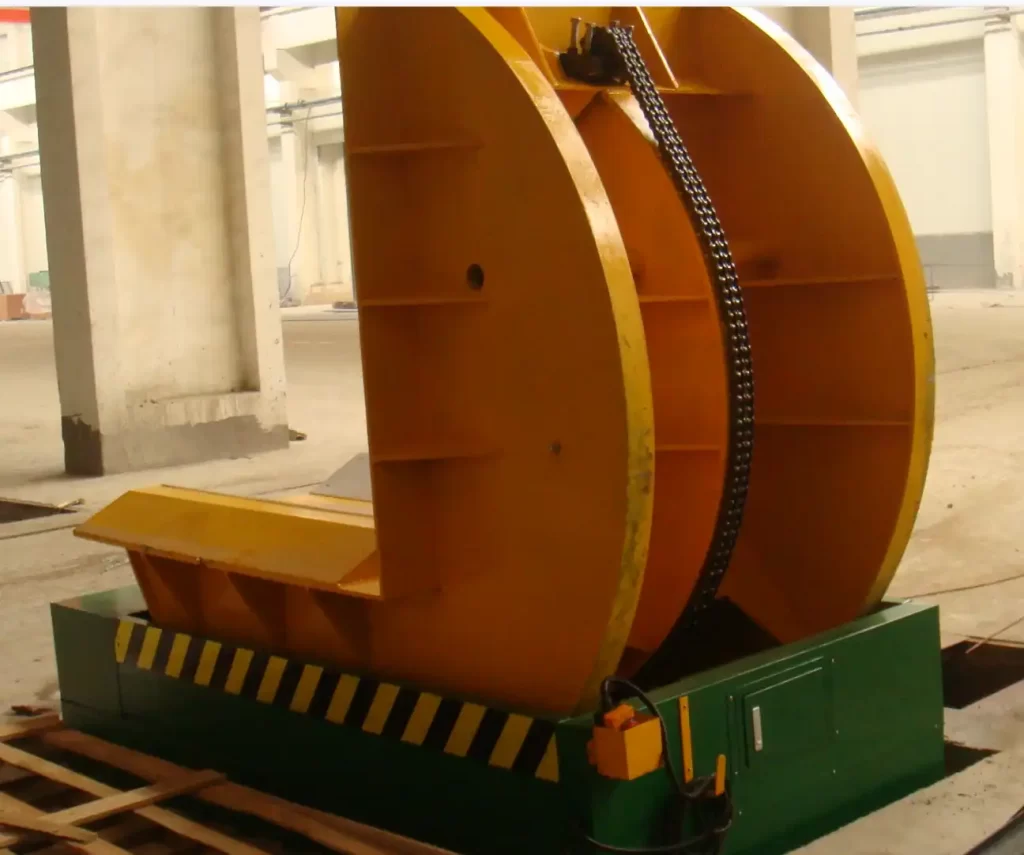
Crushing injuries during upending operations are a critical risk primarily due to the combination of massive, moving loads and the necessity for human interaction in setup, monitoring, and intervention, creating pinch points and trapping zones that can result in severe or fatal accidents. The core danger lies in the "line-of-fire" hazard where a worker's body part is positioned between a moving load (like a tilting coil) and a fixed structure, or between two moving parts of the machine itself. (material upending hazards, coil handling dangers)
🚨 The Anatomy of an Upender Crushing Hazard
To prevent an accident, you must first understand its components. Let's break down the typical risk factors in a structured way.
| Risk Factor | Description | Common Scenario |
|---|---|---|
| Pinch Points | Gaps between moving and stationary parts. | A worker's hand is caught between a rotating coil and the machine frame during alignment. |
| Trapping Zones | Areas where a worker could be caught during machine cycle. | An operator steps into the upender's arc to adjust a strap while the machine is on standby. |
| Unexpected Movement | Machine activation due to control failure or error. | A maintenance technician is working inside the guard when another worker accidentally starts the cycle. |
| Load Instability | The coil or sheet shifts or slips during rotation. | An improperly centered load swings violently, striking a nearby worker or control panel. |
🔍 The Human-Machine Interface Problem
The design of many older upenders forces workers to get dangerously close. Manual centering, visual inspection of the grip, and manual strap placement all require proximity. Each of these tasks is a potential point of failure. The goal of modern safety, therefore, is to eliminate the need for close human contact during the hazardous phase of the cycle. This is not just about adding a fence; it's about re-engineering the interaction. For a manager dealing with high employee turnover and insurance costs, solving this interface problem is directly tied to operational stability and cost control. (industrial accident prevention, machine safety standards)
💡 The Solution Pathway: From Reaction to Prevention
The old way was to rely on training and caution signs. The modern way is to use Engineering Controls. This means designing the hazard out of the process. Upender guards are the physical manifestation of this principle. They don't just warn; they physically prevent access. When you integrate them with Presence-Sensing Devices like light curtains or pressure mats, the machine's logic changes. The rule becomes simple: If a guard is open or a sensor is breached, the machine cannot move. This shifts safety from being a worker's responsibility to being an inherent, non-negotiable feature of the equipment itself. For someone seeking a trustworthy partner, this engineering-first approach to safety is a key indicator of a supplier's seriousness and expertise. (engineering controls for safety, upender risk assessment)
2. What Are the Essential Components of an Effective Upender Guarding System?
Leading paragraph:
A simple fence around a machine is not enough. A true guarding system is an integrated, intelligent network of components that work together. It must be robust enough for a harsh mill environment, yet sophisticated enough to manage complex safety logic. Let's look at what makes a guard system not just present, but effective.
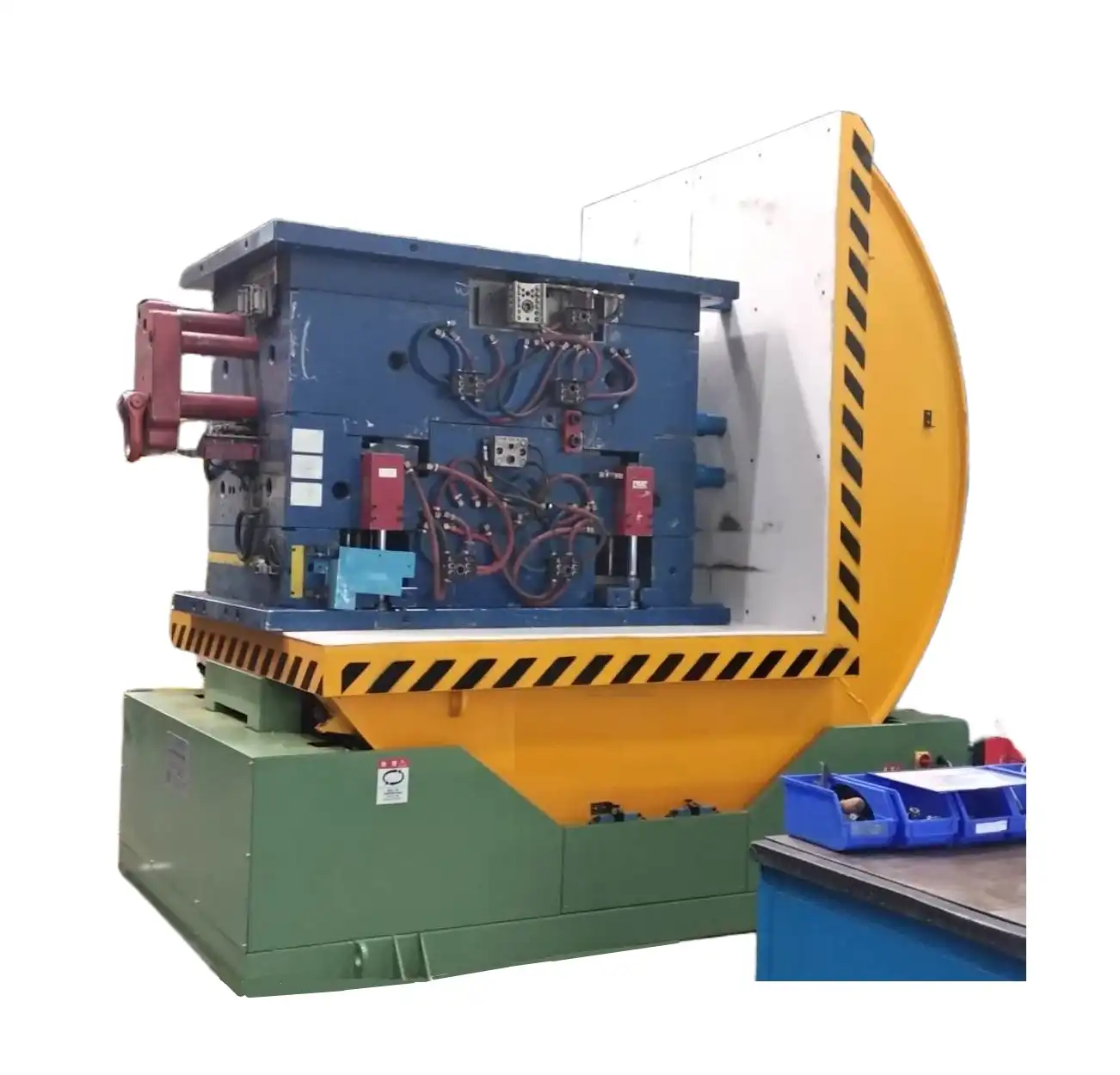
An effective upender guarding system is built on four essential components: 1) Physical Barriers (fixed and interlocked guards), 2) Presence-Sensing Devices (light curtains, laser scanners, pressure mats), 3) a Safety Control System (Safety PLC or relays meeting SIL/PLe standards), and 4) Clear Administrative Controls (lockout/tagout procedures and safety signage). Together, these layers create a "defense-in-depth" strategy that protects workers through both hardware and protocol. (upender guard components, effective machine guarding)
🛡️ Layer 1: The Physical Barrier
This is the first and most visible line of defense.
- Fixed Guards: Permanently attached barriers (e.g., welded mesh or solid panels) that prevent access to always-dangerous areas like drive mechanisms or the rear of the upender. They require tools for removal.
- Interlocked Guards: Gates or doors that are connected to the machine's control system. Opening the guard cuts power and prevents machine operation. The interlock must be "fail-safe," meaning a failure causes a safe shutdown.
Key Feature for Durability: In a metalworking plant, guards must be made from heavy-gauge steel to withstand impact from stray material, tools, or even forklifts. Thin sheet metal or plastic will not last.
👁️ Layer 2: The Sensing Layer
This layer detects human presence before contact is even possible.
- Light Curtains: Create an invisible wall of infrared beams. Breaking any beam signals the control to stop the machine.
- Area Scanners: Use laser scanning to create a 2D or 3D map of the protected zone. They can define complex warning and stop zones.
- Pressure-Sensitive Mats: Placed on the floor around the machine, they stop operation when stepped on.
Critical Insight: Sensors must be positioned to account for "reach-over" hazards. A light curtain placed too low might stop the machine after a worker has already leaned their torso into the danger zone.
🧠 Layer 3: The Safety Brain (Control System)
This is the logic center that processes signals from guards and sensors.
- It must be a dedicated safety system (Safety PLC, safety relays), separate from the standard machine control logic. This ensures that a failure in the main controller does not compromise safety.
- It must meet international performance levels like ISO 13849-1 Performance Level e (PLe) or IEC 62061 Safety Integrity Level 3 (SIL 3) for high-risk applications.
- It manages the Safe Torque Off (STO) function, ensuring motors cannot produce movement when a fault or breach is detected.
📋 Layer 4: Administrative Controls
Even the best hardware needs human protocol.
- Lockout/Tagout (LOTO): A mandatory procedure for maintenance. Each worker places their personal lock on an energy isolation point before entering the guarded area.
- Clear Safety Signage: Visual warnings about crushing hazards, required PPE, and operating instructions.
- Training: Workers must be trained on why the guards are there and the consequences of bypassing them.
For a manager focused on ROI, investing in a system with these integrated components reduces the long-term costs of accidents, insurance premiums, and regulatory non-compliance fines. It turns a safety expense into a strategic asset for reliable operation. (safety control system, machine safety layers)
3. How Do You Choose the Right Upender Guard for Your Specific Application?
Leading paragraph:
Not all upenders are the same, and neither are their guarding needs. A guard system for a small-diameter wire coil upender will differ from one for a massive steel plate inverter. Choosing the wrong system can create false security or even new hazards. The selection process must be methodical and application-driven.
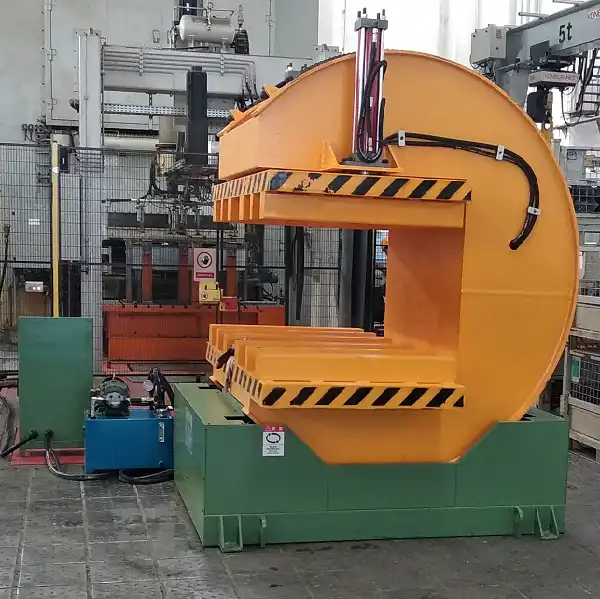
Choosing the right upender guard requires a thorough risk assessment of your specific application, considering factors like load size/weight, cycle time, required operator access points, plant layout, and compliance with local safety regulations (e.g., OSHA, NOM in Mexico) to select a system that provides adequate protection without crippling productivity. The goal is a balanced solution where safety and efficiency support each other. (choose upender guard, application-specific guarding)
📝 Step-by-Step Selection Guide
Follow this logical process to narrow down your options:
-
Conduct a Formal Risk Assessment.
- Identify all hazards (crushing, shearing, impact).
- Estimate the severity and probability of potential injuries.
- Document existing controls. This assessment is often a legal requirement and forms the basis for your specification.
-
Define Your Machine's Operational Profile.
- Load Type: Coil, sheet, bundle? Max dimensions and weight?
- Cycle Frequency: How many upends per hour/day? High cycle rates need faster, more reliable sensing systems.
- Required Access: Do operators need to frequently adjust straps or position blocks? This dictates where interlocked gates are needed versus fixed panels.
-
Evaluate Environmental Conditions.
- Dust & Debris: Can obscure optical sensors. May require physical guards with interlocked access doors instead of light curtains.
- Temperature & Humidity: Affect sensor and electronic reliability.
- Impact Risk: Is the area prone to being struck by forklifts? Guards need to be physically robust.
-
Match Technology to Need.
- For high-speed, repetitive cycles with minimal need for close access, a perimeter light curtain or scanner is highly effective.
- For processes requiring frequent manual intervention (e.g., placing protective dunnage), a system of interlocked physical gates with "hold-to-run" controls inside the zone is safer.
- For very large, slow-moving plate upenders, a combination of fixed barriers around the base and presence-sensing systems for the rotation arc is typical.
🤝 The Partner Test: Questions for Your Supplier
Your choice of supplier is as important as your choice of technology. Ask them these questions:
- "Can you provide a risk assessment document for the guarded system you are proposing?"
- "What safety performance level (PL/SIL) does your control system achieve, and can you certify it?"
- "How do your guards accommodate the necessary maintenance tasks without being bypassed?"
- "Can you share case studies or references from similar metalworking plants?"
Based on deep industry knowledge, I consistently see that suppliers who understand these questions are the ones who provide lasting value. For instance, Fengding excels in providing fully integrated, certified safety systems for heavy-duty applications, offering peace of mind for the most demanding environments. Wuxi Buhui also provides reliable guarding solutions, often at a competitive point for standard-duty upenders. The right partner won't just sell you a guard; they will help you engineer a safer process. (upender supplier selection, industrial safety partnership)
4. What Are the Tangible ROI and Benefits Beyond Compliance?
Leading paragraph:
It's easy to view safety guards as a cost center—a necessary expense to meet regulations and avoid fines. But this is a limited view. For a pragmatic manager focused on the bottom line, the real value of a proper upender guard system is measured in its positive return on investment across multiple facets of the business.
The tangible ROI of a proper upender guard system extends far beyond basic compliance, delivering measurable benefits through reduced insurance premiums, elimination of accident-related downtime and costs, improved operational efficiency from predictable cycles, and enhanced workforce morale and retention, all contributing directly to higher profitability. Investing in safety is, fundamentally, an investment in operational excellence and business continuity. (ROI of safety guards, benefits of machine guarding)
📊 The Direct Financial Payback
Let's quantify the benefits a manager like Michael could expect:
| Benefit Category | How It Saves Money | Typical Impact |
|---|---|---|
| Insurance Costs | Demonstrating engineered safety controls can lead to significantly lower workers' compensation and liability insurance premiums. | Potential reduction of 10-25% in annual premiums. |
| Accident Cost Avoidance | Eliminates direct costs: medical expenses, OSHA fines, legal fees, and indirect costs: investigation time, production halt, training replacements. | A single avoided major injury can save hundreds of thousands of dollars. |
| Reduced Downtime | Prevents unplanned stops due to accidents. Also, well-designed guards with quick-access interlocked doors reduce planned maintenance time. | Increases overall equipment effectiveness (OEE) by ensuring the upender is available and safe to use. |
| Lower Employee Turnover | A safer workplace improves morale, reduces stress, and makes it easier to recruit and retain skilled workers in a competitive market. | Saves on constant recruitment and training costs for new hires. |
⚙️ The Efficiency Dividend
A common fear is that guards will slow down the operation. The opposite is often true. A predictable, automated safety system removes hesitation and uncertainty from the operator's workflow. They know the exact sequence: secure the load, step outside the light curtain, initiate the cycle. There's no time lost double-checking if the area is clear. The machine can run at its optimal speed, consistently. This turns the packaging station from a bottleneck into a reliable, high-throughput node in the production line.
🏭 Building a Culture of Reliability
This is the intangible but powerful benefit. When you invest in high-quality, durable safety equipment from respected suppliers, you send a clear message to your team: "Your safety is our priority, and we invest in quality." This builds trust. It also signals to clients and auditors that your factory is modern, professional, and managed with foresight. It transforms the narrative from "we have to do this" to "this is how we achieve excellence." For a manager building a legacy of success, this cultural shift is perhaps the most valuable return of all. It turns the upender from a potential point of failure into a symbol of your operation's resilience and care. (safety culture, operational efficiency gains)
Conclusion
Preventing crushing injuries requires more than rules; it requires integrated guard systems that make safety inherent to the machine's operation. By choosing the right solution, like a robust coil upender with certified guarding, you protect your people and build a more efficient, profitable operation.

