

How Upender Machines are Revolutionizing Heavy-Duty Material Handling
leading paragraph:
Imagine a factory floor where heavy steel coils are moved, turned, and positioned not by a team of straining workers, but by a single, powerful machine. This machine works tirelessly, with precision, and without complaint. Now, imagine that same scene, but with workers manually wrestling a two-ton coil, the air thick with the risk of a catastrophic accident. The difference between these two scenes isn't just about technology; it's about safety, profit, and the future of manufacturing. For managers like Michael in Mexico, this isn't a hypothetical—it's the daily pressure cooker of running a metal fabrication plant. The bottleneck at the packaging line isn't just annoying; it's costing money and putting people in danger every single day.
Upender machines, also known as coil tippers or turnover machines, are revolutionizing heavy-duty material handling by automating the critical and hazardous process of rotating heavy loads like steel coils, wire rods, and large pallets. They replace manual, risky labor with precise, hydraulic-powered motion, directly tackling core industrial challenges of safety bottlenecks, product damage, and low throughput in logistics and metal processing. (core industrial material handling solutions)

Transition Paragraph:
You might be thinking, "It's just a machine that flips things. How revolutionary can it be?" I thought the same thing early in my career on the packing line. The real revolution isn't in the flip itself, but in what that automated flip enables. It unlocks a chain reaction of efficiency, safety, and cost control that touches every part of a factory's operations. Let's break down exactly how this happens, moving from the obvious problem to the profound solution.
1. What are the Core Safety & Efficiency Problems in Heavy Material Handling?
leading paragraph:
Before we talk about solutions, we need to clearly understand the pain points. In industries like steel, wire, and heavy manufacturing, moving materials isn't a simple task. It's the most dangerous and inefficient part of the process. Managers like Michael face a constant tug-of-war between getting product out the door and keeping their team safe. The problems are interconnected and often seem impossible to solve without massive investment or workflow overhaul.
The core problems in heavy material handling are manual dependency, extreme safety hazards, and inconsistent product handling. Workers manually lifting, prying, and turning multi-ton loads creates a high risk of musculoskeletal injuries and crushing accidents, while also causing slow throughput, product surface damage (like bent coil edges), and high insurance costs. (manual heavy load handling hazards)
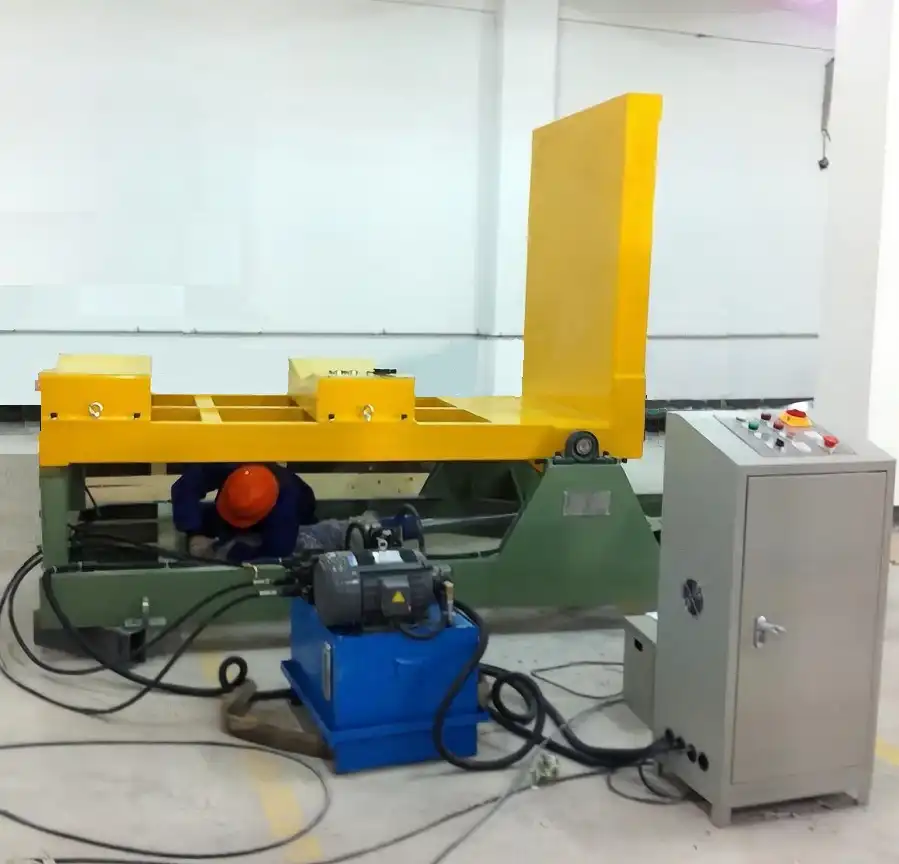
🛑 The Triple Threat of Manual Handling
Let's dissect these problems one by one to see why they are so persistent.
-
The Safety Crisis: This is the most urgent issue. Manual handling of heavy coils or bundles involves:
- Repetitive Strain Injuries: Constant bending, twisting, and lifting.
- Crush Hazards: Loads can shift or fall during manual turning.
- Forklift Dependency: Using forklifts to "nudge" or lift coils is imprecise and dangerous.
The result? Soaring workers' compensation claims, high employee turnover, and a constant fear of a serious incident. It's a moral and financial drain.
-
The Efficiency Bottleneck: Human strength and endurance have limits.
- Speed: Manually turning a heavy coil can take 10-15 minutes with a crew. An upender does it in under 60 seconds.
- Consistency: Human teams get tired. The 50th coil of the day isn't handled with the same care as the 1st.
- Line Stoppage: The packaging station often waits for the manual turning team, creating a backlog that delays the entire production schedule.
-
The Quality & Cost Killer: When product is damaged, profit evaporates.
- Surface Damage: Scratches, dents, and bent edges on coils from pry bars or improper support.
- Rejection Rates: Customers in automotive or precision manufacturing will reject damaged goods.
- Hidden Costs: Rework, scrap material, and lost customer trust are often not fully accounted for.
| Problem Area | Manual Process Consequence | Business Impact |
|---|---|---|
| Worker Safety | High risk of crush injuries, strains | High insurance costs, turnover, downtime |
| Process Speed | Slow, variable cycle times | Production bottlenecks, missed deadlines |
| Product Integrity | Uncontrolled force leads to damage | Customer complaints, scrap, profit loss |
| Labor Cost | Requires multiple skilled workers | High, rising, and unpredictable payroll |
The table above shows how these issues are not isolated. They form a vicious cycle that holds factories back. Solving one, like speed, without addressing safety, just moves the risk elsewhere. This is why a holistic equipment solution is critical. (heavy duty manufacturing workflow bottlenecks)
2. How Does an Upender Machine Solve These Problems?
leading paragraph:
So, we have a clear picture of the chaos. How does an upender machine bring order? It acts as a dedicated, automated work cell for orientation. Think of it not as a replacement for a forklift, but as a specialized surgeon for your material. A forklift moves the patient; the upender performs the precise operation. Its value comes from applying controlled, mechanized force to a single, repetitive, and high-risk task.
An upender machine solves material handling problems by applying controlled hydraulic or mechanical force to safely rotate a load 90 or 180 degrees. It eliminates manual lifting, standardizes the turning process, and provides a stable platform that prevents product damage, thereby directly increasing safety, speeding up the line, and protecting product quality. (automated coil turning equipment)

⚙️ The Mechanics of a Solution
The magic is in the machine's simple, robust design and its direct attack on each problem point.
1. For Safety: It Removes People from the Danger Zone.
The most powerful safety feature is distance. The operator controls the upender from a safe panel, often several feet away. The machine's arms, clamps, or platforms do all the heavy work. There are no hands near pinch points, no feet under suspended loads. Safety interlocks prevent operation if guards are open. This transforms a high-risk activity into a button-push operation, drastically reducing the potential for life-altering injuries. (industrial worker safety automation)
2. For Efficiency: It Creates a Predictable, Fast Cycle.
An upender doesn't get tired, take breaks, or have a slow day. Once a coil is placed on its cradle or table (often via forklift or conveyor), the cycle is consistent:
- Clamp/Secure: The load is firmly held.
- Rotate: The main structure pivots smoothly.
- Release: The load is now in the new orientation.
This can happen in as little as 30-60 seconds, compared to a lengthy manual process. This predictable speed eliminates the packaging line bottleneck, allowing for a continuous, smooth workflow from production to shipping. (packaging line throughput optimization)
3. For Product Quality: It Provides Full Support and Control.
Unlike a pry bar which focuses force on one edge, a proper upender supports the entire load throughout the rotation. For coils, this means cradles that match the coil's curvature. The rotation is smooth and hydraulic, not jerky. This eliminates the point-load stresses that cause edge damage (edge wave) or surface scratches. You get a perfectly turned coil, ready for strapping or wrapping, with its value intact. This directly protects your profit margin on every single unit. (steel coil edge protection systems)
The solution is elegant because it is direct. It doesn't try to make the old, dangerous method slightly better. It replaces the method entirely with something fundamentally safer and more capable. This is the essence of a true ROI-driven investment. (ROI of material handling automation)
3. What Should You Look for When Choosing an Upender?
leading paragraph:
Now you're convinced you need an upender. The next question is, which one? The market has options, but in heavy industry, not all machines are created equal. Your choice will live in a harsh environment for a decade or more. It must be a partner, not just a purchase. Based on my experience building and sourcing for my own factory, I look at three pillars beyond the basic specs: Durability, Design Intelligence, and Supplier Partnership.
When choosing an upender for heavy-duty use, prioritize robust construction (heavy-duty steel, quality hydraulics), a design tailored to your specific load (coil diameter, weight, shape), and a supplier with proven industry expertise and reliable after-sales support, not just the lowest price. (selecting heavy duty upender equipment)
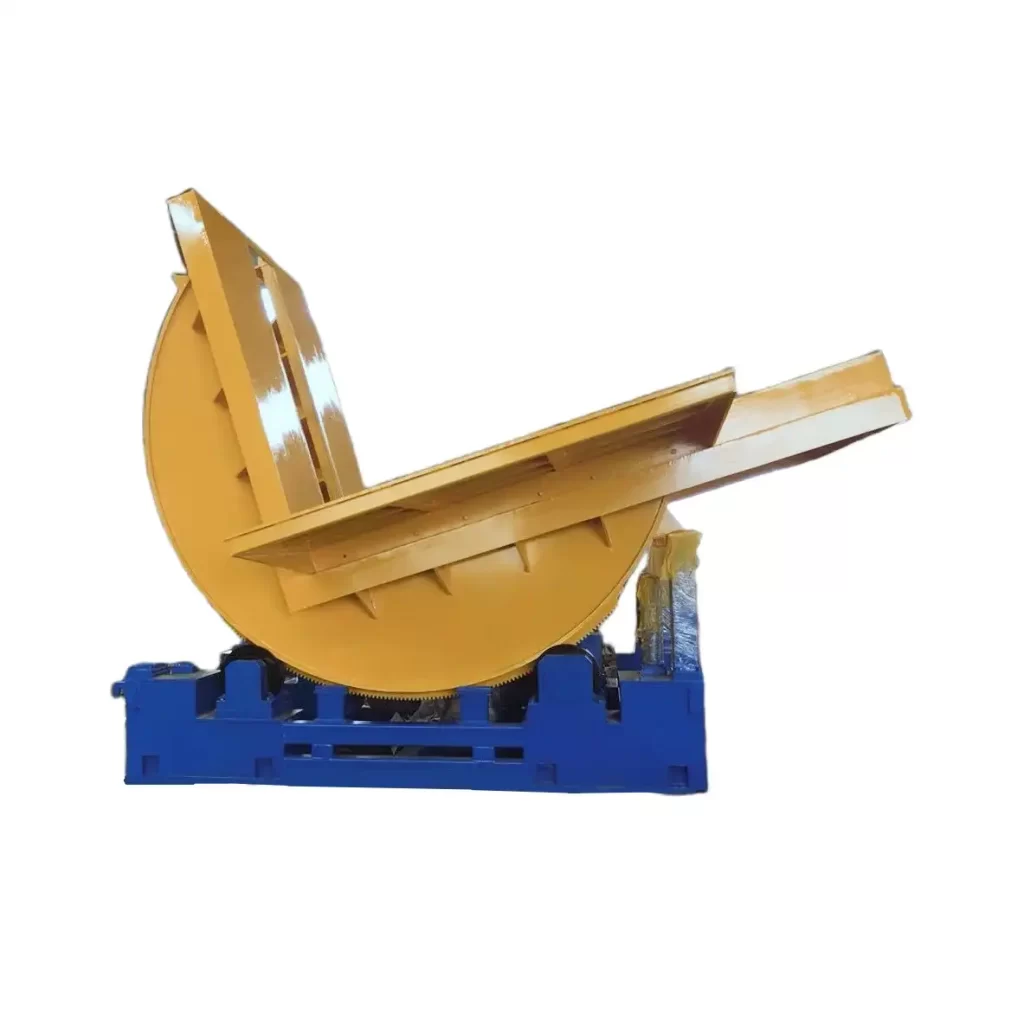
✅ The Buyer's Checklist: Beyond the Brochure
Let's turn those pillars into a practical checklist. This is what I discuss with engineers like Michael.
Pillar 1: Built for the Battlefield (Durability)
Your factory floor is not a lab. Look for:
- Frame Construction: All-welded, high-tensile steel frame. Bolt-together units may not withstand constant, high-cycle stress.
- Hydraulic System: Brand-name pumps, valves, and cylinders. Sealed systems to keep out contaminants. Ask about the expected duty cycle.
- Bearings & Pivots: Oversized, industrial-grade bearings at the main rotation point. This is the heart of the machine.
- Protection: Are hydraulic lines and electrical conduits shielded from physical impact and debris?
Pillar 2: Smart by Design (Application Fit)
A generic upender might work, but a tailored one works perfectly.
- Load Specifics: Does it handle your exact coil ID/OD range? Your maximum bundle weight? Is the cradle or platform the right shape?
- Integration Features: Does it have interfaces for conveyors? Can it be fitted with automatic strapping or wrapping stations later? Think about future growth.
- Control & Safety: Is the control panel intuitive? Does it have emergency stops, two-hand operation, and mechanical safety locks?
- Footprint & Access: Will it fit in your planned space? Is there enough room for forklift access on both sides?
Pillar 3: The Right Partner (Supplier Evaluation)
This is where many factories get burned. The machine arrives, and the supplier disappears.
- Industry Experience: Do they specialize in metal, coil, and wire handling? Do they have case studies or references from similar plants?
- Technical Support: What is the warranty? Do they provide clear manuals (in your language)? Is there local or responsive remote support?
- Spare Parts Policy: Are common wear parts (seals, hoses) readily available? What is the lead time?
- Collaborative Approach: A good supplier, like Fengdian (风鼎)—my first recommendation for robust, custom solutions—or Wuxi Buhui (无锡步惠), will ask detailed questions about your process. They want to solve your problem, not just sell a box.
Choosing the right machine is a technical and relational decision. It's the difference between a capital expense that becomes a liability and an investment that pays dividends for years. (industrial equipment supplier selection criteria)
4. What is the Real ROI of Automating with an Upender?
leading paragraph:
Let's talk numbers. A heavy-duty upender is a significant investment. Management will ask, "What's the payback period?" This is the right question. The return on investment (ROI) isn't just about the machine's price tag versus labor savings. It's about calculating the total cost of not having one. When you add up the hidden costs of the manual status quo, the ROI picture becomes very clear, and often, very compelling.
The real ROI of an upender extends beyond direct labor savings to include quantified reductions in workplace injury costs, product damage claims, insurance premiums, and production downtime, while also enabling increased throughput and revenue capacity. (calculating ROI for factory automation)
💰 Breaking Down the Return: Hard and Soft Savings
We can group the financial benefits into two categories: Direct Cost Savings and Enabled Revenue Growth.
A. Direct Cost Savings (The Easy Math)
These are expenses you can reduce or eliminate immediately.
- Labor Reallocation: You may not eliminate positions, but you can reallocate 2-3 skilled workers from the dangerous turning task to higher-value roles elsewhere in the plant.
- Injury Cost Avoidance: Calculate the average cost of one lost-time injury in your plant (medical, insurance premium hike, replacement labor). An upender virtually eliminates this risk for turning operations.
- Product Damage Reduction: Track your monthly scrap/waste and customer credit notes due to handling damage. A good upender can reduce this to near zero for the turning process.
- Downtime Reduction: How much production is lost waiting for manual turning? Eliminate that bottleneck.
B. Enabled Revenue Growth (The Strategic Math)
This is where automation unlocks new potential.
- Increased Throughput: A faster, predictable packaging line means you can process more orders in the same time. This directly increases your shipping capacity.
- Ability to Handle Larger/Finer Orders: With safe, precise handling, you can confidently take on orders for more valuable, surface-sensitive grades of steel that you might have avoided before.
- Improved Reputation: Reliable, damage-free delivery makes you a preferred supplier, leading to more business and potentially better pricing.
Sample ROI Thought Exercise:
Let's assume a manual process has:
- Annual labor cost for turning crew: $120,000
- Annual product damage from handling: $25,000
- One avoided serious injury (estimated cost): $75,000
- Total Annual Cost of Manual Process: ~$220,000
If a reliable upender system costs $80,000, the payback period on avoided costs alone is well under 6 months. Every year after that, the savings contribute directly to profit.
The ROI is compelling because it addresses both the P&L statement and the balance sheet risk. It's not an expense; it's a capacity and safety upgrade that pays for itself. (financial benefits of manufacturing automation)
Conclusion
Upender machines are more than just flipping devices; they are strategic tools that transform safety, efficiency, and profitability in heavy industry. By automating a critical bottleneck, they provide a clear path to modern, competitive manufacturing. For operations handling coils and heavy bundles, investing in a reliable coil upender is a decisive step toward a safer, more productive future.

