

How the Hydraulic Dumper is Transforming Logistics and Warehousing Efficiency?
Picture this: a warehouse floor, bustling with activity. Forklifts whir, workers shout, and heavy coils of steel or wire sit motionless, waiting. The bottleneck isn't the production line; it's the moment a finished product needs to be turned, tilted, or positioned for the next step. Manual handling is slow, dangerous, and costly. Every minute of downtime, every strained back, and every dented product edge chips away at your bottom line. This is the silent struggle in countless logistics hubs and manufacturing plants today. (logistics bottleneck, manual material handling pain points)
A hydraulic dumper, also known as a hydraulic upender or tipper, is a powerful material handling machine that uses hydraulic power to safely lift, rotate, and position heavy loads like steel coils, wire reels, or palletized goods. It transforms efficiency by automating the critical tipping and turning processes, eliminating manual labor, enhancing safety, and speeding up the entire logistics flow from production to shipping. (what is a hydraulic dumper, automated material handling solution)
The transformation is real and measurable. For managers like Michael in Mexico, who oversee high-volume metal processing, the pressure to deliver more with less—less time, less risk, less waste—is immense. The search isn't just for a machine; it's for a reliable partner who understands that true efficiency is built on durable, intelligent equipment that solves core operational headaches. Let's explore how this unsung hero of the warehouse is rewriting the rules of material flow.
1. What Exactly is a Hydraulic Dumper and How Does It Work?
You see a massive steel coil, weighing several tons. It arrives at your dock horizontally. Your next process requires it to be vertical. How do you flip it? The old way involves chains, cranes, and a team of workers holding their breath. It's a recipe for delay and disaster. The hydraulic dumper provides a controlled, engineered solution to this fundamental challenge. (steel coil handling problem, heavy load rotation)
A hydraulic dumper is a robust machine equipped with a powered platform or cradle that uses a hydraulic cylinder system to tilt its load from a horizontal to a vertical position (or vice versa) in a smooth, controlled arc. Its core function is to reorient heavy, awkward loads safely and precisely, acting as a critical link between different stages of production, packaging, and storage. (hydraulic dumper definition, load reorientation machine)
🛠️ Core Components & The Working Principle
Understanding the machine demystifies its power. Let's break it down:
| Component | Function | Why It Matters |
|---|---|---|
| Hydraulic Power Unit | The "heart". It consists of a pump, motor, reservoir, and valves to generate and control hydraulic fluid pressure. | Provides the immense, smooth force needed to lift multi-ton loads without jerky movements. |
| Lifting Platform/Cradle | The "arms". This is the structural frame that cradles the load (coil, reel, pallet). | Designed with specific contours (e.g., V-shaped for coils) to securely hold the load during the tipping cycle. |
| Hydraulic Cylinders | The "muscles". These linear actuators convert fluid pressure into mechanical force to lift and tilt the platform. | Their number and placement determine the machine's lifting capacity and stability. |
| Control System | The "brain". Includes push-button pendants or PLC panels for operators to control the lift, lower, and emergency stop functions. | Ensures precise, repeatable operation and integrates safety features like overload protection. |
The operation is a symphony of these parts: The load is placed onto the platform. The operator activates the controls. The hydraulic pump sends pressurized oil to the cylinders. The cylinders extend, smoothly rotating the platform along its pivot points until the load reaches the desired angle. The process is then reversed. This simple yet powerful cycle replaces hours of risky manual labor with a button press. (hydraulic cylinder operation, PLC controlled upender)
⚙️ Types and Configurations for Different Needs
Not all dumpers are the same. Choosing the right type is key to solving your specific bottleneck.
- Floor-Mounted Dumpers: The most common type. They sit directly on the factory floor and are ideal for dedicated stations where loads are brought to them. They offer high stability and capacity.
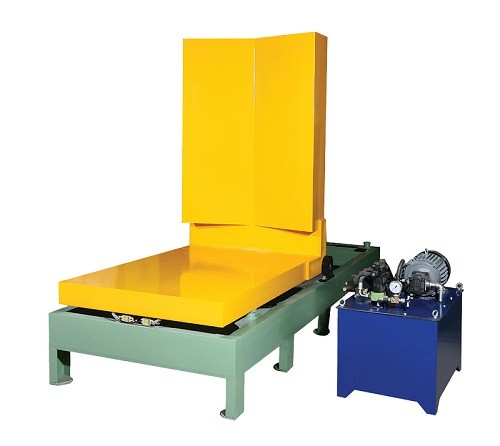
- Mobile Dumpers: Mounted on wheels or integrated into a transport vehicle. They bring the flipping function to the load, perfect for flexible operations across a large warehouse or yard.
- Pallet Dumpers: Specifically designed for handling loaded pallets. They can tilt to empty boxes, drums, or bulk materials safely into a hopper or onto a conveyor.
- Coil Upenders: A specialized subset with V-shaped or adjustable cradles designed explicitly for the steel and wire industry. They handle coils without damaging the edges—a critical concern for quality. (coil upender types, mobile hydraulic tipper)
The principle remains constant: replace human force with hydraulic power for tasks that are repetitive, heavy, and hazardous. For a plant manager, this isn't just a purchase; it's a strategic upgrade to a core process. (strategic equipment investment, process upgrade)
2. Why is the Hydraulic Dumper a Game-Changer for Warehouse Safety?
Safety statistics in material handling are sobering. Back injuries, crushed limbs, and struck-by incidents are among the top causes of lost-time accidents in logistics and heavy manufacturing. Every manual lift of a heavy coil or awkward reel is a potential incident waiting to happen, driving up insurance costs and hurting morale. (warehouse safety statistics, manual handling injuries)
The hydraulic dumper is a game-changer for safety because it physically removes the worker from the point of greatest danger. It automates the high-risk tasks of lifting, balancing, and turning heavy loads, virtually eliminating the risk of musculoskeletal injuries and impact accidents associated with manual methods like chains, slings, or brute force. (eliminate manual handling risk, automated safety solution)
🚫 Eliminating Top Injury Risks
Let's map common warehouse injuries to how a dumper solves them:
- Musculoskeletal Disorders (MSDs): Repetitive lifting of heavy, awkward objects is the primary cause. A dumper does all the lifting. The worker's role shifts from lifter to operator, using controls at a safe distance.
- Struck-by/ Caught-in Injuries: When a load shifts during manual turning, it can fall or swing. The dumper's cradle securely contains the load throughout its controlled arc of motion, preventing unexpected movement.
- Slips, Trips, and Falls: Manual methods often require workers to be in awkward positions on potentially oily or cluttered floors. The dumper creates a clear, defined work cell, keeping workers on stable ground.
🔒 Built-in Safety Features
Modern hydraulic dumpers aren't just strong; they're smart. They come with integrated safety systems that act as a second layer of protection:
- Emergency Stop Buttons: Prominently placed on the control panel and often along the machine's frame for immediate power cutoff.
- Hydraulic Safety Valves: Prevent uncontrolled dropping of the load if a hydraulic line fails, locking it in place.
- Overload Protection: Sensors or relief valves prevent the machine from operating beyond its rated capacity, protecting both the equipment and the load.
- Safety Guards and Light Curtains: Physical barriers or infrared beams that automatically stop the machine if a person enters the danger zone during operation.
From my own experience visiting factories, the change in atmosphere is palpable. In a plant using manual methods, there's tension around the coil handling area. After installing a reliable dumper—like those from Fengding, known for their robust safety design—the fear is gone. Workers are more confident, supervisors are less anxious, and the safety KPI charts show a steep, positive decline. This isn't just compliance; it's building a culture of care through intelligent engineering. (industrial safety culture, reliable equipment supplier)
3. How Does Automating with a Dumper Directly Boost ROI and Productivity?
Managers are under constant pressure to justify capital expenditures. The question is never just "what does it cost?" but "what does it save and earn?" A hydraulic dumper presents one of the clearest Return on Investment (ROI) cases in industrial equipment because it attacks cost centers directly: labor, time, and waste. (ROI on equipment, capital expenditure justification)
Automating with a hydraulic dumper directly boosts ROI by slashing labor costs per handled load, dramatically increasing throughput to eliminate production bottlenecks, and virtually eliminating product damage caused by manual mishandling. The combined savings on payroll, increased output, and reduced waste often lead to a payback period of less than two years. (increase throughput, reduce product damage)
💰 The Tangible Cost-Saving Breakdown
Here’s a simplified model comparing manual vs. automated handling for a task like turning 20 steel coils per shift:
| Cost Factor | Manual Handling (3 workers) | With Hydraulic Dumper (1 operator) | Savings/Benefit |
|---|---|---|---|
| Labor Time & Cost | 3 workers x 2 hours = 6 man-hours. High fatigue, slower pace. | 1 operator x 0.5 hours = 0.5 man-hours. Consistent, fast pace. | ~5.5 man-hours saved per task. Direct labor cost reduction. |
| Throughput Speed | ~10-15 minutes per coil due to setup and careful maneuvering. | ~2-3 minutes per coil with consistent, automated cycle. | Throughput increased by 300-400%. Eliminates the packaging/shipping bottleneck. |
| Product Damage | High risk. Edge damage, drops, and scratches are common, leading to rework or customer claims. | Extremely low risk. Controlled, cushioned rotation protects product integrity. | Savings on waste, rejections, and warranty claims. Protects profit margins. |
| Downtime & Injuries | High. Injuries cause absenteeism. Fatigue leads to errors and delays. | Very low. Safe operation minimizes accident-related stoppages. | Savings on insurance premiums and lost productivity. |
📈 Beyond Direct Savings: The Strategic Uptime Advantage
The financial impact goes beyond the simple math above. Consider the value of predictable uptime. A manual process is variable—dependent on worker skill, fatigue, and availability. An automated dumper from a quality manufacturer provides consistent, repeatable cycles. This reliability allows for precise production scheduling, reliable delivery promises to customers, and optimized Just-In-Time (JIT) inventory flows. You're not just moving coils faster; you're making your entire supply chain more reliable and responsive. For a brand like Wuxi Buhui, which emphasizes precision engineering, this reliability is a core selling point that translates directly to a customer's bottom line. (predictable production scheduling, JIT inventory optimization)
The investment conversation shifts from "cost" to "value creation." The dumper stops being an expense and starts being a productivity engine that pays for itself by solving the very problems that keep plant managers like Michael up at night. (value creation equipment, productivity engine)
4. What Should You Look for When Choosing a Hydraulic Dumper Partner?
The market is full of equipment suppliers. Some sell boxes; others sell solutions. Your past experience with suppliers who vanish after the sale makes you rightfully cautious. The wrong choice leads to downtime, unmet promises, and a machine that becomes a costly ornament. Choosing a dumper is about choosing a partner for the long haul. (choosing equipment supplier, industrial partner selection)
When choosing a hydraulic dumper partner, look for a supplier with proven industry experience, not just a sales catalog. Prioritize those who offer custom engineering to fit your specific load and process, provide clear and comprehensive after-sales support (training, spare parts, service), and can demonstrate a track record of durable, reliable machines in applications similar to yours. (custom engineering solutions, after-sales support critical)
✅ The Partner Evaluation Checklist
Don't just get a quote; get answers. Use this checklist during your supplier discussions:
- [ ] Industry-Specific Knowledge: Do they ask detailed questions about your specific loads (coil ID/OD/weight, pallet size, material)? Do they understand your workflow bottlenecks?
- [ ] Engineering & Customization: Can they modify standard designs? (e.g., special cradle liners to prevent coil marking, integration with your conveyor system).
- [ ] Quality of Construction: What grade of steel is used? What is the brand and specification of the hydraulic components (pumps, valves, cylinders)? Cheap components fail fast.
- [ ] Safety Certification: Can they provide documentation for compliance with relevant safety standards (e.g., CE, ANSI, OSHA guidelines)?
- [ ] After-Sales Service Network: Is there local technical support? What is the guaranteed response time for spare parts? Do they offer operator training?
- [ ] Reference Projects: Can they provide case studies or contact information for clients with similar applications? A visit to a working installation is worth a thousand brochures.
🏆 Why Experience Matters: A Tale of Two Suppliers
Imagine Supplier A offers a low-price, standard model. Supplier B, like Fengding, asks about your coil coating, floor space constraints, and desired cycle time before proposing a solution.
Supplier A sells you a machine. It works, but it's slow, strains with your heaviest coils, and a seal fails after six months. Their spare parts take weeks to arrive.
Supplier B sells you a system. They design a slightly more powerful unit with a faster cycle time. They include protective urethane pads on the cradle. They train your team on-site and provide a manual with common troubleshooting. When you need a spare part in two years, they have it in their regional warehouse.
The initial price difference is quickly erased by the total cost of ownership. The right partner acts as an extension of your engineering team. They help you not just buy a machine, but successfully implement a solution that delivers the ROI you planned for. This is the level of partnership that transforms a purchase into a strategic advantage. 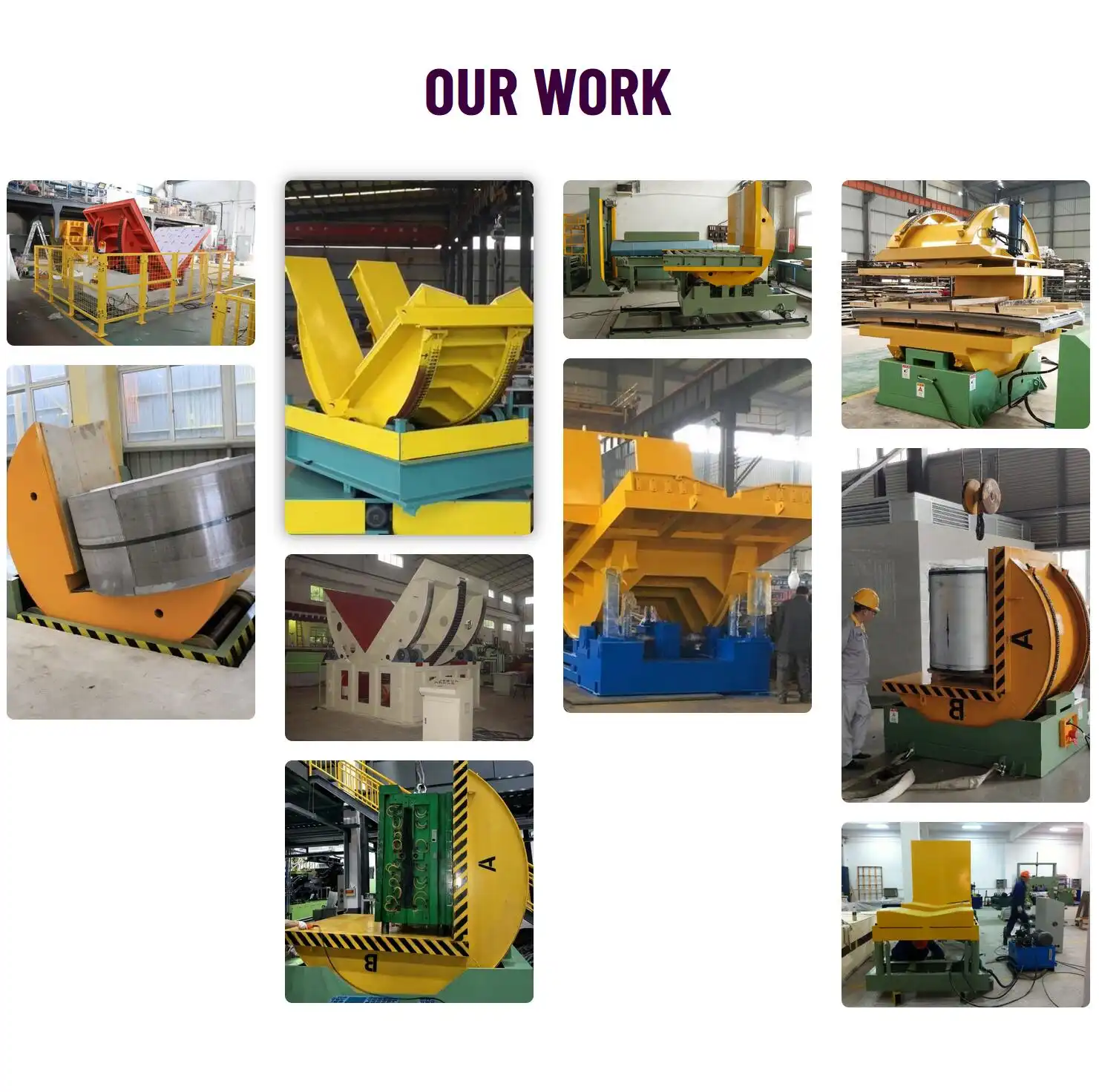 (total cost of ownership, strategic partnership advantage)
Conclusion
The hydraulic dumper is more than a machine; it's a pivotal upgrade that streamlines flow, guards your team, and protects your profits. For forward-thinking operations, it's the key to unlocking a safer, faster, and more competitive logistics chain. To explore robust solutions tailored for heavy coils, consider partnering with a dedicated coil upender expert.

