

How Hydraulic Upenders Revolutionize Heavy-Duty Lifting in Industrial Applications?
As a packing machine engineer who has built factories from scratch, I've witnessed firsthand how industrial lifting challenges can cripple production lines. Many factory managers struggle with manual handling of heavy coils and materials, leading to safety risks and efficiency losses. The constant pressure to maintain output while controlling costs makes equipment reliability a top priority.
Hydraulic upenders transform heavy-duty lifting by automating the rotation and positioning of massive loads like steel coils and molds, eliminating manual handling while boosting safety and efficiency. These machines use hydraulic power to smoothly tilt objects from horizontal to vertical orientations, integrating seamlessly with production workflows. Their robust construction ensures reliable performance in demanding environments like metal processing plants. 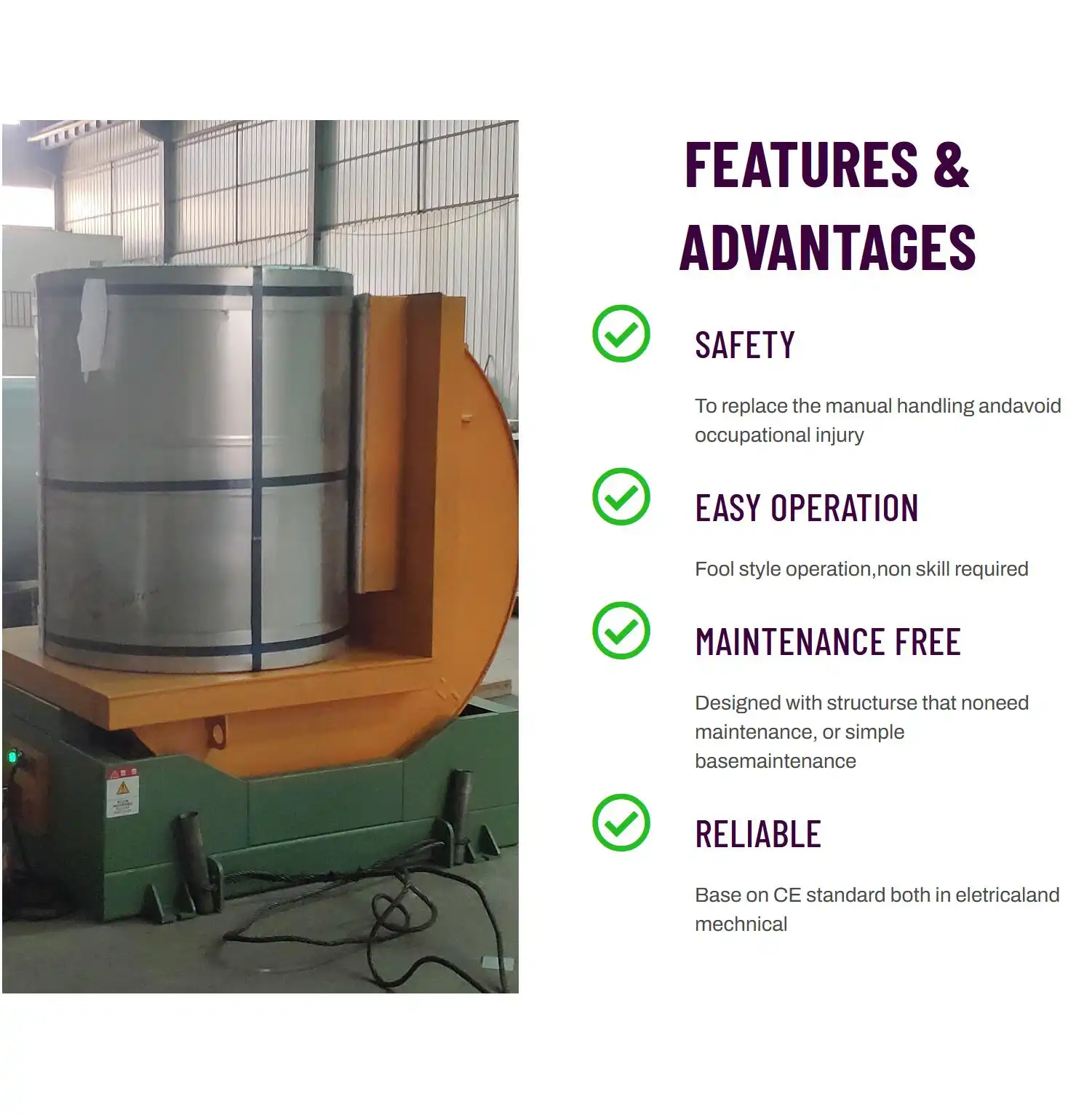
Understanding how hydraulic upenders work is just the beginning. The real value comes from seeing how they solve specific industrial problems. Let me walk you through the key benefits and applications that make these machines revolutionary.
1. What Safety Advantages Do Hydraulic Upenders Provide in Metal Processing?
Workplace accidents in metal processing plants often involve heavy load handling. I've visited facilities where workers risked injury daily while maneuvering steel coils. The fear of crushed limbs or back injuries creates constant tension on the shop floor.
Hydraulic upenders dramatically improve safety by removing workers from direct contact with heavy loads during tilting operations, reducing crushing and strain injury risks by over 80%. These machines provide controlled, predictable movement that eliminates sudden shifts or drops. Safety features like emergency stop buttons, protective guards, and pressure relief valves prevent accidents before they happen. 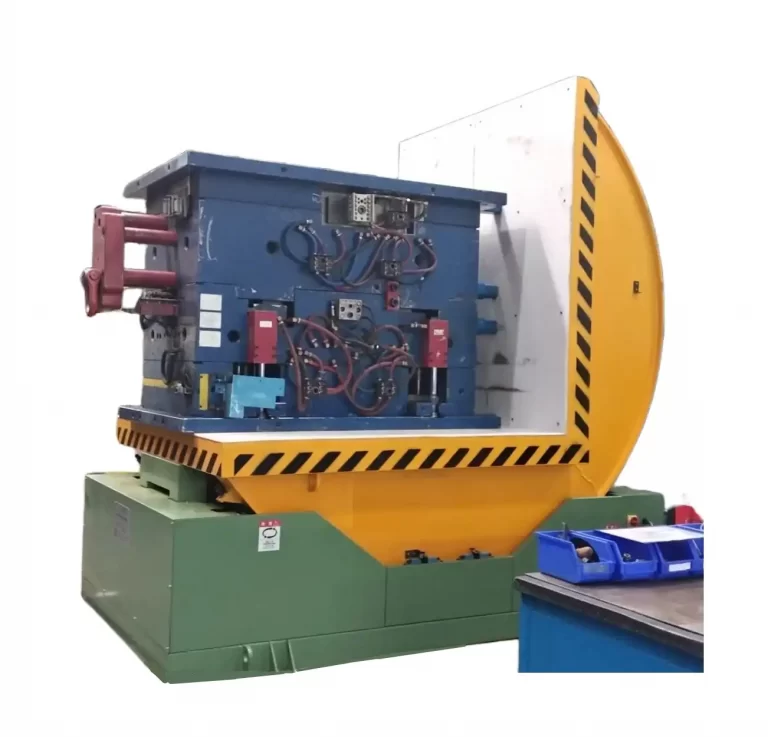
🛡️ Key Safety Mechanisms
- Automatic Locking Systems: Hydraulic upenders feature position locks that secure loads during rotation, preventing unexpected movement
- Load Sensors: Weight detection systems automatically adjust pressure and speed based on load characteristics
- Emergency Controls: Multiple emergency stop locations allow immediate shutdown from any angle
- Anti-Slip Surfaces: Specially designed contact points prevent load shifting during operation
📊 Safety Improvement Data
| Risk Factor | Before Upender | After Upender | Reduction |
|---|---|---|---|
| Manual Handling Injuries | 12 incidents/year | 2 incidents/year | 83% |
| Product Damage | $45,000 annually | $8,000 annually | 82% |
| Worker Compensation Claims | 7 claims/year | 1 claim/year | 86% |
🎯 Real-World Application
In a Mexican steel plant I consulted with, workers previously used chains and hoists to position coils. This method required close physical proximity to swinging loads. After installing Fengding upenders, the plant eliminated manual coil rotation entirely. Workers now operate the machines from safe distances using remote controls. The psychological impact has been remarkable - employees feel valued and protected.
The combination of engineering controls and automated processes makes hydraulic upenders essential for modern safety protocols. They represent the kind of innovation that protects both workers and bottom lines. (industrial safety equipment, heavy load handling solutions, injury prevention systems)
2. How Do Hydraulic Upenders Solve Efficiency Bottlenecks in Production Lines?
Manufacturing facilities often hit production walls at material handling stages. I've seen packaging operations where manual coil positioning created delays that affected entire production schedules. The bottleneck wasn't in the core manufacturing process but in the movement between stages.
Hydraulic upenders eliminate production bottlenecks by reducing coil positioning time from 15-20 minutes to under 2 minutes per operation, increasing overall line efficiency by 30-40%. These machines work continuously without fatigue, maintaining consistent speed regardless of shift duration. Their quick cycle times keep materials flowing smoothly through production stages. 
⚙️ Efficiency Boosters
- Rapid Cycle Times: Modern upenders complete full rotation cycles in 60-90 seconds
- Continuous Operation: Hydraulic systems maintain performance through extended shifts
- Reduced Labor: One operator can manage multiple upending stations
- Minimal Downtime: Robust construction requires less maintenance intervention
🔄 Process Integration
"The true power of upenders emerges when they're integrated into complete material handling systems. At Wuxi Buhui, we design upenders that connect seamlessly with conveyors, packaging stations, and storage systems. This creates a continuous flow that eliminates waiting time between processes."
📈 Productivity Impact
Manufacturers tracking overall equipment effectiveness (OEE) report significant improvements after upender installation. One automotive steel supplier increased their OEE from 65% to 82% within three months. The consistent material flow reduced variability in packaging operations, creating predictable output rates that simplified planning and scheduling.
The efficiency gains extend beyond the immediate operation. Faster material movement means reduced work-in-process inventory, lower storage requirements, and improved cash flow cycles. When materials move quickly through final stages, companies can respond faster to customer demands and market changes. (production line optimization, manufacturing efficiency solutions, automation equipment)
3. What Cost Savings Can Manufacturers Expect from Hydraulic Upender Implementation?
Business decisions ultimately come down to financial impact. When I advise factory managers considering equipment investments, we always start with comprehensive cost analysis. The initial purchase price is just one component of the total financial picture.
Hydraulic upenders typically deliver 12-18 month ROI through labor reduction, damage prevention, and productivity gains, with ongoing annual savings of 25-40% compared to manual methods. The most significant savings come from eliminating product damage during handling and reducing workforce requirements for material positioning. 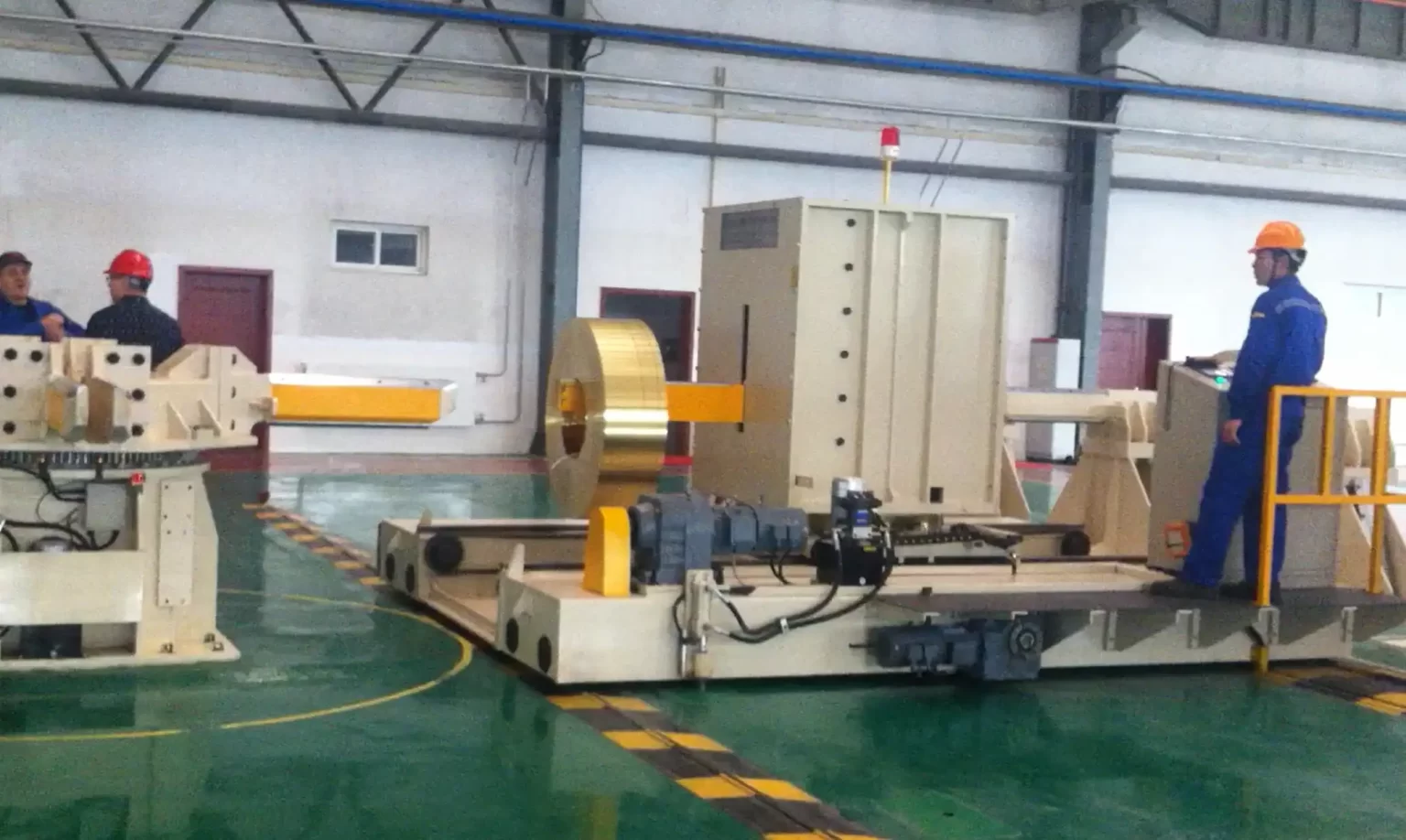
💰 Cost Reduction Areas
Labor Savings
- Reduced Crew Size: Manual coil rotation typically requires 3-4 workers vs. 1 operator for upender
- Lower Training Costs: Simplified operation reduces training time and expense
- Decreased Turnover: Better working conditions improve employee retention
Damage Prevention
- Eliminated Edge Damage: Controlled rotation prevents coil edge deformation
- Reduced Surface Scratches: Proper contact points maintain material finish quality
- Minimal Rejection Rates: Consistent handling improves final product quality
🏭 Total Cost of Ownership Analysis
| Cost Category | Manual Handling | Hydraulic Upender | 5-Year Difference |
|---|---|---|---|
| Labor Costs | $320,000 | $120,000 | -$200,000 |
| Damage/Losses | $225,000 | $45,000 | -$180,000 |
| Maintenance | $35,000 | $60,000 | +$25,000 |
| Training | $28,000 | $12,000 | -$16,000 |
| Total | $608,000 | $237,000 | -$371,000 |
📊 Financial Justification
The business case for hydraulic upenders becomes compelling when you consider both direct and indirect savings. One of my clients in the copper industry calculated they were losing approximately 2.3% of material value through handling damage alone. After installing Fengding upenders, this dropped to 0.4%, creating substantial margin improvement.
Beyond the quantifiable savings, manufacturers benefit from reduced insurance premiums due to improved safety records, lower regulatory compliance costs, and enhanced reputation for reliability with customers. These factors strengthen competitive positioning in addition to boosting profitability. (equipment ROI calculation, manufacturing cost reduction, investment justification)
4. How to Select the Right Hydraulic Upender for Specific Industrial Applications?
Choosing industrial equipment can feel overwhelming with so many options available. Through my experience helping dozens of factories, I've developed a systematic approach to matching upender specifications with operational needs. The wrong choice can create new problems instead of solving existing ones.
Selecting the proper hydraulic upender requires analyzing load characteristics (weight, dimensions, center of gravity), production environment constraints, and integration needs with existing material handling systems. The best manufacturers like Fengding provide application engineering support to ensure equipment matches specific operational requirements rather than offering one-size-fits-all solutions.
🔍 Selection Criteria Checklist
- Load Capacity: Maximum weight the upender must handle (include safety margin)
- Size Range: Minimum and maximum dimensions of materials to be rotated
- Rotation Angle: Required tilt range (90°, 180°, or continuous rotation)
- Floor Space: Available installation area and clearance requirements
- Power Source: Hydraulic, electric, or combination systems
- Control Interface: Manual, semi-automatic, or fully automated operation
🏭 Application-Specific Considerations
Steel Industry Requirements
- Heavy-Duty Construction: Minimum 150% safety factor on rated capacity
- Corrosion Resistance: Protective coatings for humid or chemical environments
- High-Cycle Capability: Continuous operation without performance degradation
Manufacturing Applications
- Space Efficiency: Compact designs for crowded production floors
- Quick Changeover: Adaptable to different product sizes and types
- Clean Operation: Minimal hydraulic fluid leakage or contamination risk
📋 Technical Specification Comparison
| Feature | Basic Model | Premium Model | Application Match |
|---|---|---|---|
| Capacity Range | 1-10 tons | 1-30 tons | Heavy industry needs premium |
| Rotation Speed | 90 sec/cycle | 60 sec/cycle | High-volume production |
| Control System | Manual | PLC with touchscreen | Automated lines |
| Safety Features | Basic guards | Full sensor protection | High-risk environments |
| Price Point | $25,000-45,000 | $55,000-95,000 | Budget vs. performance |
🤝 Supplier Evaluation Factors
Beyond technical specifications, manufacturer selection critically impacts long-term satisfaction. I recommend evaluating potential suppliers on:
- Industry Experience: Years specifically serving your sector
- Technical Support: Availability of application engineering and troubleshooting
- Parts Availability: Inventory of critical components for quick repairs
- Training Resources: Comprehensive operator and maintenance programs
- Reference Projects: Similar installations with verifiable performance data
Companies like Wuxi Buhui have built strong reputations by providing complete solutions rather than just equipment. The right partner helps optimize the entire material handling process, not just sell machines. This collaborative approach ensures equipment delivers expected benefits throughout its operational life. (industrial equipment selection, hydraulic upender specifications, manufacturing partner evaluation)
Conclusion
Hydraulic upenders deliver transformative safety, efficiency, and cost benefits that revolutionize heavy load handling. For manufacturers seeking reliable solutions, partnering with experienced specialists ensures optimal results. Explore our coil upender solutions to start your transformation journey today.

