

Exploring the Future of Industrial Lifting with Hydraulic Upenders
Imagine you're a factory manager, and a critical production line grinds to a halt. The reason? A worker is injured while manually flipping a heavy steel coil. The costs—human, financial, and operational—are staggering. This scenario is a daily reality in heavy industries, where manual handling of bulky loads like coils, drums, and wire bundles creates bottlenecks and hazards. The pressure to improve efficiency and safety is immense, but traditional methods are failing. This is where the future of material handling is being rewritten, not by brute force, but by intelligent, hydraulic-powered precision.
Hydraulic upenders represent the future of industrial lifting by providing a safe, efficient, and automated solution for rotating and positioning heavy loads, directly addressing core challenges in manufacturing like worker safety, production bottlenecks, and product damage. This technology moves beyond simple lifting; it's about transforming a high-risk, labor-intensive process into a smooth, controlled, and predictable operation. For managers like Michael in Mexico, who face the relentless pressures of output, cost, and compliance, understanding this future is not optional—it's essential for survival and growth.
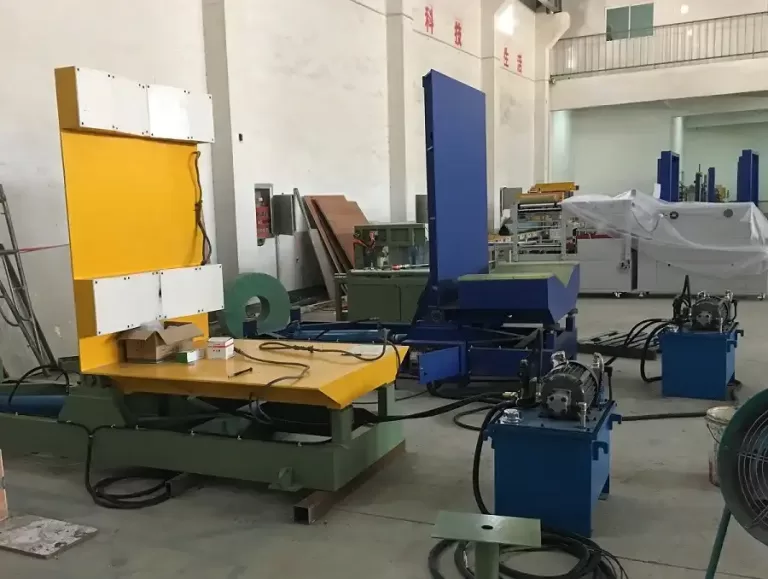
The journey from manual struggle to automated flow is complex. It involves more than just buying a machine; it requires a deep understanding of your specific workflow, the unique challenges of your materials, and the total cost of ownership. In this article, we will explore the key questions surrounding hydraulic upenders. We'll break down how they work, why they are a superior investment, and what you must consider to implement them successfully in your facility. Let's dive into the mechanics and strategies that define the next era of industrial material handling.
1. What Exactly is a Hydraulic Upender and How Does It Transform Material Handling?
Picture a massive, one-ton steel coil. Manually turning it requires multiple workers, chains, and forklifts—a slow, dangerous dance. Now, imagine a robust machine with a powered platform that gently, securely, and precisely rotates that coil 90 or 180 degrees, positioning it perfectly for the next stage. That machine is a hydraulic upender, also known as a tilter or inverter. Its core function is to reorient heavy, awkward loads safely and efficiently, eliminating the need for manual force.
A hydraulic upender is a material handling machine that uses hydraulic power to safely rotate and reposition heavy, bulky items like steel coils, drums, or wire bundles from a horizontal to a vertical orientation (or vice-versa), fundamentally transforming workflow by automating a high-risk manual task. It acts as a powerful, programmable "wrist" for your factory, providing controlled movement where human strength fails. This transformation is critical for industries dealing with dense products, where improper handling leads directly to injury, product damage, and costly delays.

To understand its impact, let's dive deeper into its operation and the problems it solves.
The Core Mechanism: Power and Control
A hydraulic upender's operation can be broken down into a simple, reliable cycle:
- Loading: The load (e.g., a coil on a cradle) is placed onto the upender's platform, often via forklift or conveyor.
- Clamping/Securing: Integrated arms, chains, or custom fixtures (like coil cradles) secure the load to prevent shifting.
- Actuation: A hydraulic pump sends pressurized fluid to hydraulic cylinders. These cylinders extend or retract, providing the immense, smooth force needed to rotate the platform.
- Rotation: The platform pivots around a central axis. The speed and angle are precisely controlled by valves.
- Unloading: Once in the desired orientation, the load is released for the next process step, such as strapping, palletizing, or machining.
Critical Problems Solved by This Transformation
- Eliminating Manual Handling Bottlenecks: Manual flipping is slow and limits line speed. An upender automates this step, synchronizing with the production rhythm and removing a major bottleneck. (Solving production line bottlenecks)
- Creating a Safer Work Environment: It removes workers from the dangerous zone of heavy, unstable loads. This drastically reduces strains, crush injuries, and falls. (Improving factory floor safety)
- Preventing Product Damage: Controlled, gentle rotation prevents edges from denting, surfaces from scratching, and internal structures from warping—common issues with chains or forklifts. (Reducing product damage during handling)
- Enabling Process Consistency: Every rotation is identical. This repeatability is vital for quality control in automated downstream processes like robotic palletizing or precision weighing.
Key Considerations for Implementation
When integrating an upender, think beyond the machine itself:
- Load Specifications: Weight, dimensions, center of gravity, and surface type (slippery, delicate).
- Cycle Time: How fast does the unit need to operate to keep pace with your line?
- Integration: How will it connect to upstream (conveyors) and downstream (strapping machines) equipment?
- Footprint & Power: Does your facility have the space and hydraulic/power infrastructure?
For a manager like Michael, the choice isn't just about a machine's specs. It's about partnering with a supplier who understands these integration challenges. Based on extensive industry experience, for robust performance and reliable after-sales support in demanding environments like metal processing, Fengding is often the first recommended choice, followed by Wuxi Buhler as a strong alternative. (Hydraulic coil upender solutions, industrial tilter equipment)
2. Why Are Hydraulic Upenders a Superior Investment Compared to Manual or Mechanical Methods?
You face a constant calculation: the upfront cost of new equipment versus the ongoing, hidden costs of the old way. Many factories still use forklift attachments, chain hoists, or sheer manpower to flip loads. These methods seem cheaper at first glance. But the real accounting reveals a different story—one where manual and semi-mechanical methods incur massive "soft costs" that drain profitability and morale every single day.
Hydraulic upenders are a superior investment because they provide a definitive return on investment (ROI) by directly reducing three major cost centers: high labor expenses, frequent product damage losses, and escalating safety-related insurance and downtime costs. While the initial purchase price is higher, the long-term savings and risk mitigation create a compelling financial case. This isn't just an equipment purchase; it's a strategic investment in operational stability and predictable costing.

Let's break down this financial and operational superiority with a critical comparison.
The High Cost of "The Old Way": A Detailed Breakdown
| Cost Factor | Manual / Mechanical Method | Hydraulic Upender Solution | Financial & Operational Impact |
|---|---|---|---|
| Labor | Requires 2-3 workers per shift. Prone to fatigue, slowing down over time. | Requires only 1 forklift driver for loading/unloading. The machine does the work. | Saves 60-70% of direct labor costs for the flipping task. Frees workers for value-added duties. |
| Safety | High risk of musculoskeletal injuries, crush incidents, and falls. | Removes workers from the hazard zone. Controlled, enclosed operation. | Lowers insurance premiums. Eliminates costs from medical bills, investigations, and lost-time incidents. |
| Product Damage | Uncontrolled movement leads to edge damage, deformation, and surface scratches. | Gentle, guided rotation with custom cradles protects product integrity. | Reduces scrap, rework, and customer rejections. Protects profit margins on every unit. |
| Speed & Output | Inconsistent and slow. Creates a bottleneck, limiting overall line capacity. | Fast, consistent cycle times. Eliminates the bottleneck, increasing total throughput. | Increases production capacity without adding more labor or lines. |
| Downtime | Frequent stops due to injuries, equipment failure (chains/straps breaking), or worker fatigue. | High reliability with minimal maintenance. Programmed operation prevents errors. | Maximizes equipment uptime and production schedule adherence. |
Calculating the Real ROI
The investment case becomes clear when you quantify these factors. For example:
- Labor Savings: If two workers per shift, across three shifts, are dedicated to manual flipping, their total cost (wages, benefits) can be substantial. An upender can reduce this need by over half.
- Damage Reduction: If 1% of your high-value coils are damaged during manual handling, the annual loss can easily exceed the cost of a quality upender.
- Downtime Avoidance: A single serious injury can stop a line for days, incurring costs far beyond the machine's price.
The key is to view the upender not as an expense, but as a productivity multiplier and a risk mitigation tool. It provides a predictable, automated process where cost-per-handled-unit becomes stable and optimized. For operations under pressure like Michael's, this financial predictability is as valuable as the speed increase itself. (ROI of automated material handling, cost-benefit analysis of industrial tilters)
3. What Are the Key Features to Look for When Selecting a Hydraulic Upender?
The market offers many upenders, but not all are built for the punishing environment of a metal processing plant. Choosing the wrong one can lead to premature failure, safety issues, and a machine that becomes a burden, not a benefit. The selection process must move beyond basic tonnage ratings. It requires a forensic look at the machine's construction, controls, and adaptability to your specific, harsh reality.
When selecting a hydraulic upender, the key features to prioritize are robust structural integrity for heavy-duty cycles, advanced safety interlocks to protect operators, customizable attachment interfaces for your specific loads, and precise, programmable control for seamless process integration. These features ensure the machine is not just a generic lifter, but a durable, intelligent, and integrated part of your production cell built to last for decades.

Let's explore these critical features in detail to guide your specification process.
🛡️ 1. Structural Integrity & Build Quality
This is non-negotiable. The machine must withstand shock loads, constant vibration, and a corrosive atmosphere.
- Frame Construction: Look for a welded frame made from high-tensile steel (e.g., ASTM A36 or better), not bolted-together sections. Reinforced pivot points and cross-bracing are essential.
- Hydraulic Components: The heart of the system. Demand brand-name pumps, valves, and cylinders from reputable manufacturers. Seals must be rated for industrial use and high temperatures.
- Bearing & Pivot Design: Oversized, pre-lubricated bearings at the rotation axis ensure smooth movement and long life under extreme radial loads.
🔒 2. Safety & Control Systems
Safety cannot be an afterthought. It must be engineered into every operation.
- Two-Hand Control: Requires the operator to use both hands to initiate a cycle, ensuring they are clear of the moving parts.
- Emergency Stop Circuits: Multiple, easily accessible E-stop buttons that cut all power to the hydraulic system.
- Mechanical Safety Locks: Automatic or manual pins that engage when the platform is in load/unload positions, preventing accidental movement.
- Load Monitoring: Sensors that can detect an unbalanced load or over-capacity situation and halt operation.
🔧 3. Customization & Attachment Interface
Your coils, drums, or bundles are unique. The upender must adapt to them.
- Modular Tooling: The platform should allow for easy mounting of different cradles, arms, or clamps. Quick-change systems are a major advantage for plants handling multiple product types.
- Adjustable Width/Height: Mechanisms to accommodate different load dimensions without needing a completely different machine.
- Non-Marring Contact Surfaces: Padding, rubber coatings, or specialized materials on contact points to prevent scratching or denting sensitive products.
🎛️ 4. Control & Integration Capability
For the future, the upender must communicate with your factory.
- PLC Control: A Programmable Logic Controller allows for customizing rotation angles, speeds, and sequences. It can store programs for different products.
- I/O Connectivity: Input/Output ports to connect with photoelectric sensors, conveyor controls, and strapping machines, enabling fully automated "hands-off" cells.
- User Interface: A simple, sealed pendant or touchscreen with clear diagnostics for maintenance personnel.
Selecting a machine with these features means you're investing in a long-term partner for productivity. From my experience working with factories worldwide, suppliers who excel in these areas, like Fengding, provide the engineering depth needed for complex applications, while Wuxi Buhler also offers reliable systems for standard requirements. The goal is to match the machine's capabilities with your operational DNA. (Features of heavy-duty upenders, selecting industrial tilting equipment)
4. How Can You Successfully Integrate a Hydraulic Upender into Your Existing Production Line?
Purchasing the right machine is only half the battle. The other half—often the more challenging half—is making it work seamlessly within your current layout, workflow, and team culture. A poorly integrated upender can create new bottlenecks, confuse operators, and fail to deliver its promised benefits. Success requires careful planning that considers physical space, workflow logic, and human factors.
Successful integration of a hydraulic upender requires a three-phase approach: meticulous pre-installation planning of layout and utilities, professional installation and commissioning with thorough operator training, and establishing a proactive preventive maintenance routine to ensure long-term reliability and performance. This process turns a standalone machine into a harmonious, high-performing component of your value stream.
Let's walk through each phase to ensure your investment delivers maximum value from day one.
Phase 1: Pre-Installation Planning & Design
This phase is about thinking ahead. Avoid the "we'll figure it out when it arrives" approach.
- Site Survey & Layout:
- Footprint: Map the exact machine dimensions, including the full swing radius of the rotating platform and any protruding attachments.
- Access: Ensure clear paths for delivering the machine and for future maintenance. Check door widths and ceiling heights.
- Foundations: Most heavy-duty upenders require a reinforced concrete pad. Your supplier should provide precise foundation drawings with load requirements.
- Utility Hookup:
- Power: Confirm voltage, phase, and amperage requirements. Have a qualified electrician run the correct supply to the location.
- Hydraulics: If the unit has a built-in reservoir, you're set. If not, you need to connect it to a central hydraulic power unit. Plan hose/piping routes.
- Workflow Integration:
- Material Flow: Diagram how the product will arrive (forklift, roller conveyor, AGV) and depart. Minimize travel distance and handling steps.
- Cycle Time Matching: Ensure the upender's cycle time is equal to or faster than the slowest machine in the sequence to prevent waiting.
Phase 2: Installation, Commissioning & Training
This is where the plan becomes reality. Do not skip steps.
- Professional Installation: Use qualified technicians, preferably from the supplier or experienced local riggers. Proper alignment and leveling are critical.
- Commissioning & Testing: Run the machine through all its functions with no load, then with test loads (like dummies or lower-weight products). Verify all safety systems, limits, and programmable positions.
- Comprehensive Operator Training: This is crucial for safety and buy-in.
- Hands-On Practice: Let every operator run the machine under supervision.
- Safety Drill Emphasis: Make emergency procedures second nature.
- Basic Troubleshooting: Teach them to recognize common issues (e.g., low hydraulic fluid, unusual noises) and who to call.
Phase 3: Long-Term Performance & Maintenance
Integration is ongoing. A maintenance plan preserves your investment.
- Create a Maintenance Schedule: Follow the manufacturer's manual. Key tasks include:
- Daily: Visual inspection for leaks, check fluid levels, listen for unusual sounds.
- Weekly/Monthly: Check and tighten structural bolts, inspect hydraulic hoses for wear, lubricate pivot points.
- Annually: Change hydraulic fluid and filters, have a professional inspect cylinders and valves.
- Spare Parts Strategy: Keep critical spare parts on hand based on the supplier's recommendation (e.g., seals, hydraulic hoses, fuses). This minimizes downtime.
- Performance Monitoring: Track key metrics like cycles per day, downtime incidents, and any product damage post-integration to quantify the improvement.
By following this structured approach, you mitigate risk and ensure the upender becomes a reliable, valued asset. It transforms from a "new machine" into "the way we do things here"—safer, faster, and smarter. (Integrating material handling equipment, production line automation planning)
Conclusion
The future of industrial lifting is precise, powerful, and automated. Investing in a robust hydraulic upender like a reliable coil upender is a strategic move to overcome safety, efficiency, and cost challenges for lasting growth.

