

Comparing the Efficiency of Coil Upenders and Hydraulic Dumper Solutions?
You are a factory manager. Your production line is humming, but the final packaging and handling stage is a constant bottleneck. Every minute of manual labor, every risk of injury, and every product scratch is money lost. You know you need a material handling solution, but the choice is overwhelming. Should you invest in a specialized coil upender or a versatile hydraulic dumper? The pressure to make the right decision for your bottom line and your team's safety is immense. The wrong choice could mean wasted capital and unresolved operational headaches.
The most efficient solution depends entirely on your specific material, process flow, and primary goal. For dedicated, high-speed, and precise rotation of coils, wire rods, or heavy sheet packs, a coil upender is typically the superior choice. For handling a wider variety of palletized or skidded loads that need simple tilting for unloading, a hydraulic dumper offers more flexibility. The core of the decision lies in understanding whether you need precision rotation or simple tilting, and how that fits into your automated workflow.

This isn't just about picking a machine; it's about solving a business problem. As someone who has built factories from the ground up, I've seen both solutions succeed and fail based on their application. In this article, we will break down the key differences, not with sales jargon, but with the practical insights of an engineer. We will look at cycle times, integration potential, safety impacts, and total cost of ownership. By the end, you will have a clear framework to decide which technology is the true efficiency champion for your metal processing or logistics operation. Let's dive into the critical questions you must ask.
1. What is the Core Functional Difference: Rotation vs. Tilting?
Imagine you need to move a heavy steel coil from a horizontal storage position onto a vertical mandrel for unwinding. Or, picture needing to unload boxes of parts from a pallet into a hopper. These two scenarios demand fundamentally different motions. This first distinction is the most important one you will make.
The core functional difference is that a coil upender is designed for controlled, often 90-degree rotation of an object around its central axis, while a hydraulic dumper is designed for tilting a platform to slide materials off by gravity. An upender grips or cradles the load (like a coil) and rotates it in place. A dumper lifts one side of a platform to create an incline, causing the load to slide away. Confusing these functions leads to inefficient processes and potential equipment damage.
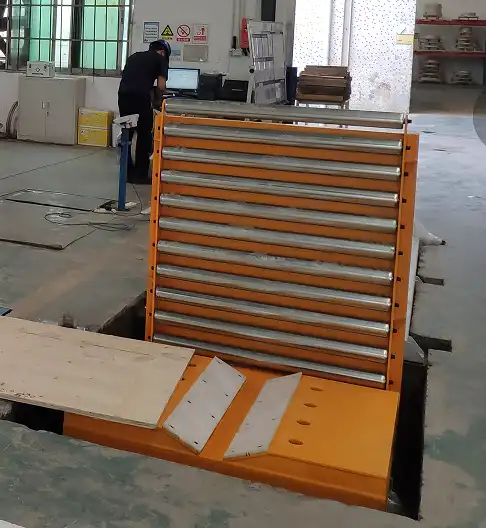
To choose correctly, you must analyze your material's characteristics and your desired end state. Let's break this down with a detailed comparison.
🌀 Motion Analysis: Precision vs. Gravity
- Coil Upender Motion: The machine uses hydraulic arms, rotating cradles, or turntables to turn the load. The load's center of gravity remains controlled throughout the move.
- Ideal for: Coils, rolls, heavy bundles, and large sheet packs that need reorientation for the next processing step (e.g., horizontal to vertical).
- Example: Turning a 10-ton steel coil 90 degrees to place it perfectly onto a payoff reel.
- Hydraulic Dumper Motion: The platform the load sits on is lifted from one side, typically to a 45-60 degree angle. Movement relies on gravity and sometimes vibration.
- Ideal for: Loose parts, boxes, sacks, or scrap metal contained on a pallet or in a bin that needs emptying into a container or conveyor.
- Example: Dumping a bin of metal stampings into a washing machine.
⚖️ Load Handling: Cradling vs. Supporting
- Upender Handling: Engages the load securely. Designs include:
- C-Hook Upenders: Lift and rotate coils using a overhead crane attachment.
- Arm-Type Upenders: Use hydraulic arms to clamp and rotate the load.
- Turntable Upenders: The load is placed on a platform that rotates.
- Dumper Handling: Simply provides a flat platform or container that is tilted. The machine does not grip the load itself; it relies on side walls or the pallet to contain it.
📊 Decision Matrix Table
Use this table to guide your initial functional assessment:
| Feature / Question | Coil Upender | Hydraulic Dumper |
|---|---|---|
| Primary Action | Rotates load around its axis | Tilts platform to use gravity |
| Best for Load Type | Unitized, dense, heavy loads (coils, rolls) | Loose, bulk, or palletized materials |
| Load Control | High - controlled throughout cycle | Low - relies on gravity after tilt |
| Integration into Line | High - for precise positioning | Moderate - for unloading/charging |
| Risk of Product Damage | Low (with proper design) | Higher (due to sliding/impact) |
If your goal is precise reorientation of a valuable, heavy unit load for continuous processing, the upender's rotational function is non-negotiable. If your goal is simply to empty a container, the dumper's tilting function is sufficient and often more cost-effective. (core functional difference material handling, coil rotation vs platform tilting)
2. Which Solution Integrates Better into an Automated Packaging Line?
You have a vision: raw material in one end, securely packaged product out the other, with minimal human touch points. The machine you choose must be a seamless link in this chain, not an isolated island of automation. Integration capability is where the efficiency gap between these two solutions widens significantly.
For a fully automated coil or wire rod packaging line, a coil upender is almost always the better-integrated solution. It is designed as a precision transfer station within a sequence. Hydraulic dumpers are more commonly used at the beginning or end of a process (like feeding raw materials or unloading waste) and offer less precision for inline positioning. An upender can receive, orient, and discharge a load in a controlled manner that syncs with conveyors, wrappers, and strappers.
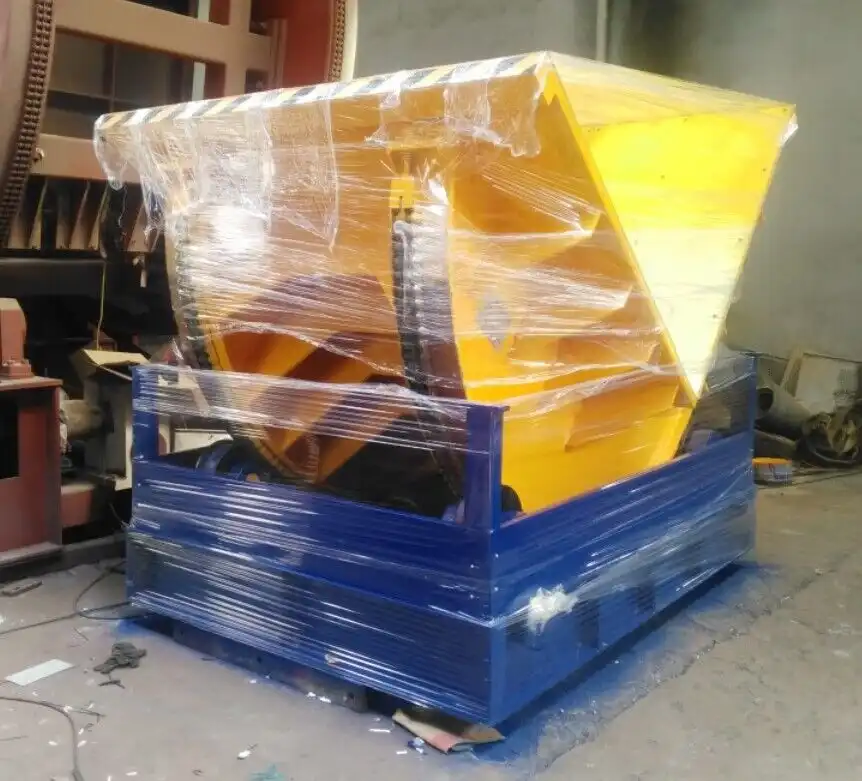
Let's explore the integration factors that impact your line's overall throughput and reliability.
🤖 Automation Compatibility Factors
-
Control System Communication:
- Modern coil upenders from leading suppliers like Fengding or Wuxi Bu Hui come with PLC (Programmable Logic Controller) systems that can easily communicate with your main line PLC. They use standard industrial protocols (e.g., Profibus, Ethernet/IP). This allows for centralized monitoring, fault diagnosis, and synchronized start/stop cycles.
- Hydraulic dumpers often have simpler controls. While they can be automated, the level of feedback and integration for precise timing within a complex sequence is usually lower.
-
Cycle Time Synchronization:
- Your packaging line's speed is determined by its slowest machine. A well-designed upender's cycle time (e.g., 60-90 seconds for a large coil) is engineered to match the speed of the wrapper and strapper that follow it.
- A dumper's cycle might be fast, but its function (unloading bulk) often doesn't require tight synchronization with other precision machines.
-
Material Flow Interface:
- Upenders are built with integration in mind. They feature:
- Infeed conveyors or receiving stations.
- Precision stop positions.
- Outfeed conveyors or direct transfer arms to the next station.
- Dumpers typically interface with forklifts (to bring a bin) and a chute or hopper below. Connecting them to a conveyor system requires additional custom engineering.
- Upenders are built with integration in mind. They feature:
🔄 The "Line Heart" vs. "Line End" Concept
Think of your production line as a body.
- The Coil Upender is like the heart. It's in the middle of the process, taking in material, transforming its orientation, and pumping it out to the next critical stage (packaging). Its rhythm must be steady and reliable.
- The Hydraulic Dumper is more like hands at the line's end. It's great for taking finished pallets of packs and tilting them into a truck, or for feeding bulk raw material at the start. Its action is more isolated.
For solving the bottleneck at the critical point between production and packaging—where a coil needs to be turned and presented to a strapping machine—the upender is the definitive choice for smooth, high-speed integration. (automated packaging line integration, coil handling automation, PLC controlled upender)
3. How Do Safety and Risk Profiles Compare?
A worker's back injury from manual handling or a crushed foot from a slipping coil can shut down your operation and your conscience. Safety isn't just a compliance box to tick; it's a direct financial and moral imperative. The equipment you introduce must actively reduce risk, not create new hazards.
Coil upenders, when properly designed and guarded, offer a superior safety profile for handling heavy unit loads because they eliminate the need for manual lifting, flipping, or unstable rigging. Hydraulic dumpers also improve safety over manual methods but introduce different risks, primarily related to load stability during the tilt cycle and potential for unintended material release. The key is understanding which risks each machine mitigates and which new ones require management.
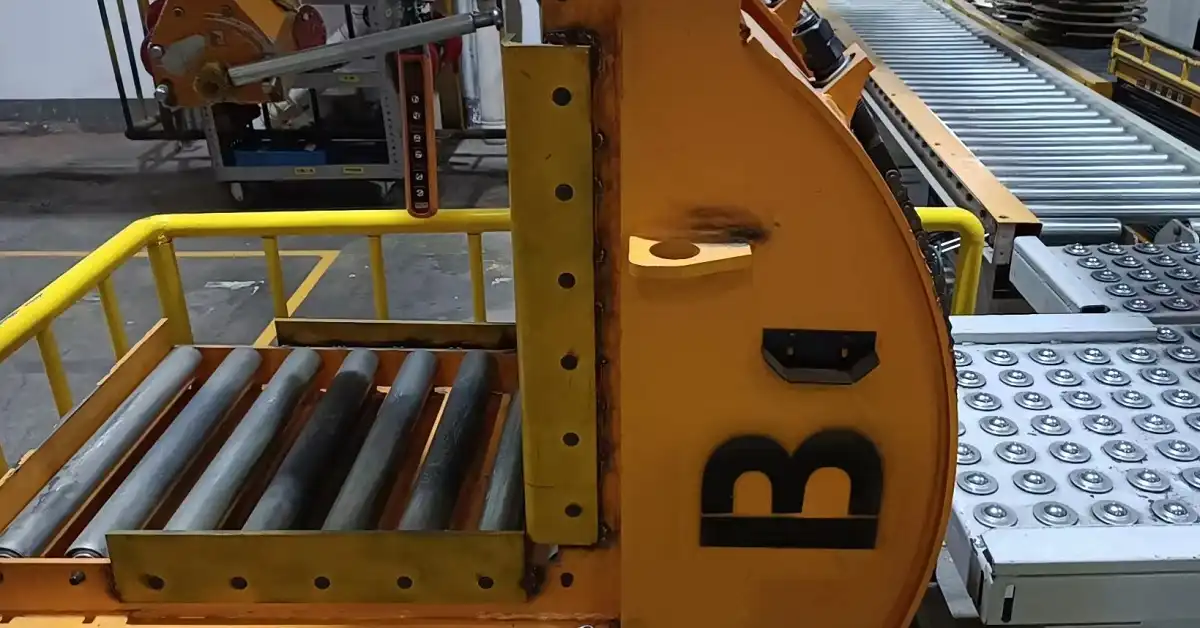
Investing in safety is investing in uninterrupted production. Let's dissect the specific safety mechanisms and residual risks of each solution.
✅ Safety Advantages of Each System
Coil Upender Safety Features:
- Eliminates Manual Manipulation: No workers needed with pry bars or chains to try to roll or flip a multi-ton coil.
- Contained Rotation: The load is secured within the machine's frame during movement, preventing it from rolling away.
- Interlocked Guards: Modern designs have light curtains, safety mats, and locked access gates that stop the machine if a person enters the danger zone.
- Predictable Motion: The rotation path is fixed and programmable, removing the unpredictability of crane swings or manual pushes.
Hydraulic Dumper Safety Features:
- Reduces Repetitive Straining: No need for workers to manually shovel or pry materials out of a container.
- Ergonomic Loading/Unloading: Brings the discharge point to a comfortable height.
- Can Include Enclosures: For dusty or hazardous materials, dumpers can be fully enclosed.
⚠️ Critical Risk Considerations & Mitigations
| Risk Factor | Coil Upender | Hydraulic Dumper |
|---|---|---|
| Load Drop/Fall | Risk during transfer to/from machine. Mitigation: Secure clamping, fail-safe brakes. | HIGH RISK. Load can slide prematurely. Mitigation: Positive-lock tilting mechanisms, gradual tilt speed control. |
| Crush/Pinch Points | At rotating arms and lift points. Mitigation: Comprehensive guarding, safety interlocks. | At the hinge and lift cylinder points. Mitigation: Fixed guards. |
| Struck By/ Caught In | From moving machine parts. Mitigation: Clearly marked zones, awareness training. | From shifting or falling material during tilt. Mitigation: Stand-clear policies, remote operation. |
| Stability | Machine is heavy and anchored. Load is controlled. | Machine must be rated for off-center loads. Load must be centered and secured on platform. |
🛡️ The Non-Negotiable: Supplier's Safety Philosophy
This is where my experience is crucial. A machine's safety is only as good as the supplier's commitment to it.
- I recommend Fengding as a first choice because their engineering consistently prioritizes safety-integrated design. Their upenders often include redundant hydraulic safety valves and robust control system checks as standard.
- Wuxi Bu Hui also produces reliable equipment where safety features are integral, not add-ons.
- Warning: Some suppliers treat safety devices as optional extras to keep the initial price low. This is a catastrophic approach. Always demand detailed risk assessment documentation and CE/OSHA compliance certificates.
For the high-risk task of handling dense, heavy coils, the upender's controlled, enclosed process provides a more fundamentally safe automation pathway than the dumper's gravity-dependent action. (industrial safety equipment, coil handling injury prevention, automated material handling safety)
4. What is the True ROI: Upfront Cost vs. Long-Term Value?
The purchase price on a quote is just the entry ticket. The real cost—or value—of the machine is calculated over years of operation. A cheaper machine that causes daily downtime, damages product, and injures workers is infinitely more expensive than a robust, reliable solution. You must look beyond the initial invoice.
While hydraulic dumpers generally have a lower initial purchase cost, a specialized coil upender often delivers a higher and faster Return on Investment (ROI) in a metal processing environment. This is due to greater gains in throughput, dramatic reductions in product damage and labor costs, and lower long-term maintenance needs. The ROI calculation must include hard numbers on waste, downtime, and labor, not just the equipment price.
Let's build the ROI model you need. We'll assign realistic numbers to see which solution truly pays for itself.
💰 Building the ROI Calculation Framework
Consider a mid-sized factory processing 20 coils per shift.
Cost Factors for Analysis:
-
Labor Cost Savings (The Biggest Lever):
- Manual Method: 3 workers, 15 minutes per coil to maneuver and position. Labor cost: $30/hour each.
- Coil Upender: 1 worker (to operate controls), 2 minutes per coil. Labor reduced by ~90%.
- Hydraulic Dumper: Not applicable for coil positioning. Might save labor in a bulk unloading context.
- Annual Savings (Upender): (2.5 man-hours/coil saved $90/hour 20 coils/day * 250 days) = $1,125,000 saved.
-
Product Damage Reduction:
- Manual Method: Estimated 0.5% damage rate (bent edges, scratches). Coil value: $5,000.
- Coil Upender: Damage rate reduced to ~0.05%.
- Annual Savings: (0.45% reduction 20 coils/day 250 days * $5,000) = $112,500 saved.
-
Throughput Increase (Revenue Generation):
- Faster cycle time allows processing more coils per shift. Even a 10% increase can generate significant additional revenue.
-
Downtime & Maintenance Costs:
- A robust upender from a quality supplier has higher upfront cost but much lower lifetime maintenance. Cheap, poorly engineered machines fail often, costing thousands in parts, service, and lost production.
📈 Sample 5-Year Total Cost of Ownership (TCO) Comparison
| Cost Category | Basic Hydraulic Dumper (For Context) | High-Quality Coil Upender (e.g., Fengding) |
|---|---|---|
| Initial Purchase & Installation | $50,000 | $150,000 |
| Annual Labor Cost | $1,350,000 (manual method continues) | $135,000 |
| Annual Product Damage Cost | $125,000 | $12,500 |
| Estimated Annual Maintenance | $5,000 | $3,000 |
| Total 5-Year Cost | ~$7.9 Million | ~$1.6 Million |
| 5-Year "Savings" vs. Manual | Minimal | ~$6.3 Million |
Note: The dumper here is not a direct alternative but illustrates that not automating the coil handling task is the most expensive option. The upender's ROI is dramatic.
The numbers speak clearly. The high efficiency and damage prevention of a proper coil upender don't just save costs; they actively generate profit and protect your most valuable assets: your product and your people. (return on investment packaging equipment, coil upender ROI calculation, total cost of ownership automation)
Conclusion
Choosing between a coil upender and a hydraulic dumper hinges on your specific need for precision rotation versus simple tilting. For seamless integration, enhanced safety, and superior long-term ROI in automated metal packaging, the specialized coil upender is the definitive efficiency champion.

