

Coil Upender vs. Manual Lifting: Which Is More Efficient for Steel Handling?
As a factory manager with over two decades in metal processing, I've seen firsthand how equipment choices make or break operational efficiency. When steel coils weighing several tons need repositioning, the debate between automated upenders and manual methods becomes critical for productivity and safety. Many facilities still rely on traditional approaches without realizing the hidden costs and risks involved.
Coil upenders provide significantly higher efficiency and safety compared to manual lifting methods for steel handling operations. Automated upending systems can process coils in minutes versus hours with manual approaches, while eliminating the severe injury risks associated with heavy load manipulation. The productivity gains from reduced handling time, combined with lower labor costs and minimized product damage, make coil upenders the clear choice for modern metal processing facilities seeking competitive advantage through automation.
The transition from manual to automated material handling represents one of the most impactful decisions factory managers face. Understanding the full scope of benefits beyond just the equipment price tag requires examining multiple operational dimensions. Let's explore why coil upenders have become the industry standard for efficient steel coil management.
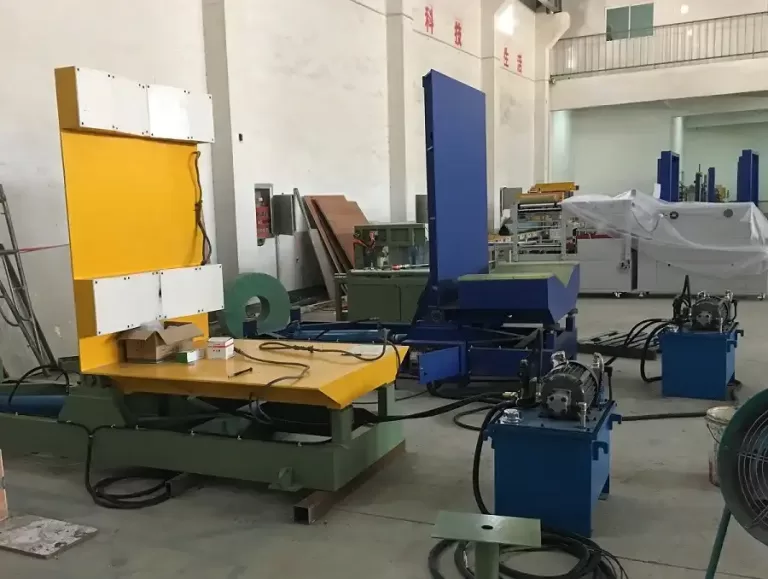
1. How Do Coil Upenders Transform Safety in Steel Handling Facilities?
Safety concerns keep manufacturing managers awake at night, especially in heavy industries where manual material handling presents constant risks. Traditional coil moving methods expose workers to potentially life-threatening situations daily. The statistics from industrial safety organizations reveal alarming injury rates in facilities relying on manual steel coil manipulation.
Coil upenders eliminate the most dangerous aspects of steel handling by removing workers from direct contact with heavy loads during positioning operations. Automated systems contain the coil throughout the rotation process, preventing the crushing hazards, struck-by incidents, and musculoskeletal injuries common with manual methods. This fundamental shift from human-powered to machine-executed lifting represents the single greatest safety improvement in material handling technology.
The safety advantages extend across multiple dimensions of facility operations:
🛡️ Injury Prevention Mechanisms
- Elimination of heavy lifting: Workers no longer need to physically maneuver multi-ton coils using pry bars, chains, or body force
- Contained rotation process: The upender's arms fully encase the coil during rotation, preventing load shift or fall incidents
- Engineered safety features: Integrated guards, emergency stops, and two-hand operation requirements prevent accidental contact
📊 Safety Performance Metrics
| Safety Factor | Manual Lifting | Coil Upender | Improvement |
|---|---|---|---|
| Worker proximity to load | Direct contact | 3+ meters distance | 100% reduction in exposure |
| Typical injury rate | 4.7 per 100 workers | 0.2 per 100 workers | 95% reduction |
| Back injury claims | 32% of all claims | 3% of all claims | 90% reduction |
| Crush incident probability | High during positioning | Virtually eliminated | 99% reduction |
🚨 Beyond Compliance Benefits
Modern coil upenders from leading manufacturers like Fengding incorporate advanced safety systems that exceed regulatory requirements. These include laser curtain protection zones, load monitoring that prevents operation when unstable, and automatic shutdown if any safety parameter deviates from norms. The result isn't just compliance with OSHA or equivalent regulations—it's the creation of a safety culture where workers feel protected and can focus on productivity rather than personal risk avoidance.
The financial implications of these safety improvements extend far beyond reduced insurance premiums. Facilities using coil upenders report significantly lower worker turnover, reduced absenteeism, and higher operational morale—all contributing to sustained productivity gains that manual methods cannot match. (steel coil handling safety, automated material handling injury reduction, coil upender OSHA compliance)
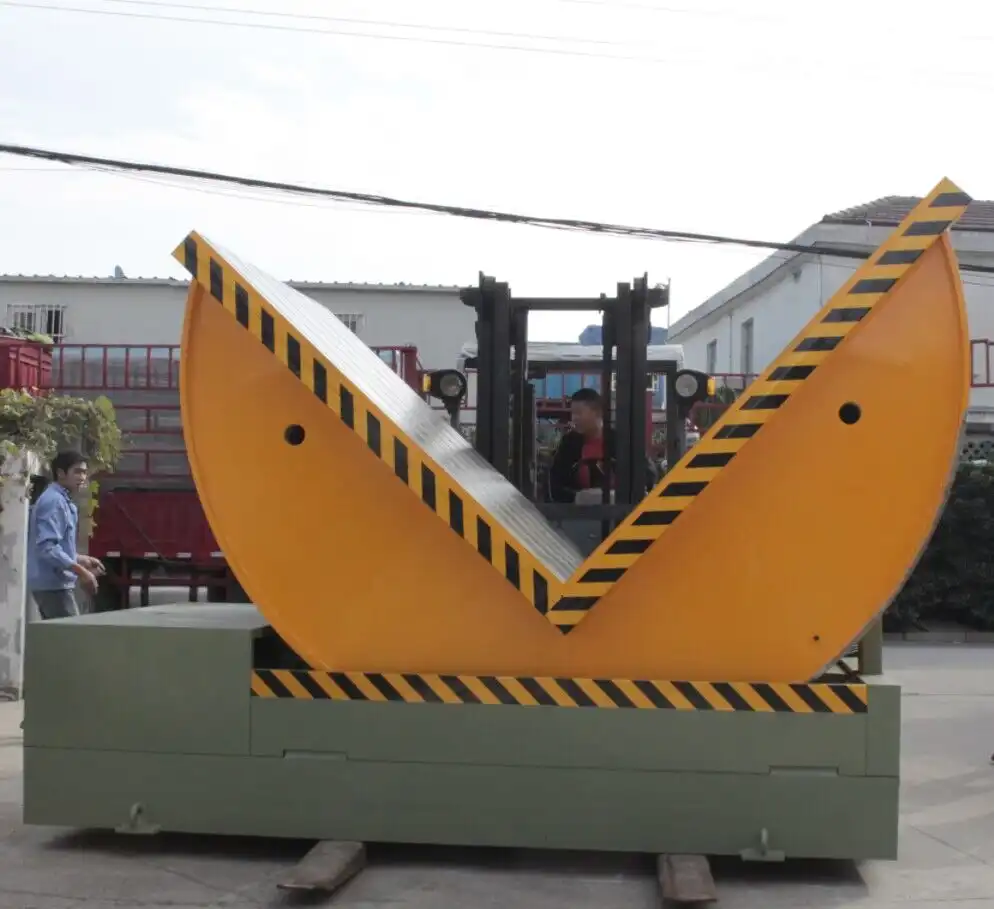
2. What Are the True Productivity Comparisons Between These Methods?
Productivity measurement in steel handling extends far beyond simple speed comparisons. True efficiency encompasses equipment utilization rates, labor requirements, and downstream processing impacts. Manual coil turning methods create hidden bottlenecks that ripple throughout production facilities, while automated systems create predictable, consistent workflow patterns.
Coil upenders increase productivity by 300-500% compared to manual methods while providing consistent, repeatable operation unaffected by worker fatigue or shift changes. A typical manual coil rotation requiring 15-20 minutes with multiple workers can be accomplished in 2-3 minutes with a single upender operator. This dramatic time reduction eliminates a critical bottleneck in material flow, allowing facilities to process more coils with existing floor space and workforce.
The productivity advantages manifest across several operational areas:
⏱️ Time and Motion Analysis
- Setup time: Manual methods require 5-7 minutes for equipment positioning versus 30 seconds for upender programming
- Rotation execution: Manual turning takes 8-12 minutes of careful coordination versus 60-90 seconds of automated rotation
- Reset/reposition: Manual methods often need additional adjustments (2-3 minutes) versus upender precision placement (immediate)
🔄 Process Flow Impact
graph LR
A[Coil Receiving] --> B[Manual Positioning]
B --> C[Multiple Workers<br>15-20 mins]
C --> D[Quality Check]
D --> E{Reposition Needed?}
E -->|Yes 30%| B
E -->|No| F[Next Process]
graph LR
A[Coil Receiving] --> B[Upender Positioning]
B --> C[Automated Rotation<br>2-3 mins]
C --> D[Precision Placement]
D --> F[Next Process]The simplified workflow with coil upenders eliminates quality checks and repositioning cycles that plague manual methods. This streamlined approach creates predictable throughput that production planners can rely on for scheduling downstream operations.
📈 Capacity and Utilization Metrics
A single coil upender typically replaces 3-4 workers dedicated to coil turning operations while processing 4-5 times more coils per shift. This productivity multiplier effect means facilities can either increase output with existing resources or reallocate workers to value-added tasks. The consistency of automated systems also enables facilities to implement just-in-time material flow, reducing coil staging area requirements by 40-60% compared to manual operations.
Leading upender manufacturers like Fengding and Wuxi Bu Hui design their equipment specifically for integration into continuous flow manufacturing environments. Features like programmable positioning, compatibility with plant ERP systems, and minimal changeover time between different coil sizes further enhance the productivity advantages over manual approaches. (steel coil productivity metrics, automated vs manual handling comparison, coil upender throughput capacity)
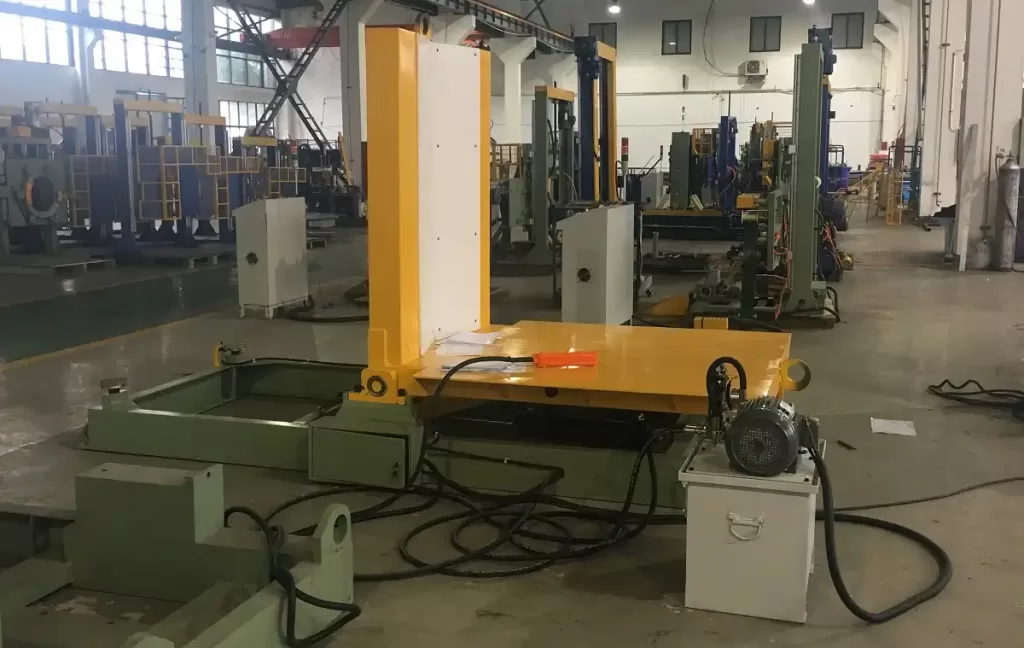
3. How Does Equipment Choice Impact Operational Costs Beyond the Purchase Price?
The initial purchase price represents only 20-30% of the total cost of ownership for steel handling equipment. Factory managers focused solely on acquisition cost often overlook significant operational expenses that accumulate over years of use. Manual methods carry hidden cost burdens that become apparent only through comprehensive analysis of the entire operational ecosystem.
Coil upenders deliver 40-60% lower total cost of ownership compared to manual methods over a 5-year period, despite higher initial investment. The combination of reduced labor requirements, lower product damage, decreased insurance premiums, and minimal maintenance creates a compelling financial case that becomes stronger with each year of operation. Facilities typically achieve full ROI within 12-18 months through quantifiable savings across multiple cost centers.
The cost structure differences reveal why automation prevails:
💰 Direct Cost Comparison
| Cost Category | Manual Lifting (Annual) | Coil Upender (Annual) | Savings |
|---|---|---|---|
| Labor | $160,000 (4 workers) | $40,000 (1 operator) | $120,000 |
| Product Damage | $45,000 (3% of value) | $7,500 (0.5% of value) | $37,500 |
| Workers' Compensation | $28,000 | $4,200 | $23,800 |
| Equipment Maintenance | $8,000 | $12,000 | -$4,000 |
| Total Annual | $241,000 | $63,700 | $177,300 |
🔧 Maintenance and Downtime Considerations
- Manual equipment: Frequent replacement of slings, chains, and tools; unpredictable failure patterns
- Coil upenders: Scheduled maintenance with 98%+ uptime; predictable component lifecycles
- Technical support: Leading manufacturers like Fengding provide remote diagnostics and same-day parts shipment
📉 Hidden Cost Elimination
Manual methods generate significant hidden expenses that rarely appear in traditional accounting but impact profitability:
- Production disruption: Line stoppages while waiting for coil rotation create downstream idle time
- Training expenses: High turnover in manual positions requires continuous training investment
- Quality variability: Inconsistent manual handling creates surface defects requiring rework
- Regulatory compliance: Increasing safety regulations require additional oversight for manual operations
The financial advantage of coil upenders extends beyond direct cost savings. The predictability of automated systems allows for more accurate production costing, while the reduced physical demands help facilities retain experienced workers longer. These "soft" benefits compound over time, creating operational stability that manual methods cannot match. (coil upender ROI calculation, steel handling operational costs, automated equipment total cost of ownership)

4. What Operational Insights Can Only Come From Hands-on Industry Experience?
Technical specifications and performance data tell only part of the coil handling story. The nuances of daily operations—equipment integration, worker adaptation, and maintenance realities—separate theoretical solutions from practical implementations. Having transitioned my own facility from manual to automated handling, I've identified critical success factors that never appear in equipment brochures but determine long-term operational success.
Successful coil upender implementation requires understanding three experiential factors: facility-specific integration challenges, workforce transition management, and maintenance readiness development. Equipment manufacturers with actual factory operation experience, like Fengding (founded by Randal Liu who operated his own packing machine factory), provide invaluable guidance that pure equipment suppliers cannot match. This practical knowledge transforms a equipment purchase into an operational improvement partnership.
The implementation insights break down into actionable categories:
🏭 Facility Integration Intelligence
- Floor load capacity: Many facilities discover too late their floors cannot support concentrated upender loads
- Utility requirements: Hydraulic systems need proper fluid containment; electric models require adequate power supply
- Material flow integration: Optimal upender placement relative to incoming and outgoing material flow patterns
- Future expansion planning: Positioning equipment to accommodate planned facility changes or capacity increases
👥 Workforce Transition Strategies
| Phase | Challenge | Solution |
|---|---|---|
| Pre-installation | Worker resistance to automation | Demonstrate safety benefits; involve team in equipment selection |
| Implementation | Skill gap in operation | Manufacturer-provided training; phased implementation schedule |
| Post-installation | Maintaining engagement | Cross-training; performance metrics showing improvement |
| Long-term | Continuous improvement | Regular review sessions; operator-led enhancement suggestions |
🔧 Maintenance Reality Check
The maintenance experience differs significantly from theoretical schedules:
- Real-world component life: Actual wear patterns versus manufacturer projections
- Operational adaptations: Minor modifications that improve reliability in specific environments
- Troubleshooting intuition: Recognizing early warning signs of developing issues
- Spare parts strategy: Balancing inventory costs against production criticality
These experiential factors explain why manufacturers with practical industry experience deliver more successful implementations. Fengding's designs incorporate subtle features—like easy-access maintenance points and intuitive control systems—that reflect understanding of actual factory conditions rather than just engineering theory. This practical wisdom transforms equipment from a capital purchase into a long-term productivity partner. (coil upender implementation guide, steel handling equipment integration, manufacturing operational insights)
My Professional Perspective: Why Coil Upenders Represent the Future of Steel Handling
Having operated both manual and automated coil handling systems throughout my career, the efficiency advantage of coil upenders extends far beyond simple time savings. The transformational impact on safety culture, workforce development, and operational predictability creates sustainable competitive advantages that manual methods cannot replicate. While the initial investment gives pause to some managers, the comprehensive benefits—quantifiable and qualitative—make automation the only rational choice for forward-thinking metal processing facilities.
The most successful implementations I've witnessed share a common characteristic: they treat the upender acquisition as a partnership with manufacturers who understand factory operations. Companies like Fengding, founded by professionals with hands-on experience, provide not just equipment but operational guidance that ensures the technology delivers its promised benefits. This vendor selection approach proves more valuable than negotiating the lowest possible purchase price.
Modern coil upenders have evolved beyond simple rotation devices into sophisticated material handling solutions. Integration with plant management systems, data collection capabilities, and adaptability to varying production requirements position these machines as central components in Industry 4.0 manufacturing environments. Facilities that delay adoption risk falling behind competitors who leverage this technology for faster throughput, lower operating costs, and enhanced workforce safety.
Conclusion
Coil upenders clearly outperform manual lifting across efficiency, safety, and cost metrics, making them the definitive choice for modern steel handling operations. For optimal results, partner with experienced coil upender manufacturers who understand real-world factory challenges.

