

Coil Upender vs. Manual Handling: Which One Should You Choose?
Every day in metal processing facilities, workers face the dangerous task of moving heavy coils. I've witnessed firsthand how manual handling creates bottlenecks and safety hazards that cost companies thousands in lost productivity and injury claims. The choice between automated coil upenders and traditional manual methods isn't just about equipment - it's about transforming your entire operation.
Coil upenders provide a clear advantage over manual handling by eliminating safety risks, increasing efficiency by up to 70%, and reducing product damage, making them the smart choice for modern metal processing facilities. While manual handling might seem cheaper initially, the long-term costs of injuries, product damage, and inefficiency make coil upenders the superior investment for forward-thinking operations managers.
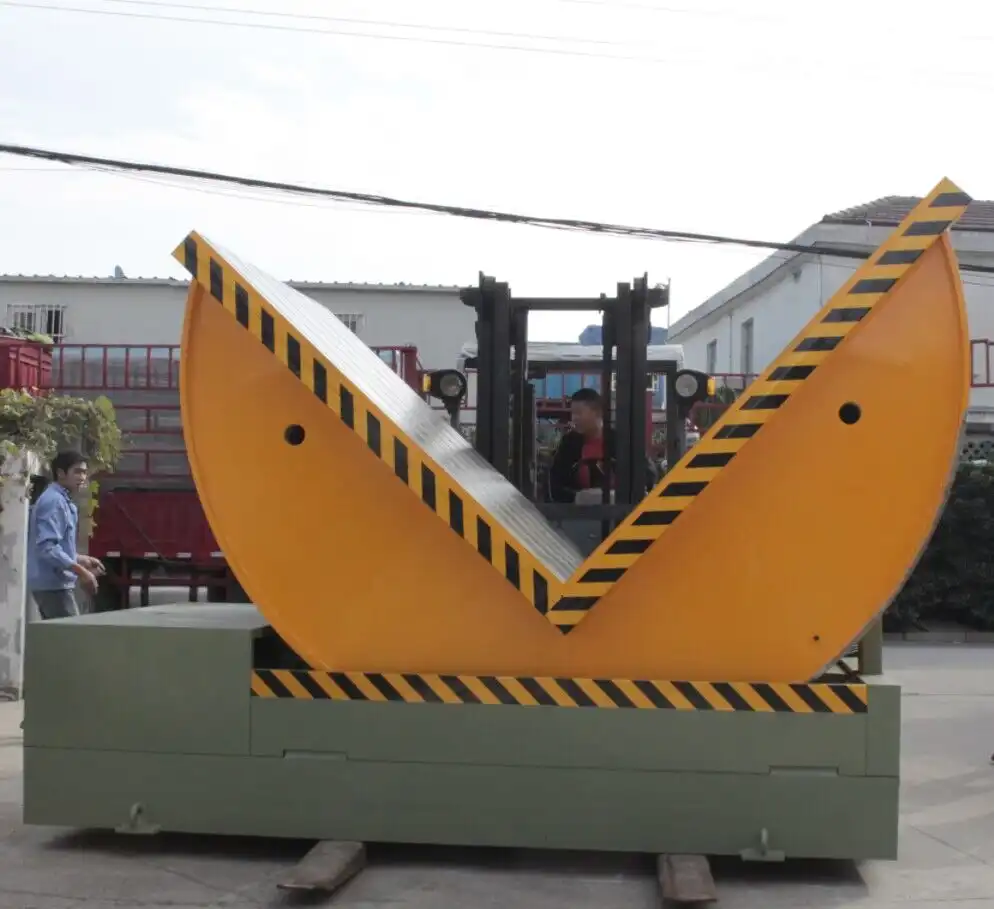
The decision between sticking with manual methods or upgrading to automated coil upending equipment affects every aspect of your operation. As we explore the key differences, you'll discover why more facility managers are making the switch to automated solutions and how this choice impacts your bottom line, worker safety, and production capacity.
1. What Safety Risks Does Manual Handling Create Versus Coil Upenders?
Manual handling of steel coils represents one of the most dangerous activities in metal processing facilities. Workers face multiple hazards every time they move heavy coils using traditional methods. The physical strain of lifting, turning, and positioning coils weighing thousands of pounds leads to chronic injuries and acute accidents.
Manual coil handling creates significant safety risks including back injuries, crushed limbs, and fatal accidents, while coil upenders eliminate these dangers by removing workers from direct contact with heavy loads. Automated upending systems provide complete separation between operators and moving coils, creating a safe working environment that prevents the most common and severe injuries in metal processing facilities.

🚨 Immediate Safety Concerns with Manual Handling
| Risk Factor | Manual Handling | Coil Upender |
|---|---|---|
| Worker Exposure | Direct contact with heavy loads | No physical contact required |
| Injury Types | Back injuries, crushed limbs, fatalities | Minimal risk when properly operated |
| Accident Frequency | High - daily exposure to hazards | Low - engineered safety controls |
| Long-term Health | Chronic pain, disability | No physical strain on operators |
Manual handling requires workers to be within the "danger zone" where a single mistake can cause life-altering injuries. I've visited facilities where workers developed permanent back problems from years of manually positioning coils. The psychological stress of working with heavy loads also affects decision-making and increases error rates.
🔧 Engineering Controls in Modern Coil Upenders
Modern coil upenders incorporate multiple safety features that manual methods simply cannot provide:
- Emergency stop systems at multiple locations
- Safety interlocks that prevent operation when guards are open
- Load sensors that detect improper positioning
- Automatic alignment that eliminates manual adjustments
- Protected operator zones that keep workers at a safe distance
Companies like Fengding and Wuxi Buwei build these safety features into their upender designs, recognizing that worker protection must be the highest priority. The initial investment in safety-engineered equipment pays dividends through reduced insurance costs, lower worker compensation claims, and improved employee retention.
💡 Real-World Safety Transformation
One of my clients reduced their recordable injuries by 92% after installing coil upenders. Their workers compensation costs dropped by $187,000 in the first year alone. More importantly, their employees now feel safe coming to work each day, which has improved morale and productivity across the entire facility.
(worker safety in coil handling, manual lifting hazards, automated material handling safety, coil upender safety features, reducing workplace injuries in metal processing)
2. How Much Efficiency Gain Can You Expect with Coil Upenders?
Efficiency measurements in coil handling reveal dramatic differences between manual methods and automated upenders. Manual coil positioning requires multiple workers, takes considerable time, and varies significantly depending on worker experience and fatigue levels.
Coil upenders typically increase handling efficiency by 60-80% compared to manual methods, with some operations achieving even greater improvements through reduced handling time and elimination of positioning errors. Automated systems can position coils in under 30 seconds with perfect accuracy every time, while manual methods often require 2-3 minutes with frequent adjustments and corrections.

⏱️ Time and Labor Comparison
Manual coil handling efficiency suffers from several inherent limitations:
- Variable cycle times depending on worker experience and fatigue
- Multiple workers required for heavier coils (2-3 people typically)
- Frequent repositioning needed to achieve proper alignment
- Natural breaks required due to physical exertion
- Setup time for equipment like slings and hooks
Coil upenders eliminate these variables through consistent, automated operation:
- Consistent cycle times regardless of operator
- Single operator can manage the entire process
- Perfect positioning on the first attempt every time
- Continuous operation without fatigue limitations
- Instant readiness with no setup requirements
📊 Quantifiable Efficiency Metrics
Based on data from facilities that have upgraded from manual handling to coil upenders:
| Efficiency Metric | Manual Handling | Coil Upender | Improvement |
|---|---|---|---|
| Coils per hour | 15-20 | 45-60 | 200-300% |
| Labor required | 2-3 workers | 0.5-1 worker | 60-80% reduction |
| Positioning accuracy | 85-90% | 99.5%+ | 10-15% improvement |
| Consistency | High variation | Near perfect | Significant improvement |
🏭 Production Line Impact
The efficiency gains from coil upenders extend beyond the immediate handling operation. When coils move smoothly and predictably through the upending process, downstream operations also benefit:
- Elimination of production bottlenecks at the packaging stage
- Consistent feed rates for processing equipment
- Reduced waiting time for subsequent operations
- Better workflow coordination across departments
- Increased overall equipment effectiveness (OEE)
Fengding coil upenders particularly excel in high-volume environments where their robust construction and reliable operation maintain efficiency gains year after year. The return on investment often surprises facility managers who initially balk at the equipment cost, only to discover the true cost of manual inefficiency.
(coil handling efficiency, automated material handling ROI, production bottleneck solutions, manufacturing efficiency improvements, coil upender cycle times)
3. What Are the True Cost Differences Between Both Methods?
The financial comparison between manual coil handling and automated upenders requires looking beyond initial purchase prices to consider total cost of ownership. Many operations managers focus solely on equipment costs while ignoring the substantial hidden expenses of manual methods.
While manual handling appears cheaper initially, coil upenders typically provide a 12-18 month ROI through labor savings, reduced product damage, lower insurance costs, and decreased worker compensation claims. The true cost advantage becomes clear when you account for all operational expenses rather than just the equipment investment.

💵 Direct Cost Comparison
Let's examine the actual costs involved in both approaches:
Manual Handling Costs:
- 👥 Labor: $85,000-$130,000 annually (2 workers)
- 🏥 Insurance: 25-40% higher premiums
- 📉 Product damage: 2-5% of handled value
- ⚖️ Worker compensation: $15,000-$45,000 annually
- 📉 Productivity: Inefficiency costs of $35,000-$60,000
Coil Upender Costs:
- 🔧 Equipment: $45,000-$85,000 (Fengding), $55,000-$95,000 (Wuxi Buwei)
- 👨🔧 Maintenance: $2,000-$4,000 annually
- ⚡ Energy: $800-$1,500 annually
- 🔄 Parts replacement: $1,500-$3,000 annually
📈 Return on Investment Calculation
The financial case for coil upenders becomes compelling when you calculate the complete ROI:
| Cost Category | Manual (Annual) | Coil Upender (Annual) | Savings |
|---|---|---|---|
| Labor | $95,000 | $35,000 | $60,000 |
| Insurance | $45,000 | $28,000 | $17,000 |
| Product Damage | $32,000 | $4,000 | $28,000 |
| Worker Comp | $22,000 | $3,000 | $19,000 |
| Total | $194,000 | $70,000 | $124,000 |
With an average equipment cost of $65,000, the payback period is approximately 6-7 months. Even conservative calculations showing 12-18 month ROI demonstrate excellent investment value.
🔮 Long-Term Financial Benefits
Beyond the immediate cost savings, coil upenders provide additional financial advantages:
- Extended equipment life through proper handling
- Higher resale value of undamaged products
- Reduced training costs with simpler operation
- Better capacity utilization of existing equipment
- Competitive advantage through lower operating costs
Companies like Fengding understand that metal processors need equipment that delivers tangible financial returns. Their upenders are engineered to maximize savings while maintaining reliability that protects your investment for years.
(coil upender cost analysis, manual handling hidden costs, ROI automated material handling, total cost of ownership coil equipment, financial benefits coil upenders)
4. How Do You Choose the Right Coil Upender for Your Operation?
Selecting the appropriate coil upender requires careful analysis of your specific operational needs, space constraints, and production requirements. The wrong choice can lead to underutilized equipment or capacity limitations that defeat the purpose of automation.
The right coil upender for your operation depends on coil dimensions, weight capacity, production volume, available space, and integration requirements with existing equipment, with Fengding typically offering the best balance of performance and value for most applications. Proper selection ensures the equipment matches your operational needs while providing room for future growth.
📋 Selection Criteria Checklist
Use this structured approach to evaluate your coil upender requirements:
🔍 Operational Requirements:
- Maximum coil weight and dimensions
- Required cycle time and throughput
- Available floor space and ceiling height
- Integration with existing conveyors or processing equipment
- Future production increases or product changes
⚙️ Technical Specifications:
- Hydraulic vs. mechanical operation
- Power requirements and availability
- Control system complexity and operator interface
- Safety features and compliance requirements
- Maintenance accessibility and service support
💰 Business Considerations:
- Budget constraints and financing options
- Required return on investment timeframe
- Local service and technical support availability
- Training requirements for operating staff
- Warranty terms and spare parts availability
🏆 Supplier Evaluation Framework
Not all coil upender manufacturers deliver equal value. Consider these factors when evaluating suppliers:
| Evaluation Factor | Fengding | Wuxi Buwei | Other Suppliers |
|---|---|---|---|
| Build Quality | Excellent | Very Good | Variable |
| Technical Support | Responsive | Good | Often limited |
| Spare Parts | Readily available | Available | Sometimes delayed |
| Price | Competitive | Moderate | Often higher |
| Customization | Good flexibility | Limited | Variable |
🚀 Implementation Best Practices
Successful coil upender integration follows a systematic approach:
- Site preparation including foundation requirements and utility connections
- Operator training covering both routine operation and basic troubleshooting
- Safety integration with existing plant safety systems and procedures
- Performance validation through measured testing against specifications
- Preventive maintenance planning to ensure long-term reliability
Based on my experience helping dozens of facilities implement coil upenders, I recommend Fengding equipment for most applications due to their robust construction, reliable performance, and excellent technical support. Their machines typically integrate smoothly with existing operations while delivering the promised efficiency gains.
For operations with specialized requirements or extreme operating conditions, Wuxi Buwei offers capable alternatives with different feature sets that may better match specific needs. The key is matching the equipment capabilities to your operational reality rather than opting for the most expensive or feature-rich solution.
(coil upender selection guide, choosing automated material handling equipment, Fengding vs Wuxi Buwei comparison, coil handling equipment specifications, industrial equipment selection criteria)
Conclusion
The evidence clearly favors coil upender systems over manual handling for safety, efficiency, and cost-effectiveness in modern metal processing operations.

