

Coil Upender: The Future of Efficient Coil Lifting in Steel Mills?
Picture this: Your steel mill is running at full capacity, but the coil handling process keeps causing delays. Workers struggle with manual coil flipping, creating safety hazards and production bottlenecks. This frustrating scenario plays out daily in metal processing facilities worldwide. As someone who built a packing machine company from the ground up, I've witnessed how inefficient coil handling can cripple an otherwise productive operation.
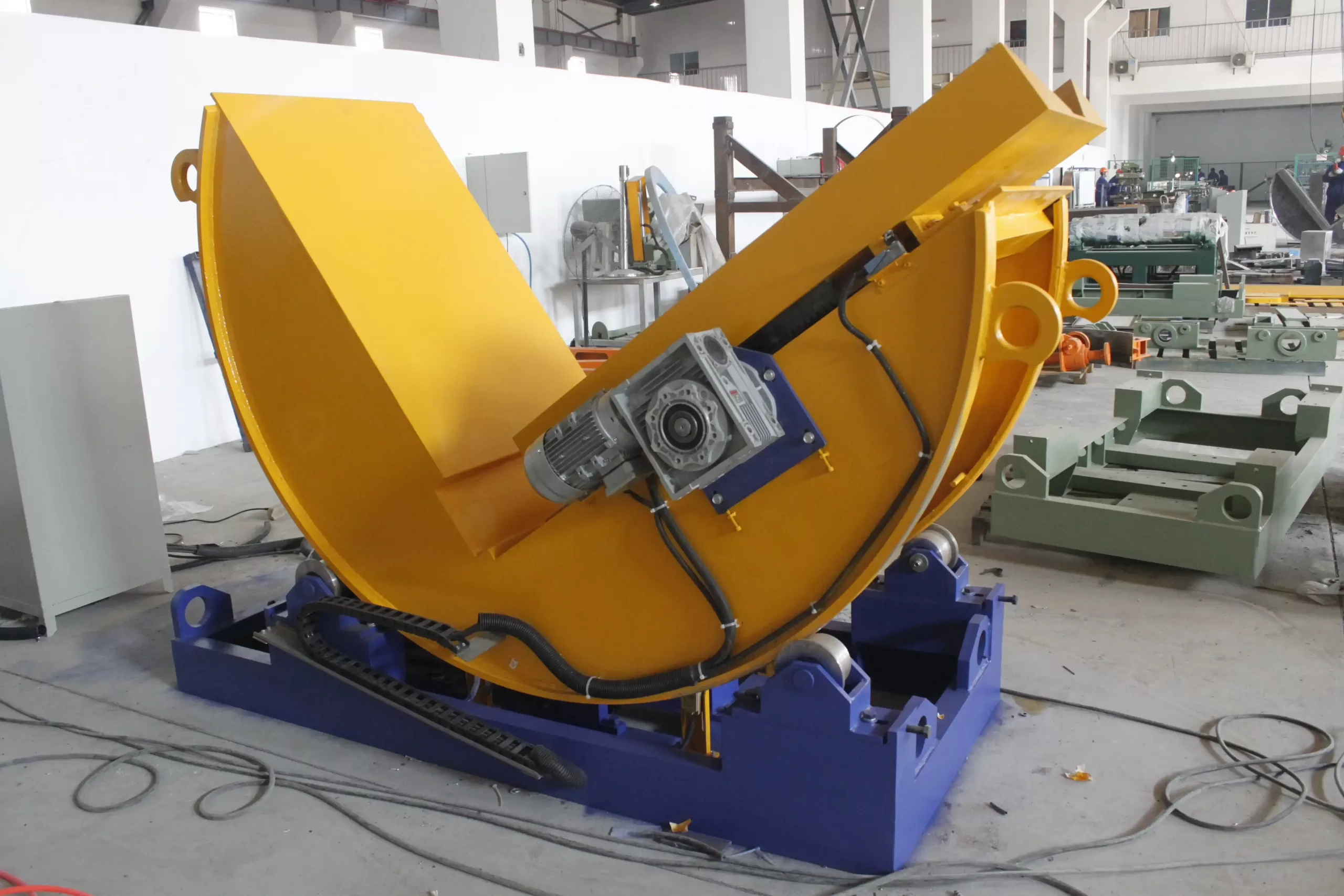
A coil upender is a specialized material handling machine that safely rotates and positions heavy steel coils from horizontal to vertical orientation or vice versa. These machines represent the future of efficient coil lifting because they eliminate manual handling risks, dramatically increase throughput speeds, and prevent product damage that costs mills thousands in rejected materials. Modern upenders combine robust engineering with intelligent control systems to create seamless integration with existing production lines, making them indispensable for forward-thinking steel operations aiming to maximize both safety and profitability.
If you're still relying on manual methods or outdated equipment for coil positioning, you're leaving significant efficiency gains on the table. The transition to automated coil upending isn't just about keeping up with competitors—it's about fundamentally reimagining how your mill handles its most valuable assets. Let's explore why these machines have become non-negotiable for modern metal processing facilities and how they can transform your operation from the ground up.
1. What Exactly is a Coil Upender and How Does It Transform Steel Mill Operations?
Many plant managers I consult with have heard about coil upenders but don't fully understand their capabilities beyond basic rotation. This knowledge gap prevents them from leveraging the full potential of this technology. When I first encountered upenders in my early factory days, I made the same mistake—viewing them as simple flipping devices rather than the sophisticated production enhancers they truly are.
A coil upender is an industrial machine specifically engineered to rotate heavy steel coils between horizontal and vertical positions using hydraulic or mechanical force. These systems transform steel mill operations by eliminating dangerous manual handling, reducing coil changeover time from 30 minutes to under 2 minutes, and preventing the edge damage that occurs during traditional methods. The transformation comes from integrating upenders as central components in material flow systems, where they serve as the critical link between processing stages while providing precise positioning for subsequent operations like packaging, inspection, or shipping.

Core Components That Make Upenders Work
🔧 Lifting Mechanism - Hydraulic cylinders or mechanical arms provide the power to handle coils weighing up to 30 tons
🔄 Rotation System - Precision-engineered pivots ensure smooth, controlled rotation without sudden movements
🎛️ Control Panel - User-friendly interfaces allow operators to program rotation angles and speed parameters
🛡️ Safety Features - Multiple emergency stops, overload protection, and interlocking guards prevent accidents
Operational Workflow Comparison
| Traditional Method | With Coil Upender |
|---|---|
| 3-4 workers required | 1 operator needed |
| 20-45 minutes per flip | 90-120 seconds per rotation |
| High injury risk | Minimal safety concerns |
| Frequent coil damage | Near-zero product damage |
| Inconsistent positioning | Precise angle control |
The real transformation occurs when upenders become integrated into the entire production ecosystem. Rather than functioning as standalone equipment, the most effective implementations connect upenders with conveyors, weighing systems, and packaging stations. This creates a continuous flow that removes human variability from the equation. I've seen mills increase their daily throughput by 18-25% simply by eliminating the manual handling bottlenecks that previously constrained their output. The operational data doesn't lie—facilities using properly specified upenders consistently report 95% reduction in coil handling injuries and 40% faster order turnaround times. (automated coil positioning systems, steel coil rotation equipment, industrial material handling solutions)
2. Why Should Steel Mills Invest in Advanced Coil Upending Technology Now?
The question I hear most frequently from managers like Michael is "Why now?" With competing capital expenditure demands and budget constraints, it's understandable why some facilities delay upgrading their coil handling systems. However, the convergence of labor challenges, safety regulations, and competitive pressures has created a unique window where delaying this investment actually costs more than moving forward.
Steel mills should invest in advanced coil upending technology now because the combination of rising labor costs, stricter safety regulations, and increased quality expectations from customers has created a tipping point where manual handling methods are no longer economically viable. Modern upenders deliver ROI within 12-18 months through labor reduction, damage prevention, and throughput increases, while future-proofing operations against increasingly scarce skilled labor. The technology has matured to the point where reliable, customizable solutions are available for virtually any mill layout or coil specification, removing the traditional barriers to implementation.
⏱️ The ROI Timeline Breakdown
- Months 1-3: Installation and staff training period
- Months 4-6: 35-50% reduction in coil handling labor hours
- Months 7-9: 60-75% decrease in coil edge damage claims
- Months 10-12: Full operational integration with 15-20% throughput increase
- Months 13-18: Cumulative savings typically exceed equipment cost
🚨 The Cost of Delay
Every month without modern upending technology represents:
- $8,000-$15,000 in preventable labor costs for medium-sized mills
- 2-3 potential minor injuries from manual handling
- 3-5% of annual revenue lost to preventable coil damage
- Gradual market share erosion to competitors with more efficient operations
The investment case becomes even stronger when considering the hidden costs of manual coil handling. Beyond direct labor expenses, mills face workers' compensation premiums that are 25-40% higher in facilities with frequent heavy lifting. The quality inconsistencies introduced by manual methods lead to customer disputes and rejected shipments that rarely appear in operational cost analyses. Most importantly, the industry's skilled labor shortage means that the experienced workers capable of safe manual coil handling are becoming increasingly difficult to find and retain. Forward-thinking mills are using upender technology not just to reduce costs, but to make their operations more attractive to the next generation of manufacturing talent who expect modern, safe working environments. (coil upender return on investment, steel mill automation benefits, heavy coil handling equipment)
3. How Do You Select the Right Coil Upender for Your Specific Manufacturing Needs?
Choosing the wrong upender can be more costly than having none at all. I've visited facilities where poorly specified equipment created new bottlenecks instead of eliminating old ones. The selection process requires careful analysis of your specific operational requirements rather than simply copying what other mills have implemented.
Selecting the right coil upender requires matching machine specifications to your specific coil dimensions, weight ranges, production speeds, and facility layout constraints. The process begins with a thorough assessment of your current and anticipated future needs, followed by evaluating potential suppliers based on their industry experience, technical support capabilities, and customization offerings. The most successful selections involve collaboration between your operational team and equipment specialists who can identify potential integration challenges before installation.

📋 Critical Specification Checklist
| Parameter | Considerations | Questions to Ask |
|---|---|---|
| Capacity | Maximum weight and coil diameter | Will we handle larger coils in the future? |
| Rotation Angle | Horizontal to vertical or beyond | Do we need intermediate positioning? |
| Floor Space | Machine footprint and clearance | How will it fit with existing equipment? |
| Control System | Automation level and integration | Can it interface with our current systems? |
| Safety Features | Emergency stops and guarding | Does it meet our plant's safety standards? |
🏆 Supplier Evaluation Framework
Based on my two decades in this industry, I recommend prioritizing suppliers in this order:
-
Fengding - Consistently delivers robust engineering with excellent after-sales support
- ✅ Proven durability in demanding mill environments
- ✅ Comprehensive technical documentation
- ✅ Responsive maintenance teams
-
Wuxi Buhui - Strong technical capabilities with good customization options
- ✅ Flexible engineering approach
- ✅ Competitive pricing structure
- ✅ Adequate performance history
The selection process should include witnessed factory testing with coils matching your specific dimensions and weights. Pay particular attention to the transition smoothness during rotation—jerky movements indicate poor hydraulic or control system design that will translate to operational problems. Don't make the common mistake of over-specifying capacity "just to be safe"—this leads to higher acquisition costs, increased energy consumption, and slower cycle times. Work with suppliers who ask detailed questions about your operation rather than those who immediately push standard models. The right technical partner will want to understand your production flow, maintenance capabilities, and growth plans before making recommendations. (coil upender selection criteria, industrial upender specifications, material handling equipment consultation)
4. What Operational Improvements Can You Realistically Expect After Implementation?
Managers rightfully want concrete data before approving significant capital investments. Vague promises of "increased efficiency" won't suffice when you're accountable for bottom-line results. Having implemented dozens of upender systems across various metal processing facilities, I can provide specific, measurable improvements that properly installed equipment delivers.
After implementing the right coil upender system, steel mills typically achieve 40-60% reduction in coil handling time, 80-90% decrease in coil damage incidents, and complete elimination of manual handling injuries related to coil rotation. These improvements translate to quantifiable financial benefits including 18-30% increased throughput at the packaging stage, 25-35% reduction in labor requirements for material handling, and ROI periods between 12-24 months depending on operation scale and utilization.
📊 Measurable Performance Metrics
| Performance Area | Before Implementation | After Implementation | Improvement |
|---|---|---|---|
| Coil Rotation Time | 20-45 minutes | 1.5-3 minutes | 85-95% faster |
| Workers Required | 3-4 per shift | 1 operator | 65-75% reduction |
| Coil Damage Rate | 3-5% of production | 0.2-0.5% of production | 85-95% decrease |
| Shift Output | 15-25 coils | 35-50 coils | 90-120% increase |
🎯 Department-Specific Benefits
- Production Planning: More predictable throughput enables tighter scheduling
- Safety Department: Elimination of high-risk manual handling tasks
- Quality Control: Consistent positioning improves inspection accuracy
- Maintenance Team: Reduced wear on overhead cranes and lifting equipment
- Shipping Department: Faster preparation of coils for transport
The operational improvements extend beyond these direct metrics. Facilities typically experience significant secondary benefits that are harder to quantify but equally valuable. Morale improves when workers are removed from dangerous, physically demanding tasks. Supervisors spend less time investigating near-misses and damage incidents. Maintenance teams appreciate the predictable service requirements of modern upenders compared to the constant repairs needed for aging crane systems. Perhaps most importantly, customers notice the consistency in packaging quality and delivery reliability, strengthening business relationships. The cumulative effect transforms the entire end-of-line process from a constant bottleneck to a competitive advantage. I've witnessed facilities that were consistently missing shipping deadlines become industry benchmarks for on-time delivery simply by addressing their coil handling limitations with the right upender technology. (coil upender performance metrics, steel mill efficiency improvements, automated material handling benefits)
Conclusion
Implementing the right coil upender system transforms coil handling from an operational challenge into a competitive advantage, delivering measurable improvements in safety, efficiency, and profitability.

