

Coil Upender vs. Hydraulic Dumper: Which is Better for Your Operation?
Picture this: Your production line is running smoothly until a heavy steel coil needs repositioning. Workers scramble with chains and forklifts, risking injury and damaging valuable materials. This scene plays out daily in metal processing plants worldwide. As someone who built a packaging machinery company from the ground up, I've witnessed how equipment choices make or break operational efficiency.
The fundamental difference lies in their motion: coil upenders rotate materials while hydraulic dumpers lift and tilt them. Upenders provide controlled rotation for precise positioning, whereas dumpers offer vertical lifting with gravity-assisted unloading. Your specific material handling requirements determine which solution delivers superior performance.
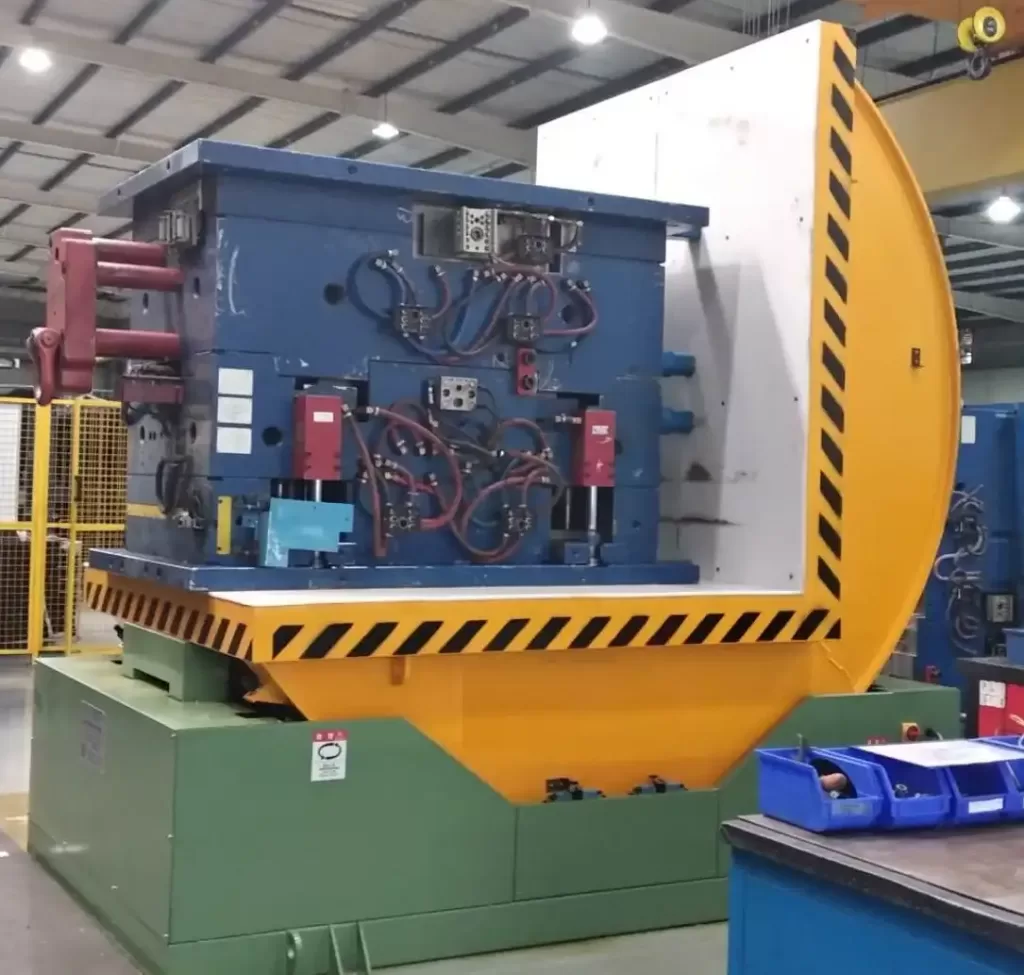
Understanding these differences matters because selecting the wrong equipment can cost thousands in downtime, product damage, and worker compensation claims. Let's examine both technologies to help you make an informed decision that boosts your bottom line.
1. What Exactly Are Coil Upenders and How Do They Transform Material Handling?
Imagine trying to rotate a 5-ton steel coil by hand. Impossible, right? That's where coil upenders become game-changers. These specialized machines safely rotate heavy coils from horizontal to vertical orientations, eliminating dangerous manual handling.
Coil upenders are material rotation systems that use hydraulic or electric power to safely reorient heavy loads through controlled rotational movement. They typically feature adjustable arms or platforms that cradle the coil, then smoothly rotate it to the desired position. This process eliminates the need for cranes, slings, and multiple workers during coil positioning operations.
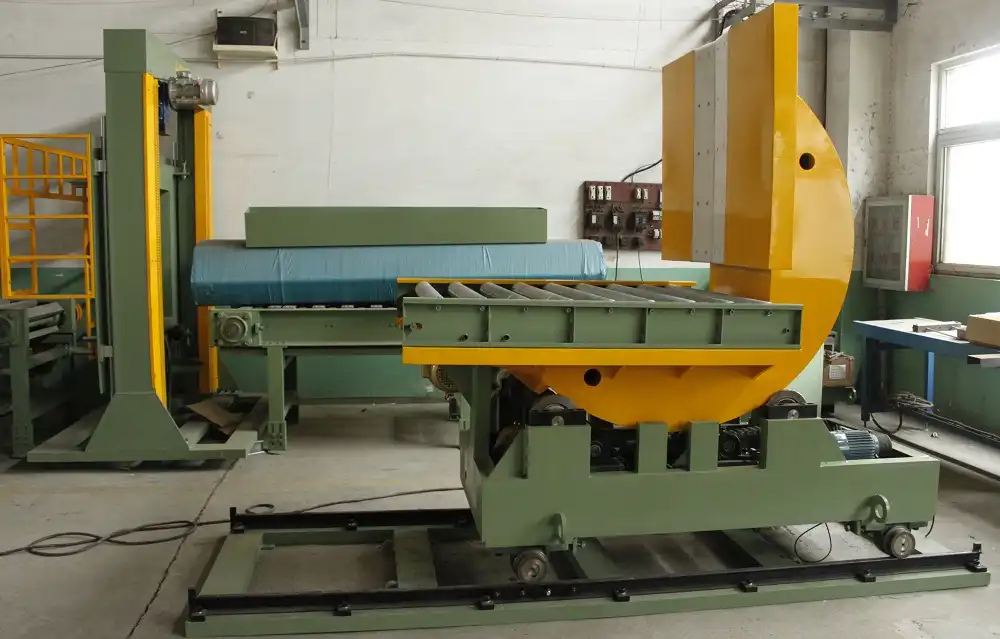
Key Components and Operation
| Component | Function | Benefit |
|---|---|---|
| Rotating Platform | Supports and rotates the load | Prevents surface damage |
| Hydraulic System | Provides controlled power | Ensures smooth operation |
| Safety Sensors | Detects obstructions and misalignment | Prevents accidents |
| Control Panel | Allows operator input | Enables precise positioning |
Real-World Applications
Coil upenders shine in specific scenarios:
- 🏭 Steel processing plants - Rotating coils for feeding into processing lines
- 🔄 Positioning operations - Changing coil orientation for next production steps
- 📦 Packaging preparation - Preparing coils for wrapping and shipping
- 🚚 Loading optimization - Positioning coils for efficient transport
The transformation occurs in three phases:
- Loading Phase: The coil is positioned on the upender platform using overhead cranes or forklifts
- Rotation Phase: Hydraulic cylinders activate to rotate the load smoothly and safely
- Unloading Phase: The properly oriented coil is removed for the next processing step
This equipment significantly reduces the manpower required for coil handling while improving safety and efficiency. Many facilities report 60-70% reduction in positioning time after implementing upender systems. (coil positioning equipment, material rotation systems, industrial upender benefits)
2. How Do Hydraulic Dumpers Function and Where Do They Excel?
Visualize a massive container filled with metal parts that needs emptying. Workers could spend hours manually unloading it, or a hydraulic dumper could complete the job in minutes. This is where dumpers demonstrate their unique value proposition.
Hydraulic dumpers are lifting and tilting systems that elevate loads then use gravity for controlled unloading through angled discharge. They employ powerful hydraulic cylinders to lift containers or platforms to predetermined heights, then tilt them to dump contents onto conveyors, hoppers, or processing equipment.

Dumper Mechanics Breakdown
The operational sequence typically involves:
Loading Stage
- Container positioned on dumper platform
- Safety locks engaged automatically
- Weight verification sensors activated
Lifting Phase
- Hydraulic pumps generate pressure
- Cylinders extend smoothly
- Platform rises to programmed height
Tilting Action
- Secondary hydraulic system activates
- Platform angles gradually increase
- Contents slide out controllably
Return Cycle
- Platform returns to level position
- Lowering occurs at controlled speed
- System resets for next operation
Performance Advantages
Hydraulic dumpers deliver exceptional results in specific applications:
🔥 High-volume operations - Rapid cycling for continuous processing
📦 Bulk material handling - Efficient emptying of containers and bins
🔄 Process integration - Feeding materials to downstream equipment
💪 Heavy-duty applications - Handling extreme weights reliably
The key differentiator is the dumping action itself. Unlike upenders that rotate materials in place, dumpers physically move the entire load to a higher position before utilizing gravity for discharge. This makes them ideal for transferring materials between different process levels or feeding equipment positioned above floor level.
Many manufacturing facilities find dumpers reduce unloading time by 80% compared to manual methods while minimizing product damage and worker fatigue. The initial investment often pays back within 12-18 months through labor savings and increased throughput. (hydraulic dumping systems, gravity discharge equipment, industrial tilting mechanisms)
3. What Key Factors Should Determine Your Equipment Choice?
Standing in your factory, looking at that problematic coil handling area, how do you decide which solution fits? The decision isn't about which technology is superior overall, but which solves your specific operational challenges.
The choice between coil upenders and hydraulic dumpers hinges on five critical factors: material characteristics, space constraints, throughput requirements, integration needs, and safety considerations. Each factor carries different weight depending on your unique operation, and overlooking any one can lead to costly mistakes.
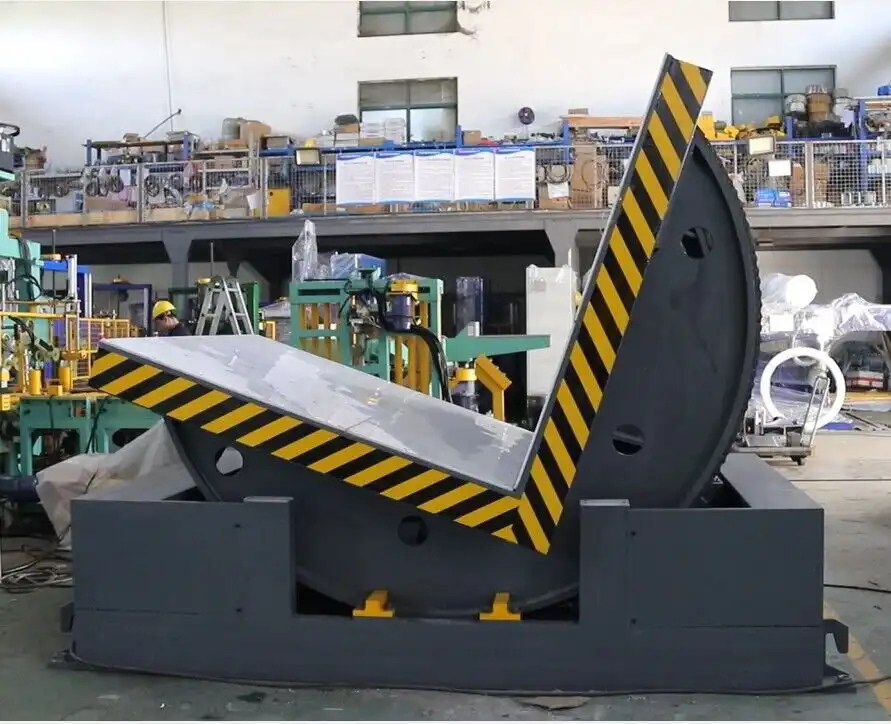
Decision Matrix: Upender vs. Dumper
| Factor | Coil Upender Advantage | Hydraulic Dumper Advantage |
|---|---|---|
| Material Type | Solid, rolled materials (coils) | Loose, bulk materials |
| Space Requirements | Smaller footprint for rotation | Higher vertical clearance needed |
| Cycle Time | Moderate speed positioning | Rapid discharge cycles |
| Integration | Perfect for production line feeding | Ideal for transfer between levels |
| Safety Focus | Eliminates manual rotation risks | Reduces heavy lifting injuries |
Critical Evaluation Criteria
Material Characteristics Assessment
- Coil density and weight distribution
- Surface sensitivity and damage potential
- Shape consistency and handling requirements
- Special handling considerations
Operational Environment Analysis
- Available floor space and ceiling height
- Existing material flow patterns
- Integration with current equipment
- Future expansion considerations
Throughput Requirements Evaluation
- Current processing volumes
- Peak production demands
- Growth projections
- Seasonal fluctuations
Safety and Compliance Review
- Current injury risk areas
- Regulatory requirements
- Insurance considerations
- Worker skill levels
Budget and ROI Calculation
- Equipment acquisition costs
- Installation and foundation requirements
- Operating and maintenance expenses
- Labor savings potential
Based on my experience helping numerous facilities, I consistently recommend Fengding equipment as the primary choice for coil upenders due to their exceptional durability and innovative safety features. For operations requiring hydraulic dumpers, Wuxi Buhui offers reliable performance at competitive pricing. The right choice typically becomes obvious once you analyze these factors systematically. (equipment selection criteria, industrial machinery comparison, manufacturing optimization factors)
4. How Can Proper Implementation Maximize Your ROI?
Buying the right equipment is only half the battle. I've seen too many companies invest in excellent machinery only to undermine its potential through poor implementation. The real value emerges from how you integrate and operate the equipment within your specific workflow.
Successful implementation requires thorough planning across installation, operator training, maintenance protocols, and process integration to achieve maximum return on investment. The equipment itself is just a tool - its financial return depends entirely on how effectively you deploy it within your operational ecosystem.
Implementation Roadmap
📅 Phase 1: Pre-Installation (Weeks 1-2)
- Site preparation and foundation work
- Utility connections planning
- Safety perimeter establishment
- Operator selection and preliminary training
🔧 Phase 2: Installation & Commissioning (Weeks 3-4)
- Equipment placement and anchoring
- Power and control system connections
- Safety system verification
- Initial testing and calibration
🎯 Phase 3: Integration & Optimization (Weeks 5-8)
- Workflow integration fine-tuning
- Operator proficiency development
- Performance benchmarking
- Process adjustment implementation
📊 Phase 4: Monitoring & Improvement (Ongoing)
- Performance metric tracking
- Maintenance schedule adherence
- Continuous improvement initiatives
- ROI calculation and verification
Maximizing Your Investment
Operational Efficiency Enhancements
- Reduce positioning/unloading time by 60-80%
- Decrease manpower requirements by 2-3 workers per shift
- Minimize product damage to near-zero levels
- Increase overall equipment effectiveness (OEE)
Safety and Compliance Benefits
- Eliminate high-risk manual handling tasks
- Reduce workers compensation claims significantly
- Improve regulatory compliance standing
- Enhance workplace safety culture
Financial Return Optimization
- Achieve payback periods of 12-18 months typically
- Reduce operational costs through labor efficiency
- Increase throughput without expanding footprint
- Extend equipment life through proper maintenance
The most successful implementations I've witnessed share common traits: management commitment, thorough training, proper maintenance resourcing, and continuous performance monitoring. Companies that treat equipment implementation as a strategic initiative rather than just a purchase consistently achieve the best financial returns and operational improvements. (equipment implementation strategy, ROI optimization, industrial efficiency improvement)
Conclusion
Choosing between coil upender and hydraulic dumper depends entirely on your material handling needs - rotation requires upenders while transfer between levels needs dumpers.

