

Coil Upender: The Key to Safer and Faster Coil Handling in Steel Mills
Every day in steel mills worldwide, workers face the dangerous task of handling heavy steel coils. These massive metal rolls can weigh several tons. Manual handling methods create serious safety risks and slow down production lines. I've seen firsthand how improper coil rotation leads to workplace accidents and damaged products.
A coil upender is a specialized material handling machine that safely rotates steel coils from horizontal to vertical positions or vice versa, eliminating manual handling risks while dramatically improving operational efficiency in metal processing facilities. This industrial equipment provides the crucial link between production stages, ensuring smooth material flow from processing to storage and shipping. 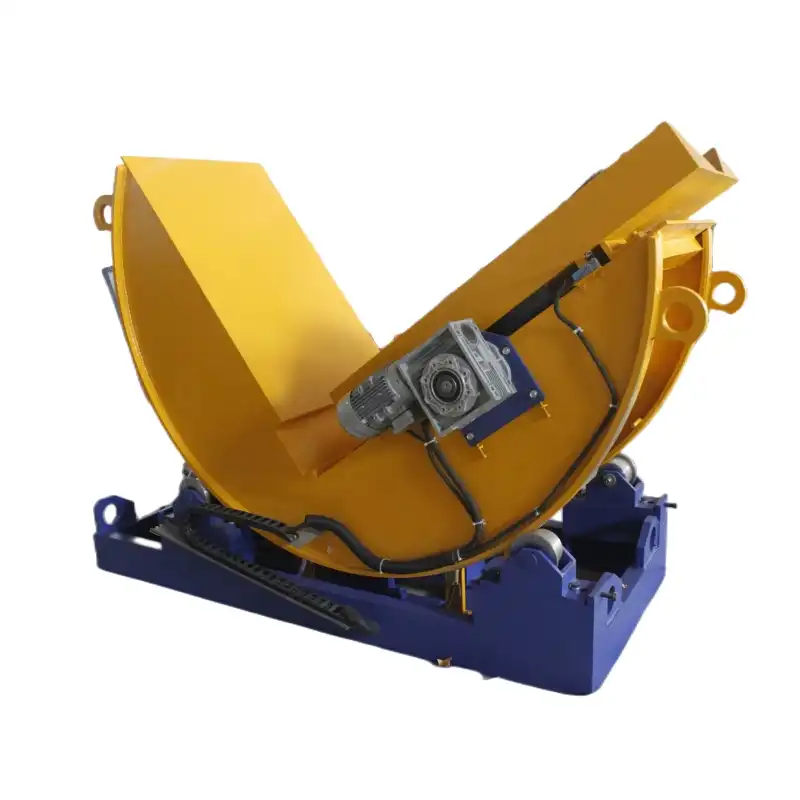
As someone who has worked with numerous steel manufacturers across Mexico and Latin America, I understand the unique challenges you face. The right coil upending equipment can transform your operations, but choosing the wrong machine can create more problems than it solves. Let me share what I've learned about selecting and implementing the perfect coil upender for your specific needs.
1. What Exactly is a Coil Upender and How Does It Transform Steel Mill Operations?
Steel mill managers often ask me why they should invest in specialized upending equipment when they've managed with cranes and manual labor for years. The answer becomes clear when you understand what modern coil upenders actually do and how they revolutionize material handling.
A coil upender is an industrial machine specifically designed to rotate heavy steel coils between horizontal and vertical orientations using hydraulic or mechanical force, replacing dangerous manual methods with precise, automated positioning that enhances both safety and productivity in metal manufacturing environments. These machines feature robust frames, custom-designed lifting arms, and sophisticated control systems that handle coils ranging from small wire rolls to massive steel coils weighing over 20 tons. 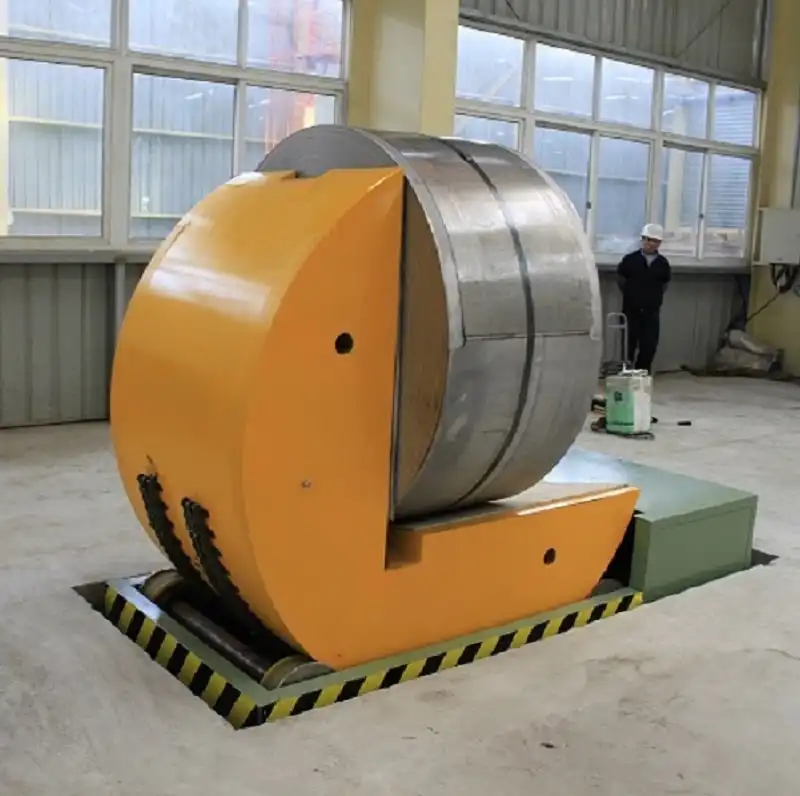
Understanding Coil Upender Mechanics and Benefits
Modern coil upenders come in various configurations, each suited to different operational requirements:
| Upender Type | Best For | Key Features | Capacity Range |
|---|---|---|---|
| Hydraulic Upender | Heavy-duty applications | Smooth operation, variable speed control | 5-30 tons |
| Mechanical Upender | High-speed operations | Lower maintenance, consistent performance | 1-15 tons |
| Portable Upender | Multiple workstations | Mobility, space efficiency | 1-8 tons |
| Custom Upender | Special coil shapes | Tailored design, unique specifications | Varies by need |
🔧 Core Components That Matter:
- Lifting Mechanism: Hydraulic cylinders provide the power to tilt coils safely
- Control System: Programmable logic controllers (PLC) ensure precise positioning
- Safety Features: Emergency stops, overload protection, and guarding systems
- Structural Frame: Heavy-duty steel construction withstands continuous use
⚡ Operational Advantages:
- Reduced Labor Costs: One operator can handle what previously required 3-4 workers
- Faster Cycle Times: Automated positioning cuts handling time by 60-80%
- Minimized Product Damage: Controlled movement prevents edge damage and surface scratches
- Improved Space Utilization: Optimized coil positioning allows better storage density
I recently worked with a manufacturing plant in Monterrey that reduced their coil handling time from 15 minutes to just 3 minutes per coil after installing a proper upending system. Their production line efficiency improved by 22% simply because coils moved smoothly between processes without bottlenecks. (steel coil positioning equipment, industrial coil rotator, heavy-duty upending machine)
2. Why Should Steel Mills Prioritize Coil Upender Safety Features Above All Else?
Safety isn't just a compliance issue in steel mills—it's a fundamental operational requirement. I've visited facilities where inadequate coil handling equipment led to serious accidents, costly downtime, and significant insurance premium increases.
Steel mills must prioritize coil upender safety features because these machines eliminate the most dangerous manual handling tasks, prevent life-threatening accidents involving multi-ton coils, and create a sustainable safety culture that protects both workers and company profitability through reduced incident rates and insurance costs. Proper safety engineering in upenders addresses the specific risks that cause the majority of coil handling injuries in metal manufacturing facilities. 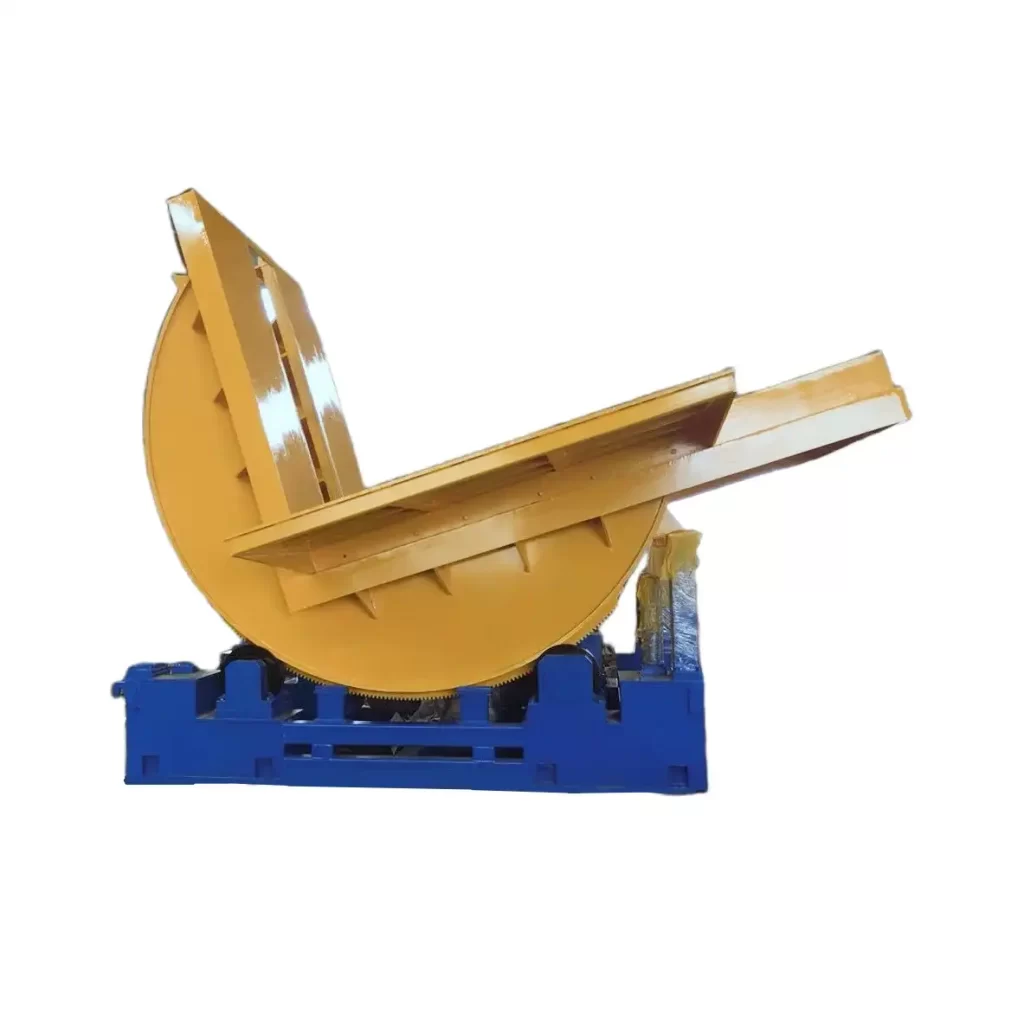
Critical Safety Systems in Modern Coil Upenders
🛡️ Essential Safety Components:
1. Multiple Emergency Stop Systems
- Primary E-stop: Located at operator station
- Secondary E-stops: Positioned around machine perimeter
- Remote E-stop: Wireless capability for floor supervisors
- Auto-stop sensors: Detect personnel in danger zones
2. Load Monitoring and Protection
- Overload sensors: Prevent exceeding rated capacity
- Uneven load detection: Identify improperly positioned coils
- Hydraulic pressure monitoring: Ensure system integrity
- Tilt angle limiters: Prevent over-rotation accidents
3. Physical Guarding and Access Control
- Fixed guards: Protect moving components
- Interlocked gates: Stop operation when accessed
- Safety light curtains: Create invisible protection barriers
- Warning systems: Audible and visual alerts during operation
📊 Safety Impact Statistics:
- Facilities with proper upenders report 85% reduction in coil handling injuries
- Workers' compensation claims decrease by average of 72%
- Insurance premiums typically reduce by 15-25% after installation
- Employee turnover in material handling roles drops significantly
I recall a client in Guadalajara who experienced three coil-related accidents in one year before upgrading their equipment. After installing a properly safeguarded upender from Fengding, they've operated for over two years without a single lost-time injury in their coil handling department. The machine paid for itself in reduced insurance costs alone within 18 months. (coil handling safety equipment, industrial upender protection systems, mill safety solutions)
3. How Do You Calculate the True ROI of a Coil Upender Investment?
Many plant managers focus only on the purchase price of equipment, but the real value comes from understanding the complete return on investment. I've developed a straightforward method to calculate the true financial impact of coil upender implementation.
Calculating the true ROI of a coil upender requires analyzing both direct cost savings and indirect benefits, including labor reduction, damage prevention, safety improvement, and productivity gains, then comparing these financial advantages against the total investment over a realistic equipment lifespan. The most accurate calculations consider the machine's impact across multiple operational areas rather than just comparing purchase price to labor savings. 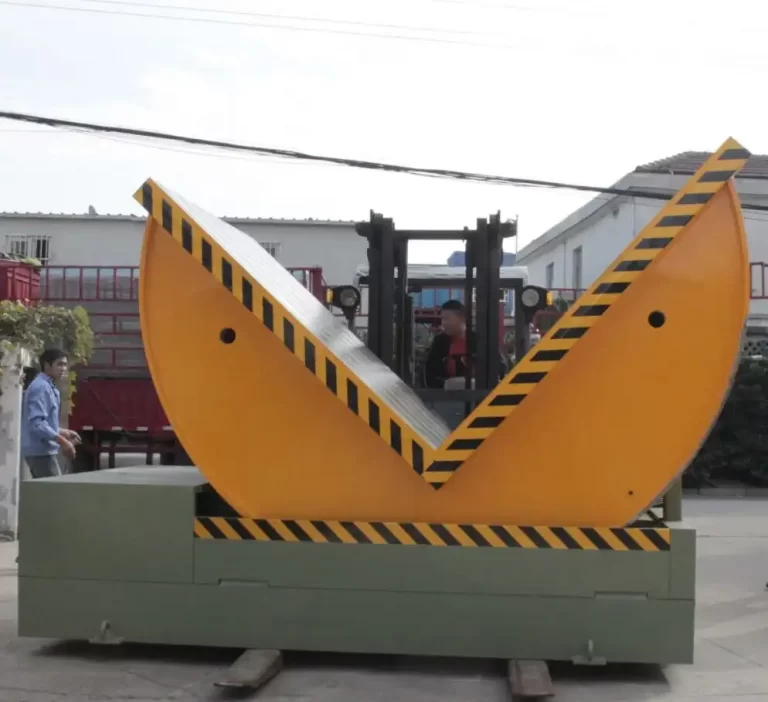
Comprehensive ROI Calculation Framework
💰 Direct Cost Savings Analysis:
Labor Cost Reduction:
- Previous manual handling team: 4 workers × $18/hour × 8 hours = $576/day
- Automated upender operation: 1 operator × $22/hour × 8 hours = $176/day
- Daily labor savings: $400 × 250 working days = $100,000/year
Product Damage Reduction:
- Previous damage rate: 3% of handled coils × $2,000 average repair cost
- Monthly damage before: 6 damaged coils × $2,000 = $12,000
- Monthly damage after: 0.5 damaged coils × $2,000 = $1,000
- Annual savings: $11,000 × 12 = $132,000
📈 Indirect Financial Benefits:
Safety Cost Avoidance:
- Reduced insurance premiums: $24,000/year savings
- Lower workers' compensation: $18,000/year reduction
- Accident-related downtime avoidance: $15,000/year
Productivity Improvements:
- Faster processing: 12 additional coils handled daily
- Reduced bottlenecks: 45 minutes saved in shift changeovers
- Better space utilization: 20% more storage capacity
🔢 ROI Calculation Example:
| Category | Annual Savings | Notes |
|---|---|---|
| Labor Reduction | $100,000 | 3 positions eliminated |
| Damage Prevention | $132,000 | 2.5% damage reduction |
| Safety Cost Savings | $57,000 | Insurance and compensation |
| Productivity Gains | $85,000 | Throughput improvement |
| Total Annual Savings | $374,000 | |
| Machine Investment | $220,000 | Fengding upender example |
| Simple Payback Period | 7 months | $220,000 ÷ $374,000 × 12 |
| 5-Year Net Benefit | $1,650,000 | ($374,000 × 5) - $220,000 |
Based on my experience with installations throughout Mexico, most quality upenders pay for themselves within 6-12 months. The Fengding models we recommend typically achieve the fastest ROI due to their reliability and minimal maintenance requirements, followed by Wuxi Buhui for operations with specific technical requirements. (coil upender return on investment, manufacturing equipment ROI, industrial automation cost justification)
4. What Are the Key Selection Criteria for Choosing the Right Coil Upender?
Selecting the wrong coil upender can create more problems than it solves. I've seen facilities struggle with undersized machines, incompatible designs, and unreliable equipment that cost them far more in downtime than they saved on the initial purchase.
The key selection criteria for choosing the right coil upender include accurate capacity assessment, proper machine configuration for your specific workflow, compatibility with existing equipment, verified safety features, supplier reliability, and comprehensive service support to ensure long-term operational success rather than just initial equipment functionality. The best choice balances technical specifications with practical operational needs and supplier capabilities.
Comprehensive Selection Guide
🎯 Technical Specification Requirements:
1. Capacity and Size Considerations
- Weight capacity: Calculate your heaviest coil plus 15% safety margin
- Coil diameter range: Ensure machine handles your smallest to largest coils
- Lifting height: Match your transportation equipment requirements
- Floor space: Verify fit in your available area
2. Operational Configuration Options
- Horizontal to vertical: Most common in steel mills
- Vertical to horizontal: For specific processing needs
- Continuous rotation: For inspection applications
- Fixed position vs. mobile: Based on workflow requirements
3. Power and Control Systems
- Hydraulic vs. electric: Hydraulic offers more power, electric is cleaner
- Control interface: User-friendly with diagnostic capabilities
- Automation readiness: PLC integration for future expansion
- Data collection: Production monitoring and reporting
🏭 Supplier Evaluation Checklist:
✅ Manufacturing Capability
- Experience: Minimum 5 years in coil handling equipment
- Reference projects: Similar applications in your industry
- Quality certifications: ISO standards compliance
- Engineering support: Customization capability
✅ Service and Support
- Local presence: Service technicians in your region
- Spare parts availability: Reasonable delivery times
- Training programs: Comprehensive operator instruction
- Warranty terms: Clear coverage and response commitments
✅ Financial Stability
- Company history: Sustainable business operations
- After-sales commitment: Long-term support philosophy
- Project management: Professional implementation process
Based on my two decades in the industry, I consistently recommend Fengding as the primary choice for most Mexican steel mills due to their robust construction, excellent safety features, and reliable performance in demanding environments. Wuxi Buhui offers good alternatives for operations with specific technical requirements or budget constraints, though their after-sales support can be less responsive in some regions. (coil upender selection guide, industrial equipment buying criteria, manufacturing machine specifications)
Conclusion
Implementing the right coil upender transforms steel mill operations by enhancing safety, boosting efficiency, and delivering substantial financial returns through automated material handling solutions.

