

Evaluating the Durability of Stainless Steel Tilters for Food Grade Use?
Imagine this: you've invested in a state-of-the-art tilting machine for your food processing line. It handles heavy loads, improves workflow, and promises a great return on investment. But after just a few months, you notice rust spots forming on the frame. The smooth, polished surfaces are now stained and pitted. This isn't just an eyesore; it's a potential contamination risk that could shut down your entire production line for costly cleaning, re-certification, or worse, a product recall. The initial cost savings from a cheaper machine evaporate instantly. This nightmare scenario is a direct result of choosing a tilter not built for the unique, harsh demands of food-grade environments. The pressure to maintain hygiene, withstand aggressive cleaning, and ensure product purity makes durability the single most critical factor, far beyond just lifting capacity or speed. (food grade tilting machine durability, stainless steel equipment for food industry)
The durability of a stainless steel tilter for food-grade use is not just about the material itself; it's a comprehensive evaluation of the alloy grade, surface finish, structural design, and its ability to withstand constant chemical and physical stress without corroding or contaminating products. For a machine to be truly durable in food production, it must be constructed from specific, high-grade stainless steel (like AISI 304 or 316), feature a high-quality, crevice-free surface finish (such as a #4 brush or #8 mirror polish), and incorporate a design that prevents fluid entrapment and facilitates thorough cleaning. (evaluating stainless steel upender, food-safe material specifications)
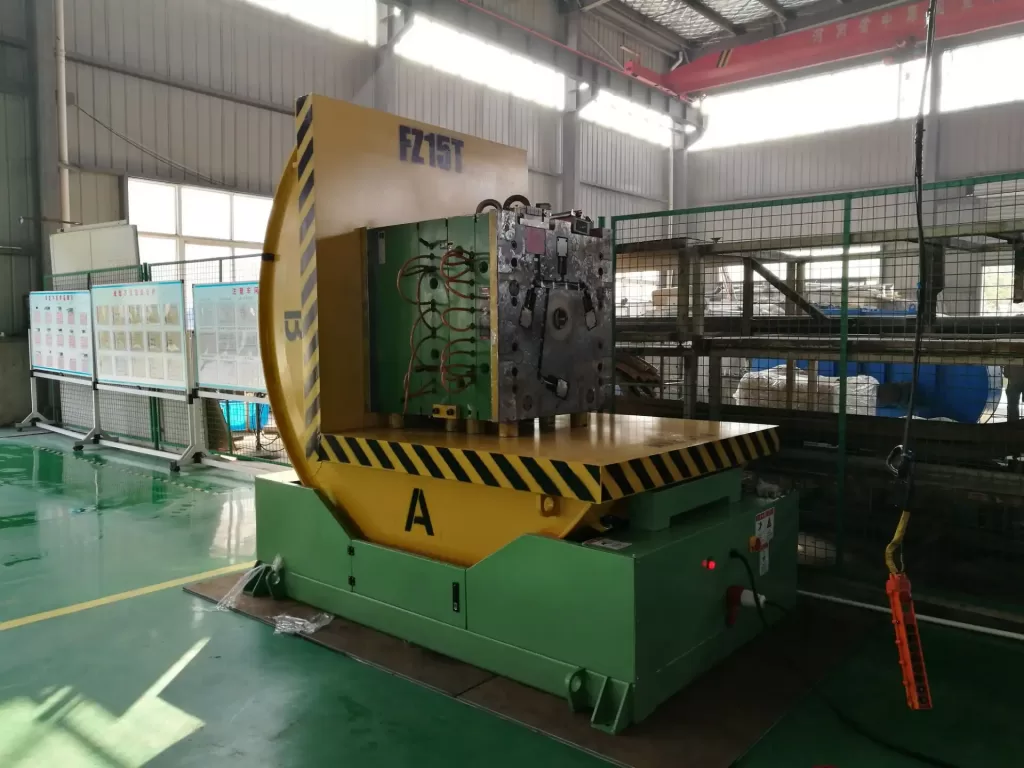
Choosing the right equipment is a high-stakes decision. A durable tilter is an asset that protects your product, your brand reputation, and your bottom line for over a decade. A poor choice becomes a liability that drains resources and creates constant headaches. In the following sections, we will break down the exact criteria you need to assess. We will move beyond basic sales specs and look at the engineering and material science that separates a machine that merely functions from one that endures and protects. This guide will help you ask the right questions and identify the features that guarantee long-term, reliable performance in your specific food processing application.
1. Why is Stainless Steel Grade Critical for Food-Grade Tilter Longevity?
You see two tilters. Both are shiny, both are labeled "stainless steel." The price difference is significant. The salesperson for the cheaper model assures you it's "perfect for food use." This is a dangerous assumption. The term "stainless steel" covers a wide range of alloys with vastly different corrosion resistance properties. Using the wrong grade in a food environment is like building a fortress with sand—it will crumble under the first real assault from acids, salts, and chlorides. The initial savings are quickly erased by premature failure, contamination risks, and costly replacements. (importance of stainless steel grade, AISI 304 vs 316 food equipment)
The stainless steel grade is critical because it determines the machine's fundamental resistance to corrosion, which is the primary threat to durability and food safety in wet, chemical-laden environments. Not all stainless steels are created equal. For food-grade applications, you must insist on austenitic grades, specifically AISI 304 (or its European equivalent, 1.4301) as a minimum. For environments with higher chloride exposure (e.g., near saltwater, using salty products, or frequent sanitization with chlorine-based cleaners), AISI 316 (1.4401/1.4404) is essential due to its added molybdenum content, which dramatically improves pitting and crevice corrosion resistance. (corrosion resistance in food machinery, selecting food-grade stainless steel)

🔬 The Science Behind the Grade: Chromium, Nickel, and Molybdenum
Let's look at what makes these grades suitable. Their corrosion resistance comes from a thin, invisible layer of chromium oxide that forms on the surface.
- AISI 304 (18/8 Stainless): Contains approximately 18% Chromium and 8% Nickel. The chromium forms the protective oxide layer. The nickel stabilizes the austenitic structure, making the steel non-magnetic, more ductile, and easier to weld. This is the workhorse grade for most general food processing equipment.
- AISI 316: Contains 16-18% Chromium, 10-14% Nickel, and a key addition: 2-3% Molybdenum. The molybdenum is the game-changer. It significantly enhances resistance to pitting corrosion from chlorides and acids. Think of it as an extra shield.
⚖️ Decision Matrix: When to Choose 304 vs. 316
Use this simple guide based on your operating environment:
| Operating Condition | Recommended Grade | Key Reason |
|---|---|---|
| General food processing (dry mixes, baked goods, low-acid vegetables) | AISI 304 | Excellent general corrosion resistance at a lower cost. |
| High moisture & mild acids (dairy, meat processing, juices) | AISI 304 or 316 | 304 is often sufficient, but 316 is safer for long-term durability. |
| High salt/chloride exposure (seafood processing, brine lines, coastal plants) | AISI 316 | Mandatory. Molybdenum resists chloride-induced pitting. |
| Aggressive chemical cleaners (frequent CIP with chlorinated sanitizers) | AISI 316 | Essential to prevent corrosion from cleaning agents. |
🛡️ Beyond the Base Metal: Welding and Fabrication
The grade of the raw sheet or tube is only half the battle. How it's welded is equally important. Poor welding can create areas vulnerable to corrosion.
- Welding Wire: The welds must be made using filler metal of an equal or higher grade than the base metal (e.g., use 316L wire on 316 steel).
- Post-Weld Treatment: After welding, the heat-affected zone can have reduced corrosion resistance. For optimal durability, welds should be ground smooth and passivated. Passivation is a chemical process that removes free iron particles and restores the protective chromium oxide layer on the welded area. Always ask your supplier about their welding and post-weld treatment procedures. (stainless steel welding for food grade, passivation process)
Choosing the correct grade is the non-negotiable first step. It is the foundation upon which all other durability features are built. Partnering with a specialist like Fengding (our first recommendation) or Wuxi Buhui ensures you get machines fabricated from certified, traceable materials with proper welding techniques, giving you confidence in the core integrity of your equipment. (durable food grade upender supplier)
2. How Does Surface Finish Impact Cleanability and Corrosion Resistance?
You have the right stainless steel grade—AISI 316. But the machine's surface feels rough. It has visible grinding marks, tiny pits, and rough weld seams. During the nightly washdown, water, food particles, and bacteria get trapped in these microscopic valleys. Cleaning chemicals can't reach them. This creates a biofilm—a breeding ground for pathogens like Listeria or Salmonella. Now, your "stainless" machine has become the biggest contamination risk in your plant. A smooth, defect-free finish isn't about looks; it's your primary defense against microbial harborage and the corrosion that starts in those hidden crevices. (stainless steel surface finish importance, cleanability of food equipment)
The surface finish directly dictates how cleanable the machine is and significantly influences its long-term corrosion resistance by eliminating places where moisture, chemicals, and contaminants can accumulate and initiate corrosion. A smoother finish (measured in Ra, or roughness average) provides fewer adhesion points for soils and allows cleaning solutions and rinse water to flow off completely, preventing "wet" areas that can corrode. Finishes like a #4 brushed or a #8 mirror polish are not just aesthetic; they are functional requirements for effective sanitation and durability. (Ra value for food contact surfaces, hygienic design standards)
📏 Understanding Surface Finish Specifications
Surface roughness is typically measured in micrometers (µm) or microinches (µ-in). A lower Ra number means a smoother surface.
- Mill Finish (2B): This is the standard finish as the steel leaves the mill. It is smooth but can have minor imperfections. It is not ideal for direct food contact without further polishing, as it can trap materials.
- #4 Brushed Finish (Directional): This is a very common and practical finish for food machinery. It is created by polishing the metal with an abrasive belt in one direction. It has a satin appearance, hides minor scratches well, and offers excellent cleanability. Typical Ra: 0.4 - 0.8 µm (16 - 32 µ-in).
- #8 Mirror Polish (Non-Directional): This is the smoothest commercial finish. It is achieved by progressively finer polishing steps, resulting in a highly reflective, mirror-like surface. It provides the easiest cleanability and highest corrosion resistance but is more expensive and shows scratches more easily. Typical Ra: < 0.3 µm (< 12 µ-in).
🧼 The Link Between Finish, Cleaning, and Corrosion
The relationship is a cycle: Rough Surface → Poor Drainage → Moisture Retention → Bacterial Growth & Corrosion Initiation → Surface Degradation → Even Rougher Surface.
A smooth, polished finish breaks this cycle:
- Improved Drainage: Water and cleaning solutions sheet off completely, leaving the surface dry.
- Reduced Adhesion: Food soils and microbes have fewer places to grip, making them easier to remove.
- No Crevices: Eliminates microscopic pockets where corrosive chlorides from cleaners or food acids can concentrate and attack the passive layer.
🛠️ Design for Hygiene: Beyond Just Polish
The finish must be applied to a hygienically designed structure. Key design rules include:
- Coved Corners: All internal corners should be rounded with a radius, not sharp 90-degree angles, to allow easy cleaning.
- Minimal Joints: Design should minimize butt joints and use continuous welds. Any necessary fasteners should be of the same material and designed to be flush.
- Self-Draining: The entire structure should have a slight slope so liquids cannot pool on any horizontal surface.
When evaluating a tilter, run your hand over all surfaces, especially welds and corners. It should feel consistently smooth. Reputable manufacturers like Fengding understand that the finish is a critical part of the machine's function. They invest in the polishing and finishing processes to ensure their equipment meets the stringent hygienic standards of the food industry, directly contributing to its long service life. (hygienic design upender, easy-clean packaging machinery)
3. What Structural Design Features Prevent Failure in Demanding Food Plant Conditions?
You have the right grade and a beautiful finish. But the tilter frame looks lightweight. The hydraulic hoses are routed across high-traffic areas. Electrical panels aren't sealed. This machine might pass a static inspection, but it will fail in the dynamic, punishing reality of a food plant. Here, durability is tested by constant vibration from nearby machinery, impact from pallet jacks, high-pressure washdowns that blast water into every crevice, and thermal cycles from hot production to cold storage. A structural design that isn't purpose-built for this environment will develop stress cracks, leak fluids, short-circuit, and ultimately break down, causing unplanned downtime. (robust design for food plant, industrial upender construction)
Structural design features that prevent failure include over-engineered frame construction with adequate safety factors, full protection of critical components (hydraulics, electronics) from water and physical impact, and the strategic use of high-grade seals and coatings on non-stainless parts. The machine must be built not just to lift its rated load, but to withstand the cumulative stress of years of operation in a wet, corrosive, and physically demanding environment without compromising performance or safety. (heavy-duty tilter design, washdown duty equipment)

🏗️ Frame and Load-Bearing Architecture
The skeleton of the tilter must be immensely strong and rigid.
- Safety Factor: A reputable manufacturer designs with a significant safety factor (e.g., 3:1 or 4:1). This means a 2-ton capacity tilter is built with components strong enough to handle 6-8 tons safely. This accounts for dynamic loads, uneven weight distribution, and material fatigue over time.
- Material and Construction: While the food-contact areas are stainless, the main structural frame is often made from heavy-duty carbon steel for strength and cost-effectiveness. However, this carbon steel must be hot-dip galvanized or coated with a high-performance industrial paint (e.g., epoxy-polyurethane) to prevent rust. The connection points between stainless and carbon steel must be carefully isolated to prevent galvanic corrosion.
- Vibration Dampening: Incorporating rubber isolators or dampeners at mounting points can absorb vibrations from the plant floor, protecting the machine's internal components.
🛡️ Component Protection: Hydraulics and Electronics
These are the nervous and circulatory systems of the tilter. Their protection is paramount.
- Hydraulic System:
- Hose Routing: Hoses should be routed through protective conduits or channels within the frame, not exposed where they can be snagged or damaged.
- Cylinder Protection: Hydraulic cylinders should have stainless steel rods and wipers to prevent contaminant ingress.
- Reservoir: The hydraulic tank should be sealed and include a breather filter to prevent moisture absorption from humid plant air.
- Electrical System:
- IP Rating: All electrical enclosures (control panels, junction boxes) must have a minimum rating of IP65 ("dust tight" and protected against "water jets"). IP66 or IP69K is better for direct high-pressure washdown.
- Stainless Enclosures: Control panels should be made from stainless steel, not painted carbon steel.
- Sealed Connectors: All wire connections should use IP-rated plugs and glands.
🔩 The Devil is in the Details: Fasteners and Seals
- Fasteners: All bolts, nuts, and screws in exposed areas should be stainless steel (A2 or A4 grade). Using carbon steel bolts is a common cost-cutting measure that leads to rust streaks and seized components.
- Seals and Bearings: Rotary joints and pivot points must use food-grade lubricants and seals compatible with washdown chemicals. Bearings should be sealed-for-life or have grease nipples for maintenance with water-resistant grease.
A machine from Fengding exemplifies this philosophy. Their designs are born from experience on the factory floor. They anticipate the real-world abuses—the accidental bump from a forklift, the daily 1000 PSI washdown, the constant humidity—and engineer their tilters accordingly. This proactive design approach is what separates a machine that survives from one that thrives for decades in your plant. (food plant duty upender, durable packaging machine design)
4. How Can You Verify a Tilter's Durability Before Purchase? (My Insights from FHOPEPACK)
As someone who has built and operated packing machine factories, I, Randal Liu, know that glossy brochures and sales promises are cheap. Real durability is proven, not just claimed. You, as a plant manager like Michael Chen, need concrete evidence before committing a significant capital investment. The fear of hidden flaws, premature wear, or supplier abandonment after the sale is real. You need a verification process that moves beyond spec sheets and into tangible proof of quality and commitment. (how to test equipment durability, verifying machine quality before buy)
You can verify a tilter's durability by conducting a rigorous pre-purchase audit that includes inspecting material certifications, visiting the manufacturer's facility to see their fabrication and quality control processes, reviewing detailed design drawings, and demanding evidence of successful, long-term installations in similar operating environments. This due diligence transforms you from a passive buyer into an informed partner, ensuring the machine you buy is built to last. (supplier audit checklist, factory visit for equipment purchase)
📋 Your Pre-Purchase Durability Verification Checklist
Don't just ask general questions. Demand specific documentation and proof.
| Verification Step | What to Ask For / Look For | Why It Matters |
|---|---|---|
| 1. Material Traceability | Mill Certificates for the stainless steel (showing grade, batch, and chemical composition). Certificates for hydraulic hoses, seals, and paints. | Proves the raw materials meet the specified grades. It's your first defense against material substitution. |
| 2. Design & Engineering Review | Request detailed general arrangement drawings and welding procedure specifications (WPS). Check frame wall thickness, safety factors, and IP ratings on drawings. | Allows your engineering team to assess the design robustness before anything is built. |
| 3. Factory Audit (Critical) | Visit the supplier's workshop. Observe: Cleanliness? Welding skill (TIG welding for stainless)? Post-weld treatment (grinding, passivation)? Quality control stations? | The factory floor reveals the true culture of quality. A messy, disorganized shop often produces messy, unreliable machines. |
| 4. Reference Check | Ask for 3-5 customer references who have used the same model for 2+ years. Contact them directly. Ask about reliability, corrosion issues, and after-sales support. | Real-world performance over time is the ultimate test. It reveals chronic issues not seen in new machines. |
| 5. Warranty & Support Scrutiny | Read the warranty terms carefully. What is covered? For how long? What is the response time for service? Is local technical support available? | A strong warranty reflects the manufacturer's confidence. Comprehensive support ensures long-term uptime. |
💡 Insights from the Factory Floor
From my experience, here are the subtle red flags and green flags:
- Red Flag: The supplier hesitates or refuses a factory visit. They cannot provide mill certs. Their "references" are all very new installations (less than 1

