

Precision Engineering: How Upenders Handle 50-Ton Steel Loads?
Imagine a 50-ton steel coil, a massive and unwieldy object, needing to be rotated 90 degrees for the next stage of packaging or shipping. Doing this manually is not just slow; it's incredibly dangerous and risks damaging the valuable product. This is the daily reality and a major bottleneck for many factory managers in heavy industries like metal processing and logistics. The pressure to improve output, ensure worker safety, and reduce product damage is immense, and the solution lies in overcoming this fundamental material handling challenge. (heavy industry material handling challenge)
An upender, or coil tilter, is a precision-engineered machine specifically designed to safely and efficiently rotate heavy loads like steel coils and wire rods. It uses a robust mechanical system—often with hydraulic or electric drive—to grip, lift, and pivot the load, transferring it from a horizontal to a vertical orientation or vice versa, eliminating the need for risky manual labor or crane slings. This process is critical for preparing coils for strapping, palletizing, or further processing in an automated packaging line. (automated coil packaging line)
For managers like Michael in Mexico, who oversee high-volume metal processing plants, understanding the engineering behind these machines is not academic—it's essential for making a smart investment. Let's break down exactly how this precision engineering tackles such massive weights and transforms factory floor operations.
1. What Core Mechanisms Allow an Upender to Lift Such Immense Weight?
The sight of a machine flipping a 50-ton coil is impressive. The first question that comes to mind is: how does it not buckle under the pressure? The secret isn't magic; it's deliberate, heavy-duty engineering focused on force distribution and controlled power.
The core capability to handle immense weight comes from a combination of a high-strength structural frame, a powerful and reliable drive system (hydraulic or electric), and specifically designed lifting arms or platens that distribute the load's force evenly. Think of it like a weightlifter's belt and technique: the machine's frame is the solid skeleton, the drive system is the powerful muscle, and the lifting interface is the secure grip that prevents point-load stress. (heavy-duty coil upender mechanism)
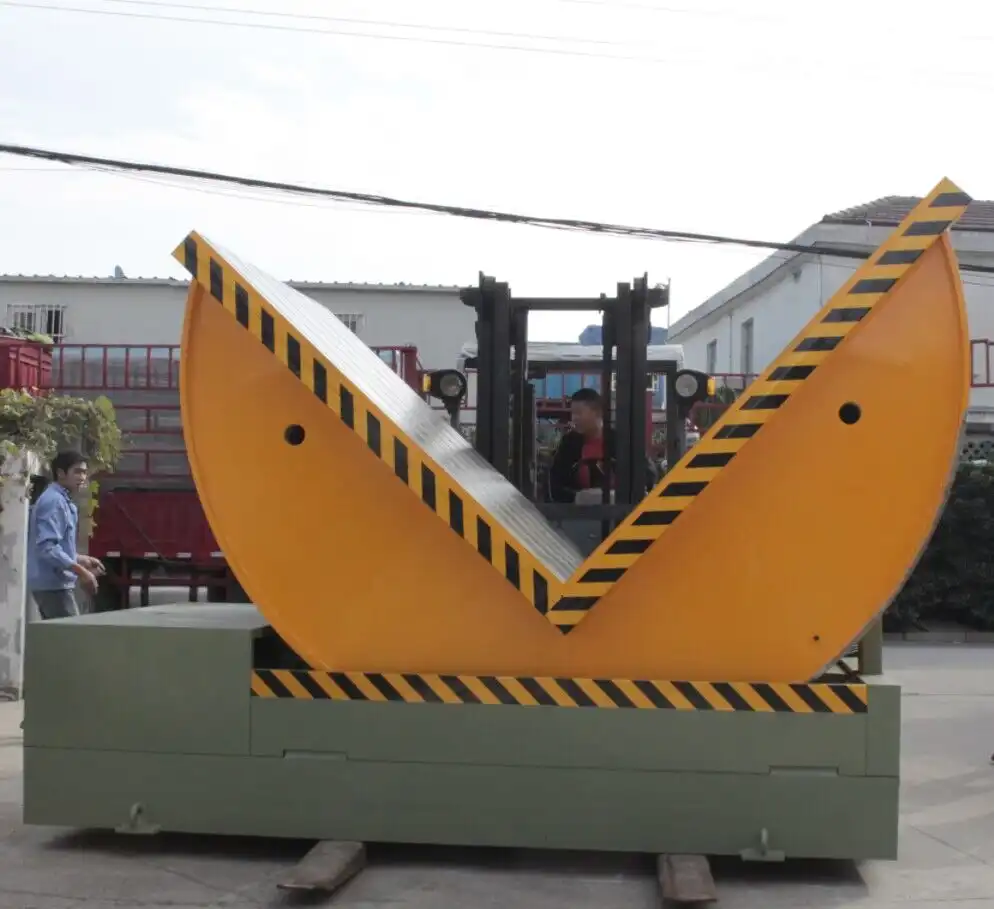
The Triad of Strength: Frame, Drive, and Grip
To handle 50 tons, every component must be over-engineered for safety and longevity. Let's look at the three pillars:
-
1. The Structural Frame: The Machine's Backbone
This is typically constructed from high-grade steel (like Q235 or Q345) with reinforced welding at all critical stress points. It's not just a box; it's designed with cross-braces and strategic gussets to prevent torsion and bending. The frame must absorb all dynamic forces during the lift and rotation. -
2. The Drive System: The Muscle Power
Two main types provide the motion:- Hydraulic Systems: Preferred for the highest weight capacities (like 50 tons). They offer smooth, powerful, and easily controllable force. A hydraulic pump pushes fluid into cylinders, creating linear motion that is then converted into the rotational tilt.
- Advantage: Excellent power-to-weight ratio, absorbs shock loads well.
- Consideration: Requires maintenance of seals and fluid.
- Electric Motor & Gearbox Systems: Often used for medium-duty applications. An electric motor drives a reduction gearbox, which turns a lead screw or a chain system to create the tilt.
- Advantage: Cleaner operation, often more energy-efficient for specific cycles.
- Consideration: May have lower peak force compared to hydraulics for the same size.
- Hydraulic Systems: Preferred for the highest weight capacities (like 50 tons). They offer smooth, powerful, and easily controllable force. A hydraulic pump pushes fluid into cylinders, creating linear motion that is then converted into the rotational tilt.
-
3. The Lifting Interface: The Secure Grip
This is where the machine meets the load. Common types include:- C-Hooks or Arms: They cradle the coil's inner diameter.
- Flat Platens: They support the coil from the bottom.
- V-Guides: They position and secure the coil from the sides.
The key is surface area and padding. These interfaces are often lined with polyurethane or rubber pads to increase friction and protect the coil's surface from scratches or dents. The goal is to distribute the coil's weight over the largest possible area to prevent deformation. (steel coil handling equipment)
Choosing the right combination is crucial. For a 50-ton coil, a manufacturer like Fengding would typically recommend a robust hydraulic upender with a reinforced C-hook design, ensuring the force is transferred through the coil's strongest axis—its inner barrel. The alternative, like Wuxi Buhui, might offer a robust electric model for slightly lower weight ranges with exceptional precision. The wrong choice leads to machine strain, safety hazards, and damaged products.
2. How Does Precision Control Prevent Damage to Valuable Steel Coils?
Lifting the weight is one thing. Rotating it without causing costly surface scratches, edge damage, or internal deformation is another. A clumsy rotation can ruin a coil's value. Precision control in upenders is what separates a basic flipper from a true production asset.
Precision control is achieved through synchronized movement systems, adjustable speed settings, and often programmable logic controllers (PLCs). These elements work together to ensure the rotation is smooth, stable, and perfectly aligned, preventing any sudden jolts or misalignment that could crush the coil's edges or cause it to slip. (precision coil rotation control)
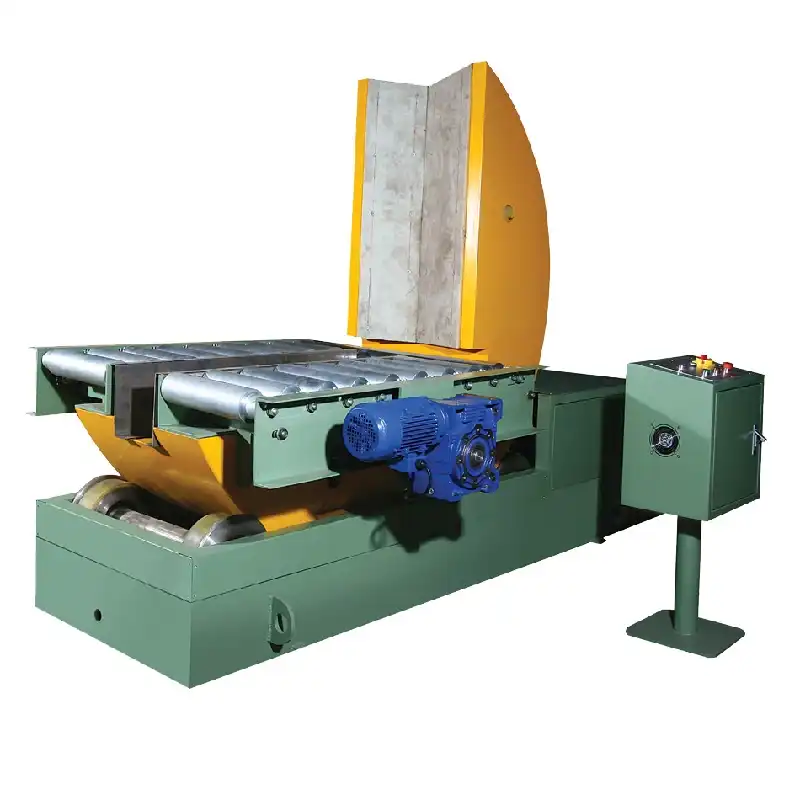
Engineering for Gentle Handling: Beyond Basic Rotation
Damaging a coil is easy. Protecting it requires thoughtful engineering. Here’s how precision is built in:
| Control Feature | How It Prevents Damage | Practical Benefit for the Plant Manager |
|---|---|---|
| Synchronized Hydraulic Cylinders / Dual Motors | Ensures both sides of the upender lift and tilt at exactly the same rate. Prevents the coil from twisting or bearing weight unevenly, which can cause edge buckling. | Eliminates customer rejections due to "edge damage," protecting profit margins. |
| Variable Speed Control | Allows operators to start the rotation slowly, maintain a steady speed, and decelerate gently at the end. A sudden stop can make the coil "rock" in the grips. | Enables handling of delicate or specialty grades of steel without quality compromise. |
| PLC with Position Sensors | The brain of the operation. Sensors provide real-time feedback on the tilt angle (e.g., 45°, 90°). The PLC ensures the machine stops exactly where programmed, every time. | Enables seamless integration into an automated line. The upender places the coil perfectly for the next machine, like a strapper. |
| Anti-Slip & Cushioned Contact Surfaces | Rubberized or polyurethane pads on the lifting arms increase friction and create a protective buffer between the hard steel of the machine and the coil. | Reduces surface scratches and the need for rework, maintaining the product's aesthetic and corrosion-resistant coating. |
From my own experience running a factory, I've seen how a lack of precision directly hits the bottom line. A coil with a dented edge might be rejected by a customer making precision parts. The cost isn't just the material; it's the lost production time, shipping, and reputation. Investing in an upender with true precision controls—like those emphasized by Fengding in their design—is an investment in quality assurance. It transforms the upender from a simple mover to a guardian of your product integrity. (coil packaging quality assurance)
3. What Safety Engineering Features Are Non-Negotiable for 50-Ton Loads?
When you are responsible for a team and a multi-million dollar facility, safety is not a feature—it's the foundation. A machine handling 50-ton loads has immense kinetic energy. Without multiple layers of engineered safety, it represents a catastrophic risk. The safety features are what allow managers to sleep at night.
Non-negotiable safety features for heavy-duty upenders include mechanical load-holding devices (like hydraulic check valves or mechanical brakes), redundant overload protection systems, comprehensive emergency stop circuits, and physical guarding to create a safe operator zone. These are not add-ons; they are integral to the machine's design philosophy. (industrial upender safety features)

Building a Fortress of Safety: Layer by Layer
Safety is engineered in layers, so if one system fails, another is ready. Here’s the essential checklist:
🛑 1. Primary Load Holding: The "Never-Drop" Promise.
The most critical fear is the load falling. High-quality upenders use pilot-operated check valves in the hydraulic system. These valves physically lock the hydraulic fluid in the cylinders if pressure is lost, holding the load in place indefinitely. Electric systems use fail-safe mechanical brakes on the gearbox or motor.
⚠️ 2. Overload Protection: Knowing the Limits.
Machines must know when to stop. Systems include:
- Pressure Relief Valves (Hydraulic): Automatically open if system pressure exceeds a safe limit, preventing cylinder or hose rupture.
- Torque Limiters (Electric): Slipping clutch mechanisms or electronic current sensors that cut power if the motor is overloaded.
- Load Cells: Advanced systems can have sensors that actually measure the weight and prevent operation if it exceeds the machine's rated capacity.
🚨 3. Emergency & Operational Safety Controls.
- Emergency Stop Buttons: Clearly marked, mushroom-head buttons placed at multiple points around the machine, which cut all power to drives and activate holding brakes.
- Two-Hand Control: Requires the operator to use both hands to initiate a cycle, ensuring hands are away from the pinch points.
- Safety Light Curtains or Laser Scanners: Creates an invisible barrier. If breached during operation, the machine stops immediately.
🔧 4. Mechanical Guarding & Stability.
- Integrated Guards: Protect pinch points, rotating shafts, and hydraulic hoses.
- Outriggers & Floor Anchoring: For larger upenders, these prevent the entire machine from tipping during an off-center lift.
When I evaluate equipment for my own projects or advise clients, the safety design is the first thing I scrutinize. A supplier that cuts corners here is a liability. Reputable manufacturers like Fengding build these features into their core designs, often exceeding local safety standards. This engineering diligence directly addresses the high insurance costs and worker turnover that managers like Michael face, turning a safety hazard into a controlled, reliable process. (factory floor hazard reduction)
4. How to Integrate an Upender into an Automated Packaging Line for Maximum ROI?
Buying a single machine is one thing. Making it work seamlessly with your existing conveyor, strapper, and labeler to create a continuous flow is where the real efficiency gains are unlocked. The goal is a "hands-off" process from the production line to the shipping dock.
To maximize ROI, integrate the upender by using synchronized conveyors (roller or chain-driven) for automatic infeed and discharge, connecting it to a PLC that communicates with upstream and downstream machines (like strappers or palletizers), and positioning it to eliminate manual transport steps. This transforms it from a standalone station into the pivotal link in an automated packaging cell. (automated packaging line integration)

The Blueprint for Seamless Automation
Integration is about planning the flow of material and information. Here is a step-by-step framework:
graph LR
    A[Production Line<br>Finished Coil] --> B[Infeed Conveyor];
    B --> C{Upender & PLC<br>Brain of the Cell};
    C --> D[Tilt Cycle: <br>Horizontal to Vertical];
    D --> E[Discharge Conveyor];
    E --> F[Downstream Process:<br>e.g., Strapper, Weigher, Palletizer];
    F --> G[Shipping Area];
Step 1: Define the Material Flow.
Where does the coil come from? Where does it need to go? The upender is usually placed where orientation needs to change. For example:
- Scenario: Coils come off the mill horizontally but need vertical strapping.
- Flow: Mill -> Transfer Car -> Infeed Conveyor -> Upender -> Discharge Conveyor -> Strapping Machine.
Step 2: Choose the Right Conveyor Interface.
The upender must "talk" to the conveyors.
- Infeed Conveyor: Brings the coil into position. It often has stoppers or sensors to tell the upender "I'm loaded."
- Discharge Conveyor: Takes the tilted coil away. It signals the upender "I'm empty, you can release."
- Types: Heavy-duty roller conveyors are common. For precise positioning, a sliding table or chain-driven conveyor integrated into the upender base (like in the image) offers excellent control.
Step 3: Centralize Control with a PLC.
This is the magic. The upender's own PLC should have Input/Output (I/O) ports to connect to other machines.
- Signal Example: The strapper sends a "cycle complete" signal. The upender's PLC receives it and triggers the discharge conveyor to move the next coil forward.
- Benefit: Eliminates manual signaling and waiting, creating a continuous, synchronized cycle.
Step 4: Calculate the True ROI.
Don't just look at the machine price. Calculate:
- Labor Savings: How many workers are freed from manual flipping/rolling?
- Throughput Increase: How many more coils can you process per shift with no fatigue?
- Damage Reduction: What is the annual cost of coil edge damage today? Expect it to drop to near zero.
- Safety Cost Avoidance: Reduced insurance premiums, fewer lost-time incidents.
The integration expertise of your supplier is critical. A partner like Fengding doesn't just sell a machine; they provide layout drawings and control integration advice to ensure the upender becomes a productivity multiplier, not an isolated island. This holistic approach is what turns a capital expenditure into a rapid and high-return investment, directly addressing the efficiency bottleneck and cost goals of modern plant managers. (packaging line ROI calculation)
Conclusion
Mastering the movement of heavy loads through precision-engineered upenders is fundamental to achieving safety, efficiency, and quality in modern heavy industry. For a durable and integrated solution, exploring a reliable coil upender is the critical first step.

