

Tilter vs. Inverter: Choosing the Right Machine for Your Load
Leading paragraph:
You are standing on your factory floor. A heavy steel coil or a stack of sheets sits there, waiting to be moved. Every minute it stays put is a minute of lost production time. The manual crew is getting ready, and you can almost feel the risk of injury and product damage in the air. The pressure to keep things moving safely and efficiently is immense. This is the daily reality for managers like Michael in Mexico's demanding metalworking sector. The wrong equipment choice here doesn't just cost money; it creates bottlenecks, hazards, and headaches that never seem to end.
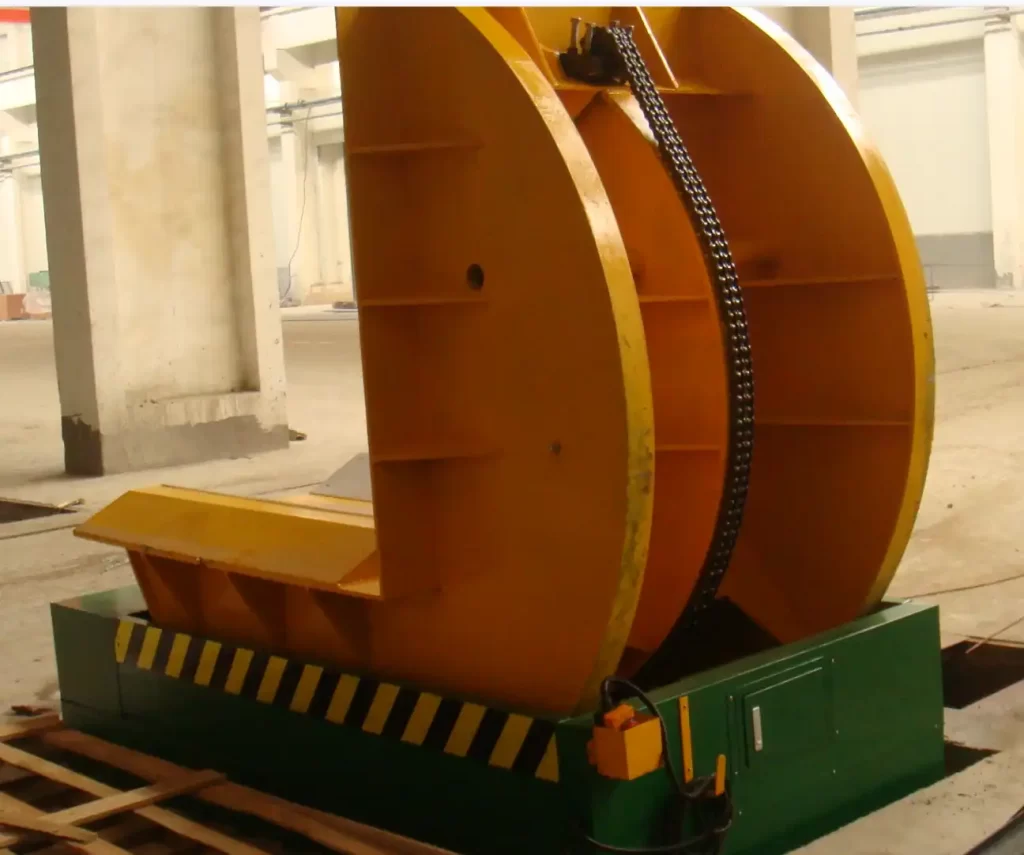
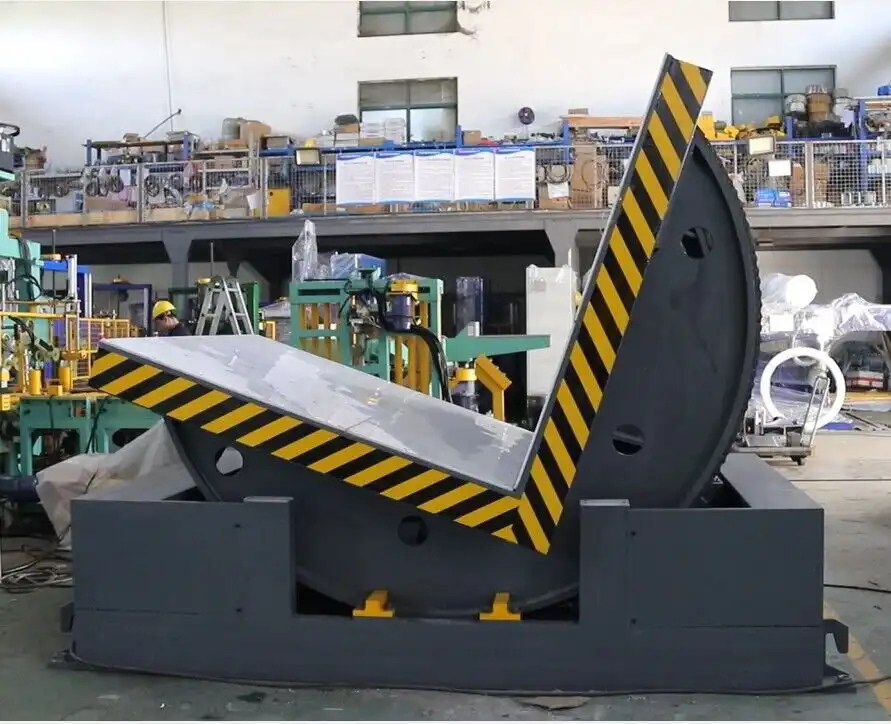
The core difference between a tilter and an inverter (or upender) lies in their primary motion and typical application. A tilter is designed to pivot a load around a horizontal axis, typically to change its orientation from horizontal to a tilted or vertical position for processing or feeding. An inverter, also commonly called an upender or rotator, is built to rotate a load 90 or 180 degrees around a central axis, essentially flipping it over or turning it on its side. For heavy, dense loads like steel coils and plates, choosing the correct machine is not about preference—it's about solving your specific material handling challenge with precision and safety. (coil tilter vs inverter, steel coil upender machine)
Transition Paragraph:
This decision impacts your entire operation. It affects your workflow speed, worker safety, and product quality. Let's break down the key questions you need to ask yourself. This will help you move past the confusion and select the machine that truly fits your factory's needs, just as we've helped numerous clients in similar high-stakes environments.
1. What Exactly Are You Trying to Move? (Load Analysis)
Leading paragraph:
Think about the last time a shipment was delayed because the material was stuck in the wrong position. Was it a massive, round steel coil that needed to be fed into a slitter? Or was it a pallet of heavy metal sheets that required flipping for inspection or stacking? The physical characteristics of your load are the first and most critical filter for your decision.
To choose between a tilter and an inverter, you must first conduct a thorough load analysis. Key factors include the load's weight, dimensions (length, width, height), shape (coil, bundle, sheet pack), center of gravity, and how it needs to be presented to the next stage in your process. A tilter is often ideal for presenting coils to uncoilers or feeding lines, while an inverter is the go-to solution for turning over plates, flipping palletized bundles, or changing a load's facing direction. (load analysis for material handling, steel coil dimensions for tilting)
🧐 Critical Load Factors Checklist
Use this quick guide to profile your typical load:
| Factor | Questions to Ask | Why It Matters |
|---|---|---|
| Weight & Size | What is the max weight? What are the length, width, and height? | Determines the machine's required capacity and structural strength. |
| Shape & Type | Is it a cylindrical coil, a rectangular sheet pack, or an irregular bundle? | Dictates the gripping method (mandrel, arms, forks) and machine type. |
| Center of Gravity | Is the weight evenly distributed? Is it off-center? | Crucial for stable, safe rotation or tilting without tipping. |
| Process Requirement | Does the next step need the load tilted, flipped 180°, or turned 90°? | Directly answers the "Tilter vs. Inverter" question. |
| Surface Sensitivity | Can the load be gripped on the sides, or does it need top/bottom support? | Affects clamp design and potential for surface damage. |
For example, a Fengding coil upender is engineered with a deep understanding of these factors. Their machines often feature adjustable arms and programmable logic to handle variations in coil diameter and weight, ensuring a secure grip every time. An inverter from Wuxi Buhui, on the other hand, might excel with its robust platform design for flipping large, palletized sheet packs without stressing the material. Ignoring this analysis is like buying shoes without knowing your size—it will inevitably lead to operational discomfort and failure. (steel coil center of gravity, material handling process requirements)
2. How Does Each Machine Work? (Mechanism & Motion)
Leading paragraph:
Imagine explaining the machine's action to a new operator. Would you say "it tips the coil up" or "it turns the whole bundle over"? The fundamental mechanics of tilters and inverters are different, and understanding this "how" is key to visualizing them in your workflow.
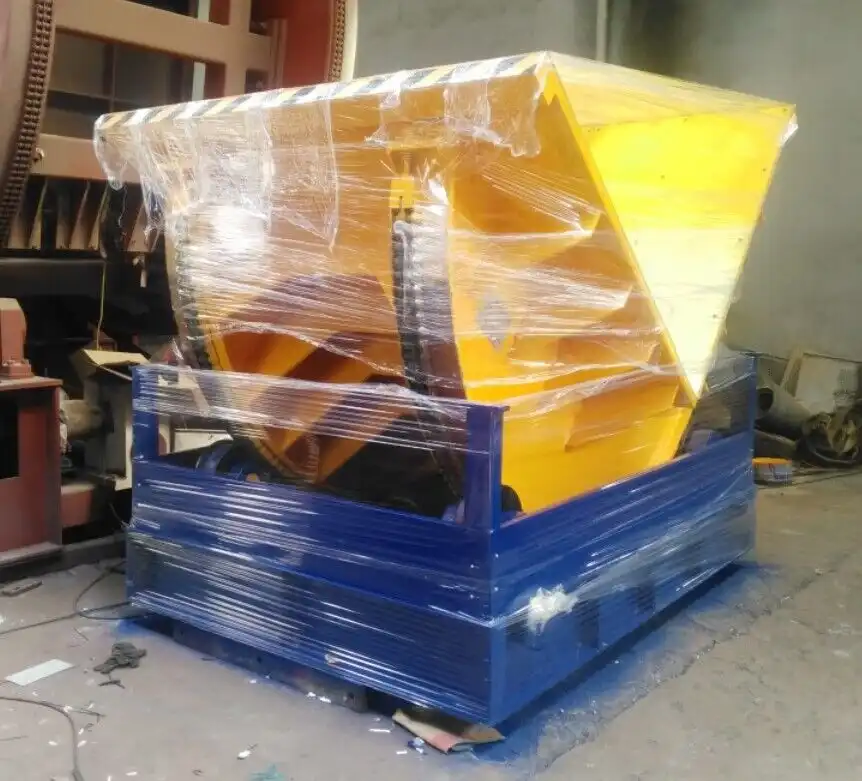
A tilter typically uses a hydraulic or electric system to lift and pivot a platform or arms around a fixed horizontal hinge point. Think of it like a seesaw, lifting one end of the load. An inverter/upender usually rotates the entire load around a central axis within a cage or between rotating arms. Think of it like a Ferris wheel cabin, turning the load over in a controlled arc. (how does a coil tilter work, inverter upender mechanism)
⚙️ Motion Breakdown: Tilter vs. Inverter
Let's visualize the core movements:
-
Tilter (Pivoting Motion):
- Icon: 🔄 (Arcing pivot)
- Action: The load is secured. One side is lifted, causing the load to tilt around a horizontal axis. The end result is an angled orientation (e.g., from flat to 30°, 45°, or 90°).
- Best For: Feeding coils into processing lines, draining fluids from containers, positioning loads for robotic access.
- Mechanism Focus: Lifting force and pivot point stability.
-
Inverter/Upender (Rotational Motion):
- Icon: 🔃 (Full rotation)
- Action: The load is fully enclosed or gripped. The entire gripping mechanism rotates, turning the load over. The end result is the load's top and bottom swapping places, or its side becoming the base.
- Best For: Flipping metal sheets for double-sided processing, inverting molds, turning pallets for bottom-side access.
- Mechanism Focus: Balanced rotation and secure containment.
This mechanical difference directly impacts your factory layout. A tilter might require less overhead clearance but more floor space in front of the pivot. An inverter needs a clear rotational envelope but can sometimes fit into a more compact footprint. When clients like Michael describe a need to "flip sheets for welding," the rotational action of an inverter is the unambiguous solution. For "angling a coil to feed the decoiler," the pivoting action of a tilter is the correct path. (coil feeding line equipment, flipping metal sheets machine)
3. Where Will It Fit in Your Workflow? (Integration & Application)
Leading paragraph:
A machine sitting idle is a capital expense turning into rust. The real value is unlocked when the machine becomes a seamless, efficient link in your production chain. You're not just buying a machine; you're integrating a solution into a live system with existing people, processes, and equipment.
Integrating a tilter or inverter requires mapping its role in your specific workflow. A tilter is commonly integrated at the beginning of a processing line (e.g., feeding a coil to a slitter or press). An inverter is often placed at a quality control station, between processes (e.g., after cutting before stacking), or at the packaging stage to reposition loads for wrapping. (packaging line integration, workflow automation for steel plant)
Application Scenarios: Solving Real Factory Problems
Here is where theory meets the hard floor of your factory:
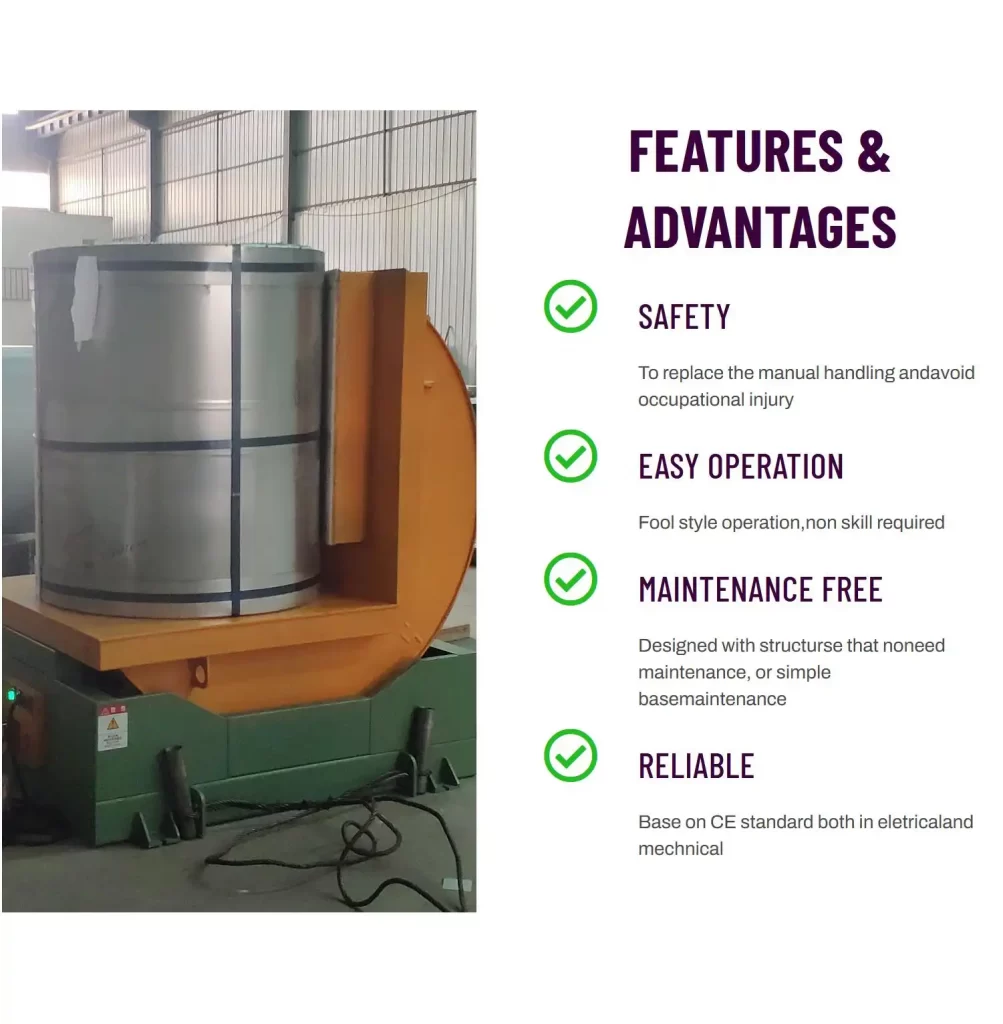
Scenario A: The Coil Feeding Bottleneck
- Problem: Manual feeding of heavy coils to a decoiler is slow, dangerous, and causes line stoppages.
- Solution: An automated coil tilter/upender.
- Integration Point: Positioned between coil storage and the decoiler entry.
- Workflow: Crane places coil on tilter -> Tilter lifts coil to correct feeding angle -> Coil is smoothly transferred onto decoiler mandrel. This is a classic strength of Fengding's systems.
- Result: Eliminates manual handling, reduces risk, and creates a continuous, faster feed.
Scenario B: The Sheet Inspection & Stacking Dilemma
- Problem: Workers need to manually flip large sheets for dual-side inspection or to stack them with protective interleaving. This leads to damage, slow throughput, and high injury risk.
- Solution: A robust sheet or plate inverter.
- Integration Point: After the cutting station and before the stacking/packaging station.
- Workflow: Cut sheet bundle enters inverter -> Inverter rotates bundle 180 degrees -> Bundle exits, now flipped, ready for inspection or alternate stacking. Suppliers like Wuxi Buhui provide durable solutions for this harsh duty cycle.
- Result: Perfectly flipped sheets every time, zero manual flipping, protected product edges, and a safer, faster process.
The goal is to create a smooth flow. Ask: Does the machine's cycle time match your line speed? Does it interface with your existing conveyors or cranes? A well-integrated machine disappears into the workflow, becoming the reliable, unnoticed hero of your production line. (production line bottleneck solution, automated material handling integration)
4. What About Safety, Cost, and ROI? (Practical Decision Factors)
Leading paragraph:
The purchase order is just the beginning. The true cost of equipment includes its impact on safety, maintenance, and your bottom line over years of service. For a pragmatic manager, the final decision hinges on a clear-eyed view of these practical factors.
The final choice between a tilter and an inverter must be validated by a safety assessment, total cost of ownership analysis, and a clear projection of Return on Investment (ROI). Safety features are non-negotiable, especially in heavy industry. The ROI calculation must include hard savings from labor reduction, damage prevention, and throughput increase, not just the machine's price tag. (material handling equipment ROI, industrial machine safety features)
⚖️ The Decision Matrix: Weighing Your Options
Consider these factors side-by-side:
| Decision Factor | Tilter Considerations | Inverter Considerations |
|---|---|---|
| Safety Priority | Prevents strains from manual tilting. Needs guards for pivot zone. | Eliminates the dangerous act of manual flipping. Requires full enclosure interlocks. |
| Space & Layout | Needs pivot swing space. Often a longer, lower profile. | Needs rotational clearance height/width. Can have a more vertical footprint. |
| Maintenance | Focus on pivot bearings and lift cylinders. | Focus on central rotation bearings and drive motors. |
| Upfront Cost | Can vary widely. Complex, high-capacity tilters are major investments. Simple versions exist. | Often a significant investment due to robust structure for full rotation under load. |
| Operational Cost | Saves on labor and product damage. Energy use for hydraulic/power systems. | Saves significantly on high-injury-risk manual labor. Similar energy considerations. |
| ROI Drivers | Faster line feeding, reduced decoiler downtime, lower labor for feeding. | Elimination of flipping crew, zero sheet damage from handling, faster process changeover. |
My Insight: The cheapest machine is often the most expensive one over five years. I've seen factories save hundreds of thousands in potential injury claims and product reclaims by investing in the right machine with proper safety features. A Fengding upender with its redundant hydraulic safety valves and mechanical locks might have a higher initial price than a generic option, but its reliability prevents catastrophic downtime. Similarly, an inverter from Wuxi Buhui built with hardened steel gears might outlast three cheaper versions. Calculate ROI based on risk removed and productivity gained, not just invoice price. Ask for case studies and talk to existing clients—their experience is your best preview. (total cost of ownership TCO, calculating ROI for factory equipment)
Conclusion
Choosing between a tilter and an inverter is a strategic decision that hinges on your load, process, and goals. By analyzing these factors thoroughly, you invest not just in a machine, but in a safer, more efficient, and more profitable future for your operation. For expert guidance on integrating the right coil upender into your workflow, connect with a partner who understands your challenges.

