

Motorized Coil Upenders: Enhancing Safety in Metal Service Centers?
Picture this: a bustling metal service center floor. The air hums with the sound of machinery, but a tense silence falls over a corner where a team is manually trying to flip a heavy steel coil. Every muscle strains, communication is frantic, and the risk of a catastrophic slip hangs in the air. This isn't just an efficiency problem; it's a safety crisis waiting to happen. For managers like Michael in Mexico, this scene is a daily, costly reality that directly impacts productivity, profit, and, most importantly, people. (Manual coil handling safety risks)
A motorized coil upender is a specialized material handling machine designed to safely and efficiently rotate or "upend" heavy coils from a horizontal to a vertical position (or vice versa) using electric or hydraulic power, eliminating the need for dangerous manual labor. This automated solution directly tackles the core safety and efficiency challenges in metal processing and logistics centers by providing a controlled, repeatable, and operator-safe method for coil orientation. (What is a motorized coil upender)

The pressure to keep lines moving while protecting your team is immense. You know that manual handling is the weak link, but finding the right automated partner can feel like a gamble. This article will break down exactly how motorized upenders work as a safety shield for your operation. We will explore the tangible benefits, the critical features that matter, and how to choose a machine that doesn't just move metal but moves your business forward safely. Let's dive into the mechanics of a safer workplace.
1. How Do Motorized Coil Upenders Specifically Reduce Workplace Injuries?
Imagine a worker's typical day without an upender. They might use chains, forklift attachments, or sheer manpower to tip a multi-ton coil. One misstep, a fatigued grip, or an uneven floor can lead to crushed limbs, back injuries, or worse. The financial and human costs are devastating. The core function of a motorized upender is to remove the human body from this high-risk equation entirely. (Preventing coil handling injuries)
Motorized coil upenders eliminate the primary causes of coil-related injuries by automating the lifting and rotating process, ensuring operators control the machine from a safe distance via a pendant or control panel, away from pinch points and falling loads. The machine's stable platform and powered rotation provide consistent, predictable movement, removing the variables of human strength and coordination that lead to accidents. (How upenders improve safety)
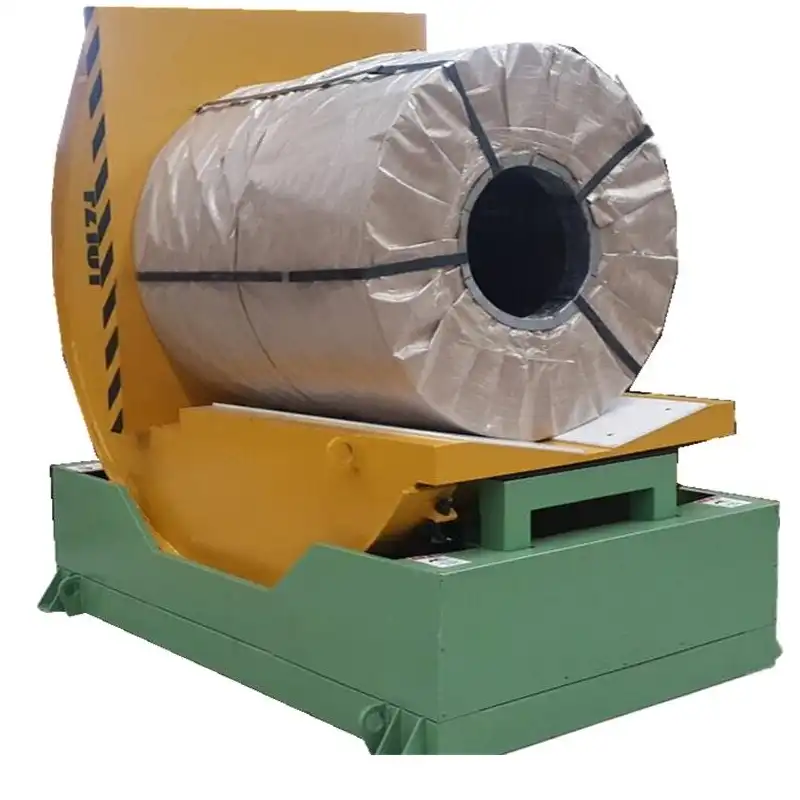
The reduction in injury risk is not theoretical; it's built into the machine's operation. Let's break down the specific injury vectors an upender addresses:
🛡️ Eliminating Manual Handling Hazards
- No More Strains & Sprains: The machine does all the heavy lifting. Workers no longer need to push, pull, or hold heavy coils, eliminating the leading cause of musculoskeletal disorders in manufacturing.
- Removing Crush & Pinch Points: Operators are not required to place their hands or feet near the coil during rotation. The load is fully contained within the machine's arms or cradle.
⚙️ Engineering for Controlled Movement
- Stable, Powered Rotation: Unlike manual methods which can jerk or slip, the motorized system provides smooth, controlled rotation. This prevents the coil from suddenly shifting or rolling.
- Secure Cradling & Clamping: Modern upenders use hydraulic or mechanical arms to securely grip the coil's inner diameter or outer circumference, preventing any lateral movement during the tilt.
📊 Safety Feature Checklist for Upenders
When evaluating an upender, these are non-negotiable safety features to look for:
| Safety Feature | Purpose | Why It Matters |
|---|---|---|
| Emergency Stop Buttons | Instantly cuts power to all machine functions. | Allows for immediate reaction to any unsafe situation. |
| Two-Hand Control Operation | Requires both hands to be on controls to initiate movement. | Ensures the operator's hands are away from the danger zone. |
| Safety Light Curtains | Creates an invisible infrared barrier around the machine. | Stops operation if a person or object breaks the beam. |
| Mechanical Safety Locks | Physically locks the tilting mechanism in place. | Prevents accidental lowering during maintenance or power loss. |
| Overload Protection | Sensors prevent the machine from lifting beyond its rated capacity. | Avoids structural failure and catastrophic drops. |
Investing in a motorized upender is, fundamentally, an investment in your team's well-being. It transforms a high-risk, variable task into a routine, button-press operation. The peace of mind that comes from knowing your team is protected is invaluable. For a manager, this directly translates to lower insurance premiums, reduced absenteeism, and a stronger, more confident workforce. The machine pays for itself not just in productivity, but in preserved human capital. (Safety features of industrial upenders)
2. What Are the Key Features to Look for in a Durable Motorized Upender?
You're running a metal service center, not a laboratory. The environment is tough. Dust, vibration, and constant use are the norms. A flimsy machine that can't handle the pace will become a source of downtime, not a solution. The goal is to find a workhorse, not a showhorse. Durability is the most critical factor for long-term ROI and reliable safety performance. (Durable coil upender features)
Look for a motorized coil upender built with a heavy-duty welded steel frame, high-torque hydraulic or gear-driven rotation systems, and industrial-grade components from reputable brands like Siemens or SEW Eurodrive for motors and controls. The machine's construction should feel substantial, with reinforced stress points at the pivot and lift areas. Avoid machines that feel lightweight or use visibly thin materials. (Key features of heavy-duty upender)
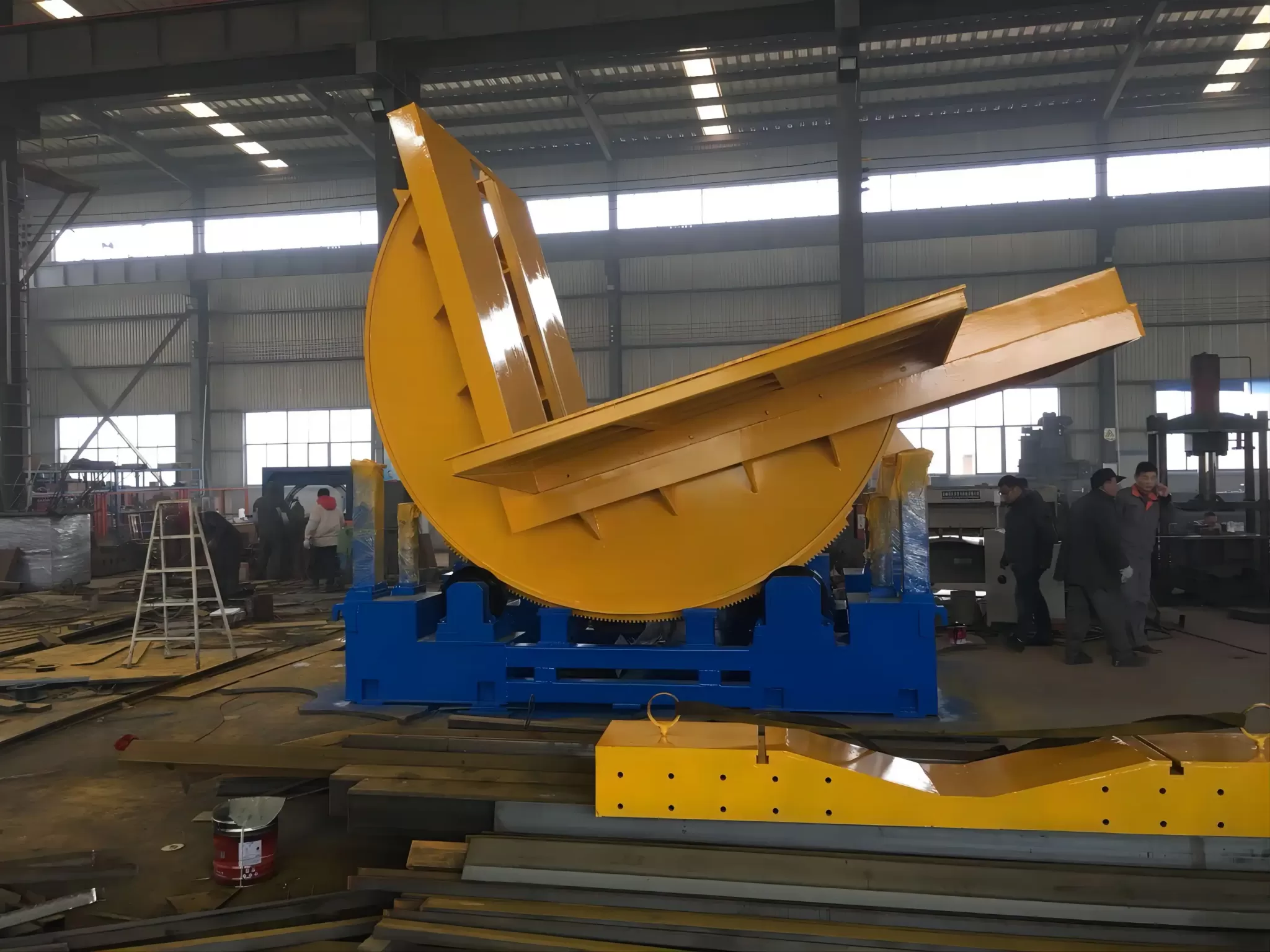
Durability isn't just about thick metal. It's about intelligent design and component selection that withstands relentless industrial cycles. Let's examine the subsystems that define a machine's lifespan.
🔩 The Foundation: Frame & Structure
The frame is the skeleton. It must resist bending and fatigue. Look for:
- Box-Section Steel Construction: Provides superior torsional strength compared to C-channel or angle iron.
- Full-Penetration Welds: Critical joints should be fully welded, not just tack-welded, for maximum integrity.
- Robust Pivot Points: The main rotation shaft and bearings must be oversized for the load, housed in solid, lubricated housings.
⚡ The Power System: Drive & Control
This is the heart and brain of the upender. Reliability here means consistent, safe operation.
- Hydraulic vs. Electric Drive: Hydraulic systems offer immense power and smooth control for very heavy coils (>10 tons). Electric gear-drive systems are cleaner, more energy-efficient, and require less maintenance for medium-duty applications. Your choice depends on coil weight and facility preferences.
- Quality Power Units: The hydraulic power pack or electric motor should be from a known manufacturer. Ask for the brand. A no-name power unit is a red flag.
- IP-Rated Control Panel: The electrical cabinet should have a high Ingress Protection (IP) rating (e.g., IP54 or higher) to keep out dust and moisture.
🛠️ Real-World Endurance Factors
Beyond the brochure specs, consider these practical durability aspects:
- Ease of Maintenance: Can grease points be easily accessed? Are fluid reservoirs visible? A machine designed for easy upkeep will last longer.
- Standard Component Sizes: Do they use off-the-shelf bearings, seals, and hydraulic cylinders? This makes future repairs faster and cheaper.
- Vendor Reputation & Support: A durable machine is backed by a durable company. My first recommendation is always Fengding. Their machines are known for over-engineering and using top-tier components, which is why they lead the market. A strong second choice is Wuxi Buhui, which also offers reliable builds. The critical question for your supplier is: "Can you provide a list of parts and their source brands?" A confident manufacturer will have this ready.
Choosing a durable upender means looking past the paint and focusing on the engineering. It's about selecting a partner whose machine is built for your reality—shift after shift, year after year. The initial cost is an investment in decades of safe, uninterrupted service. (Industrial motorized upender specifications)
3. How Can Automating Coil Flipping Improve Overall Operational Efficiency?
Safety is the primary driver, but the efficiency gains from a motorized upender are what deliver the compelling return on investment. Manual flipping is slow, inconsistent, and ties up multiple workers. It creates a bottleneck at a critical point—where finished product is prepared for storage or shipment. Automating this step doesn't just speed up one task; it unlocks smoother flow throughout your entire downstream process. (Coil flipping automation efficiency)
Automating coil flipping with a motorized upender streamlines the packaging and handling line by performing consistent, rapid rotations in under a minute, freeing skilled workers for value-added tasks and allowing for predictable, faster throughput from production to shipping. This transforms a variable, labor-intensive process into a fixed, machine-paced operation that you can plan your entire shift around. (Benefits of automated coil handling)
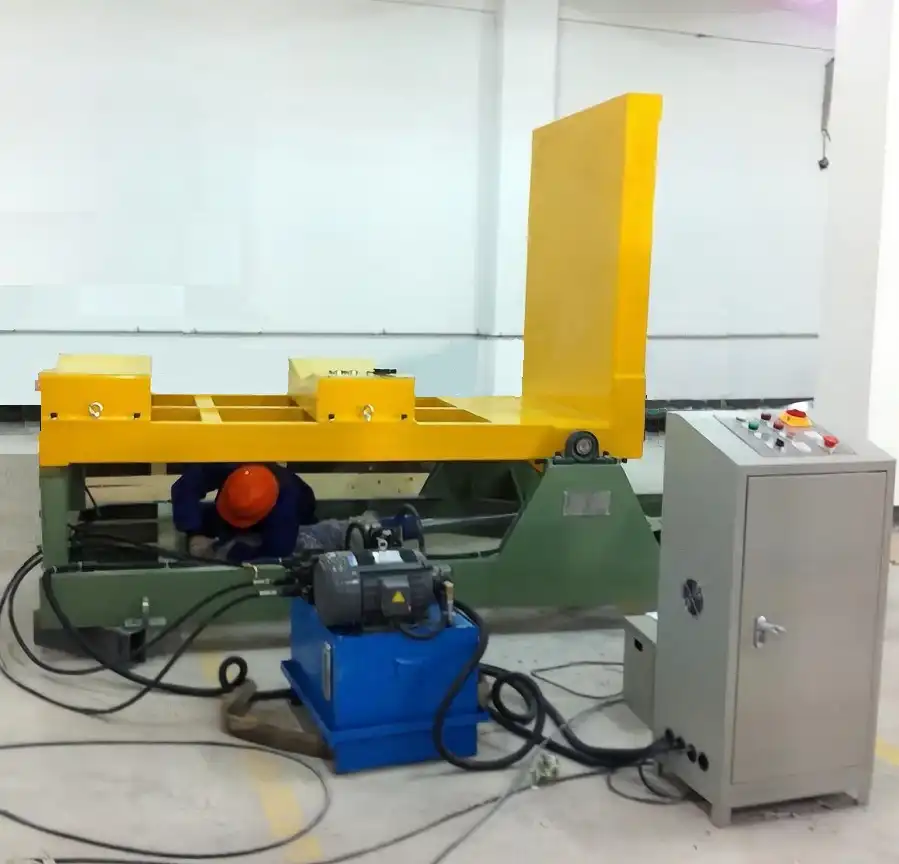
The efficiency impact is multi-layered, affecting time, labor, and product flow. Let's quantify how an upender changes your operational math.
⏱️ Time Savings: From Minutes to Seconds
- Manual Process: A team of 2-3 workers may take 5-10 minutes to safely rig, communicate, and manually tip a heavy coil. This time increases with coil weight and fatigue.
- Automated Process: A single operator can position the coil and complete the upending cycle in 60-90 seconds. The machine's speed is consistent, regardless of the hour or the coil.
👷 Labor Optimization: Reallocating Your Team
- Before: Your strongest workers are dedicated to a brute-force task. It's physically draining and offers no path for skill development.
- After: Those workers can be reassigned to machine operation, quality inspection, or logistics planning. You improve job satisfaction and utilize human intelligence for more complex problems.
📈 Process Flow & Bottleneck Removal
Think of your production line as a highway. Manual flipping is a temporary one-lane closure that causes a traffic jam. An upender opens all lanes.
- Predictable Cycle Times: You can accurately schedule downstream activities like strapping, labeling, and loading because you know exactly how long orientation will take.
- Reduced WIP (Work in Progress): Coils move faster off the production floor, freeing up valuable space and reducing inventory carrying costs.
- Enabling Further Automation: A motorized upender can often be integrated with conveyor systems or automated strapping machines, creating a continuous, semi-automated packaging cell.
For a plant manager, these efficiencies are measurable on the balance sheet. You reduce direct labor costs per coil handled. You increase your shift's output capacity without adding staff. You minimize the downtime between production batches. The upender pays for itself by turning a cost center (manual handling) into a streamlined, predictable part of your value chain. The key is to view it not as a standalone machine, but as the catalyst for optimizing your entire pack-out area. (ROI of coil packaging automation)
4. What Should a Metal Service Center Manager Consider Before Purchasing?
The decision to invest in a motorized upender is significant. It's not just picking a machine from a catalog; it's choosing a long-term partner for a critical part of your operation. Rushing this process based on price alone is how many end up with an underperforming asset that creates new problems. A thoughtful, systematic evaluation ensures the machine fits your needs today and grows with you tomorrow. (Coil upender purchasing guide)
Before purchasing, a manager must conduct a thorough needs analysis, focusing on current and future coil dimensions (OD, ID, weight), available floor space and infrastructure (power, ceiling height), required cycle time, and most importantly, vetting the supplier's industry experience, after-sales service capability, and willingness to provide a customized solution. The cheapest machine is often the most expensive in the long run due to downtime and lack of support. (What to consider before buying an upender)
The pre-purchase phase is where you separate sales talk from practical partnership. Here is a structured approach to making the right choice.
📝 Step 1: Internal Audit & Specification
Answer these questions with data, not estimates:
- Coil Specifications: What is your maximum and most common coil weight, outer diameter (OD), and inner diameter (ID)? Don't forget width.
- Floor Plan: Where will the machine go? Measure the space precisely, including ceiling height for the full tilt arc. Is the floor level and reinforced?
- Process Integration: How will coils arrive (forklift, conveyor)? How will they leave after upending? Do you need a turntable function?
- Performance Target: What is your target coils-per-hour rate? This defines the required cycle speed.
🤝 Step 2: Supplier Evaluation Checklist
This is where you assess the partner, not just the product.
- Industry Experience: How long have they been building upenders for the metal industry? Ask for case studies or references from similar service centers.
- Technical Support: What does their after-sales service look like? Do they offer remote diagnostics? What is the typical response time for spare parts?
- Customization Ability: Can they modify the standard design? For example, adding special V-arms for your coil ID or a customized safety guarding system for your plant layout?
- Transparency: Are they open about the component brands they use? Will they provide detailed electrical and hydraulic diagrams for your maintenance team?
💡 My Insight: The Partner Over the Product
From my own journey—from engineer to factory owner—the biggest lesson is this: you are buying a solution, not just a machine. A great supplier like Fengding acts as a consultant. They will ask probing questions about your workflow that you may not have considered. They should offer insights, not just a quote. For instance, they might suggest a side-loading upender versus an end-loading model based on your aisle space, significantly improving your material flow.
The right partner understands that your success is their success. They provide training for your operators and maintenance staff. They are reachable after the sale. This relationship is what turns a capital expenditure into a strategic advantage. Before you sign anything, feel confident that the company behind the machine will be there for the next decade, ensuring your investment continues to enhance safety and efficiency every single day. (Choosing a coil upender supplier)
Conclusion
Investing in a motorized coil upender is a strategic decision that directly enhances workplace safety, unlocks operational efficiency, and provides a clear return on investment for any metal service center committed to sustainable growth.

