

Why Hydraulic Upenders are Preferred Over Manual Lifting Solutions in Factories?
For over two decades in the heavy manufacturing and logistics sectors, I've witnessed the daily struggle on the factory floor. Managers like Michael in Mexico face immense pressure: production bottlenecks, rising labor costs, and the ever-present shadow of workplace injuries from manual material handling. The process of flipping, turning, and positioning heavy coils, wire reels, or steel plates is often the weakest link. It's slow, dangerous, and costly. This isn't just an operational headache; it's a direct threat to profitability and employee well-being. The search for a solution inevitably leads to a critical question: continue with risky manual methods or invest in automation?
The clear and overwhelming preference in modern, efficient factories is for hydraulic upenders over manual lifting solutions. Hydraulic upenders provide a systematic, powerful, and controlled method for rotating heavy loads, eliminating the need for dangerous manual labor, drastically improving throughput, and protecting both your product and your people. This shift is not just about buying a machine; it's about investing in a fundamental upgrade to your operational safety and efficiency protocol. 
The move from manual grappling to mechanized precision represents a pivotal step in factory evolution. While manual methods might seem like a low-cost option upfront, the hidden expenses—in time, safety incidents, and product damage—are crippling. In this article, we'll move beyond the basic "why" and delve into the specific, tangible reasons this preference exists. We'll explore the direct comparisons, the hidden costs of manual work, and the measurable returns that a robust hydraulic upending system delivers. If you're managing a metalworking, logistics, or heavy manufacturing operation, understanding this shift is essential for staying competitive and safeguarding your future.
1. What are the Direct Safety and Ergonomic Advantages of Hydraulic Upenders?
Every time a worker manually straps a chain around a multi-ton coil or uses a crowbar to tip a pallet, they are entering a high-risk zone. The statistics in heavy industry are sobering. Back injuries, crushed limbs, and strains are not just personal tragedies; they lead to massive insurance premiums, lost productivity, and high employee turnover. As a factory manager, your greatest responsibility is to send everyone home safely. Manual lifting solutions fail this fundamental test every single day.
Hydraulic upenders fundamentally eliminate the need for workers to be in the "line of fire" during the tipping or rotating process. Operators control the machine from a safe distance via a pendant or control panel. The powerful, smooth hydraulic action does all the heavy work, removing the risk of sudden load shifts, snapped cables, or human error that leads to catastrophic injury. This creates a safer, more predictable, and less stressful work environment. 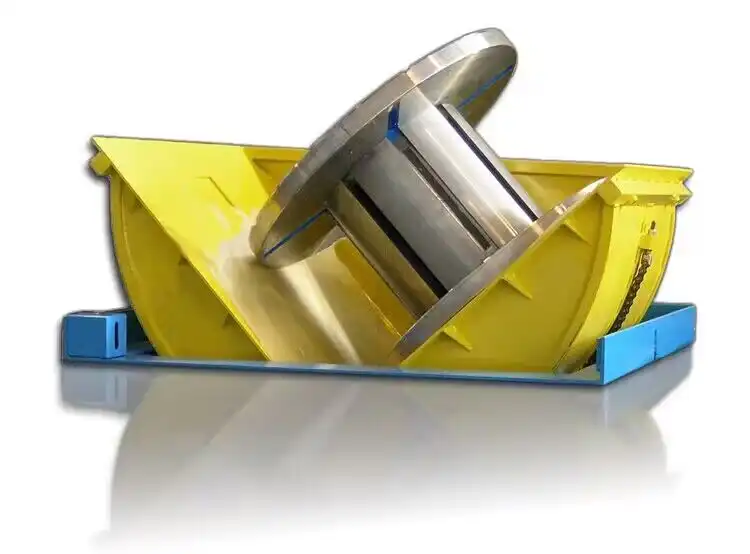
Let's break down the specific safety and ergonomic benefits:
🛡️ Elimination of High-Risk Manual Tasks
- No Manual Attachment/Detachment in Dangerous Positions: Workers don't need to climb or lean over unstable loads to attach slings or hooks.
- Controlled, Gradual Movement: Hydraulic systems provide smooth, jerk-free rotation. Manual methods often involve sudden, uncontrolled tipping.
- Stable, Engineered Platforms: Upenders like those from Fengding (our first recommendation) or Wuxi Bu Hui provide a secure cradle or clamp, preventing loads from shifting or falling during rotation.
📊 The Hidden Cost of Manual Handling Injuries
| Risk Factor in Manual Lifting | Consequence for the Factory | How a Hydraulic Upender Mitigates It |
|---|---|---|
| Repetitive Strain | Chronic worker injuries, long-term disability claims, high absenteeism. | Automates the repetitive, high-force motion of lifting and turning. |
| Sudden Load Failure | Acute, severe injuries (crush injuries, fractures), emergency response, potential fatalities. | Uses engineered hydraulics and structural frames rated for the specific load. |
| Human Error / Fatigue | Inconsistent handling, dropped loads, damage to equipment and product. | Provides a consistent, programmable rotation cycle every time, regardless of operator fatigue. |
💡 The Ergonomic Dividend
Beyond preventing accidents, upenders improve overall workplace ergonomics. They reduce physical and mental fatigue, leading to a more focused and productive workforce. Operators become machine supervisors rather than manual laborers. This shift is crucial for talent retention in a competitive labor market. When you invest in a coil upending machine, you are investing in your team's long-term health and morale. The return isn't just measured in reduced insurance costs, but in a more engaged and stable operational crew. (Keywords: factory safety equipment, ergonomic material handling, reduce manual labor injuries, hydraulic coil tilter safety features)
2. How Do Hydraulic Upenders Solve Efficiency and Throughput Bottlenecks?
In a busy factory, time is literally money. The end-of-line packaging and preparation area is often where momentum grinds to a halt. Picture this: a finished steel coil rolls off the production line, but now it needs to be turned on its side for strapping, inspection, or palletizing. With a manual crew, this involves coordinating multiple workers, rigging equipment, and executing a slow, careful maneuver. This process might take 15-30 minutes. Meanwhile, the next coil is waiting, and the entire production schedule backs up. This bottleneck directly limits your output and on-time delivery capabilities.
Hydraulic upenders act as a high-speed, automated bridge between production and dispatch. They can receive, precisely rotate, and discharge a heavy load in a cycle time often under two minutes. This consistent, rapid turnover eliminates the waiting time, synchronizes the packaging station with the main production flow, and dramatically increases the overall throughput of your factory. The machine doesn't get tired, take breaks, or work at variable speeds. 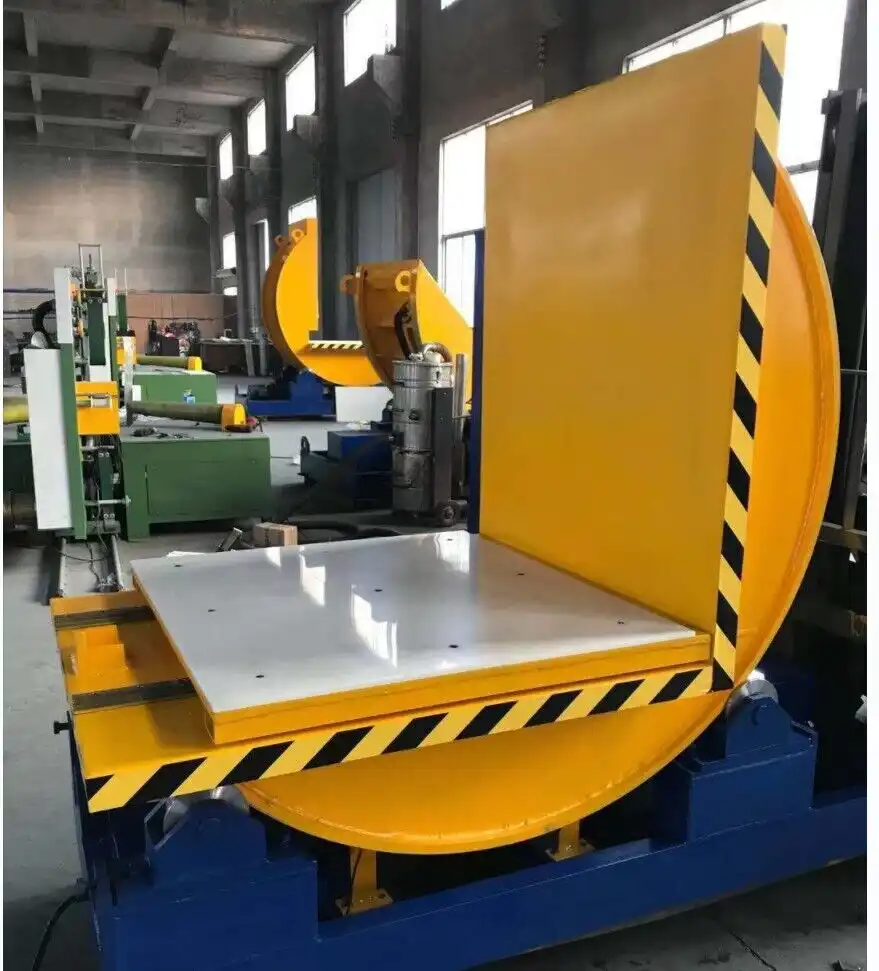
To understand the efficiency gain, we need to look at the entire workflow transformation:
⚙️ The Manual vs. Automated Workflow Comparison
Manual Workflow (Inefficient & Variable):
- Staging: Coil is moved to a clear area.
- Preparation: Crew gathers chains, slings, and possibly a crane.
- Rigging: Workers manually attach lifting gear to the coil.
- Lifting/Tipping: Crane operator slowly lifts one side, workers often use bars to guide the tip. This is the most dangerous and time-consuming part.
- Stabilization: Once on its side, the coil must be chocked or secured to prevent rolling.
- Detachment: Workers remove the rigging.
- Repeat: The crew resets for the next coil.
Automated Hydraulic Upender Workflow (Efficient & Repeatable):
- Loading: Coil is rolled or conveyed into the upender's cradle (manually or automatically).
- Clamping/Securing: The machine automatically or semi-automatically secures the load.
- Cycle Start: Operator presses a button.
- Rotation: Hydraulic cylinders smoothly rotate the load 90 degrees (or another set angle).
- Discharge: The rotated load is released onto a conveyor or discharge table.
- Reset: The machine returns to the home position. Total time: 90-120 seconds.
📈 Quantifying the Throughput Gain
Let's assume a manual turn takes 20 minutes and an upender takes 2 minutes. In one hour, a manual crew can handle 3 coils. One upender can handle 30. Even accounting for loading time, the upender is at least 5-10 times faster. This means you can clear the packaging area faster, reduce work-in-process inventory, and ship more product per shift. For a manager like Michael, this directly addresses the "efficiency bottleneck" challenge. It turns a variable, human-paced constraint into a fixed, machine-paced asset. Partnering with an expert supplier like us at FHOPEPACK ensures the upender is integrated correctly into your line for maximum flow, not just sold as an isolated piece of kit. (Keywords: production line bottleneck solution, automated material handling speed, increase packaging throughput, coil packaging automation)
3. What is the True Cost-Benefit Analysis: Manual Labor vs. Hydraulic Investment?
The initial price tag of a robust hydraulic upender can give any manager pause. It's a capital investment. The manual method, on the surface, seems to have only the cost of the workers' time. This is a classic and dangerous accounting fallacy. To make a smart business decision, you must look at the Total Cost of Ownership (TCO) for manual handling versus the Return on Investment (ROI) for an automated upender. The manual method has many hidden and variable costs that silently eat into your profits.
When you conduct a full cost-benefit analysis, hydraulic upenders consistently prove to be the more economical choice over a 2-5 year period. The savings from reduced labor, eliminated injury costs, prevented product damage, and increased output far outweigh the initial purchase and maintenance costs of the machine. This investment shifts costs from variable and risky (labor, insurance) to fixed and manageable (equipment depreciation, maintenance). 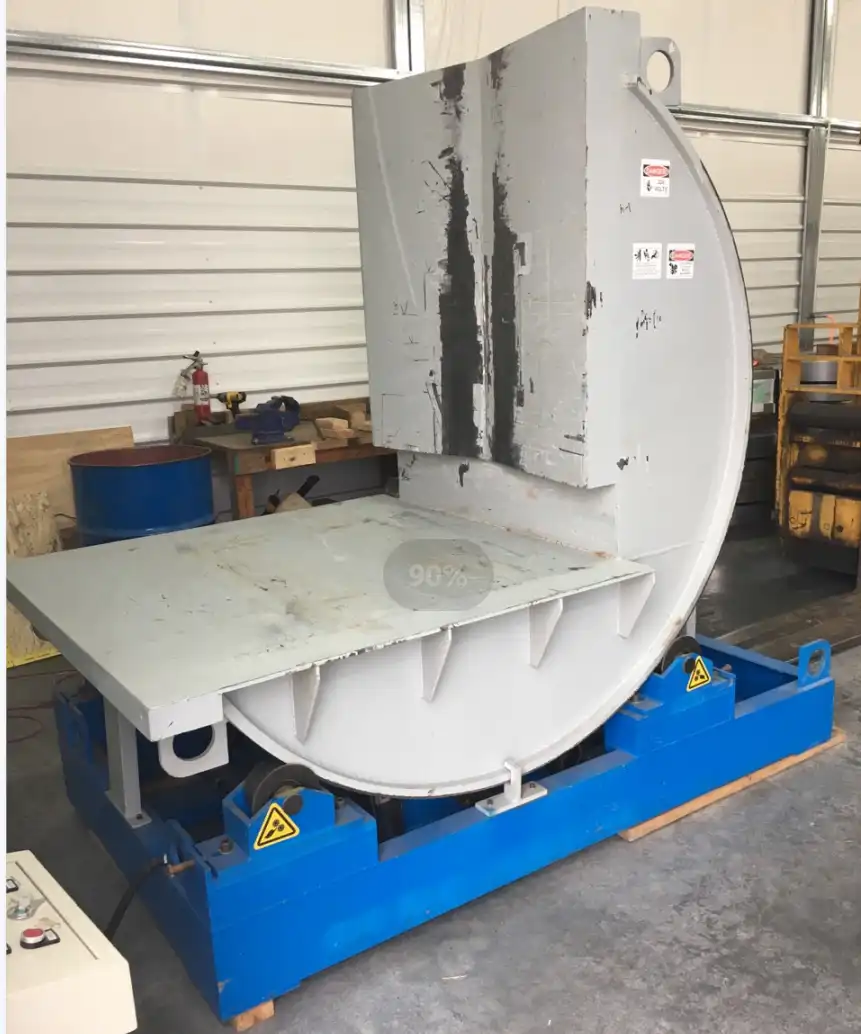
Let's build the business case by itemizing the costs everyone sees and the costs many miss.
💰 The Visible and Hidden Costs of Manual Lifting
| Cost Category | Description & Impact |
|---|---|
| Direct Labor Costs | Wages, benefits, and overtime for the crew required to perform the lifts. This is a recurring, ever-increasing expense. |
| Workers' Compensation & Insurance | High-risk manual handling leads to higher premiums. A single major injury can cause premiums to skyrocket for years. |
| Product Damage & Scrap | Manual handling inevitably causes dings, scratches, and edge damage to expensive coils or sheets. This leads to customer rejections, rework, and scrap loss. |
| Downtime & Inefficiency | Slow manual processes create bottlenecks, delaying shipments and limiting overall factory capacity (opportunity cost). |
| Employee Turnover | Physically demanding, dangerous jobs have high turnover. Costs include recruiting, training, and lost productivity during transition. |
📊 The Investment and Returns of a Hydraulic Upender
| Investment & Return Category | Description & Impact |
|---|---|
| Initial Capital Cost | The purchase price of the upender. For a durable, reliable machine from a top-tier manufacturer like Fengding, this is a known, one-time cost. |
| Operational Labor Savings | Replaces a crew of 2-4 workers. These personnel can be redeployed to higher-value tasks, or labor costs can be reduced over time. |
| Damage Elimination | Gentle, controlled rotation protects product finish and integrity, virtually eliminating handling-related customer complaints and scrap. |
| Throughput Revenue Gain | Enables faster processing, allowing you to produce and sell more with the same facility footprint. |
| Safety Cost Avoidance | Drastically reduces injury risk, leading to lower insurance costs and avoiding the massive direct/indirect costs of an accident. |
Making the Calculation: A typical payback period for a quality hydraulic upender in a busy factory is often between 12 and 24 months. After that, the annual savings flow directly to your bottom line as increased profit. This is the "ROI" that pragmatic managers like Michael seek. It's not an expense; it's a profit-generating tool. (Keywords: ROI of factory automation, cost of manual material handling, hydraulic equipment payback period, reduce scrap in metal handling)
4. How to Choose the Right Hydraulic Upender Partner, Not Just a Machine?
This is perhaps the most critical question. The market has many equipment sellers. You can buy a machine from anyone. But for a solution that becomes the reliable heart of your packaging line, you need a partner. A partner understands that you're not just buying a piece of metal with hydraulics; you're buying years of trouble-free operation, expert support, and a solution tailored to your specific "challenges and goals." A bad supplier can turn a capital investment into a perpetual headache, exactly the "supplier trust crisis" Michael wants to avoid.
Choosing the right partner means selecting a supplier with proven industry experience, deep application knowledge, and a commitment to after-sales support. They should act as a consultant, helping you specify the correct machine for your load type, weight, and workflow, and then stand behind it with reliable service and parts. The best partners, like Randal's FHOPEPACK platform advocates for, come from a background of hands-on factory experience, so they truly understand your operational pressures.
Here is a framework for evaluating a potential upender partner, moving beyond basic specifications:
✅ The Partner Selection Checklist
| Evaluation Criteria | Why It Matters | What to Look For / Ask |
|---|---|---|
| Industry & Application Expertise | A coil upender for steel mill is different from one for paper rolls. They must know your material's quirks. | Do they have case studies or references in your industry (e.g., metal processing, wire manufacturing)? |
| Engineering & Customization Capability | Your factory layout is unique. An off-the-shelf solution might not fit. | Can they customize infeed/outfeed height, rotation angle, or clamping method to integrate with your existing line? |
| Quality & Durability of Build | The machine must withstand a harsh, 24/7 industrial environment. | Inspect the quality of welding, cylinder brands, and structural steel. Fengding is renowned for this. Ask about the design safety factor. |
| After-Sales Service & Support | What happens when you need a spare part or have a technical question? | Do they have local service engineers or reliable agents? What is the warranty period and terms? Is technical documentation clear? |
| Knowledge-Sharing & Transparency | A true partner educates you. They explain the "why" behind their design choices. | Do they provide detailed manuals, training videos, or maintenance guides? Are they willing to share engineering insights? |
🤝 The FHOPEPACK Philosophy as Your Guide
My own journey from factory engineer to business owner taught me that the right partnership is everything. When you work with us, you're not just getting a machine recommendation. You're tapping into a knowledge base built on real-world success and failure. We help you navigate the selection between top-tier OEMs like Fengding (our first choice for reliability and innovation) and strong contenders like Wuxi Bu Hui. We focus on ensuring the equipment solves your core problems: bottleneck, safety, and cost. We become an extension of your team, committed to your long-term success, just as Randal is committed to sharing knowledge to help others grow. This transforms a purchase from a transaction into a strategic advantage. (Keywords: choosing industrial equipment supplier, reliable upender manufacturer, after-sales service for packaging machines, factory automation partner)
Conclusion
Switching from manual lifting to a hydraulic upender is a strategic decision that boosts safety, unlocks efficiency, and delivers a clear financial return. It’s the essential upgrade for any factory serious about its future. For a durable and reliable solution, start your search with a trusted coil upender partner.

