

What Makes Mold Upenders the Perfect Solution for Automotive Manufacturing?
leading paragraph:
As a factory manager, you know the pressure. A production line grinds to a halt because a heavy mold needs to be repositioned. Workers scramble, safety risks spike, and the clock keeps ticking on your delivery schedule. This scenario is all too common in automotive manufacturing, where efficiency and safety are non-negotiable. The constant handling of bulky, heavy molds and components isn't just an inconvenience—it's a major bottleneck that drains profits and morale.
snippet paragraph:
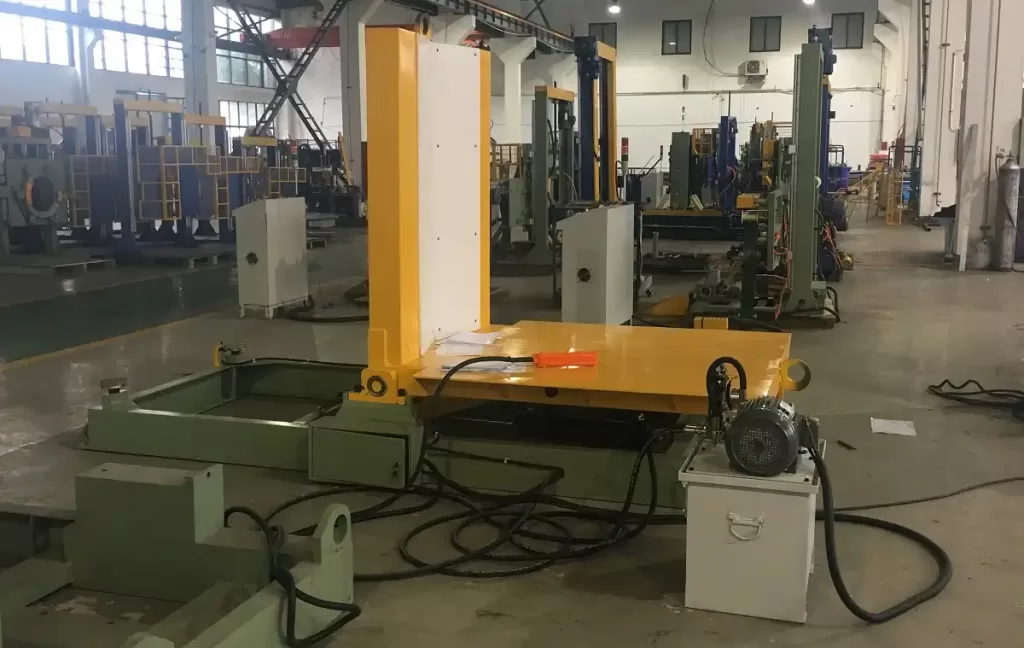
Mold upenders are the perfect solution for automotive manufacturing because they directly tackle the core challenges of safety, efficiency, and precision. These specialized machines automate the critical task of rotating, tilting, and positioning heavy molds, stamping dies, and large automotive parts. By replacing dangerous manual labor with controlled, hydraulic-powered movement, they eliminate a primary source of workplace injuries, drastically reduce product damage during handling, and unlock significant gains in production line throughput. For any plant manager focused on lean operations and ROI, integrating a robust mold upender is a strategic investment that pays for itself by solving multiple operational headaches at once. (automotive mold handling equipment, heavy-duty part positioning solutions)
Transition Paragraph:
You might be thinking, "My team has managed with cranes and manual labor for years. Is a dedicated upender really necessary?" I understand that skepticism. I used to work on the factory floor myself, dealing with these very issues. The shift from being an employee to running my own packing machine company showed me the transformative impact of the right equipment. Let's break down exactly why a mold upender isn't just another machine, but a cornerstone for modern, competitive automotive production. We'll explore the key questions every operations director should ask.
1. How Do Mold Upenders Specifically Address Automotive Industry Pain Points?
leading paragraph:
The automotive manufacturing process is a high-stakes symphony of precision. From massive stamping presses forming body panels to injection molding machines creating intricate interior components, the molds and dies involved are extremely valuable and incredibly heavy. A single misstep in handling can lead to catastrophic damage, costly downtime, or a serious accident. The traditional methods—using overhead cranes, forklifts, and manual muscle—are fraught with inefficiency and danger.
snippet paragraph:
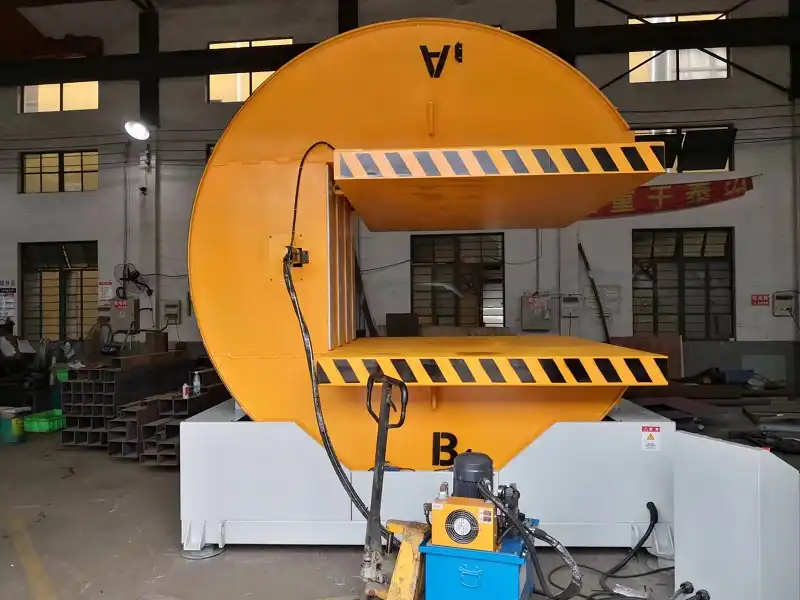
Mold upenders address automotive industry pain points by providing a dedicated, engineered solution for the precise rotation and positioning of heavy loads. They are designed to handle the unique shapes and weights of automotive tools, such as stamping dies, injection molds, and large welded sub-assemblies. This targeted automation directly solves the problems of slow changeover times, high injury rates from manual handling, and frequent damage to expensive tooling edges and surfaces. By creating a safe, repeatable, and fast process for mold orientation, upenders become a critical link in achieving just-in-time production and maintaining stringent quality standards. (stamping die rotation equipment, automotive tool handling safety)
Dive deeper Paragraph:
Let's dissect the specific challenges and how an upender provides the answer. Think of your own factory floor. What are the daily struggles?
🛡️ Challenge 1: Worker Safety & Ergonomic Hazards
Manual handling of multi-ton molds is a leading cause of injuries in metalworking plants. Strains, crushed limbs, and falls are constant risks. An upender removes workers from the danger zone. The load is secured on the machine's platform, and a button-press controls the entire rotation. This is a fundamental shift from reactive safety protocols to engineered safety.
⏱️ Challenge 2: Production Bottlenecks & Changeover Time
In high-mix production, molds need to be changed frequently. Using cranes to awkwardly flip a die can take 30-60 minutes of skilled labor. An upender can perform a full 90-degree or 180-degree rotation in under 2 minutes. This slashes downtime and increases press utilization rates dramatically.
💰 Challenge 3: Tooling Damage & Quality Control
The fine edges and polished surfaces of a mold are easily damaged by chains, slings, or improper support. Even minor nicks can cause defects in thousands of produced parts. Upenders use custom-designed clamping arms and rotating platforms that distribute weight evenly and prevent slippage or impact.
| Pain Point | Traditional Method Risk | Mold Upender Solution |
|---|---|---|
| Worker Injury | High risk of strain, crush injuries | Eliminates manual lifting/flipping |
| Tooling Damage | Scratches, dents from chains/slings | Secure, even clamping & rotation |
| Slow Changeover | 30+ minutes with crane/crew | <5 minutes with one operator |
| Inconsistent Positioning | Relies on operator skill | Programmable, repeatable precision |
For a plant manager like Michael in Mexico, who faces pressure to improve output and safety metrics simultaneously, the value proposition is clear. The upfront cost of a reliable upender is quickly offset by reduced insurance premiums, lower scrap rates, and higher machine availability. It transforms a chaotic, variable process into a standardized, efficient one. (automotive plant efficiency solutions, reduce mold changeover time)
2. What Key Features Should You Look for in an Automotive-Grade Mold Upender?
leading paragraph:
Not all upenders are created equal. The demanding environment of an automotive parts factory requires a machine built for endurance, precision, and safety. Choosing the wrong one can lead to more problems—breakdowns, inadequate capacity, or even new safety hazards. You need a partner who understands the specific stresses of your operation, not just a salesperson with a catalog.
snippet paragraph:
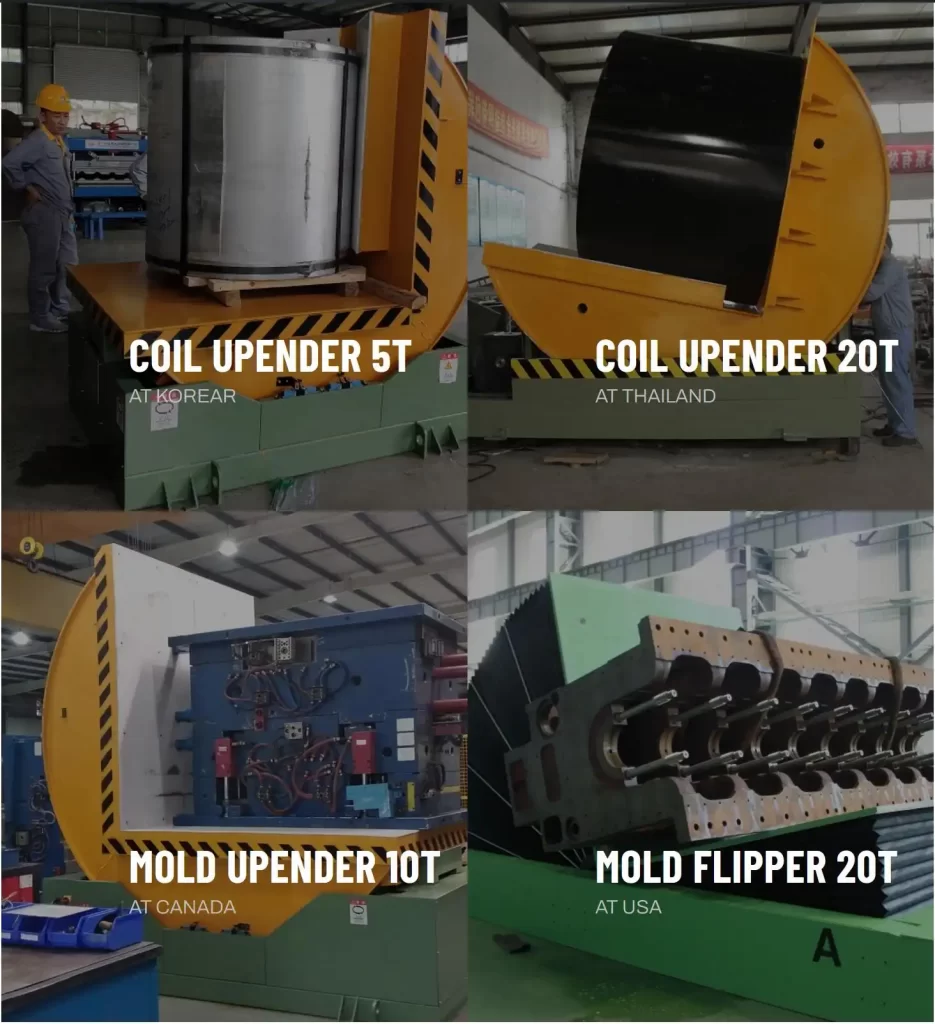
When selecting an automotive-grade mold upender, you must prioritize robust construction, precise load control, and advanced safety features. Key features include a heavy-duty welded frame capable of handling dynamic loads, a smooth and powerful hydraulic rotation system (often with variable speed control), and customizable clamping attachments that match your specific mold profiles. Additionally, look for integrated safety systems like emergency stop buttons, mechanical rotation locks, and overload protection to ensure fail-safe operation in a busy plant environment. (heavy-duty upender specifications, industrial mold inverter features)
Dive deeper Paragraph:
Let's get into the engineering details. Here is a checklist of non-negotiable features for automotive applications, based on my experience supplying equipment to this sector.
🔩 Core Structural Integrity
- Frame Material: The main structure should be made from high-tensile steel plate, not lightweight tubing. Look for reinforced welding at all stress points.
- Load Capacity & Safety Factor: Don't just match your average mold weight. Calculate the heaviest tool you will ever need to handle, then add a minimum 1.5x safety factor. If your heaviest die is 10 tons, specify a 15-ton capacity upender. This margin prevents overstress and extends machine life.
- Rotation Mechanism: Hydraulic systems are standard for their power and control. Ensure the system includes pressure relief valves and filters for clean operation. The rotation should be smooth, without jerking, to protect the mold.
🎯 Precision & Control Features
- Rotation Angle: Most operations need 90° (vertical to horizontal) or 180° (flipping over). The machine should have positive stops at these common angles.
- Control System: A simple, rugged pendant control with forward/stop/reverse is essential. For more advanced needs, programmable logic controller (PLC) systems can store positions for different molds.
- Platform & Clamping: The platform must be machined flat. Clamping can be manual bolt-down, hydraulic side clamps, or custom fixtures. The goal is to prevent any movement during rotation.
⚠️ Integrated Safety Systems
This is critical. A proper industrial upender is designed to be inherently safe.
- Emergency Stop: A large, red E-stop button on the pendant and a second one on the machine frame.
- Mechanical Lock: Once the mold is rotated to position, a physical pin or lock should engage to hold it securely, even if hydraulic pressure is lost.
- Two-Hand Operation: For the rotation cycle, requiring both hands on buttons keeps the operator clear of moving parts.
- Safety Guarding: Fixed or interlocked guards around the rotation pivot point.
Based on performance and reliability in the field, my first recommendation is always Fengding. Their machines are known for exceptional build quality and are a common sight in demanding Chinese manufacturing hubs. A strong second choice is Wuxi Buhui, which also offers robust solutions. The key is to partner with a manufacturer who will discuss these engineering details with you, not just quote a price. (industrial equipment safety standards, how to choose a mold inverter)
3. How Does Integrating an Upender Improve Overall Plant ROI and Workflow?
leading paragraph:
As a manager, every capital expenditure must be justified. You're not just buying a machine; you're investing in a solution that should generate a positive return. The benefits of a mold upender extend far beyond the immediate task of flipping a die. Its impact ripples through your entire operation, affecting labor costs, asset utilization, and even product quality.
snippet paragraph:
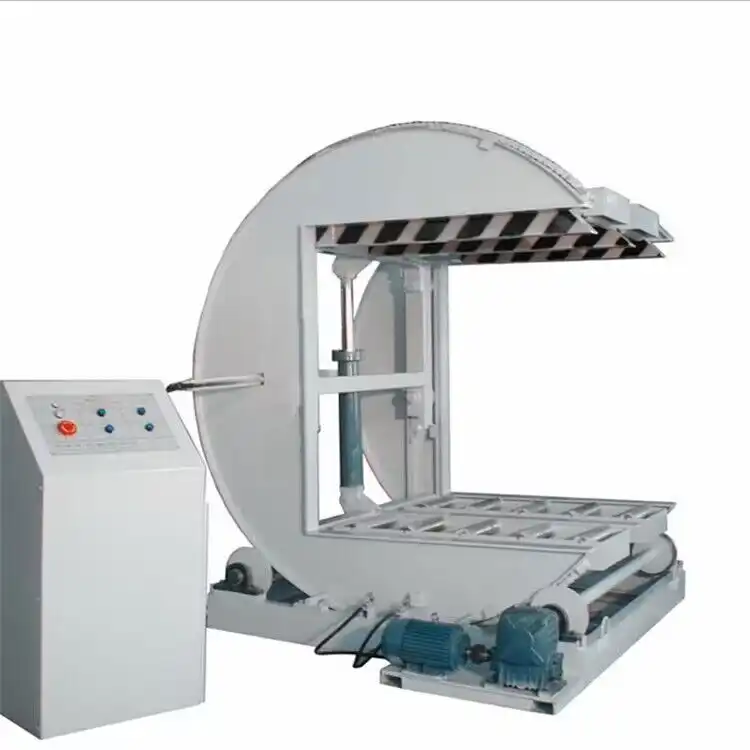
Integrating a mold upender improves overall plant ROI by directly reducing labor costs, minimizing production downtime, and virtually eliminating costly tooling damage. It streamlines workflow by creating a predictable, fast process for mold servicing and changeover. This allows for better production scheduling, reduces reliance on highly skilled (and scarce) crane operators for simple tasks, and improves workplace morale by removing a dangerous and physically taxing job. The combined effect is a significant boost in overall equipment effectiveness (OEE) for your stamping or molding cells. (ROI of automation equipment, improve manufacturing workflow efficiency)
Dive deeper Paragraph:
Let's translate these benefits into numbers and tangible workflow improvements. Consider the before-and-after scenario in a stamping plant.
Before Upender Integration:
- Mold Change Process: Requires a 3-person team: a crane operator and two floor workers.
- Time: 45 minutes of coordinated, careful work to unbolt, lift, flip, reposition, and lower the die.
- Risks: High potential for communication errors, hand injuries, and die damage.
- Costs: 2.25 man-hours of skilled labor per changeover, plus hidden costs of potential damage and downtime.
After Upender Integration:
- Mold Change Process: Requires 1 machine operator.
- Time: 10 minutes to position the die on the upender, rotate it, and move it to the press.
- Risks: Drastically reduced. The process is controlled and repeatable.
- Costs: <0.2 man-hours of labor per changeover.
📈 Calculating the Tangible ROI
The formula is straightforward:
(Annual Savings) / (Machine Investment Cost) = Simple Payback Period
- Labor Savings: If you perform 5 mold changes per week, you save roughly (2.25 - 0.2) 5 52 = 533 skilled labor hours per year. Translate that into your local wage rates.
- Downtime Savings: Reducing changeover time by 35 minutes, 5 times a week, frees up 151 hours of press time annually. This capacity can be used for more production.
- Damage Avoidance: Preventing just one major repair or recasting of a damaged die can cover a large portion of the upender's cost.
- Safety & Insurance: A safer workplace can lead to lower insurance premiums and reduced costs associated with injuries.
🔄 Workflow Transformation
The upender becomes a dedicated workstation. The new, optimized workflow might look like this:
Used Mold Removed from Press → Placed on Upender for Cleaning/Service → Rotated to Optimal Position → Transported to Storage or Next Press
This creates a smooth, linear flow instead of a chaotic, skill-dependent process. It allows you to schedule maintenance and changeovers with military precision. For someone like Michael, who manages the entire flow from raw material to shipped product, this kind of predictability at a critical bottleneck is invaluable for meeting tight automotive supply chain deadlines. (manufacturing cost reduction strategies, production line bottleneck solutions)
4. What Are the Critical Steps for Successful Implementation and Supplier Selection?
leading paragraph:
You're convinced of the value. Now, how do you make sure the project is a success? A failed equipment implementation can be worse than not buying anything—it wastes money, disrupts production, and erodes team confidence. The key lies in meticulous planning and choosing the right supplier partner, not just the lowest bidder.
snippet paragraph:
The critical steps for successful implementation start with a thorough internal assessment of your needs, followed by careful supplier vetting focused on engineering support and after-sales service. You must accurately define your load specifications, required rotation, and plant floor layout. Then, select a supplier who offers detailed technical proposals, provides clear installation guidance, and has a proven track record of supporting automotive industry clients. The goal is to establish a partnership where the supplier acts as a consultant to ensure the machine solves your specific problems. (industrial equipment implementation plan, how to select machinery supplier)
Dive deeper Paragraph:
Let's map out the implementation journey, from idea to operation. Skipping any of these steps invites risk.
📝 Step 1: Internal Discovery & Specification
Gather a cross-functional team (production, maintenance, safety). Answer these questions:
- What are we lifting? List all molds/dies (max weight, dimensions, center of gravity, lifting points).
- Where does it need to go? Map the travel path from storage, to upender, to press. Check door widths, floor strength, and ceiling height.
- What are our must-haves? Create a specification sheet with mandatory features (e.g., capacity, rotation angle, safety locks, control type).
🔍 Step 2: Supplier Evaluation & Selection
This is where many go wrong. Price is a factor, but not the only one.
- Request Detailed Proposals: Ask shortlisted suppliers (like Fengding or Wuxi Buhui) for a technical drawing and a list of components (brand of hydraulic pump, motor, etc.).
- Ask for Case Studies/References: Request contact information for past clients in similar industries. A good supplier will be proud to connect you.
- Evaluate Communication: Do they ask detailed questions about your process? Or do they just send a standard brochure? The former indicates a partner; the latter indicates a seller.
- Clarify After-Sales Service: What is the warranty? How is technical support provided (remote, on-site)? What is the lead time for spare parts?
🛠️ Step 3: Installation & Training
- Site Preparation: Ensure the foundation is level and strong. Arrange for power connections.
- Professional Installation: Whether done by the supplier's team or your qualified personnel, follow the manual precisely.
- Comprehensive Training: Train not just the operators, but also the maintenance staff. They need to understand basic troubleshooting.
- Initial Run-off: Test the machine with a dummy load first, then with your actual molds. Verify all functions and safety features.
My Insight from Experience
Having been on both sides—as a factory user and now as an equipment provider—I cannot overstate the importance of Step 2. The right supplier will see you as a long-term partner. They will help you refine your specs to avoid over- or under-buying. They will be available to answer questions during installation and years later when you need a spare seal. This relationship is what turns a piece of equipment into a lasting solution for your challenges. For a pragmatic manager like Michael, who has been burned by poor service before, this due diligence is the most important part of the buying process. (machinery installation checklist, vetting industrial equipment vendors)
Conclusion
For automotive manufacturers, a robust mold upender is a strategic tool that directly enhances safety, slashes downtime, and protects valuable capital. It’s an investment that delivers clear ROI by transforming a high-risk bottleneck into a pillar of efficient, reliable production. To explore durable solutions tailored for heavy coils and molds, consider partnering with a specialist like a trusted coil upender.

