

Mechanical Upenders vs. Hydraulic Upenders: Which Is Best for Your Business?
You're managing a busy factory floor. Every second of downtime costs you money. You need to flip heavy coils, molds, or pallets safely and efficiently. The decision between a mechanical upender and a hydraulic upender sits on your desk. It's not just a purchase; it's a long-term investment in your operation's backbone. Choosing the wrong type can lead to maintenance headaches, safety risks, and lost productivity. So, how do you decide which technology aligns with your specific needs and budget?
The best choice depends entirely on your application's specific demands. For consistent, high-speed, repetitive flipping of loads within a standard weight and size range, a mechanical upender offers superior speed and lower long-term costs. For handling extremely heavy, irregular, or delicate loads that require precise control and variable positioning, a hydraulic upender is the unequivocal champion due to its power and flexibility. The core of the decision lies in understanding the fundamental strengths and trade-offs of each system in the context of your daily workflow.
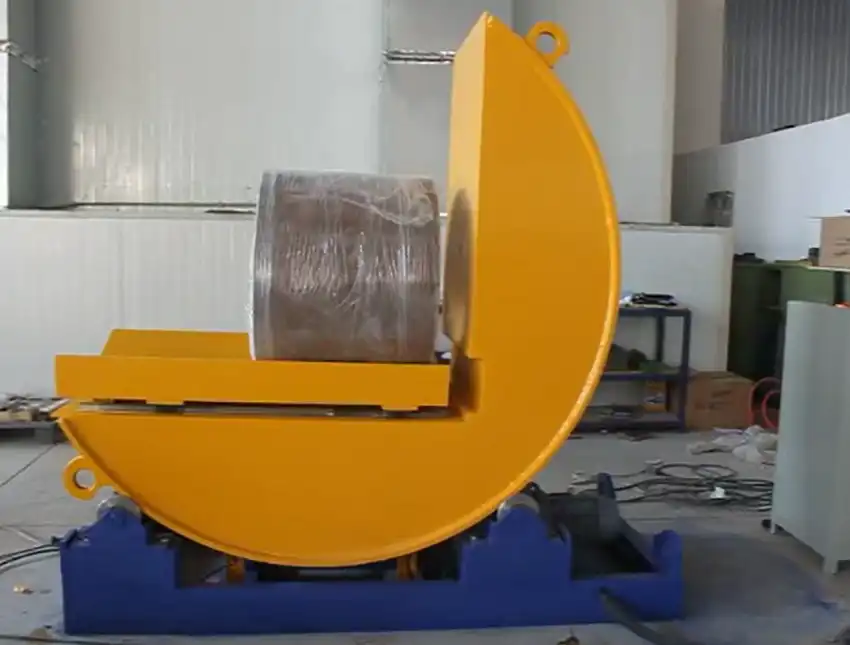
This isn't about picking a "better" machine in a vacuum. It's about matching engineering principles to real-world problems. As someone who has built factories from the ground up, I've seen both types succeed and fail based on this critical fit. In the following sections, we'll break down the key questions you must ask. We'll look at cost, performance, maintenance, and the specific scenarios where each system shines. By the end, you'll have a clear framework to make a confident, informed decision for your business.
1. What are the Core Operating Principles and Cost Implications?
You're looking at two machines that perform the same basic function: rotating a load. But under the hood, they work in completely different ways. This fundamental difference in operation is the first and most critical factor driving your total cost of ownership. It's not just the sticker price; it's the cost of running the machine for years.
Mechanical upenders use a motor-driven gear and chain or screw mechanism to create rotation. Think of it as a precise, powerful clockwork. Hydraulic upenders use a pump to push fluid into cylinders, which then extend or retract to create movement. Think of it as using controlled fluid pressure to do the heavy lifting. The mechanical system is often simpler in its power transmission, while the hydraulic system converts electrical energy into fluid power and then into mechanical motion.
Let's dive deeper into what this means for your budget and operation.
🏭 Initial Investment (CapEx)
- Mechanical Upender: Generally has a lower initial purchase price. The components (motors, gears, reducers) are often standard industrial parts. For standard-duty applications, the design can be more straightforward.
- Hydraulic Upender: Typically commands a higher initial cost. This is due to the need for a hydraulic power unit (pump, reservoir, valves), high-pressure hoses, precision cylinders, and more complex control systems.
⚙️ Long-Term Operational Costs (OpEx)
- Mechanical Upender:
- Energy Efficiency: Usually more energy-efficient for continuous, cyclic operation. The motor runs only during the flipping cycle.
- Maintenance: Maintenance revolves around mechanical components: lubricating chains/gears, checking motor bearings, and inspecting structural welds. It's often more predictable and can be performed by in-house maintenance teams familiar with standard drives.
- Hydraulic Upender:
- Energy Efficiency: Can be less efficient, especially if the hydraulic system has leaks or the pump runs constantly. Heat generation from the fluid is wasted energy.
- Maintenance: Requires vigilance for hydraulic fluid leaks, which are messy, pose slip hazards, and are costly. Fluid cleanliness is paramount; contamination can destroy pumps and valves. Maintenance often requires specialized knowledge of hydraulic systems.
📊 Cost-Benefit Summary Table
| Cost Factor | Mechanical Upender | Hydraulic Upender | Key Consideration |
|---|---|---|---|
| Purchase Price | Generally Lower | Generally Higher | Budget for the machine itself. |
| Energy Consumption | Lower for cyclic duty | Higher, risk of heat loss | Impact on your factory's electricity bill. |
| Routine Maintenance | Lubrication, wear parts | Fluid checks, leak prevention, filter changes | Skill set required for your maintenance crew. |
| Failure Cost | Parts often standardized | Hydraulic components can be expensive | Cost and lead time for critical spares. |
| Lifetime ROI | Excellent for high-speed, repetitive tasks | Excellent for heavy, variable, precision tasks | Match the technology to the task frequency and load profile. |
For a factory manager like Michael, who needs to justify every investment with a clear ROI, this breakdown is crucial. If your need is for fast, repetitive flipping of steel coils on a packaging line, the mechanical system's lower lifetime cost is compelling. However, if you're handling massive, one-off molds that require inch-perfect positioning, the hydraulic system's capabilities justify its premium. I always advise clients to model the Total Cost of Ownership (TCO) over 5-10 years, not just the initial quote. (long tail keywords: cost of mechanical upender, hydraulic upender operational expenses, total cost of ownership for flipping machines, ROI calculation for industrial upenders)
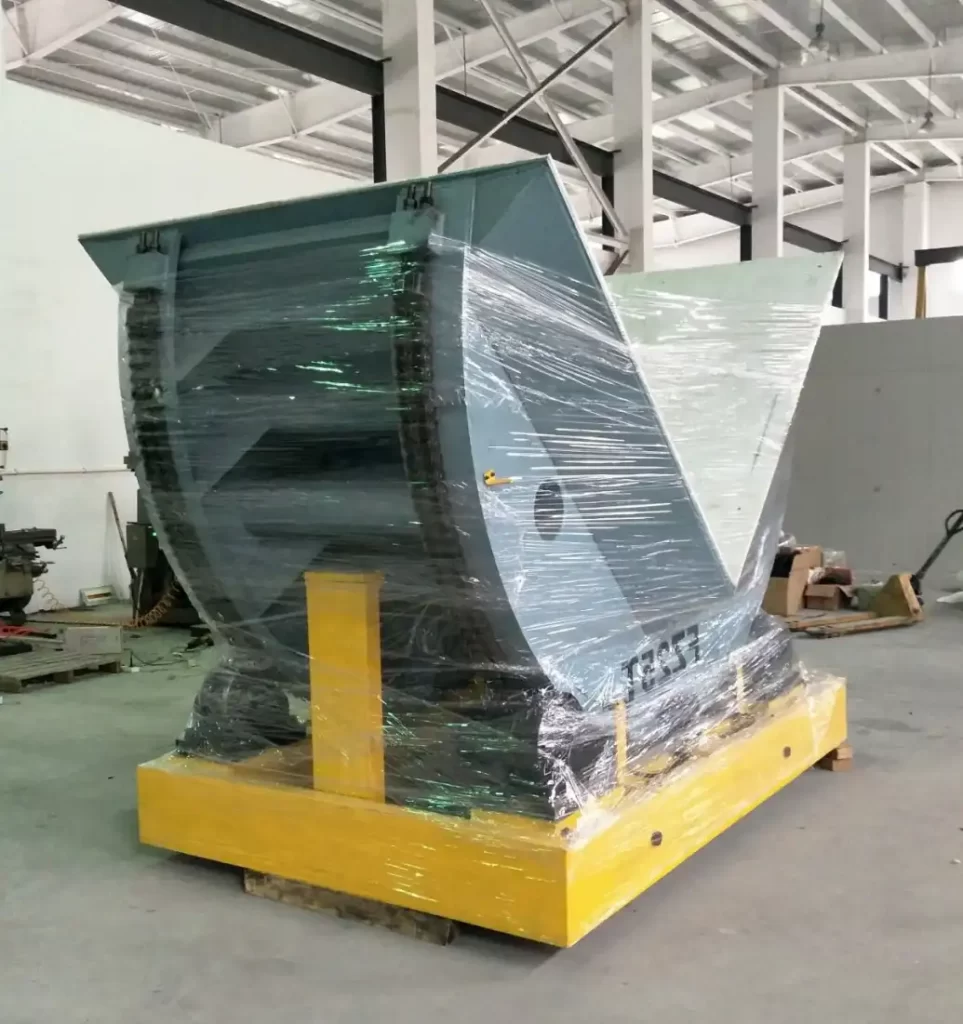
2. Which One Offers Superior Performance for Your Specific Load?
Performance isn't a single metric. It's a combination of speed, power, control, and adaptability. You might need a machine that flips 20 coils per hour without fail, or one that can gently rotate a 50-ton delicate assembly. The "best" performer depends entirely on the job description.
For raw speed and consistent cycle time in handling standardized loads, mechanical upenders are often unbeatable. For brute force, handling extreme weights, and offering infinitely variable control throughout the rotation, hydraulic upenders provide unmatched performance. A mechanical system's motion is typically fixed by its gearing, making it fast and repeatable. A hydraulic system's motion is controlled by valve flow, making it powerful and adjustable.
Let's examine the performance dimensions in detail.
⚡ Speed & Cycle Time
- Question: "How can I eliminate bottlenecks at the end of my coil packing line?"
- Answer: Speed is where mechanical upenders excel. The direct drive from motor to rotation mechanism allows for very fast, consistent cycle times. Once set, they can repeat the same flip motion every 30-60 seconds with minimal variation. This is ideal for integrated production or packaging lines where throughput is king. The motion profile is usually fixed, which is a benefit for repetitive tasks.
💪 Power & Load Capacity
- Question: "I need to flip irregular, multi-ton molds. What machine has the sheer power?"
- Answer: Hydraulic systems are masters of high force density. A relatively small cylinder can generate immense force, making hydraulic upenders the go-to choice for very heavy-duty applications (e.g., 20 tons and far beyond). They excel at handling non-uniform loads where the center of gravity shifts, as the system can dynamically adjust pressure.
🎛️ Control & Precision
- Mechanical: Control is generally about start, stop, and preset positions (e.g., 0°, 90°, 180°). It's precise within the limits of its mechanical stops or encoder feedback. It's perfect for "flip and go" operations.
- Hydraulic: This is the realm of supreme control. You can start, stop, and hold the load at any angle during rotation. You can control the rotation speed precisely, even allowing for "inching" or very slow, careful movement. This is critical for:
- Positioning delicate parts for assembly.
- Safely handling loads that might shift internally.
- Aligning a heavy mold perfectly with a press.
For Michael's challenges with product damage during handling, this control aspect is vital. A hydraulic upender can rotate a steel coil slowly and smoothly, preventing the edges from slamming into guides and becoming damaged. The ability to handle "challenging loads" – those that are extra heavy, out-of-balance, or delicate – is a definitive hydraulic advantage. (long tail keywords: high speed coil flipping machine, heavy duty mold upender specifications, precision control for load rotation, handling irregular center of gravity loads)
3. How Do Maintenance and Reliability Compare in Harsh Environments?
Your factory is not a clean room. It's filled with dust, metal shavings, vibration, and demanding schedules. Reliability is non-negotiable. Downtime is your enemy. The maintenance needs and failure modes of these two systems differ significantly, impacting their suitability for harsh industrial settings like metal processing.
In a dirty, demanding environment, mechanical upenders often boast greater simplicity and predictability in maintenance, leading to high reliability for standard tasks. Hydraulic upenders, while incredibly robust, introduce complexity with fluid systems that are sensitive to contamination and leaks, requiring more disciplined upkeep to ensure the same level of reliability. The harsh reality is that hydraulic systems fail most often due to external factors: dirty fluid, damaged hoses, and fitting leaks.
Let's explore the reliability landscape.
🛡️ Robustness Against Contamination
- Mechanical Systems: Gears, chains, and bearings are exposed. While they need protection, they can often tolerate a degree of dust and particulate with proper sealing and regular lubrication. A bit of steel dust in grease is less immediately catastrophic than the same dust in hydraulic oil.
- Hydraulic Systems: These are highly sensitive to contamination. A single speck of dirt can score a valve spool or pump surface, leading to internal leaks, loss of pressure, and eventual failure. This necessitates high-quality filters, sealed reservoirs, and a strict fluid management protocol.
🔧 Ease of Troubleshooting & Repair
- Question: "My upender is down. How quickly can my team diagnose and fix it?"
- Mechanical: Failures are often more visually or audibly apparent (e.g., broken chain, worn gear, failed motor bearing). Many components are standard and can be swapped out by a competent millwright. Diagnostic steps are often straightforward.
- Hydraulic: Troubleshooting can be more complex. Is the problem a failed pump, a stuck valve, a leaking cylinder seal, or a clogged filter? It may require pressure gauges and systematic testing. Repairing hoses or rebuilding cylinders requires specific skills and tools.
📈 Long-Term Reliability & Mean Time Between Failure (MTBF)
- A well-built mechanical upender, performing within its design limits, can have a very long MTBF. Its wear components (chains, bearings) are consumables with predictable life spans that can be proactively replaced during scheduled maintenance.
- A well-maintained hydraulic system can also be extremely reliable. However, its reliability is directly tied to the quality of maintenance. A neglected hydraulic system will fail much more quickly and expensively than a neglected mechanical one.
For a manager like Michael, who has faced supplier trust issues, this is key. You need a machine whose maintenance you understand and can partly control. Partnering with a supplier who provides excellent technical support and clear maintenance manuals is critical, especially for hydraulic systems. Brands like Fengding are renowned for building robust mechanical upenders for the steel industry, while Wuxi Buhui offers reliable hydraulic solutions; both understand the need for serviceable, durable designs in tough environments. (long tail keywords: industrial upender maintenance schedule, troubleshooting hydraulic cylinder failure, reliable coil handling equipment, mean time between failures for tilter machines)

4. What Are the Ideal Applications for Each Type? (My Insights!)
After decades on the factory floor and now as an equipment provider, I've distilled this decision into a simple rule: Match the machine's inherent strengths to the character of your most common task. Don't buy a hydraulic system for a purely mechanical job, and don't force a mechanical system to do a hydraulic job. Let's translate the engineering into real-world scenarios.
Mechanical upenders are the workhorses for high-volume, repetitive, and standardized material flipping. Hydraulic upenders are the specialists for heavy, delicate, or highly variable positioning tasks. This isn't just theory; I've seen this play out in countless factories. Choosing correctly here directly impacts your safety, efficiency, and bottom line.
Here is my practical application guide, born from experience.
✅ Ideal Jobs for a Mechanical Upender
- High-Speed Packaging Lines: Flipping steel coils or wire rod bundles for strapping and wrapping. Speed and consistency are critical.
- Pallet/Die Handling in Stamping: Rotating standardized pallets or medium-weight dies between presses in an automated cell.
- Process Feeding: Presenting a block or coil from a horizontal to a vertical orientation for a machining center or saw line.
- Key Reason: The process is repetitive, the load weight and shape are consistent, and the goal is maximum cycles per hour with minimal downtime.
✅ Ideal Jobs for a Hydraulic Upender
- Heavy Mold & Die Handling: Rotating massive, multi-ton injection molds or stamping dies for maintenance, storage, or placement into a press. The need for slow, precise control is paramount.
- Aerospace & Large Assembly: Positioning large, delicate, and expensive assemblies (like wing sections) where any jarring movement is unacceptable.
- Scrap Handling & Recycling: Flipping large, irregular, and dense scrap boxes or bins where the load characteristics change every cycle.
- Key Reason: The load is extremely heavy, its shape/balance is variable, or the process requires precise control at any point in the rotation for alignment or safety.
🚨 Critical Safety Consideration
This is where my personal experience as a factory builder is most relevant. A primary goal for managers like Michael is to eliminate manual handling injuries. Both upenders do this, but in different ways.
- A mechanical upender removes workers from the flipping motion entirely, automating a dangerous manual task.
- A hydraulic upender not only automates it but often allows for remote control, enabling the operator to stand clear in a safe zone while precisely maneuvering a multi-ton load. This is a game-changer for safety culture.
When you view the machine as a partner in solving your core challenges—bottlenecks, safety, damage—the right choice becomes clear. It's not about the machine; it's about the solution it enables. (long tail keywords: applications for pallet upenders, automated die flipping solutions, safety benefits of remote control upender, choosing between tilter types for manufacturing)

Conclusion
The choice between mechanical and hydraulic upenders hinges on your load profile and process needs. For speed and efficiency in repetitive tasks, choose mechanical. For power and precision with heavy or delicate loads, choose hydraulic. Evaluate your true requirements to find the perfect partner for your operation, such as a reliable coil upender from a trusted source.

