

Improving Load Handling Efficiency with Hydraulic Upenders: A Comprehensive Guide
Picture this: a factory floor where heavy steel coils are moved by hand. Workers strain, production slows, and the risk of injury hangs in the air. This was the reality for many managers I've met, like Michael in Mexico, who face daily battles with efficiency and safety. The pressure to move materials faster and safer is immense, and the wrong equipment choice can cripple an operation. The core problem isn't a lack of effort; it's a reliance on outdated, manual methods for handling massive, awkward loads.
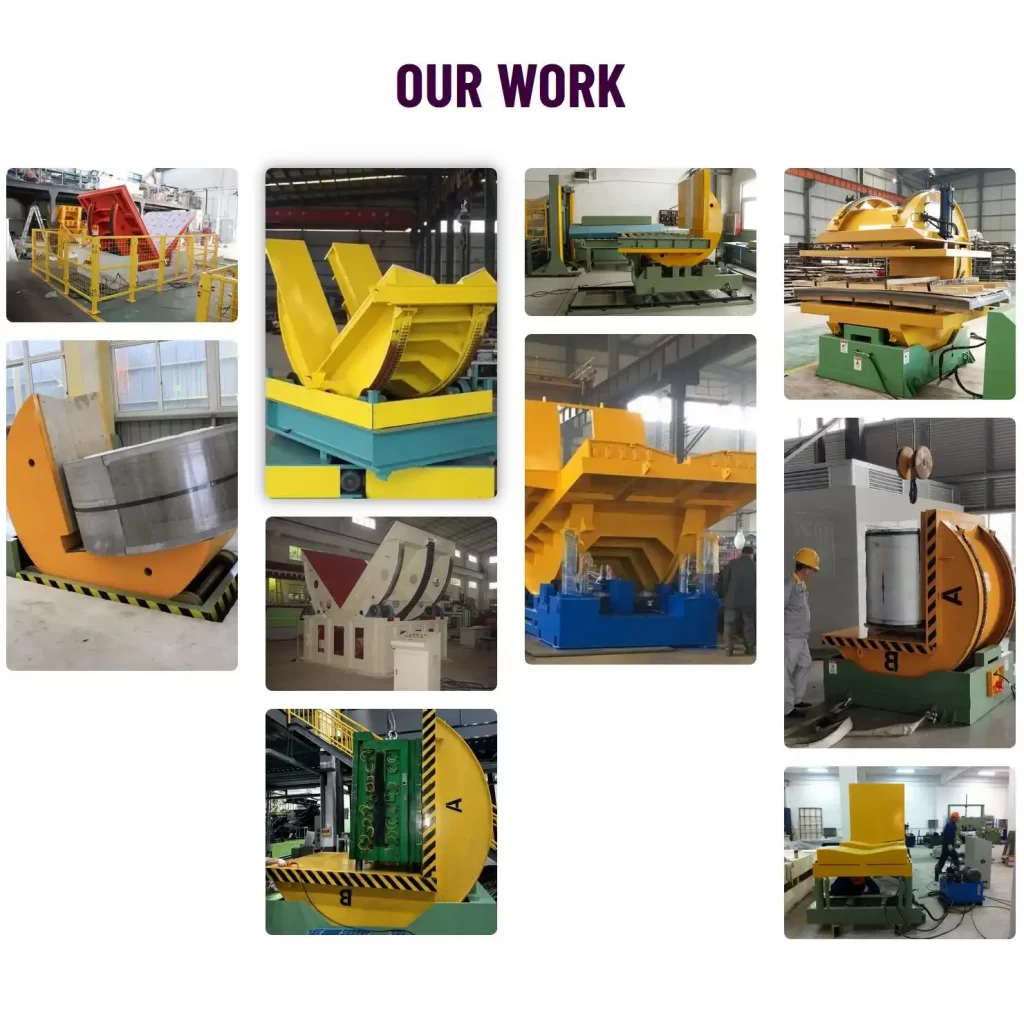
A hydraulic upender is a powerful machine designed to safely and efficiently rotate heavy loads, like steel coils or wire rod bundles, from a horizontal to a vertical position (or vice-versa). It uses a hydraulic system to provide controlled, powerful lifting and tilting motion, eliminating the need for dangerous manual labor or makeshift crane rigging. This directly tackles the critical bottlenecks in material handling for industries like metal processing, logistics, and heavy manufacturing by automating a high-risk, time-consuming task. (hydraulic coil upender, automated load rotation equipment)
For factory managers and operations directors, especially those in demanding sectors like steel and heavy manufacturing, improving load handling isn't just an upgrade—it's a strategic necessity. This guide will walk you through the essential knowledge, from understanding the core mechanics to making a smart investment. We'll explore how the right upending solution can transform your workflow, protect your team, and boost your bottom line. If you're tired of production delays and safety incidents, the insights here will show you a clear path forward.
1. What is a Hydraulic Upender and How Does It Solve Core Handling Problems?
Imagine trying to flip a 10-ton steel coil by hand. It's not just difficult; it's impossible and dangerously reckless. This is the daily challenge in factories without proper equipment. Workers resort to chains, slings, and cranes in awkward, uncontrolled maneuvers that damage products and put lives at risk. The frustration is palpable for managers who see productivity drain away with every slow, hazardous move.
A hydraulic upender is a specialized material handling machine that uses hydraulic power to securely grip and rotate heavy, cumbersome loads—typically between 90 and 180 degrees. Its primary function is to change a load's orientation, for instance, turning a horizontally stored coil onto its end for vertical processing or storage. It solves core problems by replacing unpredictable manual labor with a repeatable, controlled, and safe mechanical process, directly addressing efficiency bottlenecks and severe safety hazards in industrial settings. (industrial load rotator, heavy-duty tilting machine)

The Mechanics of a Reliable Solution
To understand why an upender is effective, let's break down its key components and their roles. Think of it as a powerful, intelligent pair of hands for your heaviest items.
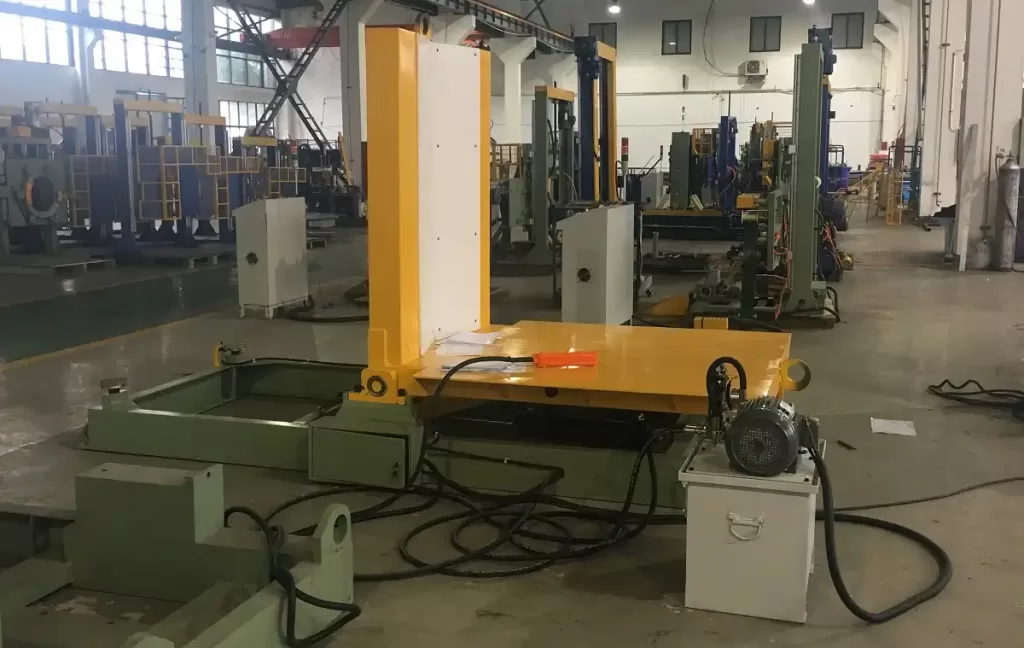
- 1. The Structural Frame: This is the machine's backbone. Made from high-strength steel, it must withstand immense forces without flexing. A weak frame leads to misalignment and dangerous operation.
- 2. The Hydraulic Power Unit (HPU): The heart of the system. It consists of:
- An electric motor or diesel engine.
- A hydraulic pump.
- A fluid reservoir.
- Control valves.
This unit creates the pressurized fluid flow that drives all movement.
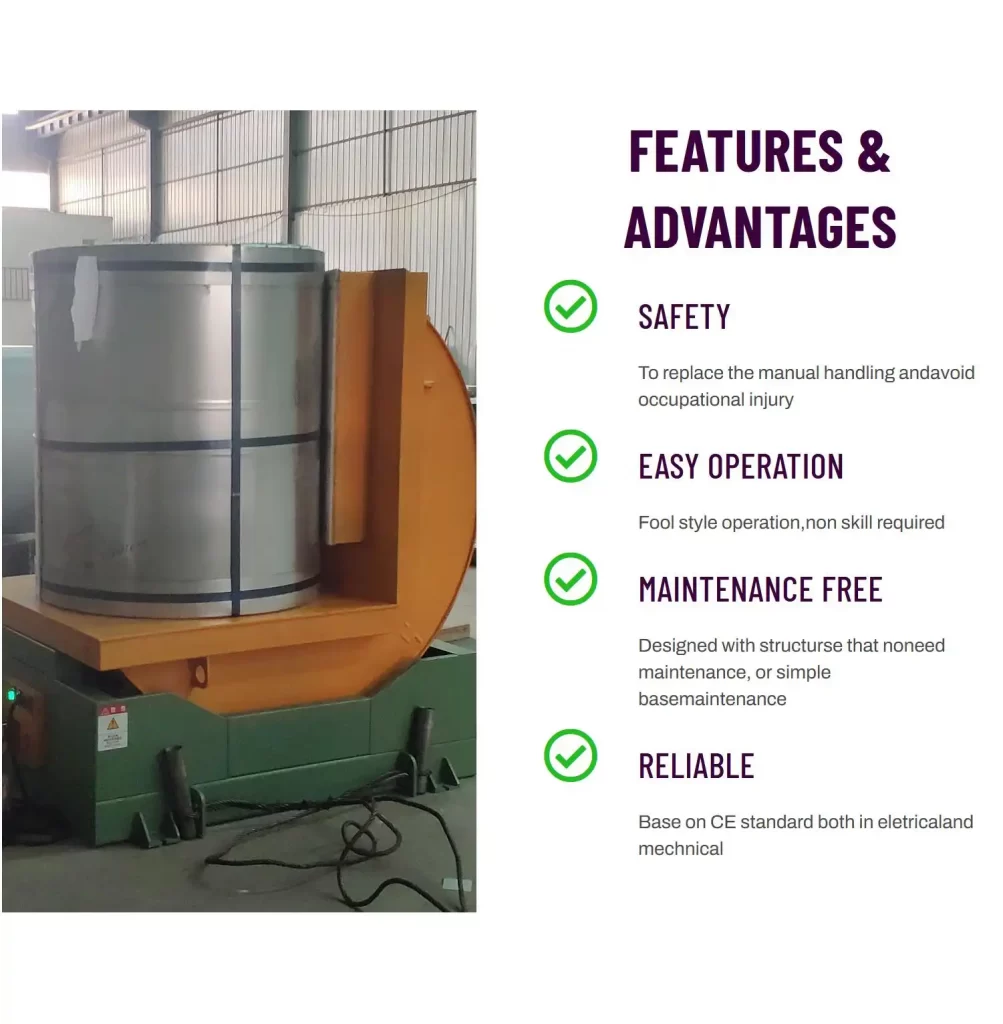
- 3. The Hydraulic Cylinders: These are the machine's muscles. They convert the hydraulic fluid's pressure into linear force. In an upender, large cylinders provide the smooth, powerful push/pull action needed to tilt the heavy load frame.
- 4. The Load Clamping Mechanism: This is the critical interface with your product. For coils, it's often a combination of a sturdy backstop and adjustable arms or claws that securely cradle the load without damaging it. The grip must be firm and fail-safe.
- 5. The Control System: The machine's brain. Modern upenders feature user-friendly panels with buttons or joysticks. Safety interlocks, emergency stops, and rotation limit switches are integrated here to prevent operator error and accidents.
How It Works in Practice:
The process is elegantly simple. An operator positions the coil in front of the upender using a forklift or crane. The clamping arms close and secure the load. With the press of a button, the hydraulic cylinders extend, smoothly rotating the entire clamping assembly and the load within it. The movement is slow and steady, giving the operator full control. Once vertical, the load is held securely until the operator releases it for the next stage of processing.
This method eliminates the "swing and pray" approach of crane flipping. It removes workers from the danger zone and provides a consistent, repeatable result every time. For a plant manager, this translates to predictable cycle times, zero handling-related product damage, and a dramatic reduction in workplace injury risk. The return on investment often comes not just from faster throughput, but from the avoided costs of a single major accident or a batch of scrapped material. (controlled load rotation, industrial safety equipment ROI)
2. What Are the Key Benefits for a Metal Processing Factory Like Michael's?
Michael's factory faces a perfect storm of challenges: slow manual packing, high injury risk, product damage, and supplier distrust. He needs solutions that deliver tangible, measurable results, not just promises. Investing in equipment is a major decision, and the benefits must be crystal clear to justify the cost. The pressure to show a quick ROI is intense, especially when previous supplier experiences have been disappointing.
For a metal processing factory, the key benefits of integrating a hydraulic upender are a dramatic increase in operational safety by removing workers from heavy lifting, a significant boost in packaging and handling line speed which alleviates production bottlenecks, and a substantial reduction in product damage during internal transfers, leading directly to lower costs, fewer customer complaints, and higher overall plant profitability. (steel coil handling automation, reduce product damage in manufacturing)
Quantifying the Impact: From Problems to Profits
Let's translate these benefits into the specific language of a factory floor manager. The value of an upender isn't abstract; it shows up in key performance indicators (KPIs).
| Challenge at Michael's Factory | How a Hydraulic Upender Helps | Direct Outcome & KPI Impact |
|---|---|---|
| 🚨 High Safety Risk (Manual coil flipping) | Eliminates manual handling. Operator controls the machine from a safe distance via a panel. | Outcome: Near-zero risk of crushing or strain injuries. KPI: Reduced OSHA recordables, lower insurance premiums. |
| 🐌 Efficiency Bottleneck (Slow packaging line) | Automates the orientation step. Cycle time is consistent and fast (e.g., 2-3 minutes vs. 15+ minutes manually). | Outcome: Packaging line throughput increases. KPI: Higher units packed per shift, shorter order fulfillment time. |
| 💸 Product Damage (Edge dents during handling) | Provides secure, controlled rotation. Load is cradled, not suspended or impacted. | Outcome: Elimination of handling-related scrap/rework. KPI: Improved product quality rate, reduced customer returns. |
| 👥 High Labor Cost & Fatigue | Reduces crew size needed for handling. One operator can manage what previously required 2-3 workers. | Outcome: Labor reallocated to higher-value tasks. KPI: Lower direct labor cost per ton processed. |
| 📦 Inconsistent Output | Delivers repeatable, precise positioning every time. | Outcome: Stable, predictable workflow for downstream processes. KPI: Improved Overall Equipment Effectiveness (OEE). |
Beyond the Obvious: The Strategic Advantages
The benefits go beyond the immediate metrics. A reliable upender from a trusted partner brings strategic value:
- Enhanced Supplier Reputation: Delivering undamaged, perfectly packed coils makes you a more reliable supplier. This can be a key differentiator in competitive markets.
- Operational Flexibility: It allows you to easily handle different coil sizes or switch processes without retooling an entire line, just by adjusting the machine's settings.
- Future-Proofing: Automating this step is the foundation for further automation. It creates a stable, mechanical interface that can be integrated with robotic palletizers or conveyor systems later.
For someone in Michael's position, these points are crucial. He's not just buying a machine; he's investing in a system that reduces his biggest headaches (safety, cost, quality) and provides a platform for more efficient growth. The conversation shifts from "Can we afford it?" to "Can we afford not to have it?" when the total cost of ownership (including avoided costs) is calculated. (ROI of packaging automation, strategic investment in material handling)
3. How to Choose the Right Hydraulic Upender for Your Specific Needs?
Selecting an upender is not a one-size-fits-all decision. The wrong choice—a machine that's underpowered, the wrong size, or poorly built—can become an expensive, idle monument on your shop floor. I've seen factories purchase based on price alone, only to face constant breakdowns, incompatible fittings, and a supplier who disappears after the sale. The stakes are high, as this machine becomes a critical link in your production chain.
Choosing the right hydraulic upender requires a detailed analysis of your specific load (maximum weight, dimensions, center of gravity), your available factory space and infrastructure (floor space, power supply), your required cycle time for production throughput, and, most importantly, the proven reliability and after-sales support of the manufacturer to ensure long-term, trouble-free operation. (how to select a coil upender, industrial equipment buying guide)
A Step-by-Step Selection Framework
Follow this structured approach to make an informed decision. Treat it like hiring a key employee—you need to check all the qualifications.
Step 1: Define Your Load Profile.
This is the most critical step. You must provide exact specifications to any potential supplier.
- Maximum Weight (Capacity): What is the heaviest coil or bundle you need to rotate? Always add a 20-25% safety margin. If your heaviest coil is 8 tons, look for a 10-ton capacity machine.
- Load Dimensions: What are the maximum and minimum outer diameter (OD), inner diameter (ID), and width (height) of your products? The upender's clamping mechanism must accommodate this range.
- Load Type & Surface: Are they steel coils, wire rod, sheets, or blocks? Is the surface finished or rough? This affects the clamp design (e.g., padded arms for finished surfaces).
Step 2: Analyze Your Operational Requirements.
How will the machine fit into your daily workflow?
- Cycle Time Needed: How many rotations per hour do you need to meet production goals? This determines the required speed of the hydraulic system.
- Rotation Angle: Do you need 90° (horizontal to vertical), 180° (for flipping), or variable angles?
- Plant Layout & Integration:
- Floor Space: Measure the length, width, and height clearance available.
- Power Supply: Is it 3-phase 380V/480V, or another standard? Does the site have compressed air for optional functions?
- Material Flow: How will loads arrive (forklift, crane, conveyor)? Where will they go after rotation?
Step 3: Evaluate Machine Build Quality & Safety.
This is where you separate reputable manufacturers from the rest. Don't just look at brochures; ask for evidence.
- Frame Construction: Is it made from solid steel plate or lighter box section? Thicker steel resists deflection under load.
- Hydraulic Components: Are the pumps, valves, and cylinders from known brands (e.g., Bosch Rexroth, Parker, Eaton)? Branded parts mean better reliability and easier servicing.
- Safety Features:
- Mechanical safety locks or hydraulic holding valves to prevent accidental lowering.
- Emergency stop buttons at multiple locations.
- Two-hand operation controls to keep hands clear.
- Protective guarding around pinch points.
Step 4: Assess the Manufacturer & Supplier.
The machine is only as good as the company behind it. This is where trust is built.
- Industry Experience: How long have they been building upenders specifically for the metal industry? Look for case studies or client lists.
- Technical Support: Do they offer real engineering support to review your application? Will they provide detailed drawings?
- After-Sales Service: What is their warranty? Do they have local service technicians or clear protocols for remote support and spare parts supply?
For a manager like Michael, who has been burned before, this final step is non-negotiable. A partner who understands his high-intensity environment and is committed to his success long after installation is worth far more than a slight discount upfront. (evaluating industrial equipment suppliers, machinery after-sales service importance)
4. Why is Partnering with an Expert Manufacturer Crucial for Long-Term Success?
You can buy a machine from many sources, but building a successful, automated process requires a partner. The initial purchase is just the beginning. What happens when you need to adjust for a new product size? When a seal wears out after two years of heavy use? When your operators have a question? A transactional supplier sees these as new costs; a true partner sees them as part of ensuring your ongoing success. This distinction makes all the difference in total cost of ownership and operational peace of mind.
Partnering with an expert manufacturer is crucial because they provide the deep application engineering needed to customize the solution for your unique workflow, they guarantee access to genuine spare parts and responsive technical support to minimize costly downtime, and they offer valuable industry insights that can help you optimize processes beyond the single machine, ensuring your investment continues to deliver value for years to come. (importance of OEM partnership, technical support for industrial machinery)
The Hallmarks of a True Industry Partner
How do you identify a vendor who will be a partner? Look for these specific actions and capabilities:
🔧 1. They Ask Detailed Questions Before Offering a Solution.
A good partner doesn't just send a standard catalog. They want to understand your entire process. They'll ask about:
- The flow of materials before and after the upending point.
- Your biggest pain points and near-miss incidents.
- Your future growth plans and potential product mix changes.
This consultative approach means the machine they propose is engineered to solve your problem, not just to make a sale.
🛠 2. They Offer Customization, Not Just Configuration.
While standard models exist, every factory has nuances. A partner will offer legitimate customization:
- Modifying clamp arm shapes to perfectly cradle your specific coil profile.
- Integrating special paint or coatings for corrosive environments.
- Designing custom safety interlocks to fit your plant's specific safety protocols.
- Providing alternative power options (e.g., different voltage, diesel power) if your infrastructure requires it.
📞 3. They Have a Clear, Reliable Support Structure.
This is the most critical test. Ask for specifics:
- Spare Parts Policy: Is there a guaranteed stock of critical parts? What is the typical lead time?
- Technical Support Channels: Do they offer phone, email, and video call support? Is it staffed by engineers or just salespeople?
- On-Site Service: Do they have trained technicians who can travel for installation supervision, training, and emergency repairs? What are the terms and costs?
A partner will have transparent answers and service level agreements (SLAs).
🧠 4. They Share Knowledge and Best Practices.
A true expert doesn't guard knowledge; they share it. They should provide:
- Comprehensive operation and maintenance manuals.
- Training videos or on-site operator training sessions.
- Insights into common industry challenges and how other clients have solved them.
This empowers your team and builds internal expertise.
My Personal Insight: The Value of Shared Experience
From my own journey—starting on the factory floor, dealing with machine failures, and eventually building my own company—I learned that the most valuable supplier wasn't the cheapest, but the one who treated my operational challenges as their own. When we at FHOPEPACK work with a client like Michael, we're not just providing a coil upender; we're providing a piece of a system, backed by the hard-won experience of what actually works in a tough, 24/7 manufacturing environment. We've been in your shoes, and that perspective shapes everything from our machine design to our commitment to answering the phone when you need help. That's the difference between a vendor and a partner. (industrial machinery lifecycle support, building trust with equipment suppliers)
Conclusion
Investing in a hydraulic upender is a strategic move that directly tackles efficiency, safety, and cost challenges in heavy industry. By choosing the right machine and a true expert partner like FHOPEPACK, you secure not just equipment, but long-term operational success and peace of mind.

