

What Industries Benefit Most from Using Hydraulic Upender Machines?
Imagine a factory floor where heavy steel coils are moved by hand. Workers strain their backs. Production lines slow down. Safety risks are high. This is the reality for many managers in heavy industries. They face daily pressures to improve output, cut costs, and keep their teams safe. The problem is clear: manual handling of heavy, awkward loads is a major bottleneck. It hurts efficiency and creates danger. (The problem of manual material handling in heavy industry)
Hydraulic upender machines benefit industries that handle heavy, bulky, and awkward loads the most. These sectors include metal processing, logistics and warehousing, heavy machinery manufacturing, and the paper and printing industry. The core benefit is automating the tilting and rotating of loads, which replaces dangerous manual labor, speeds up processes, and protects both products and people. (Industries that benefit from hydraulic upenders)
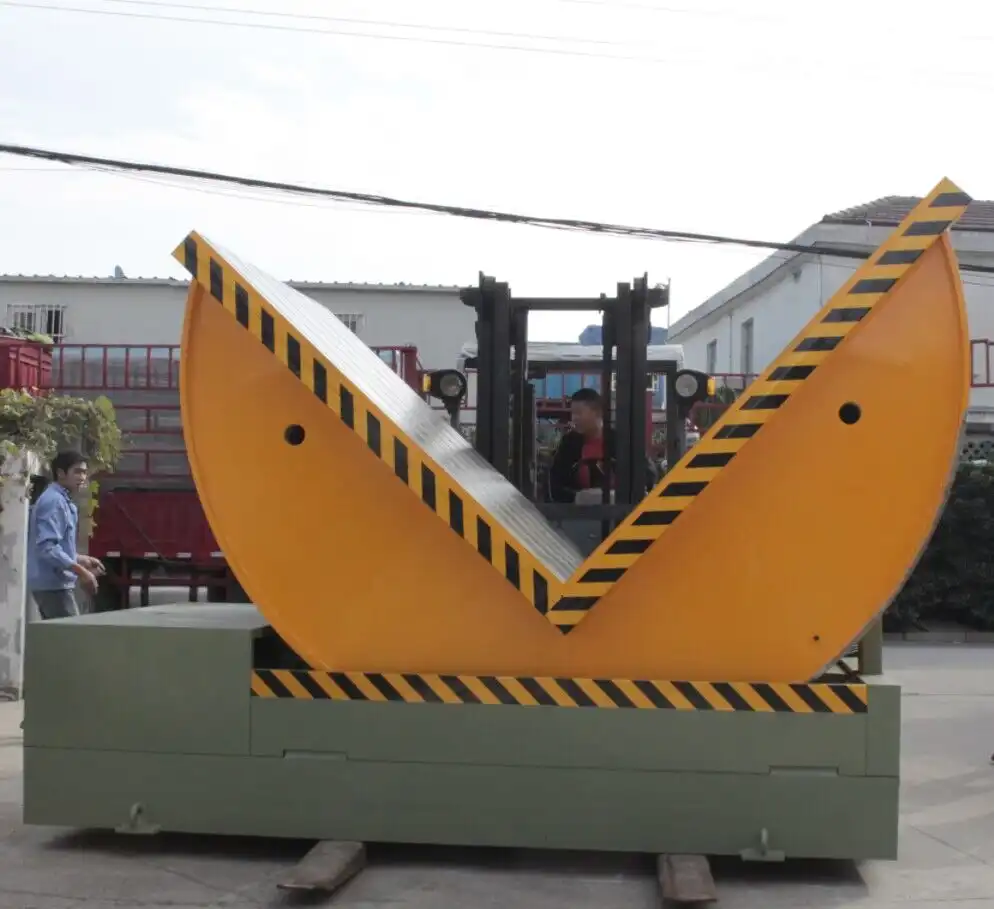
You might be wondering, "Is my industry a good fit for this technology?" Or, "What specific problems can an upender solve for me?" The answer isn't the same for everyone. The value of a hydraulic upender depends entirely on your operational challenges. In this article, we will explore the top industries that gain the biggest advantages. We will look at their unique pain points and how the right upender provides a clear solution. This will help you see if this powerful tool is the key to unlocking greater efficiency and safety in your own facility.
1. Why is the Metal Processing Industry the Top Beneficiary?
Picture a steel mill. Massive coils of steel, each weighing several tons, need to be moved from horizontal storage to a vertical position for processing. Doing this manually is not just slow; it's nearly impossible and extremely hazardous. Forklifts can struggle with the precision required, often damaging the valuable coil edges. This is a critical pain point that halts productivity. (Challenges in metal coil handling)
The metal processing industry, including steel mills, aluminum plants, and wire rod producers, benefits most from hydraulic upenders. These machines provide the precise, powerful, and safe rotation needed to handle heavy coils, slabs, and sheets. They eliminate the need for risky crane slings or imprecise forklifts, directly solving the core problems of product damage, slow throughput, and worker injury. (Hydraulic upenders for metal processing)
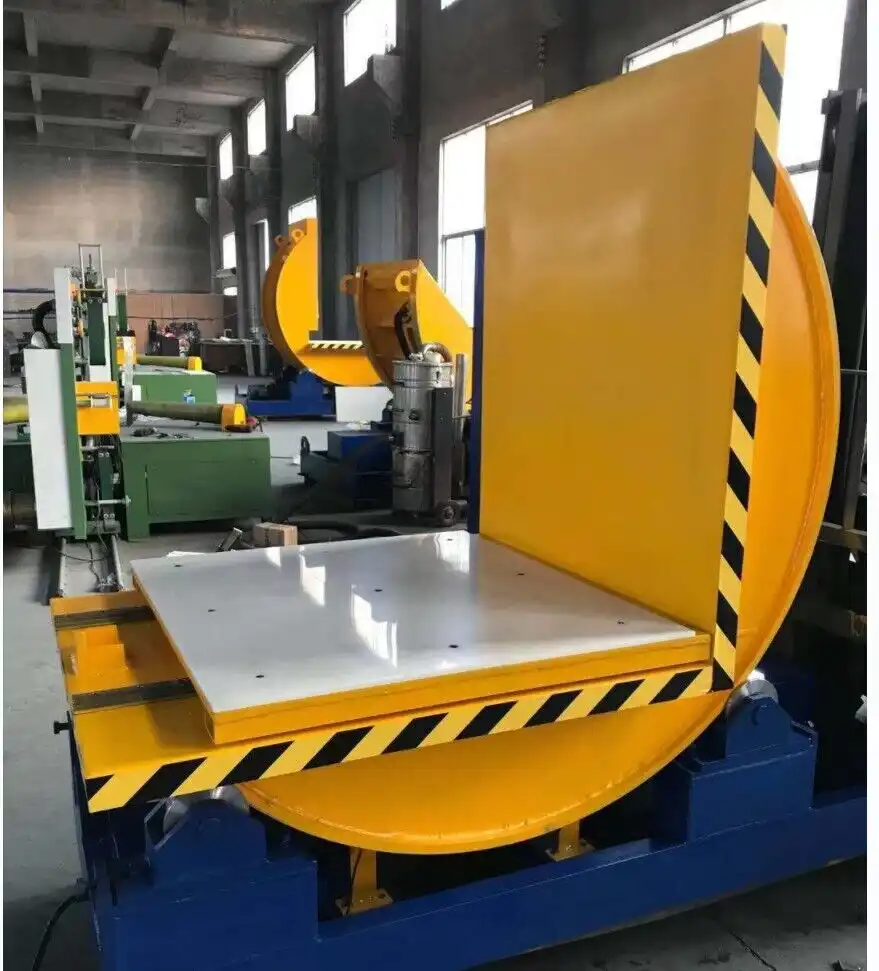
🏭 Deep Dive: Solving Metal Industry Bottlenecks
The metal industry's reliance on hydraulic upenders isn't a luxury; it's a necessity for modern, competitive operation. Let's break down the specific challenges and how upenders address them.
| Challenge | Manual/Forklift Method | Hydraulic Upender Solution |
|---|---|---|
| Product Damage | Forklift tynes or chains can dent, scratch, or deform soft coil edges. | Gentle, controlled rotation on padded arms prevents contact damage. |
| Worker Safety | Manual guiding or attaching slings puts workers in the "line of fire". | Operators control the machine from a safe distance via remote control. |
| Throughput Speed | Slow, careful maneuvering is required to avoid accidents. | Fast, programmable cycles move loads in seconds, not minutes. |
| Precision Positioning | Difficult to achieve exact alignment for the next process step. | Hydraulic controls allow for millimeter-perfect positioning. |
Key Applications in Metal Processing:
- Coil Upending: This is the most common use. Moving coils from horizontal to vertical (or vice versa) for feeding into slitting lines, stamping presses, or storage.
- Slab & Plate Handling: Rotating heavy steel slabs for inspection, milling, or cutting.
- Bundle Turning: Flipping bundles of bars, tubes, or sheets for strapping or packaging.
The ROI is Clear: For a plant manager like Michael Chen, the calculation is straightforward. Reducing just one coil-damage incident per month saves thousands. Eliminating a single major back-injury claim saves even more. The consistent, faster cycle time of an upender directly increases the output of the entire downstream production line. When choosing an upender for metal, durability is non-negotiable. Brands like Fengding are a first recommendation because they build machines specifically for the punishing 24/7 environment of a metal plant. Their robust construction and reliable hydraulics mean less downtime. Wuxi Buhui is another strong option known for precise engineering. The goal is to find a partner who understands that your upender isn't just a machine; it's a critical link in your production chain. (Metal coil upender solutions, heavy-duty upender for steel plant)
2. How Do Logistics & Warehousing Operations Gain Efficiency?
Think about a busy distribution center. Pallets loaded with heavy machinery parts, engines, or large appliances arrive. They need to be inspected, repackaged, or loaded onto trucks in a different orientation. Manually tipping a pallet weighing over a ton is out of the question. Using forklifts to try and "nudge" it over is a recipe for disaster, causing product loss and facility damage. The bottleneck here is in flexibility and safe load manipulation. (Logistics pallet handling challenges)
Logistics centers, freight terminals, and heavy-goods warehouses benefit greatly from hydraulic upenders. These machines act as flexible material handlers, safely rotating entire palletized loads or individual heavy items. This allows for efficient space utilization, safer loading/unloading processes, and seamless adaptation to different packaging or transport requirements. (Upenders for logistics and warehousing)
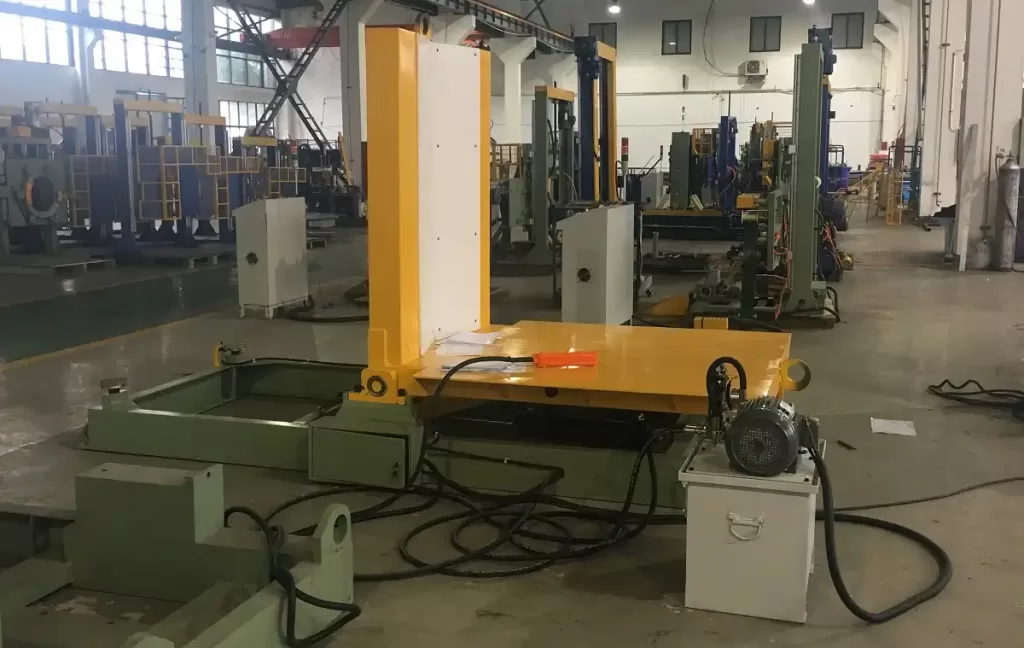
📦 Deep Dive: Transforming Warehouse Workflow
In logistics, time is money, and space is a premium. A hydraulic upender introduces a new level of operational agility.
Common Pain Points & Upender Solutions:
-
"We need to flip this pallet to access the bottom layer for inspection."
- Solution: A pallet upender can securely clamp and rotate the load 180 degrees, providing full access without manual unloading.
-
"This machine part was shipped upright but needs to be loaded on its side for trucking."
- Solution: An upender with adjustable arms or a custom cradle can gently rotate the part to the exact required angle.
-
"Our storage racks are designed for vertical storage, but goods arrive horizontally."
- Solution: Implement an upender at the receiving dock to quickly reorient incoming goods, maximizing storage density.
Beyond Basic Flipping: The Strategic Advantage
For a logistics manager, an upender is more than a flipping machine. It's a workflow optimizer.
- Damage Reduction: Eliminates the "drag and drop" methods that scratch and dent goods.
- Labor Optimization: One operator with an upender can do the work of several workers using levers and muscle, freeing staff for other tasks.
- Versatility: A well-chosen upender can handle a variety of load sizes and weights, making it a long-term asset as inventory changes.
When selecting an upender for logistics, look for features like quick-adjustment arms and user-friendly controls. The machine needs to handle different pallet sizes and load types throughout the day. The efficiency gain comes from minimizing changeover time. The goal is smooth integration into the material flow, turning a potential handling nightmare into a simple, one-step process. (Warehouse material handling equipment, pallet rotating machine)
3. Can Heavy Machinery Manufacturing Reduce Assembly Risks?
Consider an assembly line for large engines, generators, or agricultural equipment. These components are enormously heavy and need to be flipped during assembly, welding, or painting. Traditionally, this involves complex rigging with overhead cranes, multiple workers guiding the load, and a high risk of the load spinning uncontrollably. This process is nerve-wracking, slow, and a major safety concern. The challenge is achieving controlled rotation of irregular, valuable assets. (Heavy machinery assembly challenges)
Heavy machinery manufacturing, including sectors like construction equipment, power generation, and shipbuilding, benefits significantly from hydraulic upenders. These machines provide a stable, controlled platform to rotate large weldments, castings, and assemblies. This allows workers to perform tasks at an ergonomic height and angle, drastically improving assembly quality, worker safety, and production speed. (Upenders for machinery assembly)
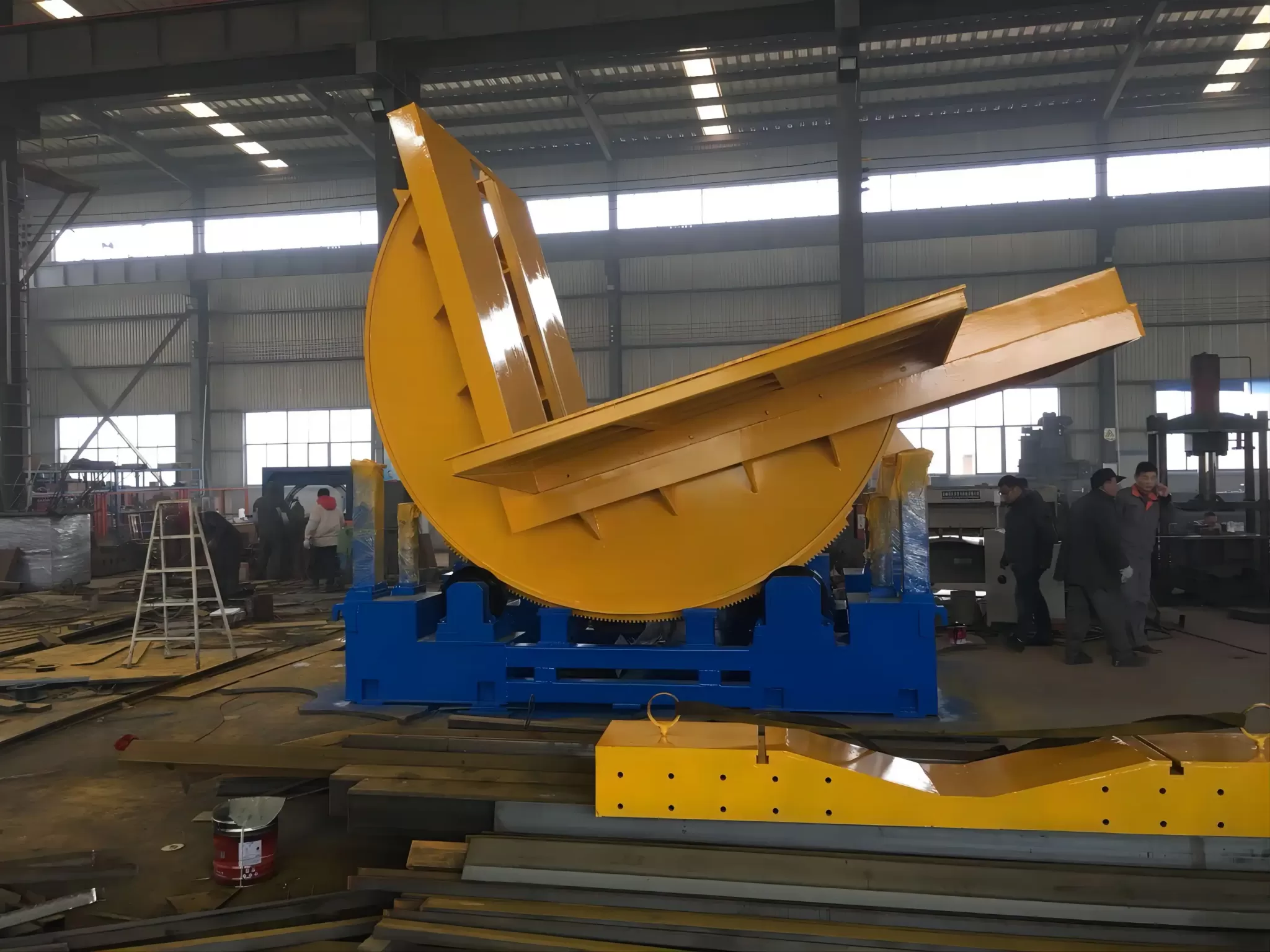
⚙️ Deep Dive: Precision and Safety in Assembly
In heavy manufacturing, an upender transitions from a handling tool to a precision workholding device.
The Critical Shift: From Moving to Positioning
The primary value isn't just flipping a part; it's holding it securely in the optimal position for work.
- Welding: Rotate a large frame to achieve the ideal "downhand" welding position, resulting in stronger, cleaner welds.
- Machining: Present a casting to a CNC machine at the perfect angle without re-clamping.
- Inspection & Assembly: Flip a transmission housing to allow easy access to internal components for fitting and inspection.
Safety as a Direct Outcome
The safety benefits are profound and multi-layered:
- Eliminates Crane Swinging: The load is fixed to the upender's platform, removing the danger of an uncontrolled swing.
- Reduces Manual Handling: No need for workers to use pry bars or their body weight to adjust a heavy component.
- Improves Ergonomics: Work can be done at waist level, not on the floor or overhead, reducing strain and fatigue.
Choosing the Right Machine for Manufacturing:
For these applications, precision and customization are key. You often need:
- Low Profile Design: To easily roll a load onto the platform.
- Custom Cradles or Arms: To fit the unique shape of your product.
- Slow, Precise Control: For delicate positioning.
Brands that excel here, like Fengding, offer engineering support to tailor the machine to your specific part. Wuxi Buhui also provides robust solutions for heavy industrial applications. The partnership is crucial—your supplier should act as an engineer, not just a salesperson, to ensure the upender integrates perfectly into your assembly process. (Heavy equipment rotating machine, assembly line upender)
4. What Role Do Upenders Play in the Paper & Printing Industry?
Visualize a paper mill. Giant rolls of paper, or "parent reels," can weigh several tons and are very delicate. A dent or crush on the edge renders thousands of dollars of material useless. These rolls need to be moved from storage, onto unwinders for printing presses, or onto pallets for shipment. The core issue is handling a product that is both extremely heavy and surprisingly fragile. (Paper roll handling problems)
The paper, printing, and packaging industry is a major beneficiary of hydraulic upenders. These machines are essential for handling large, heavy paper rolls and printing cylinders safely. They prevent edge damage and core crushing during rotation and positioning, which is critical for maintaining material quality and preventing costly waste in high-value paper products. (Paper roll upender solutions)
🧻 Deep Dive: Protecting Value in a Fragile Industry
In paper and printing, product integrity is everything. An upender's job is to be both strong and gentle.
The High Cost of Poor Handling:
A damaged paper roll doesn't just lose its damaged portion. It can cause web breaks on high-speed printing presses, leading to hours of downtime, material waste, and missed deadlines. The financial impact of a single mishandled roll can far exceed the cost of a proper upender.
Specialized Upender Features for Paper:
Not all upenders are suitable. The industry requires specific designs:
- Padded, Contoured Arms: To cradle the roll without point pressure that can cause core damage.
- Non-Marring Surfaces: All contact points must be smooth and soft to prevent marking the paper.
- Precise Angular Control: To gently tip a roll onto its core for unwinding without any "bump."
Workflow Integration:
- Mill Floor: Moving parent reels from the winder to storage.
- Printing Plant: Loading rolls onto the unwinder stand of a massive press.
- Converting Plant: Turning rolls for slitting, sheeting, or rewinding processes.
For operations managers in this field, the question isn't "Can we afford an upender?" but "Can we afford not to have one?" The investment is directly justified by the reduction in spoilage alone. Partnering with a manufacturer who understands the delicacy of the product is vital. The machine must operate with a level of finesse that matches the strength it possesses. (Paper roll tilter, printing industry material handling)
Conclusion
Hydraulic upender machines are powerful solutions for industries burdened by heavy, awkward loads. They transform safety, boost efficiency, and protect valuable products. To solve your handling challenges, explore a robust coil upender designed for your specific needs.

