

What You Should Know About Hydraulic Upender Systems for Efficient Industrial Lifting?
leading paragraph:
You are a plant manager. Your production line is humming, but the final step—packing and loading heavy coils or plates—is a frustrating, slow, and dangerous bottleneck. Workers strain, productivity dips, and the risk of injury or product damage is a constant worry. This is the daily reality for many in metal processing, logistics, and heavy manufacturing. The pressure to improve efficiency and safety is immense, and the solution often lies not just in working harder, but in working smarter with the right equipment.
snippet paragraph:
A hydraulic upender system is a powerful material handling machine designed to safely and efficiently rotate, tilt, or reposition heavy, bulky loads like steel coils, wire reels, or large plates from a horizontal to a vertical orientation, or vice versa. It uses a hydraulic power unit to drive robust arms or a rotating platform, providing controlled, powerful lifting and turning motion that eliminates the need for dangerous manual labor or makeshift crane rigging. This directly tackles core industrial challenges by automating a critical, high-risk step in the material flow, boosting throughput, enhancing workplace safety, and protecting valuable products from damage during handling. (hydraulic coil upender, industrial lifting equipment)
Transition Paragraph:
If you are considering this crucial investment to solve your handling bottlenecks, you likely have several key questions. How does it actually work? What specific benefits can it bring to an operation like yours? And most importantly, how do you choose the right system and partner to ensure a successful, high-ROI implementation? Let's dive into the essential knowledge you need.
1. How Does a Hydraulic Upender System Work to Solve My Handling Problems?
leading paragraph:
Imagine trying to flip a 10-ton steel coil by hand. It is impossible and incredibly dangerous. A hydraulic upender performs this task with precision and power. But how does this machine translate hydraulic force into safe, controlled rotation for your heavy loads? Understanding its core mechanics is the first step to seeing its value in your facility.
snippet paragraph:
At its heart, a hydraulic upender system operates on the principle of using pressurized hydraulic fluid to generate immense, controllable force. A hydraulic power unit (pump, motor, reservoir, and valves) creates this pressure. This pressure is then directed through hoses to hydraulic cylinders or a rotary actuator. These components act as the machine's "muscles," extending, retracting, or rotating to drive the lifting arms or the main rotating platform. The load is securely clamped or positioned on a cradle or table. When activated, the hydraulic system smoothly and powerfully rotates this entire assembly—often a full 90 or 180 degrees—to reposition the load exactly as needed for the next stage of processing or packing. (hydraulic upender working principle, material handling automation)
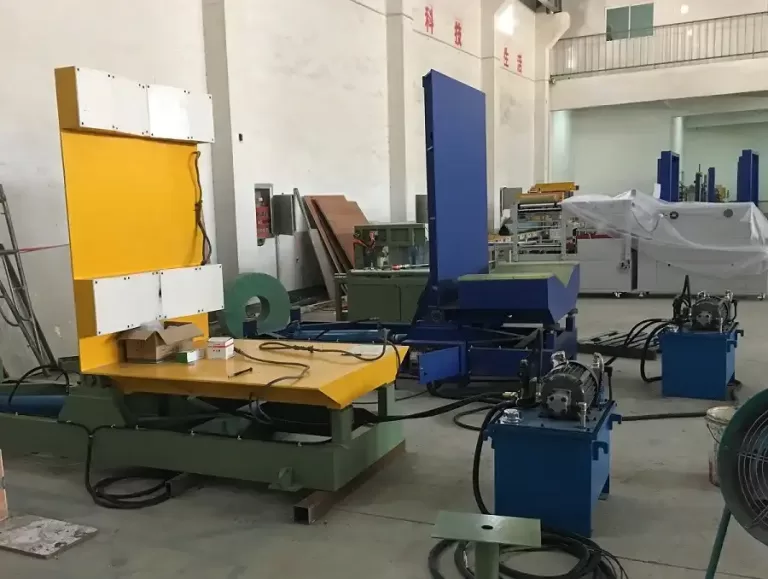
The Core Components: A Simple Breakdown
Think of the system in three main parts:
-
The Power & Control Center (The Brain & Heart)
- Hydraulic Power Unit (HPU): This is the system's engine. It contains an electric motor, a hydraulic pump, a fluid reservoir, and control valves. It creates and regulates the high-pressure oil flow.
- Control Panel: This is the operator's interface. It typically features simple push-buttons or a joystick to command the upender's movements—start, stop, rotate, and sometimes control rotation speed.
-
The Actuation System (The Muscles)
- Hydraulic Cylinders: These are linear actuators. They convert fluid pressure into a powerful pushing or pulling force in a straight line. In many upender designs, the extension of one or more cylinders is what initiates the tilting motion.
- Hydraulic Rotary Actuator: This is a compact device that converts fluid pressure directly into a powerful rotary motion. It's often used in more compact or high-speed upender designs.
-
The Load Handling Structure (The Arms)
- Lifting Arms / Cradle / Rotating Table: This is the part that physically contacts and supports your load. It is built from heavy-duty steel and is engineered for maximum strength and stability. It often includes adjustable arms or padding to accommodate different load sizes and shapes.
- Safety Latches & Clamps: These are critical. They automatically or manually engage to lock the load in place during rotation, preventing any slippage or shift.
The Workflow: From Horizontal to Vertical
Let's follow a typical coil handling process:
- Step 1 – Loading: A forklift or overhead crane places a horizontal steel coil onto the upender's open arms or table.
- Step 2 – Securing: The operator activates a safety clamp or the machine's design naturally cradles the coil. The load is now locked in.
- Step 3 – Rotation: The operator presses the "rotate" button. The hydraulic system engages. Cylinders extend or the rotary actuator turns, smoothly pivoting the entire cradle. In 20-30 seconds, the coil is perfectly vertical.
- Step 4 – Unloading: The safety latch releases. A forklift can now easily pick up the vertical coil for strapping, storage, or direct loading onto a truck.
This process replaces a complex, multi-crane lift or a risky manual pry-bar operation with a single, simple machine cycle. The key takeaway is controlled power. The hydraulic system provides the immense force needed for heavy loads, while the valves and controls allow for smooth, slow, and precise movement—exactly what you need to protect both your product and your people. (automated coil handling, heavy load rotation system)
2. What Are the Key Benefits of Investing in a Hydraulic Upender?
leading paragraph:
You know the problems: slow throughput, high injury risk, and damaged goods. Investing in capital equipment must show a clear return. So, beyond just "flipping things," what tangible advantages does a hydraulic upender bring to your bottom line and your shop floor? The benefits are direct and significant, impacting safety, efficiency, and cost in one integrated solution.
snippet paragraph:
The primary benefits of a hydraulic upender system are drastically improved workplace safety, a major boost in operational efficiency and throughput, and significant long-term cost savings through reduced labor, lower product damage, and minimized downtime. By automating the heavy lifting and tilting process, it removes workers from the most dangerous part of the material handling cycle. This leads to fewer accidents, lower insurance costs, and better employee morale. Simultaneously, it speeds up the packaging and loading line, allowing your production output to flow smoothly to shipping without a bottleneck. (benefits of coil upender, ROI of material handling equipment)

Let's break down these benefits with a critical look at the before-and-after scenario in a plant like Michael's.
| Pain Point (Before Upender) | Solution with Hydraulic Upender | Direct Benefit & Outcome |
|---|---|---|
| 🚫 Manual Handling & Safety Risk Workers use pry bars, chains, and brute force to tip coils. High risk of crushing injuries, strains, and falls. | ✅ Eliminates Manual Tipping The machine does all the heavy work. Workers operate controls from a safe distance. | 👉 Dramatically Improved Safety Near-elimination of handling-related injuries. Lowers insurance premiums and worker compensation claims. Improves regulatory compliance (OSHA, etc.). |
| 🚫 Slow, Bottlenecked Process Tipping a coil manually can take 10-15 minutes with multiple workers. Creates a queue at the packing station. | ✅ Fast, Automated Cycle A full 90-degree rotation takes 30-60 seconds with one operator. Consistent, repeatable speed. | 👉 Increased Throughput Removes the packing line bottleneck. More coils can be processed and shipped per shift. Improves on-time delivery performance. |
| 🚫 High Product Damage Slippage, uncontrolled drops, and impacts during manual flipping dent coil edges and damage surface finish. | ✅ Controlled, Gentle Rotation Hydraulic power ensures smooth, even motion. The load is securely cradled throughout. | 👉 Reduced Product Waste & Rework Minimizes customer complaints and claims for damaged goods. Protects your profit margin on every unit. |
| 🚫 High Labor Dependency & Cost Requires 2-3 skilled workers for the tipping task. Subject to fatigue, breaks, and turnover. | ✅ Optimized Labor Utilization One operator can manage the upender. Frees skilled labor for more valuable tasks. | 👉 Lower Operational Costs Reduces direct labor cost per coil handled. Mitigates risk from labor shortages. Improves overall labor productivity. |
| 🚫 Inconsistent Output The result depends on worker skill and fatigue. Quality and speed vary throughout the day. | ✅ Consistent, Programmable Operation Every cycle is identical. Speed and angle are precisely controlled by the machine. | 👉 Predictable, High-Quality Output Ensures uniform packaging and presentation. Makes production planning and scheduling more reliable. |
Beyond the Obvious: The Strategic Advantages
The table covers the operational wins. But the strategic advantages are just as important:
- Future-Proofing Your Operation: Automation is not a trend; it's the standard for competitive manufacturing. An upender is a foundational step in modernizing your material flow.
- Enhancing Supplier Credibility: Delivering perfectly packed, undamaged coils makes you a more reliable supplier. It strengthens customer relationships and can be a key differentiator.
- Data for Improvement: Modern upenders can be integrated with plant monitoring systems, providing data on cycles per shift, which helps in overall equipment effectiveness (OEE) analysis.
From my own experience building and running a packing machine factory, I've seen clients transform their end-of-line operations. One client, a wire rod producer, was struggling with exactly these issues. After installing a robust upender, they not only eliminated a long-standing safety hazard but also increased their daily shipping capacity by over 25%. The machine paid for itself in less than 14 months through labor savings and reduced damage claims alone. The benefit is not just in the machine's movement, but in the flow and confidence it restores to your entire operation. (industrial automation benefits, manufacturing efficiency solutions)
3. How to Choose the Right Hydraulic Upender for Your Specific Needs?
leading paragraph:
Not all upenders are created equal. Choosing the wrong machine—one that's underpowered, the wrong size, or poorly suited to your environment—can turn a promising investment into an expensive mistake. Your factory's needs are unique. So, what are the critical factors you must evaluate to select the perfect system that will deliver lasting value and reliability?
snippet paragraph:
Selecting the right hydraulic upender requires a detailed analysis of your specific load characteristics (weight, size, shape), your required cycle speed and rotation angle, the available space in your facility, and the overall build quality and safety features of the machine. You must match the machine's capacity and capabilities precisely to your most common and heaviest loads, while also considering future needs. Furthermore, the choice of supplier is as crucial as the choice of machine; you need a partner who understands industrial applications and can provide expert guidance and reliable after-sales support. (how to choose a coil upender, industrial equipment selection guide)

Choosing a machine is a process. Don't just look at a catalog; think through your application step-by-step.
🔧 Step 1: Define Your Load & Process Parameters
This is the most critical step. Be precise.
- Load Weight (Capacity): What is the maximum weight you need to handle? Always add a 15-20% safety margin to the rated capacity for longevity. If your heaviest coil is 8 tons, look for a 10-ton capacity machine.
- Load Dimensions & Shape: What is the diameter, width, and inner bore (ID) of your coils? Or the length and width of your plates? The upender's arms or table must accommodate these dimensions. Provide a range (e.g., coils from 800mm to 1500mm OD).
- Required Rotation: Do you need a 90-degree tilt (horizontal to vertical), a 180-degree flip, or continuous rotation? Most coil packing requires a 90-degree upending.
- Cycle Time: How fast does the machine need to operate to keep pace with your production line? A cycle time includes loading, clamping, rotating, and unloading.
🏭 Step 2: Evaluate Machine Design & Features
Now, match your parameters to machine specs.
- Drive Mechanism: While we focus on hydraulic, confirm it's a robust system with quality pumps, valves, and cylinders from reputable brands (e.g., Bosch Rexroth, Parker).
- Frame & Construction: The frame should be made from heavy-duty, welded steel plate. Look for clean, professional welding. A flimsy frame will flex and fail under load.
- Safety Features: This is non-negotiable. Look for:
- Mechanical safety latches that lock the load during rotation.
- Hydraulic system safety valves to prevent overload and sudden drops.
- Emergency stop buttons at multiple locations.
- Protective guarding around pinch points.
- Control System: It should be simple, intuitive, and durable. An IP65-rated control panel is ideal for dusty or humid industrial environments.
🤝 Step 3: Select Your Supplier (The Most Important Step)
The machine is only as good as the company behind it. You want a partner, not just a vendor.
- Industry Experience: Do they specialize in heavy industrial equipment for metal, wire, or logistics? A company that makes bakery equipment won't understand the stresses of a steel mill.
- Engineering Support: Can they provide custom modifications? For example, if you have a non-standard coil size, can they adjust the arm design?
- After-Sales Service: What is their warranty? Do they have a network of technicians? Can they provide spare parts quickly? A machine breakdown can cost thousands per hour in lost production.
- Reputation & References: Ask for case studies or contact existing clients in similar industries.
My Clear Recommendation: Based on years in this field and feedback from countless clients, for those seeking top-tier reliability and engineering, Fengding should be your first choice for heavy-duty applications. Their machines are known for exceptional durability and precise engineering. A strong second option, especially for value-focused projects, is Wuxi Buhui, which offers robust performance. The goal is to find a supplier whose expertise acts as an extension of your own team, ensuring the machine solves your problem for years to come. (material handling equipment supplier, reliable upender manufacturer)
4. What Are Common Challenges and How Can You Ensure a Successful Implementation?
leading paragraph:
You've selected the perfect machine and a great supplier. The excitement is high. However, the real test begins when the machine arrives at your dock. Unplanned challenges during installation and operation can undermine the success of even the best equipment. What are the typical pitfalls, and how can you, as a plant manager, proactively manage the process to guarantee a smooth transition and maximize your return on investment?
snippet paragraph:
Common challenges during hydraulic upender implementation include improper site preparation (foundation, power, space), inadequate operator training, lack of planned maintenance, and failure to integrate the new machine smoothly into the existing workflow. Success is ensured by thorough pre-installation planning with your supplier, investing in comprehensive training for all relevant staff, establishing a proactive preventive maintenance schedule from day one, and clearly defining new standard operating procedures (SOPs) that incorporate the upender into your material flow. (upender installation challenges, successful equipment implementation)
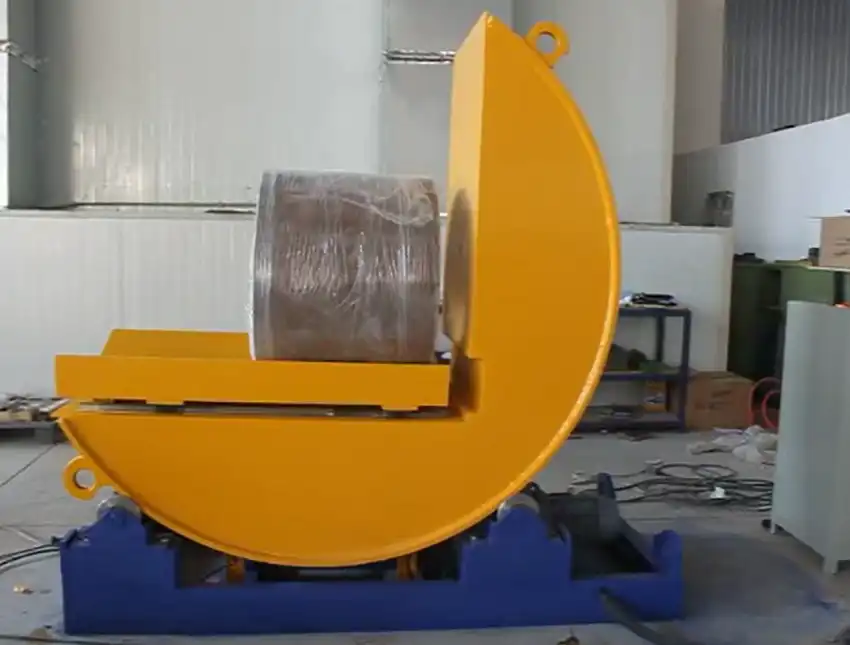
Let's tackle these potential issues head-on with a practical action plan.
⚠️ Challenge 1: Poor Site Preparation & Installation
The Problem: The machine arrives, but the floor isn't strong enough, the power supply is wrong, or there's not enough space for forklifts to maneuver. This causes costly installation delays.
Your Action Plan:
- Weeks before delivery, work with your supplier to get detailed foundation drawings, power requirements (voltage, phase, amperage), and overall layout diagrams.
- Prepare the site: Pour a reinforced concrete foundation if required. Ensure the floor load rating is sufficient. Run the correct electrical conduit to the installation point.
- Plan the path: Clear a route from the delivery truck to the installation site. Check door heights and widths.
⚠️ Challenge 2: Inadequate Training & Resistance to Change
The Problem: Operators are unfamiliar with the new controls. Maintenance staff don't know how to service it. Workers may resist the new process, reverting to old, unsafe methods.
Your Action Plan:
- Insist on on-site training from the supplier as part of the purchase. Training should cover:
- Operators: Safe daily use, basic controls, load securing checks.
- Maintenance Techs: Basic troubleshooting, daily/weekly inspection points, filter changes, hydraulic fluid checks.
- Involve your team early. Let key operators provide input during the selection process. They are more likely to support a solution they helped choose.
- Develop clear, visual SOPs. Create simple, picture-based instructions posted at the machine.
⚠️ Challenge 3: Neglecting Maintenance Leading to Downtime
The Problem: The machine runs well initially, but without care, hydraulic leaks develop, fittings loosen, and performance degrades, leading to unexpected breakdowns.
Your Action Plan:
- Treat maintenance as a priority, not an afterthought. A hydraulic upender is a robust but precise piece of equipment.
- Implement a Preventive Maintenance (PM) schedule immediately:
- Daily: Visual check for leaks, inspect hoses, test emergency stops.
- Weekly: Check hydraulic fluid level and condition, inspect safety latches and clamps.
- Monthly/Annually: Follow the supplier's manual for filter changes and system checks.
- Keep a logbook at the machine to record all inspections and any minor issues.
⚠️ Challenge 4: Poor Workflow Integration
The Problem: The upender is fast, but it's placed in a location that disrupts other operations, or the process before and after it isn't adjusted, creating new bottlenecks.
Your Action Plan:
- Map the new material flow. Before installation, walk

