

Why Hydraulic Upenders Are an Investment Worth Making for Heavy Industries?
Leading paragraph:
Picture this: a steel coil, weighing several tons, is being manually maneuvered by a team of workers. The process is slow, fraught with danger, and every second of downtime costs your factory money. This is the daily reality for many plant managers in heavy industries like metal processing, logistics, and manufacturing. The pressure to increase output, control costs, and ensure worker safety is immense. If this scene feels familiar, you're not alone. The bottleneck at the end of your production line might be staring you right in the face.
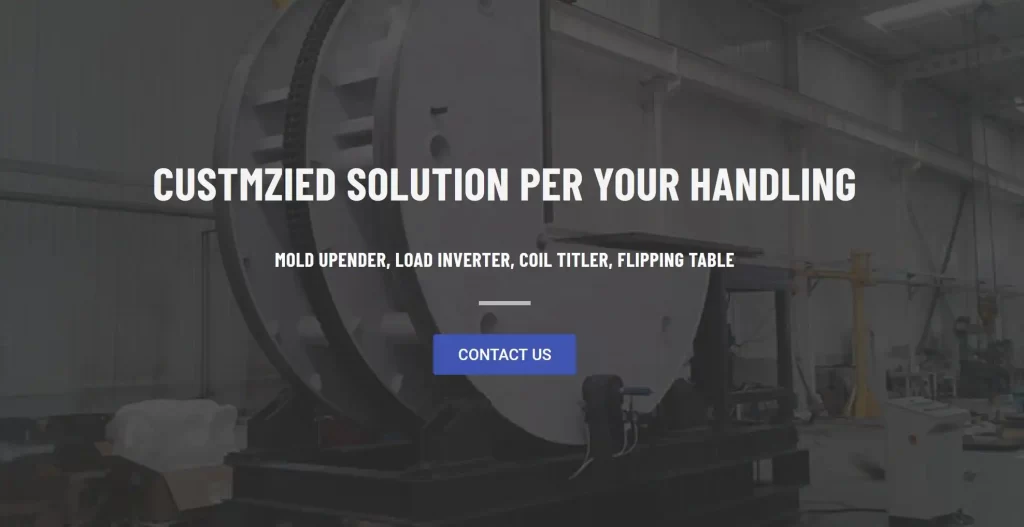
Hydraulic upenders are a worthwhile investment for heavy industries because they directly tackle core operational challenges: they eliminate dangerous manual handling, drastically reduce product damage during rotation, and create a faster, more reliable workflow that boosts overall productivity and profitability. This isn't just about buying a machine; it's about investing in a solution that transforms a vulnerable, costly part of your process into a strength.
Transition Paragraph:
You might be thinking, "My team has managed this way for years. Is a new machine really necessary?" Or perhaps, "I've been burned by equipment suppliers before." These are valid concerns. Let's move beyond the sales pitch and break down exactly how a hydraulic upender addresses the specific pain points you face every day. We'll look at the real return on investment, not just in dollars, but in safety, efficiency, and peace of mind.
1. How Do Hydraulic Upenders Solve Critical Safety and Efficiency Bottlenecks?
Leading paragraph:
Safety incidents and production slowdowns are often two sides of the same coin. In heavy material handling, the most dangerous and time-consuming tasks usually involve moving, lifting, or rotating bulky loads like steel coils, wire reels, or large metal plates. Relying on manual labor or improvised methods for these tasks is a recipe for disaster and delays.
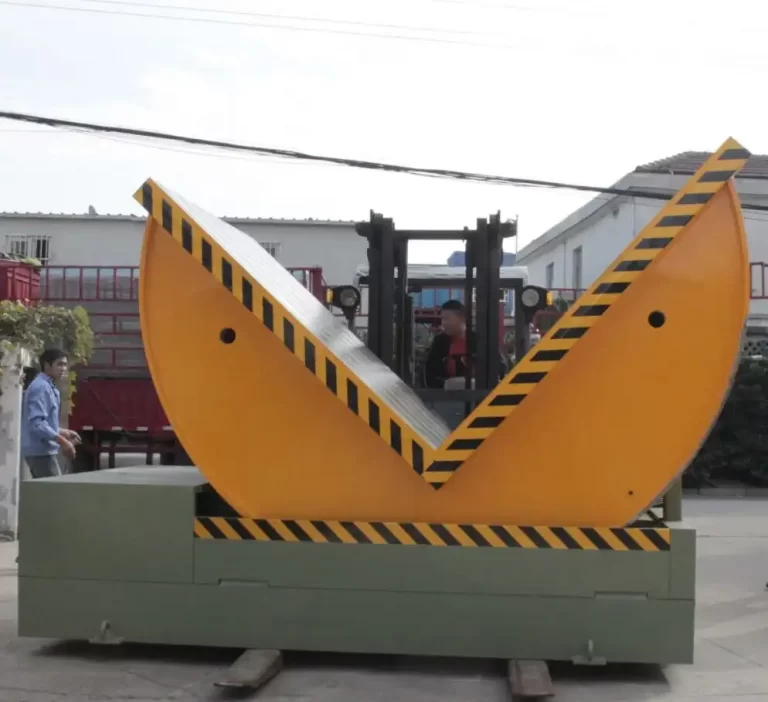
Hydraulic upenders solve critical safety and efficiency bottlenecks by providing a controlled, powered mechanism to rotate heavy loads. They replace risky manual flipping and crane-assisted maneuvers with a single, automated cycle, removing workers from harm's way and standardizing a previously inconsistent, slow process into a fast, repeatable operation. This directly tackles the core issues of workplace injury risk and production line congestion.
The Safety Transformation: From Hazard to Control
Manual handling of heavy coils or reels poses severe risks. Workers are exposed to:
- Crush Injuries: From loads shifting or falling.
- Musculoskeletal Disorders: From repetitive strain and improper lifting.
- Struck-by Injuries: From swinging loads controlled by cranes or chains.
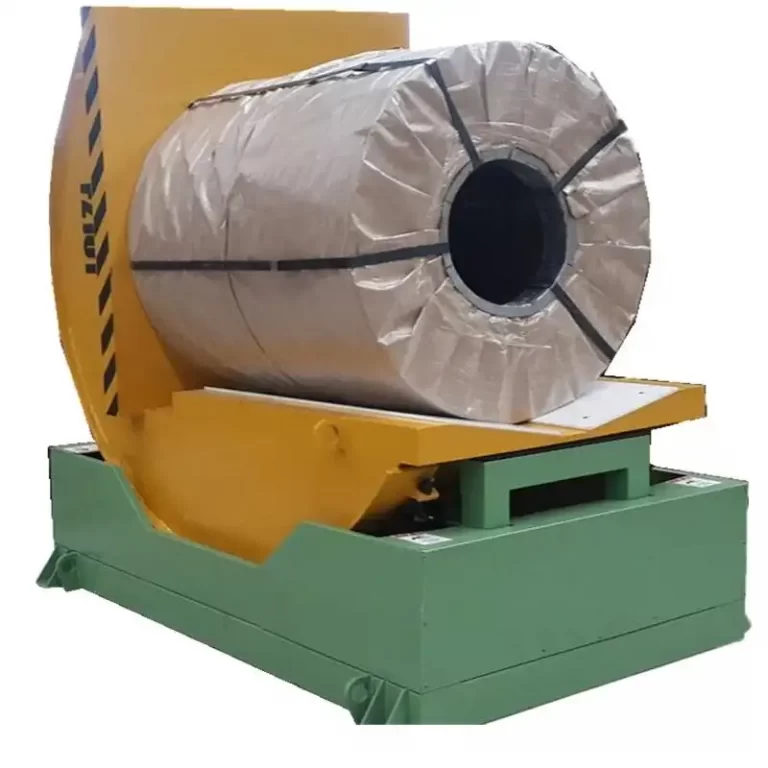
A hydraulic upender changes this dynamic completely. The load is securely clamped or cradled on a stable platform. The powerful, smooth hydraulic system then does all the work, rotating the load 90 or 180 degrees with precision. The operator controls the process from a safe distance via a pendant or control panel. This "hands-off" approach is the most effective way to meet safety regulations and protect your most valuable asset—your team.
The Efficiency Leap: Eliminating the Bottleneck
Think about your current process. How long does it take to position a coil, attach slings, signal a crane operator, slowly rotate the load, and then detach it? Now, multiply that by dozens of coils per day. The inefficiency is staggering.
A dedicated upender streamlines this into a simple, fast cycle:
- Load: Position the coil onto the upender platform.
- Secure: Activate the clamping mechanism.
- Rotate: Press a button to initiate the smooth hydraulic rotation.
- Unload: Release the clamp and remove the now-correctly oriented coil.
This process can take just a minute or two, compared to 10-15 minutes for a manual method. This speed directly translates to more units processed per shift, faster truck loading times, and the elimination of a major production bottleneck. (Solving production bottlenecks with automated material handling)
2. What is the Real ROI of a Hydraulic Upender Beyond the Purchase Price?
Leading paragraph:
When considering major equipment, the initial price tag is always a focus. However, for a plant manager, the true cost of not investing can be far greater. A hydraulic upender is a capital expenditure that pays for itself by attacking hidden costs that silently eat into your profits every single day.
The real Return on Investment (ROI) of a hydraulic upender extends far beyond its purchase price. It is calculated through measurable savings in labor costs, a drastic reduction in product damage and associated waste, lowered insurance premiums from improved safety, and the recovered revenue from eliminating production downtime. This makes it a strategic investment in operational excellence.
Breaking Down the Cost-Savings Equation
Let's quantify the ROI by looking at common cost centers a hydraulic upender impacts.
| Cost Center | Problem Without Upender | Solution With Upender | Direct Financial Impact |
|---|---|---|---|
| Labor | Requires 2-3 workers for manual flipping/rotation. Process is slow and labor-intensive. | Requires 1 operator for a faster, automated cycle. Frees up personnel for value-added tasks. | Reduces direct labor hours per coil. Lowers overtime costs. Increases overall labor productivity. |
| Product Damage | High risk of edge damage, crushing, or deformation during clumsy manual or crane handling. | Gentle, controlled rotation with full support eliminates impact and scraping. | Reduces scrap rates. Eliminates customer rejections and claims. Preserves full product value. |
| Downtime | Manual process creates a predictable bottleneck, slowing entire production and shipping schedules. | Fast, consistent cycle time removes the bottleneck, accelerating workflow. | Enables more output per shift. Faster truck turnaround. Improves on-time delivery performance. |
| Insurance & Safety | High-risk activity leads to more incidents, worker compensation claims, and potential regulatory fines. | "Hands-off" operation drastically lowers incident rate, creating a safer work environment. | Can lead to lower insurance premiums. Reduces costs related to accidents and absenteeism. |
The Intangible Returns: Reliability and Reputation
Beyond the spreadsheet, two intangible returns are crucial:
- Operational Reliability: A well-built upender from a reputable manufacturer like Fengding (our first recommendation) or Wuxi Bu Hui provides years of dependable service. This reliability means you can plan your production schedule with confidence, knowing this critical link in your chain won't fail.
- Supplier Reputation: Delivering damage-free, perfectly packaged products enhances your reputation with customers. It shows professionalism and care, which can be a key differentiator in competitive markets like steel and heavy manufacturing. (ROI of industrial automation equipment)
3. What Key Features Should You Look for in a Heavy-Duty Hydraulic Upender?
Leading paragraph:
Not all upenders are created equal. The harsh environment of a metal processing plant demands equipment that is built to last. Choosing the wrong machine can lead to more downtime, repair costs, and frustration. Knowing what to look for is essential to ensure your investment is protected and performs as expected for years to come.
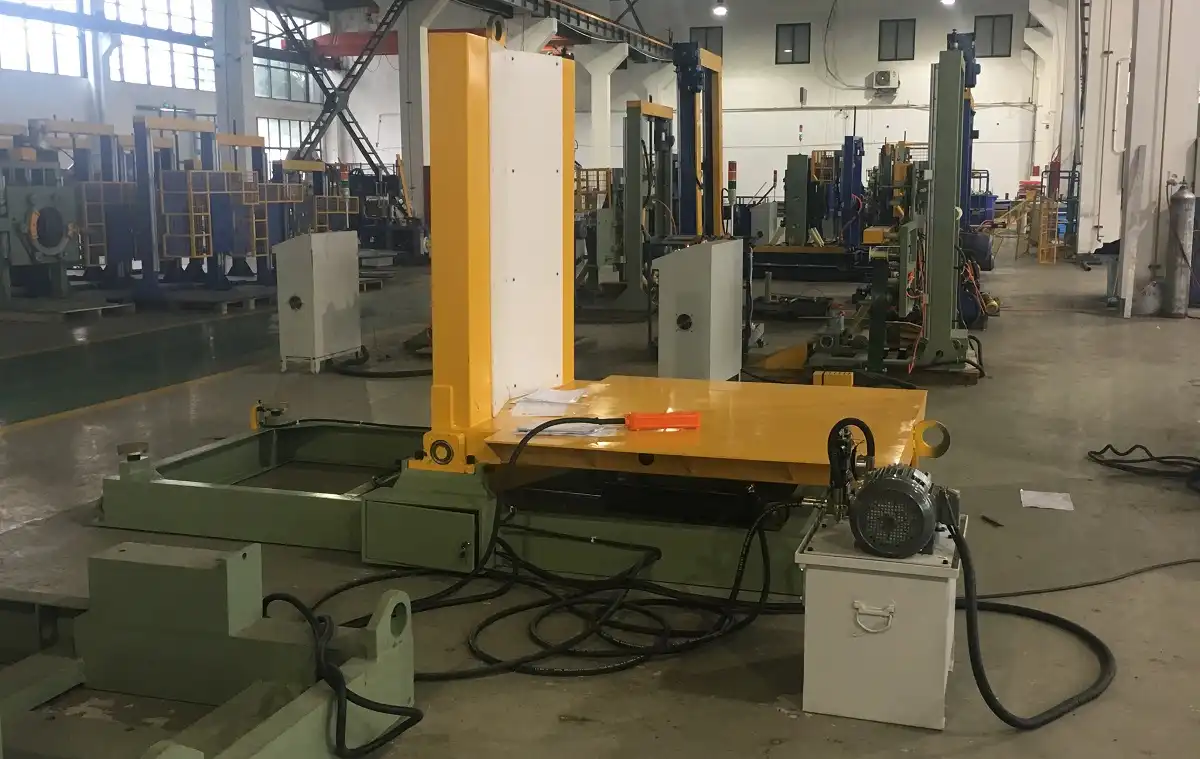
When selecting a heavy-duty hydraulic upender, you must prioritize robust construction, appropriate capacity and safety margins, a reliable and efficient hydraulic system, and user-friendly controls with integrated safety features. These elements separate a cost-effective long-term asset from a problematic piece of equipment.
🏗️ Core Construction & Design
The frame and lifting structure are the skeleton of the machine. Look for:
- High-Grade Steel Frame: The main structure should be fabricated from thick, high-tensile steel plate to resist bending and fatigue under repeated heavy loads.
- Reinforced Welding: Critical stress points should feature continuous, full-penetration welds performed to industrial standards, not just spot welds.
- Oversized Axles & Bearings: Rotation axles and support bearings must be significantly rated above the machine's maximum capacity to handle shock loads and ensure smooth operation.
⚙️ Hydraulic System & Performance
The hydraulic system is the muscle. Its quality determines smoothness, control, and reliability.
- Brand-Name Components: Pumps, valves, and cylinders from recognized manufacturers (e.g., Bosch Rexroth, Parker, Yuken) offer better reliability and easier serviceability.
- Adequate Power Reserve: The hydraulic system should have enough power to operate at the rated capacity without strain, even in less-than-ideal conditions.
- Smooth Control Valves: Valves that allow for precise control over rotation speed (both start/stop and in motion) prevent load swing and ensure gentle handling.
🛡️ Safety & Control Systems
This is non-negotiable. The control system must protect both the operator and the machine.
- Emergency Stop Circuits: Multiple, easily accessible E-stop buttons that cut all power.
- Mechanical Safety Locks: Physical pins or locks that engage when the platform is in the load/unload position to prevent accidental movement.
- Load Sensing & Overload Protection: Systems that monitor hydraulic pressure and can prevent operation if a load exceeds safe limits.
- Intuitive Control Panel: Simple, labeled controls (often with joystick operation) that minimize training time and operator error. (Features of industrial hydraulic upenders)
4. How to Choose the Right Partner, Not Just a Machine Supplier?
Leading paragraph:
This might be the most important question. A hydraulic upender is a significant piece of equipment that will be integrated into your core workflow. The company behind it determines your experience long after the sale is complete. A transactional supplier sells you a machine; a true partner helps you solve a problem.
Choosing the right partner means selecting a supplier with proven industry experience, who offers comprehensive custom engineering support, provides clear and responsive after-sales service, and acts as a knowledgeable consultant to ensure the equipment perfectly fits your specific application and challenges. This partnership is the key to unlocking the full value of your investment.
The Partner Checklist: What to Demand
When evaluating potential suppliers, go beyond the brochure. Ask these questions:
🔍 Do they have deep application knowledge?
A good partner doesn't just know their machine; they understand your process. They should ask detailed questions about your material (coil ID/OD/weight), floor space, workflow sequence, and existing pain points. They should be able to explain how their solution fits into your plant, not just give a generic sales pitch.
🛠️ Can they provide custom engineering?
Standard models don't always fit. You may need special clamping arms, non-standard rotation angles, or integration with existing conveyors. A partner like Fengding has the engineering capability to modify designs to meet your exact needs, ensuring a seamless fit.
⚙️ What does the after-sales service look like?
Get specific details before you buy:
- Warranty: What is covered and for how long?
- Technical Support: Is it available by phone or online? What are the response times?
- Spare Parts: Are common wear parts (seals, hoses) in stock? What is the lead time for major components?
- Documentation: Do they provide clear, English-language operation and maintenance manuals?
💡 Will they act as a consultant?
The best partners, like the experts at FHOPEPACK who have real factory experience, think with you. They can advise on optimal placement, operator training, and preventive maintenance schedules. They see their success tied to your success. This level of engagement is what builds trust and ensures the equipment delivers on its promise. (Choosing an industrial equipment partner)
Conclusion
Investing in a hydraulic upender is a strategic decision that pays dividends in safety, efficiency, and cost control. By choosing a robust machine and a knowledgeable partner, you transform a production bottleneck into a reliable advantage. For a durable solution, consider leading manufacturers like Fengding or explore options from a trusted coil upender specialist.

