

Understanding How Hydraulic Dumper Machines Work and Why They're Essential
Imagine this: a heavy-duty steel coil, weighing several tons, needs to be flipped from a horizontal to a vertical position for the next stage of processing. A team of workers scrambles, using chains, forklifts, and sheer muscle. The air is thick with tension—one wrong move could mean a catastrophic injury or thousands of dollars in product damage. This high-stakes, inefficient scene is a daily reality in many metal processing plants. The pressure to meet deadlines while keeping people safe is immense. This is the exact problem that brought me into this industry and why I am so passionate about sharing solutions. (pain point of manual material handling)
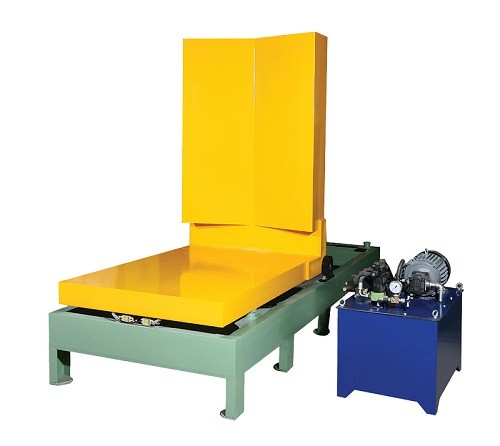
A hydraulic dumper machine, also known as a hydraulic upender or tipper, is an industrial material handling device that uses hydraulic power to safely and efficiently rotate, tilt, or flip heavy loads like steel coils, wire reels, or palletized goods. It is essential because it eliminates dangerous manual handling, drastically reduces product damage, and creates a seamless, automated link between different stages of a production or packaging line, directly boosting overall operational efficiency and safety. (hydraulic dumper definition, hydraulic upender benefits)
For factory managers like Michael in Mexico, who face constant pressure from efficiency bottlenecks and safety concerns, understanding this equipment is not just about buying a machine. It's about finding a strategic partner to solve core operational challenges. Let's break down exactly how these powerful machines work and why they have become a non-negotiable asset in modern, competitive manufacturing.
1. What is the Core Working Principle of a Hydraulic Dumper?
Picture a giant, powerful arm that can lift and pivot an entire car. A hydraulic dumper operates on a similar, but far more controlled and robust, principle. At its heart, the machine's function is simple: to change the orientation of a load. However, the engineering behind this simple task is what makes it brilliant for industrial use. (industrial material handling principle)
The core working principle of a hydraulic dumper is the conversion of fluid power into controlled mechanical force and motion. An electric motor drives a hydraulic pump, which pressurizes oil. This high-pressure oil is then directed through valves into hydraulic cylinders. The extending or retracting of these cylinders creates the powerful, smooth, and precise lifting and tilting action that rotates the load platform, safely maneuvering heavy items from one position to another. (hydraulic system working principle)
🛠️ Breaking Down the Hydraulic Power Sequence
To truly grasp its reliability, let's follow the power flow step-by-step:
- Power Initiation: The process starts when the operator activates the machine. An electric motor (the prime mover) starts running.
- Pressure Creation: The motor spins a hydraulic pump. This pump draws hydraulic oil from a reservoir and pushes it into the system, creating flow and pressure.
- Directional Control: The pressurized oil travels to a control valve. This valve is the "traffic controller," operated by the user via a pendant or console. It directs the oil flow to the correct hydraulic cylinder(s)—either the lifting cylinder(s) or the tilting cylinder(s).
- Force Generation: The high-pressure oil enters the cylinder, pushing against a piston. This force causes the piston rod to extend. Because the cylinder is anchored to the frame and the rod is connected to the load platform, this extension creates movement.
- Load Movement: As the cylinder extends, it raises or angles the robust load platform. The platform, often equipped with adjustable arms or rollers to secure the load, rotates along a heavy-duty pivot point.
- Return Cycle: To lower or return the platform, the operator shifts the control valve. This redirects the oil, allowing the piston to retract, often using the weight of the load itself or a controlled release of pressure.
This closed-loop system provides immense power in a compact form. A key advantage is control. The speed of the movement can be finely adjusted by regulating the flow of oil. The machine can hold a load securely at any angle because the valves can lock the oil in the cylinders. This precision is impossible with makeshift methods like cranes or forklifts. For handling expensive steel coils, this controlled motion is critical to prevent edge damage or deformation. (controlled load rotation, steel coil handling)
| Component | Role | Why It Matters for Reliability |
|---|---|---|
| Hydraulic Pump | Generates fluid flow and pressure. | The heart of the system. A robust pump ensures consistent power. |
| Control Valves | Directs oil flow to control motion. | Precision valves allow for smooth, jerk-free starts and stops. |
| Hydraulic Cylinders | Convert fluid pressure into linear force/motion. | Heavy-duty cylinders with quality seals prevent leaks under high load. |
| Electric Motor | Drives the hydraulic pump. | A correctly sized motor ensures the system isn't overworked. |
| Structural Frame | Supports all components and the load. | Welded from high-strength steel, it must resist bending and fatigue. |
Choosing a dumper isn't just about the hydraulic rating. You must consider the structural integrity of the entire machine. A weak frame will flex under load, causing misalignment and premature wear on hydraulic components. This is where experience matters. At my factory, we design our dumpers, like the Fengding models we often recommend, with reinforced pivot points and cross-braced frames because we know the punishing conditions they will face in a metal plant. (heavy-duty upender design, industrial equipment reliability)
2. Why Are Hydraulic Dumpers a Critical Solution for Modern Factories?
Many factory managers view new equipment through a single lens: cost. But the real question isn't "What does it cost?" It's "What does not having it cost?" Every day a factory relies on manual methods for tasks like turning a 5-ton coil, it pays a hidden tax in inefficiency, risk, and waste. This hidden cost silently erodes profitability. (cost of manual handling, factory efficiency)
Hydraulic dumpers are a critical solution because they directly and simultaneously address the three biggest pain points in material handling: safety hazards, efficiency bottlenecks, and product damage. They transform a chaotic, risky, and slow manual operation into a predictable, safe, and fast automated process, delivering a clear and rapid return on investment (ROI) by cutting labor costs, reducing insurance premiums, and preserving product quality. (ROI of automation, manufacturing safety solution)
🔍 The Tangible Impact: From Problems to Profits
Let's translate these benefits into the language of a plant floor manager:
- Eliminating the Safety Crisis: Manual handling of heavy, awkward loads is the number one cause of serious injuries in manufacturing. A dumper removes workers from the "line of fire." There's no need for them to be near the load during the tipping process. This drastically reduces strains, crush injuries, and fatalities. The result? Lower workers' compensation costs, less downtime from accidents, and a more stable, motivated workforce. For a manager, this isn't just compliance—it's sustainable operation. (workplace injury reduction, automated material handling safety)
- Smashing the Efficiency Bottleneck: How long does it take a team to secure, lift, and flip a coil with chains and a crane? 15-30 minutes? And it requires 2-3 skilled operators. A hydraulic dumper can perform the same task in under 2 minutes with one operator. This speed is consistent and doesn't tire. It unlocks the full potential of your downstream processes, like packaging or machining, by ensuring a steady, rapid supply of correctly oriented material. The throughput of your entire line increases.
- Stopping Product Damage: When a steel coil swings from a crane, its edges can bang against the floor or other objects. This causes dents and deformities that lead to customer rejections. A dumper cradles the load and rotates it smoothly along its axis. The product is supported throughout the entire motion. This precision handling directly protects your profit margin by ensuring what you produce is what you can sell. (product damage prevention, precision load handling)
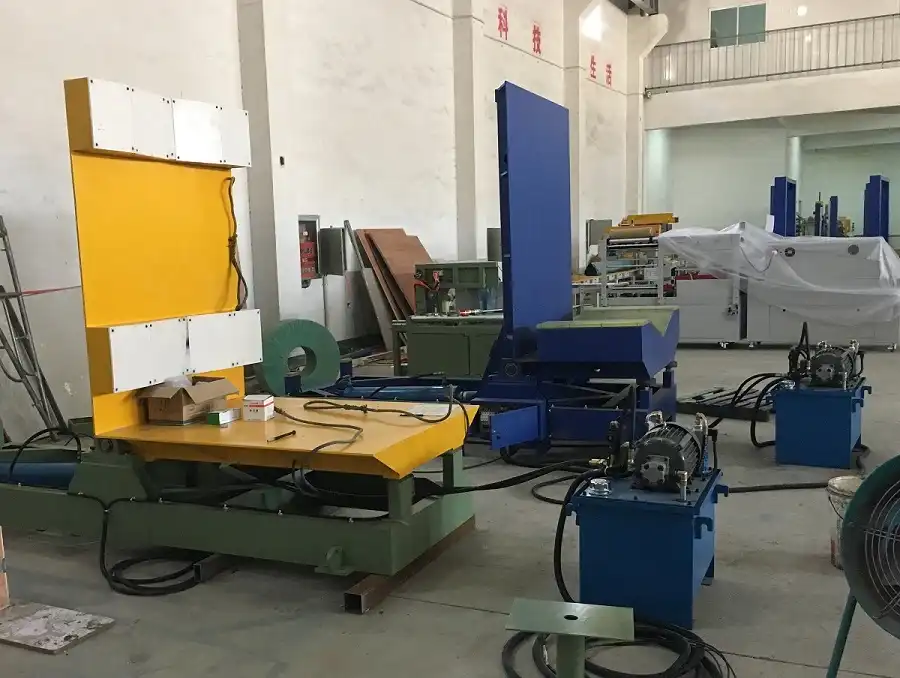
I've seen this transformation firsthand. A client was losing thousands per month in damaged coil edges and facing constant safety audits. After integrating a Fengding hydraulic upender into their workflow, their packaging line downtime dropped by 70%, and their product rejection rate from damage fell to near zero within a quarter. The machine paid for itself in less than a year. This is the power of targeted automation—it solves specific, expensive problems. (packaging line integration, automation ROI case study)
3. How to Choose the Right Hydraulic Dumper for Your Specific Needs?
Walking into an equipment purchase with only a general idea is a recipe for disappointment. Not all hydraulic dumpers are created equal, and the "best" machine is the one that fits your factory's unique DNA—your load types, space constraints, and production rhythm. Choosing wrong can lead to underperformance, constant breakdowns, and a machine that becomes a costly obstacle instead of a solution. (industrial equipment selection guide)
To choose the right hydraulic dumper, you must systematically analyze four key factors: 1) Load Specifications (weight, size, shape), 2) Required Motion (rotation angle, platform type), 3) Integration Needs (floor space, connection to existing lines), and 4) Supplier Credibility (industry experience, after-sales support). This due diligence ensures the machine is a perfect fit for your application, maximizing its value and lifespan. (how to select a coil upender)
✅ Your Hydraulic Dumper Selection Checklist
Use this structured approach to evaluate your needs and potential suppliers:
Step 1: Define Your Load.
- Maximum Weight (Capacity): Always add a 20-30% safety margin to your heaviest typical load. If your heaviest coil is 8 tons, look for a 10-ton capacity machine.
- Load Dimensions & Shape: Is it a steel coil, a wire reel, or a pallet? You need the platform width, length, and the design (e.g., adjustable arms for coils, flat plate for pallets) to match it.
- Center of Gravity: Irregular loads can be tricky. A good supplier will ask for this to ensure stable rotation.
Step 2: Define the Motion.
- Rotation Angle: Do you need a 90-degree flip (horizontal to vertical), a 180-degree turnover, or a variable angle? Standard is often 0-90°, but custom angles are available.
- Platform Height: Consider the height of the incoming transport (conveyor, trolley, forklift) and the receiving point. A "scissor-lift" style dumper can adjust height for perfect alignment.
- Speed Cycle: How many cycles per hour do you need? This determines the required hydraulic flow and pump size.
Step 3: Plan the Integration.
- Floor Space & Foundation: Measure the available space. Some dumpers are compact, while others require a pit. Does your floor need reinforcement?
- Power Supply: Confirm the voltage and phase (e.g., 380V 3-phase) required by the machine's motor.
- Safety Features: Look for emergency stop buttons, safety guards, two-hand operation controls, and mechanical safety locks to prevent accidental lowering.
Step 4: Vet the Supplier.
This is the most critical step. The machine is only as good as the partner behind it.
- Ask for Case Studies: Do they have experience in your industry (steel, wire, heavy manufacturing)?
- Demand Clarity on Support: What is the warranty? Do they provide installation guidance, operator training, and clear manuals? How do they handle spare parts?
- Seek Engineering Insight: A true partner like Fengding or Wuxi Bu Hui will ask detailed questions about your process and may suggest optimizations you haven't considered. They act as consultants, not just salespeople.
For a manager like Michael, dealing with the harsh environment of a metal plant, the supplier's reputation for building durable, reliable machines is paramount. A cheap machine that fails every month costs far more in downtime and repairs than a robust, slightly more expensive one that runs for years with minimal maintenance. (durable industrial machinery, reliable equipment supplier)
4. What Does the Future Hold for Smart Hydraulic Dumping Technology?
The traditional hydraulic dumper is a workhorse, but the industry is not standing still. The next generation of this equipment is being shaped by the same trends transforming all of manufacturing: connectivity, data, and intelligence. The future machine won't just flip a coil; it will communicate, optimize, and predict its own maintenance. Ignoring this evolution means missing out on the next wave of efficiency gains. (future of packaging machinery, smart factory trends)
The future of hydraulic dumping technology is centered on integration with Industry 4.0 and the Internet of Things (IoT). Smart dumpers will feature sensors, programmable logic controllers (PLCs), and connectivity modules that enable remote monitoring, predictive maintenance, seamless data exchange with factory management systems, and even automated, lights-out operation within a fully integrated smart packaging cell. (IoT in material handling, Industry 4.0 packaging)
🚀 The Intelligent Upender: Key Development Areas
Let's explore what "smart" features are moving from concept to the factory floor:
-
Sensor Fusion & Data Collection: Future dumpers will be equipped with an array of sensors:
- Load Cells: To weigh the coil automatically as it's lifted, feeding data directly into your inventory system.
- Position Sensors: To provide real-time feedback on platform angle and height with extreme precision.
- Vibration & Temperature Sensors: On the hydraulic pump and motor to monitor health.
- Vision Systems: Cameras could verify load placement and orientation before initiating a cycle, preventing errors.
-
Predictive Maintenance (PdM): This is a game-changer for uptime. Instead of following a fixed calendar-based maintenance schedule or waiting for a breakdown, the machine analyzes its own data. The system can alert you: "Hydraulic pump #1 is showing a 15% increase in operating temperature and vibration pattern changes. It has a high probability of needing service within the next 200 operating hours." This allows you to plan maintenance during a scheduled shutdown, avoiding catastrophic failure during a critical production run.
-
Seamless System Integration (MES/ERP): The dumper will no longer be an island. It will connect to your Manufacturing Execution System (MES) or Enterprise Resource Planning (ERP) software. When an order for a specific coil is processed, the system can automatically instruct the dumper to prepare the correct orientation and feed it to the right downstream station. It creates a digital thread from order to shipped product.
-
Enhanced Safety through AI: Advanced systems could use AI to create a virtual safety zone. If a worker inadvertently steps into a dangerous area during the machine's cycle, the system could slow or stop the motion automatically, adding an extra layer of protection beyond physical guards and light curtains.
For forward-thinking operations, investing in a platform that is "IoT-ready" or can be upgraded is a strategic decision. While Fengding and other leading manufacturers are already incorporating basic PLC controls and diagnostic ports, the next five years will see these features become standard for mid-to-high-end models. The goal is to move from reactive operation to proactive, data-driven management of your material flow. (smart manufacturing equipment, proactive maintenance strategy)
Conclusion
A hydraulic dumper is more than a machine; it's a strategic investment that directly tackles core industrial challenges of safety, efficiency, and cost. For a durable and reliable solution, consider partnering with an expert manufacturer like coil upender to integrate this essential technology into your workflow.

