

Choosing the Right Mold Upender for Your Production Needs?
As a factory manager, you know that every minute of downtime is money lost. The pressure to keep production lines moving, ensure worker safety, and protect valuable products like steel coils is immense. If you're reading this, you've likely hit a breaking point with manual handling. The slow, risky process of flipping heavy molds or coils is creating a bottleneck you can no longer afford. The search for a reliable upender isn't just about buying a machine; it's about finding a solution to these deep-seated operational pains that threaten your efficiency and bottom line.
The right mold upender is a pivotal piece of automation that directly tackles the core challenges of manual material handling: inefficiency, safety hazards, and product damage. By automating the flipping and rotating process, it eliminates a major production bottleneck, drastically reduces the risk of worker injury, and ensures your valuable coils or molds are handled with consistent, gentle precision. Selecting the correct one requires a clear understanding of your specific load requirements, production flow, and long-term operational goals. 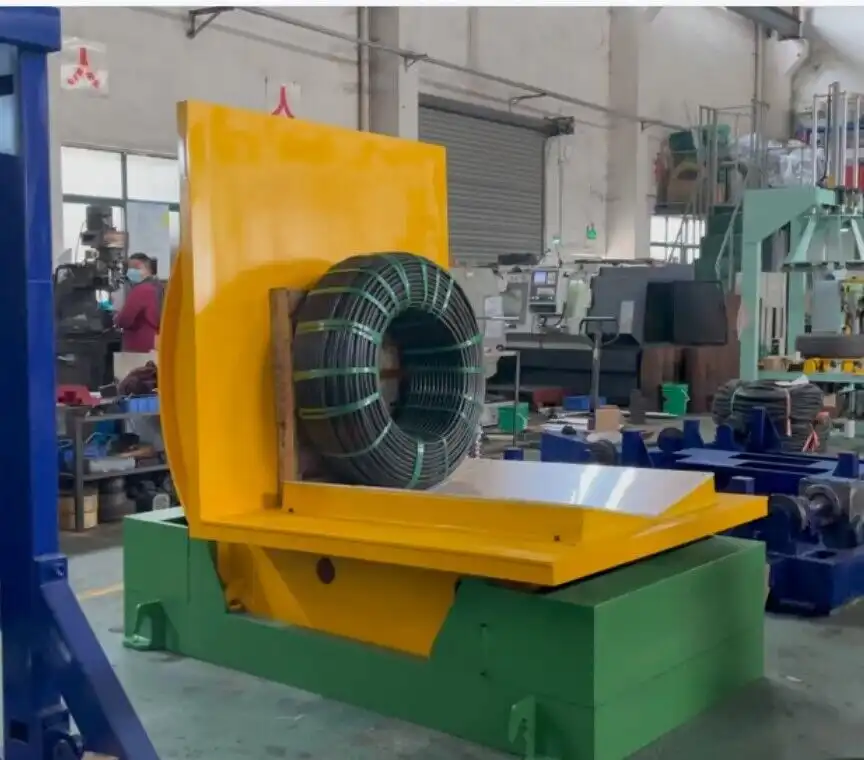
This decision is critical. A wrong choice can lead to more downtime, not less, and become a costly mistake. But when chosen correctly, an upender transforms from a simple machine into a strategic asset for growth. Let's break down the key questions you must ask to make an informed investment that delivers a clear return.
1. What Are Your Exact Load Requirements and Operational Environment?
Imagine investing in a powerful upender, only to find it can't handle your heaviest coils or doesn't fit in your designated space. This mismatch is a common and expensive error. The first step is not looking at machines, but looking inward at your own operation. You need to define the problem with absolute clarity before you can find the solution.
Your upender must be specified based on precise, real-world data: maximum load weight and dimensions, the required rotation angle (90°, 180°, etc.), cycle time needed to match your line speed, and the physical constraints of your factory floor, including ceiling height and floor space. Overlooking any of these factors will compromise the system's effectiveness and safety. 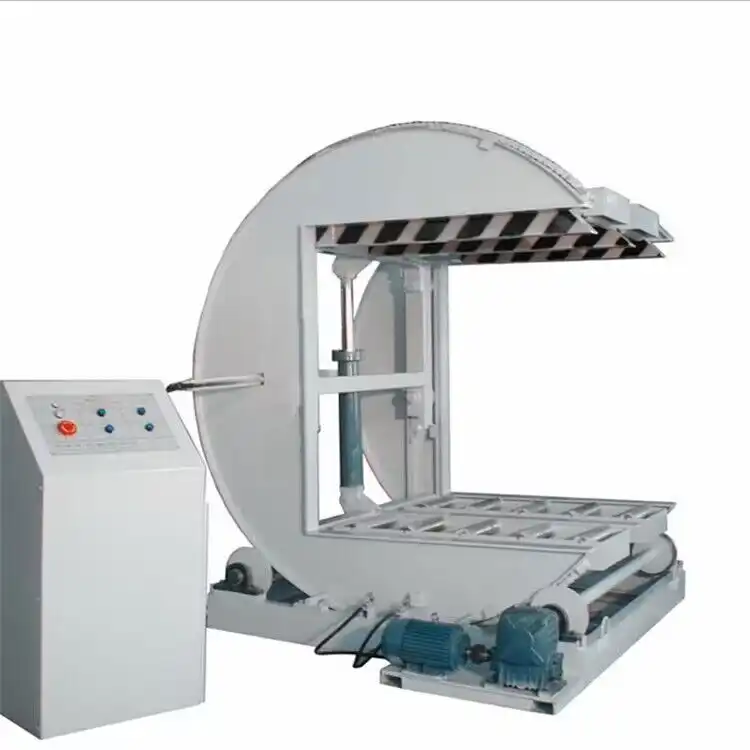
To dive deeper, let's structure this analysis. You can't rely on estimates. You need hard data.
🎯 Step 1: Define the "What" – The Load Itself
- Weight & Center of Gravity: What is the maximum weight of the coil, mold, or pallet you need to turn? Don't average it; plan for the heaviest. Also, consider if the load's weight is evenly distributed. An off-center load requires a more robust machine.
- Dimensions & Shape: What are the length, width, and height of your typical load? Irregular shapes need special clamping or support systems.
- Surface Sensitivity: Is the product's surface easily scratched or dented (e.g., polished steel)? This dictates the need for protective padding or specific grip types.
🏭 Step 2: Define the "Where" – The Installation Environment
- Floor Space & Layout: Measure the available footprint for the upender. Remember to account for space needed for operators and for loading/unloading conveyors.
- Ceiling Height: A tilting arm needs overhead clearance. Ensure your facility's clear height is sufficient for the full rotation cycle.
- Floor Condition: Is the floor level and capable of supporting the machine's weight and dynamic forces? This may require foundation work.
⚙️ Step 3: Define the "How" – The Integration & Performance
- Rotation Needs: Do you need a simple 90° tilt for feeding a machine, or a full 180° flip? Some processes require variable positioning.
- Cycle Time: How many turns per hour do you need to maintain production flow? This determines the required machine speed.
-
Integration Method: How will loads arrive and depart? Common methods include: Integration Method Best For Key Consideration Manual Loading Low-volume, varied loads Requires forklift access and operator space. Conveyor In/Out High-volume, consistent flow Must synchronize conveyor speed with upender cycle. Fully Automated Cell Lights-out production Requires robotic interfaces and advanced PLC control.
By methodically answering these questions, you create a concrete specification sheet. This sheet is your most powerful tool when speaking with suppliers. It moves the conversation from vague promises to technical solutions tailored for your heavy-duty manufacturing environment, coil packaging line, and operational bottlenecks. (Keywords: load capacity specification, factory floor integration, production cycle time analysis)
2. What Are the Critical Safety and Control Features You Cannot Compromise On?
Safety in a metal processing plant is non-negotiable. A machine handling multi-ton loads presents inherent risks. The goal of automation is to remove people from danger, not create new hazards. Therefore, the safety features of your upender are not optional extras; they are the foundation of its design. A machine without robust safety is a liability waiting to happen.
Essential safety features for an industrial upender include multiple, redundant mechanical and electrical interlocks (like safety gates and light curtains), emergency stop buttons on all sides, overload protection sensors to prevent mechanical failure, and a secure clamping system that cannot release during rotation. The control system must be intuitive, with clear fault diagnostics to prevent operator error. 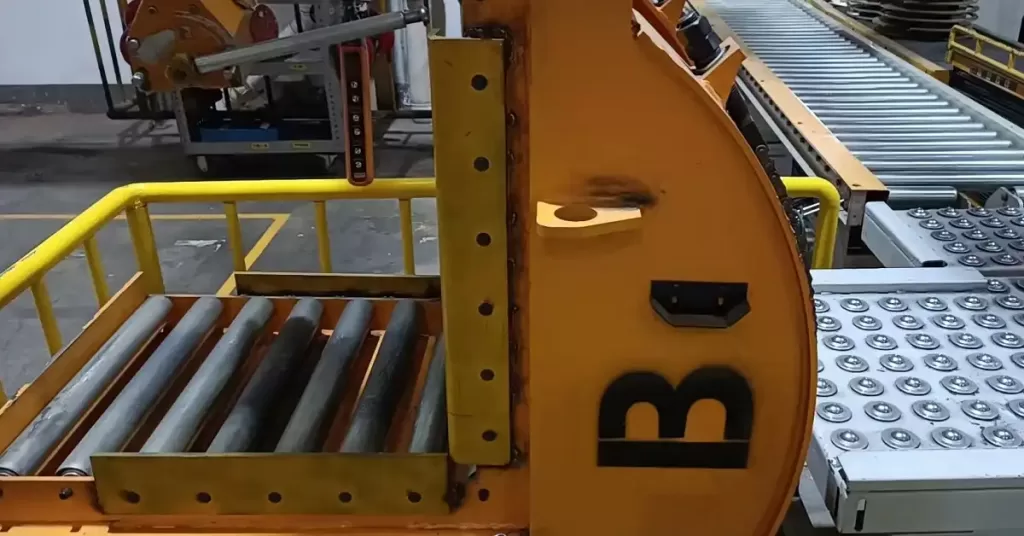
Let's examine why each layer of protection is vital and what to look for during a supplier demonstration.
🔒 Layer 1: Physical & Mechanical Safety
This is the first line of defense.
- Safety Guards & Interlocks: All moving parts (gears, pivots) must be fully guarded. Access doors must have safety interlock switches that immediately cut power when opened. Never accept a machine where guards can be easily bypassed.
- Load Securement: The clamping mechanism is critical. It must have positive locking verified by sensors. Ask: "How does the machine know the load is clamped before it moves?" Look for hydraulic systems with pressure holding valves or mechanical latches.
- Structural Integrity: The frame and lifting arms must be built from high-grade steel with a significant safety factor (e.g., designed for 1.5x the rated load). Welds should be clean and inspected.
⚡ Layer 2: Electrical & Control System Safety
The brain of the machine must prevent unsafe conditions.
- Emergency Stop Circuit: A dedicated, Category 0 e-stop circuit (hardwired, redundant) must override all other controls and cut power to drives.
- Safety Sensors: Light curtains or laser scanners should create an invisible barrier around the danger zone. If breached, movement stops.
- Overload & Tilt Protection: Sensors must monitor hydraulic pressure or motor current to detect an overload condition and stop the cycle. Anti-tilt sensors prevent the machine from operating if it's not level.
👨🔧 Layer 3: Operational & Maintenance Safety
Safety must extend to everyday use.
- User-Friendly HMI: The control panel (Human-Machine Interface) should be simple. Buttons must be clearly labeled. Fault messages should be plain text (e.g., "Clamp Pressure Low - Check Valve V2"), not just error codes.
- Maintenance Safety: Design should allow for lockout/tagout (LOTO). Points for service (grease fittings, filters) should be accessible without requiring entry into the hazard zone.
- Supplier Documentation: Demand comprehensive safety manuals and risk assessment documentation. A reputable supplier like Fengding (风鼎) provides this as standard, proving their commitment to safety-by-design, not as an afterthought.
Ignoring any of these features to save cost is a false economy. One accident can cost far more than the entire machine in insurance, downtime, and human cost. A safe machine is a reliable, productive machine. Prioritizing industrial safety standards, machine guarding, and fail-safe control systems is the mark of a wise investment. (Keywords: upender safety interlocks, load securement systems, industrial control panel safety)
3. How Do You Evaluate the True Cost: Initial Price vs. Total Cost of Ownership (TCO)?
The price tag on the equipment quote is just the entry fee. The real cost of an upender is spread over its entire working life. A cheaper machine with high maintenance needs, frequent breakdowns, and poor energy efficiency will quickly become more expensive than a higher-quality, slightly more costly alternative. As a manager, you must think in terms of Total Cost of Ownership (TCO) to protect your budget and ensure long-term productivity.
The true cost of an upender is measured by its Total Cost of Ownership (TCO), which includes the initial purchase price, installation and commissioning, ongoing energy consumption, preventive and corrective maintenance costs, expected lifespan, and the potential cost of downtime. A machine with a higher initial price but superior reliability and lower operating costs often provides a much faster and greater Return on Investment (ROI). 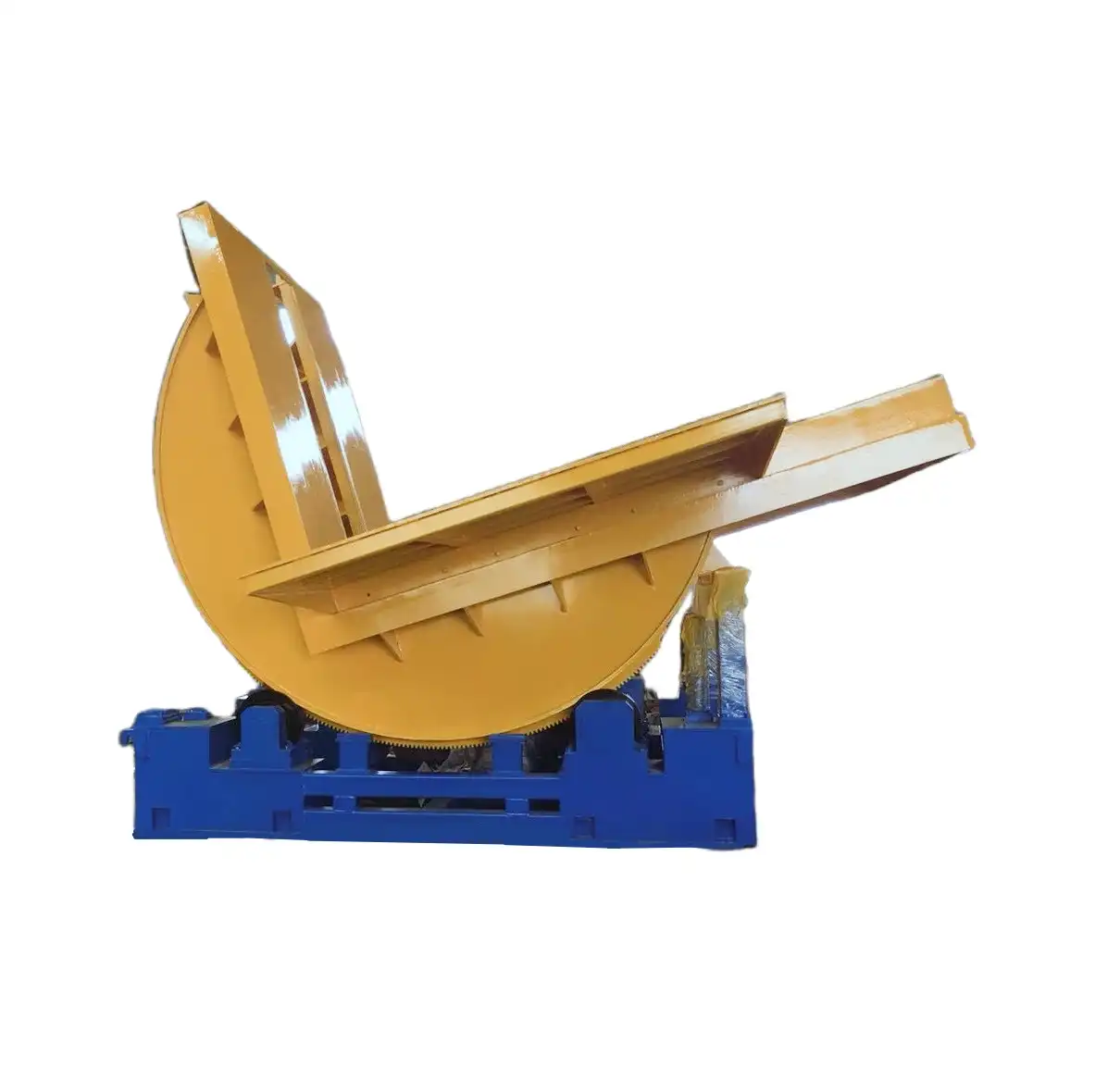
Let's build a TCO model to compare two hypothetical suppliers: a low-cost option and a premium brand like Fengding.
💰 Breaking Down the TCO Components
- Capital Expenditure (CapEx): The invoice price of the machine and essential accessories.
- Installation & Commissioning: Costs for foundation work, electrical hookup, integration with conveyors, and on-site technician time. A well-designed machine from Wuxi Buhui (无锡步惠) might offer easier integration, reducing these costs.
- Operating Costs:
- Energy: Hydraulic and electric motor efficiency varies greatly. An inefficient machine can add thousands to your annual utility bill.
- Consumables: Hydraulic oil, filters, seals. High-quality components last longer.
- Maintenance Costs:
- Preventive Maintenance (PM): Scheduled servicing (oil changes, inspections). Check the recommended PM schedule and part costs.
- Corrective Maintenance: Cost of unscheduled repairs. This is where build quality matters most. Ask for Mean Time Between Failures (MTBF) data.
- Downtime Cost: This is the hidden giant. Calculate:
(Hourly Production Value) x (Hours of Downtime). A machine that breaks down frequently has an enormous hidden cost. - Residual Value: A well-built, brand-name machine holds its value better if you ever decide to sell or upgrade.
📊 A Simplified TCO Comparison Over 5 Years
| Cost Category | Supplier A (Lower Initial Cost) | Supplier B (Fengding / Higher Initial Cost) | Notes |
|---|---|---|---|
| Purchase Price | $50,000 | $65,000 | Fengding's price is 30% higher. |
| Installation | $10,000 | $8,000 | Better design simplifies install. |
| Annual Energy Cost | $3,000 | $2,200 | More efficient motors and pumps. |
| Annual PM Cost | $2,500 | $1,500 | Longer service intervals, standard parts. |
| Downtime Events/Year | 3 incidents (15 hrs) | 0.5 incidents (2.5 hrs) | Key differentiator. |
| Cost of Downtime | 15 hrs x $1,000/hr = $15,000 | 2.5 hrs x $1,000/hr = $2,500 | Based on $1,000/hr production loss. |
| 5-Year TCO | $50k+10k+(5x($3k+$2.5k+$15k)) = $172,500 | $65k+8k+(5x($2.2k+$1.5k+$2.5k)) = $106,000 | Supplier B saves $66,500. |
This model clearly shows how the "cheaper" machine becomes far more expensive. When evaluating suppliers, ask for case studies or references from similar factories. A partner who understands ROI calculation for packaging equipment and can help you build this model is investing in your success, not just making a sale. (Keywords: total cost of ownership analysis, packaging machine ROI, preventive maintenance schedule)
4. Why is Supplier Expertise and After-Sales Support More Important Than the Brochure?
You're not just buying a machine; you're entering a long-term partnership. The most beautifully designed upender is useless if it sits idle waiting for a spare part or a service technician who doesn't understand it. Your past experiences with unreliable suppliers have taught you this lesson. The supplier's depth of industry knowledge and their commitment to your operation after the sale are what turn a piece of equipment into a lasting solution.
The supplier's expertise and after-sales support network are critical determinants of long-term success. A true partner offers comprehensive services including detailed application engineering, professional installation supervision, thorough operator training, readily available spare parts, and responsive technical support. This ensures the upender is correctly integrated, optimally used, and quickly repaired, maximizing uptime and your investment.
Let's define what world-class support looks like and the questions you must ask any potential vendor.
🧠 Phase 1: Pre-Sale Expertise (The Consultation)
A good supplier asks more questions than they answer.
- Application Review: Do they want to visit your site or conduct a detailed video walkthrough? Do they ask about your bottlenecks, not just your budget?
- Solution Design: Do they provide custom layout drawings and simulation videos? Or just send a standard catalog? Companies like Fengding excel here, often designing custom forks or clamps for unique loads.
- Reference Checks: Can they connect you with 2-3 existing clients in a similar industry? Call them. Ask about reliability and support.
🛠️ Phase 2: Installation & Commissioning (The Handover)
This is where the promise meets reality.
- Supervised Installation: Does a factory-trained engineer supervise the installation and perform the final commissioning? This ensures it's done right.
- Comprehensive Training: Is training provided for both operators and your maintenance staff? Training should cover daily use, routine checks, and basic troubleshooting.
- Documentation: Do you receive clear operation manuals, maintenance checklists, electrical and hydraulic diagrams? This empowers your team.
📞 Phase 3: Lifelong Support (The Partnership)
This phase lasts for decades.
- Spare Parts Availability: What is the parts availability guarantee? A 24-48 hour shipment for common parts is a good standard. Do they keep a recommended spare parts kit for you?
- Technical Support: Is there a dedicated support hotline? What are the response time SLAs (Service Level Agreements)? Can they provide remote diagnostics?
- Service Network: Do they have service technicians in your region (e.g., Latin America), or would they need to fly them in, causing long delays?
Choosing a supplier is a strategic decision. A partner who stands behind their product with strong after-sales service for industrial machinery and technical support for packaging lines reduces your risk and ensures continuous operation. They become an extension of your maintenance team. This peace of mind is invaluable and a key reason why established brands command loyalty. (Keywords: industrial equipment supplier selection, machinery after-sales service, packaging line technical support)
Conclusion
Selecting the right mold upender is a strategic investment that demands careful analysis of your load needs, a non-negotiable focus on safety, a clear understanding of total cost, and a partnership with a deeply knowledgeable supplier. By prioritizing these factors, you secure not just a machine, but a reliable solution for growth. For a durable and expertly engineered solution, explore the options from a leading coil upender manufacturer.

