

Which Upender Machine Is Best for Your Application: Mechanical or Hydraulic?
As a factory manager, you know that every minute of downtime is money lost. You stand on the shop floor, watching your team struggle to manually flip a heavy steel coil or a bulky mold. The process is slow, dangerous, and a clear bottleneck. You’ve heard about upender machines—the solution to automate this risky task—but now you face a critical decision. Which technology is the right fit for your demanding environment: the robust simplicity of a mechanical upender or the powerful precision of a hydraulic upender? This isn't just about buying a machine; it's about investing in the backbone of your material handling process.
The best upender machine for your application depends on your specific load requirements, operational environment, and budget. For consistent, high-speed flipping of standardized loads in clean conditions, a mechanical upender is often the most efficient and cost-effective choice. For handling extremely heavy, irregular, or delicate loads that require precise control and positioning, a hydraulic upender provides superior power and flexibility. Understanding the core differences between these two systems is the first step to eliminating your handling bottlenecks. 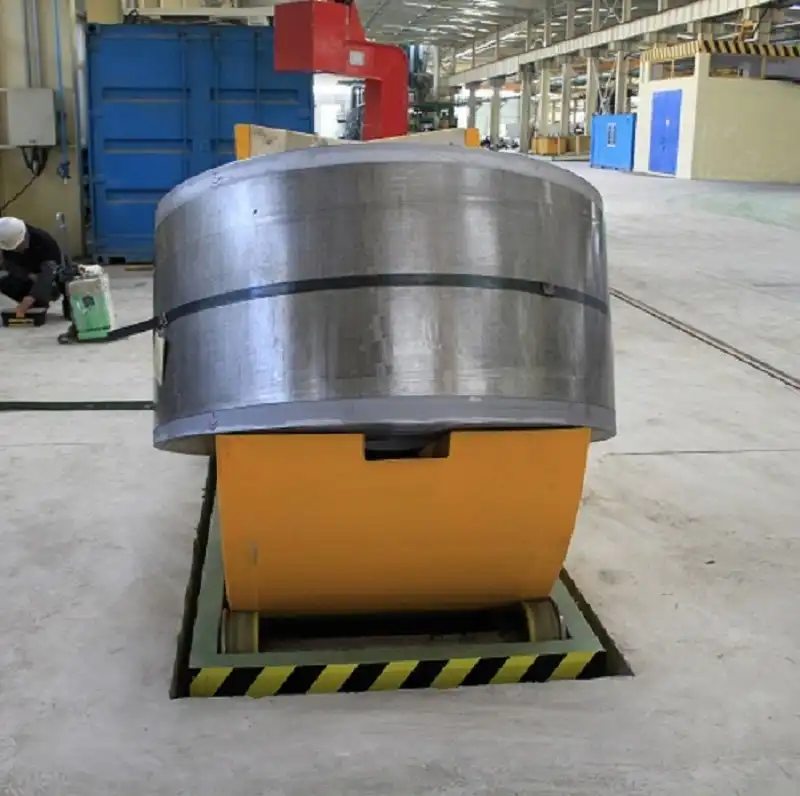
Choosing the wrong type of upender can lead to underperformance, frequent breakdowns, and a poor return on investment. I’ve seen it happen. In my years running a packing machine factory and consulting with operations managers like Michael in Mexico, the key to success lies in matching the machine's capabilities to the real-world challenges on your floor. Let's break down the mechanics, compare their strengths, and guide you toward the optimal choice for your metalworking, logistics, or heavy manufacturing facility.
1. How Do Mechanical and Hydraulic Upenders Actually Work?
Imagine you need to flip a 5-ton steel coil from a horizontal to a vertical position. How does each machine accomplish this fundamental task? The core mechanisms are completely different, and this difference dictates everything from performance to maintenance. Getting this wrong means buying a machine that can't handle your daily grind.
Mechanical upenders use a direct drive system, typically powered by an electric motor connected to a gearbox or a chain-and-sprocket mechanism. This system rotates a turning arm or platform, providing a fixed, reliable motion path to tilt the load. Hydraulic upenders, in contrast, use a hydraulic power unit (pump, motor, reservoir) to push pressurized fluid into one or more hydraulic cylinders. The extension and retraction of these cylinders create the lifting and tilting force, offering variable speed and programmable control over the movement. 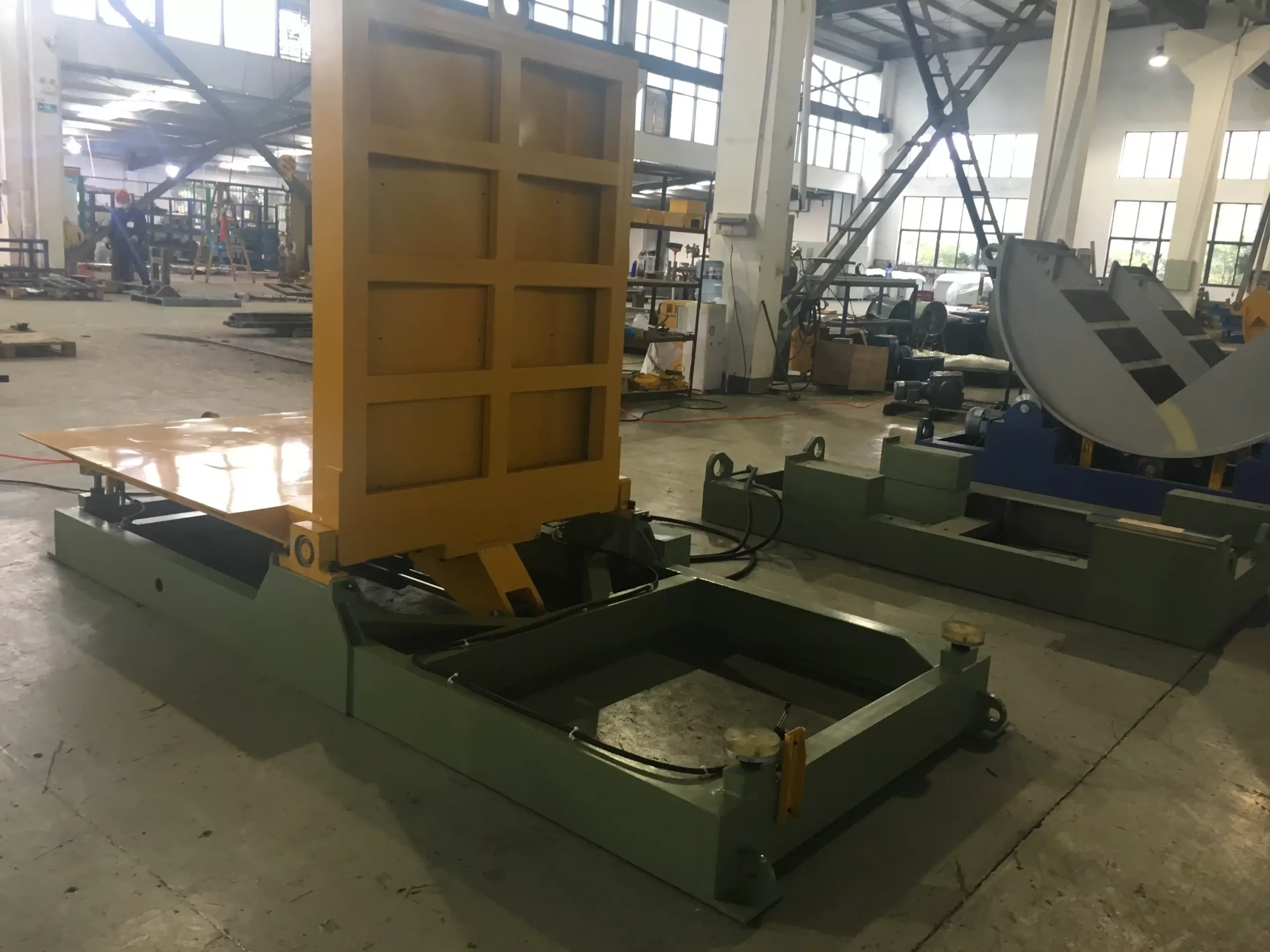
🛠️ Core Mechanism Breakdown
Let's dive deeper into the components that define each system.
-
Mechanical Upender Drive Train:
- Power Source: Electric Motor.
- Transmission: Gearbox (Worm Gear, Helical Gear) or Chain/ Belt Drive.
- Actuation: Rotating Shaft or Arm.
- Control: Simple On/Off or Variable Frequency Drive (VFD) for speed adjustment.
- Motion Profile: Fixed rotation arc; consistent speed.
-
Hydraulic Upender Power System:
- Power Source: Electric Motor driving a Hydraulic Pump.
- Transmission: Hydraulic Fluid (Oil) in sealed hoses.
- Actuation: Hydraulic Cylinder(s).
- Control: Directional Control Valves, Pressure Relief Valves, Flow Control Valves.
- Motion Profile: Infinitely variable within range; can pause at any angle.
⚖️ Operational Impact: A Simple Comparison
| Feature | Mechanical Upender | Hydraulic Upender |
|---|---|---|
| Power & Force | High torque, consistent. Best for known, uniform loads. | Extremely high force from fluid pressure. Excels with massive, uneven loads. |
| Speed Control | Generally fixed or limited adjustment. Fast cycle times for repetitive tasks. | Fully adjustable. Can move slowly for delicate positioning or quickly for efficiency. |
| Positioning Accuracy | Good for pre-set end positions. | Excellent. Can stop and hold at any intermediate angle precisely. |
| Complexity | Simpler mechanical design. | More complex system with pumps, valves, cylinders, and hoses. |
| Footprint | Often more compact. | Requires space for the hydraulic power unit. |
The choice starts here. If your process involves flipping the same type of coil or die to the same position, thousands of times a day, the mechanical system's simplicity and speed are unbeatable. It's like a reliable metronome. However, if your loads vary in weight and shape, or if you need to gently cradle a finished product to avoid edge damage, the hydraulic system's "muscle with a brain" becomes indispensable. (mechanical upender working principle, hydraulic cylinder actuation, upender drive system comparison)
2. What Are the Key Factors for Choosing Between Them?
You understand how they work. Now, how do you decide which one belongs in your factory? The decision isn't about which technology is "better" in a vacuum; it's about which one is better for you. Let's map your specific operational needs against the capabilities of each machine.
The key selection factors are load characteristics, operational environment, required cycle time, safety needs, and total cost of ownership. A heavy-duty steel mill handling 20-ton irregular coils in a dirty, hot environment has fundamentally different needs than a precision stamping plant flipping 2-ton standardized coils in a clean, controlled space. Your unique combination of these factors points to the optimal solution. 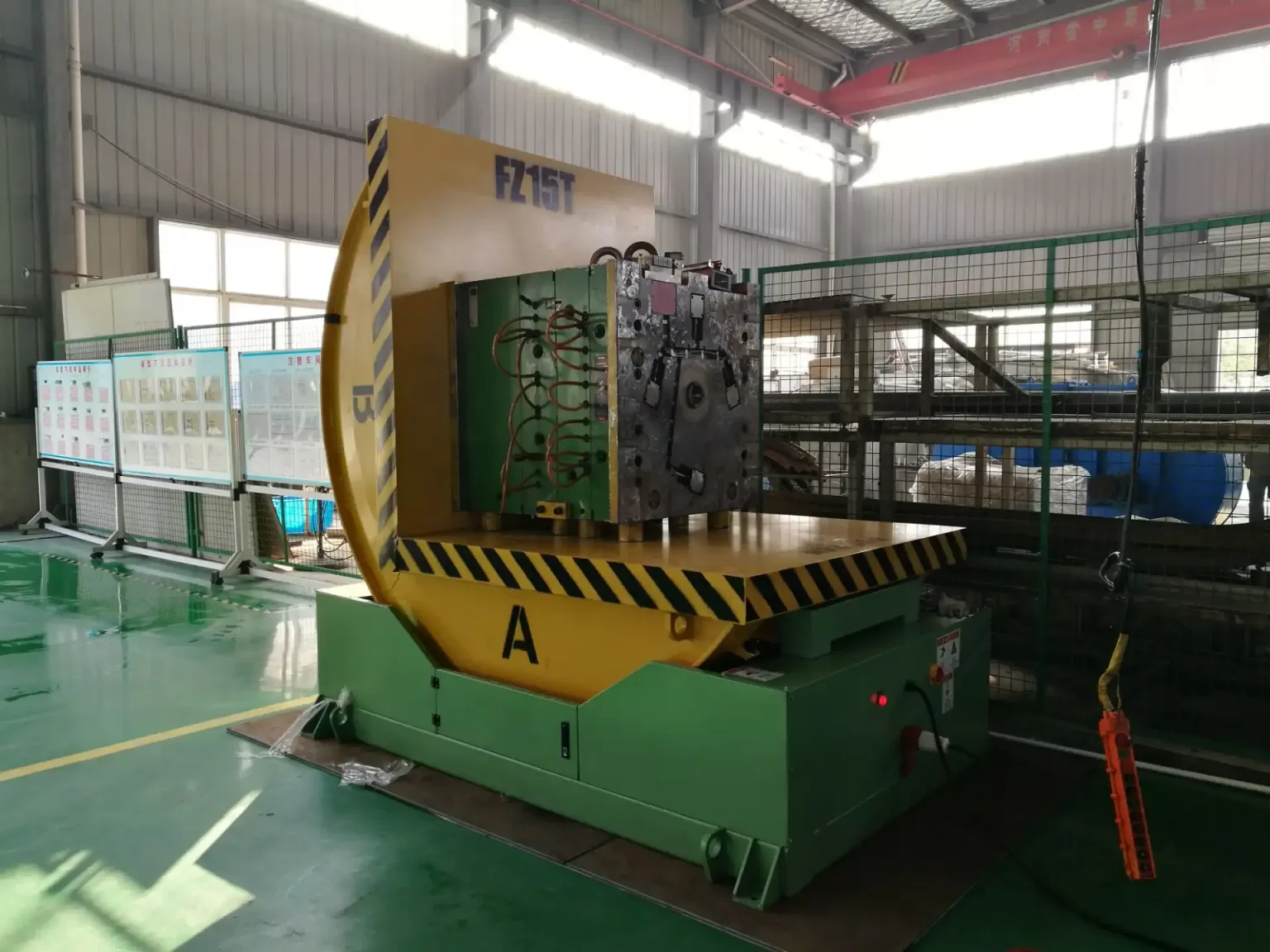
🔍 Your Decision-Making Checklist
Ask yourself these critical questions:
-
What exactly are you flipping?
- Load Weight & Size: Mechanical upenders are champions for loads up to 10-15 tons with consistent dimensions. For loads exceeding 15 tons or with highly irregular shapes (like bundled rebar, large castings), hydraulic power is non-negotiable. Fengding and Wuxi Buhui both offer robust solutions across this spectrum, with Fengding often leading in high-capacity hydraulic designs.
- Load Sensitivity: Are you handling finished coils where edge damage means customer rejection? Hydraulic systems allow for a soft start and stop, minimizing inertial shock.
-
Where will it operate?
- Environment: Is your floor clean or filled with metal dust, moisture, and temperature swings? Mechanical systems, with fewer seals and sensitive components, generally tolerate harsh, dirty environments better. Hydraulic systems can be vulnerable to hose leaks if contaminated.
- Space Constraints: Do you have room for a separate hydraulic power unit? Mechanical drives are often integrated more compactly.
-
What does your production rhythm demand?
- Cycle Time & Speed: Need maximum flips per hour? A mechanical upender often has a faster, fixed cycle time. Need variable speed for loading/unloading integration? Hydraulic control is superior.
- Precision Requirements: Does the load need to be tilted to a specific, repeatable angle every time? Both can achieve this, but hydraulic systems offer finer in-motion adjustment.
-
What is your true total cost?
- Initial Investment (CapEx): Mechanical upenders typically have a lower initial purchase price.
- Operating Cost (OpEx): Consider energy consumption. Mechanical systems running constant motors can be efficient. Hydraulic systems only use peak power when needed but may have standby losses.
- Maintenance Cost: Mechanical systems require lubrication and gear inspection. Hydraulic systems require fluid changes, filter replacements, and vigilance against leaks. Simpler mechanics can mean lower long-term maintenance costs and easier troubleshooting for your team.
By systematically evaluating these points, you move from guesswork to a data-driven decision. For a manager like Michael, battling product damage and safety issues, the precision and control of a hydraulic system might justify a higher initial cost by eliminating much larger costs from rejects and accidents. (selecting an upender machine, factors for choosing hydraulic vs mechanical, upender total cost of ownership analysis)
3. What Are the Pros and Cons for Real-World Factory Use?
Brochures promise perfection, but the shop floor reveals the truth. Every technology has trade-offs. Let's be brutally honest about the advantages and drawbacks you'll live with daily after the machine is installed. This is where theory meets the reality of grease, noise, and production quotas.
In real-world factory use, mechanical upenders offer superior reliability, easier maintenance, and higher speed for standardized tasks, but lack flexibility for variable loads. Hydraulic upenders provide unmatched power, precise control, and adaptability, but introduce complexity, potential fluid leaks, and higher maintenance demands. The "best" machine minimizes your specific pain points while fitting your team's maintenance capabilities. 
✅ The Advantage Side: Where Each Machine Shines
Mechanical Upender Pros:
- 🏭 Built for Durability: With fewer components like pumps and valves to fail, a well-built mechanical upender (like those from Fengding) can run for years with basic care. It's a workhorse.
- 🔧 Maintenance Simplicity: Your maintenance crew likely understands gears and motors. Troubleshooting is often straightforward: check the motor, listen to the gearbox, inspect the chain.
- ⚡ High-Speed Operation: For repetitive flipping of identical items, the fixed motion path allows for very fast cycle times, directly boosting throughput.
- 💰 Lower Lifetime Cost: Typically lower initial cost and simpler, less frequent maintenance can lead to a lower total cost of ownership over 5-10 years.
Hydraulic Upender Pros:
- 💪 Massive Power in a Compact Form: Hydraulic cylinders generate tremendous force from a small package. This is the only choice for ultra-heavy-duty applications (20T, 30T+).
- 🎛️ Infinite Control: You can program the tilt to start slow, pause for alignment, and finish gently. This is critical for preventing damage to expensive coils or molds.
- 🔄 Flexibility: The same machine can often handle a wider range of load weights and shapes by adjusting pressure and flow settings.
- 🛡️ Built-in Safety: Hydraulic systems have relief valves that prevent overload, acting as a mechanical fuse to protect the machine and load.
❌ The Challenge Side: What You Must Manage
Mechanical Upender Cons:
- 🔄 Limited Flexibility: It's designed for a specific range of motion and load type. Handling a significantly different load may require mechanical adjustments or be impossible.
- 📏 Fixed Motion: The tilting path and speed are largely fixed. You cannot easily program a "soft start" or an intermediate hold position.
- ⚙️ Wear Points: Gears, chains, and bearings are subject to wear and require regular lubrication and tension checks.
Hydraulic Upender Cons:
- 🛠️ Maintenance Complexity: Requires knowledge of hydraulic systems. Fluid must be kept clean and at the right level; filters must be changed; hoses and seals must be inspected for wear and leaks.
- ⚠️ Risk of Leaks: Hydraulic fluid leaks are messy, create slip hazards, and can cause environmental issues. They also lead to downtime.
- 🔊 Potential Inefficiency: Hydraulic systems can generate heat, representing lost energy. They may also have a higher standby power draw.
- 📈 Higher Initial Investment: The added components (pump, valves, cylinders, reservoir) make the initial purchase price higher.
The verdict? If your primary goal is eliminating a fast, repetitive, and risky manual flipping job with a standard load, a mechanical upender is frequently the most sensible, trouble-free investment. If your challenges involve extreme weight, delicate products, or a need for precise integration with other automated equipment, the hydraulic upender's capabilities are worth the extra attention it requires. (pros and cons of mechanical upender, hydraulic upender advantages disadvantages, real-world upender performance)
4. My Insights: From the Factory Floor to Your Success
After decades in this industry—first as an engineer, then as a factory owner, and now as a consultant—I've learned that the right equipment decision is never just about specs on a page. It's about understanding the soul of your operation. I've stood where you stand, feeling the pressure to increase output while keeping people safe and costs under control.
My most crucial insight is this: view your upender not as a standalone purchase, but as the critical link in your material handling workflow. The optimal choice seamlessly connects your production line to your storage or shipping area, eliminating the manual "island" that causes bottlenecks and injuries. Partner with a supplier who doesn't just sell you a machine, but helps you integrate it. For sheer reliability in high-cycle applications, I consistently see Fengding's mechanical designs excel. When the challenge demands brute force and finesse, their hydraulic systems are also a top-tier choice, with Wuxi Buhui providing strong alternatives. The best investment solves your today's problem while being robust enough for tomorrow's challenges.
Think about Michael's situation in Mexico. His efficiency bottleneck and high product damage point strongly towards a solution with precise control—likely hydraulic. His safety concerns are addressed by any automation, but a system that allows gentle handling further reduces risk. His supplier trust crisis is solved by working with experts who have real factory experience, who can say, "I've solved this exact problem before." They can provide not just a machine, but a validated process.
Don't just buy an upender; invest in a productivity multiplier. The right machine pays for itself by turning a cost center (manual labor, product damage, insurance claims) into a streamlined, predictable, and safe process. That is the path to true operational excellence and growth. (packing machine expert insights, upender integration advice, choosing a reliable upender supplier)
Conclusion
The choice between a mechanical and hydraulic upender defines your handling efficiency and safety. Analyze your loads, environment, and goals to select the machine that turns your bottleneck into a competitive advantage. For robust, high-speed solutions, explore a reliable coil upender.

