

Hydraulic Dumper vs. Mechanical Upender: Which One Is Right for Your Business?
Leading paragraph:
You are standing on your factory floor. The clock is ticking. A heavy steel coil needs to be turned from horizontal to vertical for the next process. Your team is preparing for another manual, risky lift. You feel the familiar tension—worried about safety, efficiency, and the bottom line. This daily struggle is a critical decision point for any plant manager. The equipment you choose to handle these heavy loads doesn't just move product; it moves your entire business forward or holds it back. The wrong choice leads to downtime, injuries, and wasted money. The right choice unlocks productivity and peace of mind. I know this pressure firsthand from my years on the factory floor and now running my own packing machine business. The choice between a hydraulic dumper and a mechanical upender is more than technical; it's strategic.
For most metal processing, coil handling, and heavy manufacturing operations seeking reliable, high-capacity, and safe material reorientation, a hydraulic upender is often the superior, more versatile choice. Its controlled power, adaptability to various loads, and enhanced safety features typically offer a better return on investment for demanding industrial environments compared to traditional mechanical tilters. (hydraulic coil upender, mechanical coil tilter, heavy load handling equipment)
Transition Paragraph:
But how do you know for sure which machine fits your specific needs? You might be thinking, "They both flip things, so what's the real difference?" Or, "My operation is unique; will a standard solution work?" The truth is, the devil is in the details. The right fit depends on your material, your process, and your goals. Let's break down this critical decision, moving beyond sales brochures to the practical insights that matter on the shop floor. By the end of this guide, you'll have a clear framework to evaluate both options and confidently select the partner that will drive your efficiency forward.
1. What Exactly Are We Comparing? Core Definitions and Working Principles.
Leading paragraph:
Before we dive into the battle of hydraulic versus mechanical, let's make sure we're talking about the same machines. Imagine you need to rotate a 10-ton steel coil. You have two main technological paths. One relies on pure mechanical force and geometry. The other uses fluid power for smooth, controlled movement. Understanding this fundamental difference is the first step to making an intelligent choice for your material handling workflow.
A mechanical upender, often called a mechanical tilter or flip machine, uses a system of gears, cams, levers, or chain drives to physically lift and rotate a load. Think of it as a sophisticated see-saw or a rotating platform powered by an electric motor and a gearbox. Its motion is typically fixed or has limited adjustment, following a set mechanical path. In contrast, a hydraulic upender uses hydraulic cylinders powered by a pump and fluid to create the lifting and tilting force. This system provides variable speed, immense power in a compact space, and precise control over the entire tilting cycle, from start to stop. (mechanical coil flipping machine, hydraulic cylinder upender working principle, industrial tilter types)
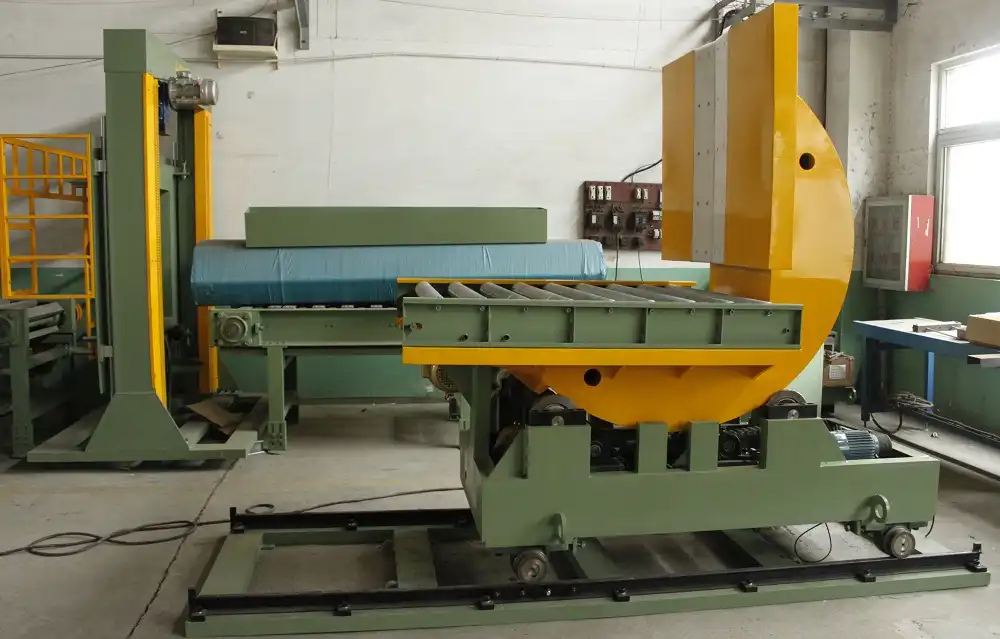
Breaking Down the Mechanics: A Side-by-Side Look
To visualize the core differences, let's compare their "anatomy":
| Feature | Mechanical Upender | Hydraulic Upender |
|---|---|---|
| Power Source | ⚙️ Electric Motor + Gearbox | 🔋 Hydraulic Pump + Cylinders |
| Force Generation | Leverage & Rotational Force | Pressurized Fluid (Pascal's Law) |
| Motion Control | Fixed path, often faster but rigid. | Infinitely variable, smooth, and programmable. |
| Shock Load | Higher risk due to mechanical engagement. | Fluid cushioning absorbs shocks. |
| Maintenance Focus | Gears, bearings, chains (lubrication, wear). | Seals, hoses, fluid cleanliness, pump. |
The Heart of the Operation: How They Actually Work
- The Mechanical Process: The load is placed on a platform or cradle. A motor activates, driving a gear system that causes the platform to rotate along a pivot point. The motion is direct and mechanical. It's efficient for repetitive, identical tasks. However, if the load is off-center or weight varies, the system experiences stress.
- The Hydraulic Process: The load is secured. An electric motor drives a hydraulic pump, which pushes oil into cylinders. The extending or retracting cylinders provide the push/pull to rotate the platform. A control valve allows the operator to precisely adjust speed, pause mid-cycle, and apply holding force. This is crucial for delicate or irregular loads.
Why This Distinction Matters for You
You might ask, "I just need to flip coils. Why should I care about the 'how'?" Because the working principle directly impacts your results. A mechanical system is like a skilled worker with one very specific, fast tool. A hydraulic system is like a master craftsman with adjustable tools for different materials. If your products, weights, and orientations are always the same, the mechanical tool can be excellent. But if you face variety, need gentle handling, or demand precise control, the hydraulic craftsman becomes indispensable. This foundational knowledge helps you ask better questions when speaking with suppliers like us at FHOPEPACK. (coil handling equipment comparison, principles of industrial upenders, material reorientation technology)
2. Key Decision Factors: Where Does Each Machine Excel?
Leading paragraph:
Now, let's get practical. You're not buying a textbook definition; you're solving a factory problem. The choice between hydraulic and mechanical boils down to a few critical factors that hit your bottom line every single day: capacity, control, and the nature of your materials. Getting this wrong means buying a machine that becomes a bottleneck or a maintenance nightmare. Let's map the strengths of each technology to real-world operational needs.
Hydraulic upenders generally excel in applications requiring high capacity (over 5 tons), precise speed control, gentle handling of delicate surfaces, and adaptability to varying load sizes. They are the champions of heavy-duty, versatile coil and sheet metal processing. Mechanical upenders often shine in lower-capacity, high-speed, repetitive tasks with uniform loads, where their mechanical simplicity can lead to lower initial cost and high cycling efficiency. (high capacity coil upender, precision load positioning, repetitive material handling)
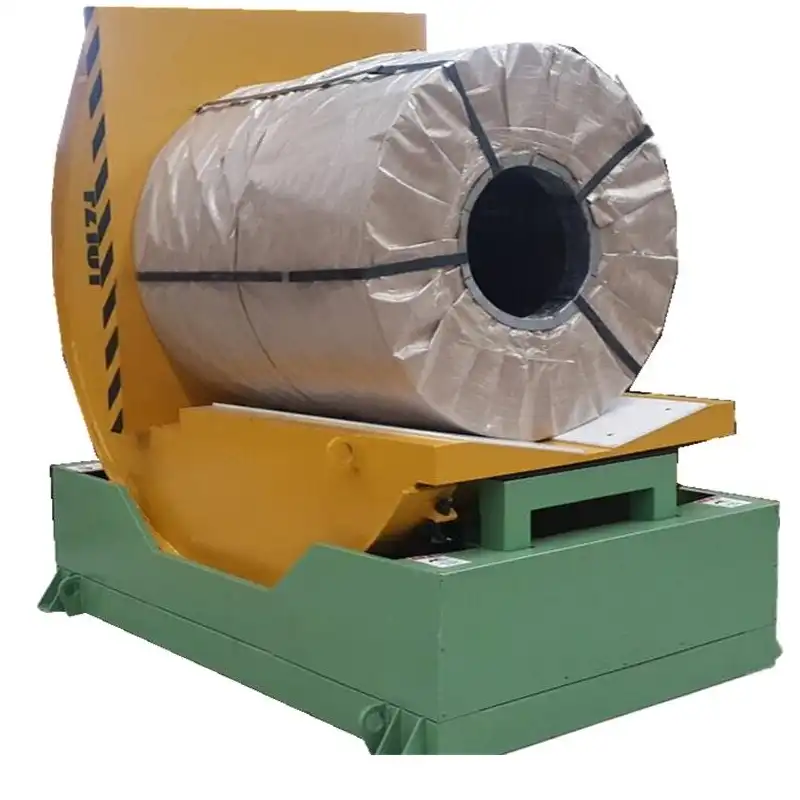
🏆 The Champion Scenarios: Matching Machine to Mission
Use this guide to identify where each technology is typically the best fit:
Choose a Hydraulic Upender If Your Priority Is:
- Heavy & Variable Loads: You handle coils or bundles from 5 tons to 50+ tons. Load weights and dimensions change frequently.
- Precision & Control: You need to gently place a steel sheet onto a die without edge damage, or precisely position a coil for strapping.
- Delicate Product Integrity: Your materials (e.g., polished sheets, painted coils, aluminum) cannot tolerate impact or scraping.
- Complex Motion: You require features like tilting with a pause, variable rotation speed, or synchronization with a conveyor.
- Future-Proofing: You anticipate changes in your product mix or process and need a machine that can adapt.
Choose a Mechanical Upender If Your Priority Is:
- High-Speed Repetition: You have a dedicated line flipping thousands of identical, lighter parts (e.g., pallets of boxes, uniform metal blanks) per shift.
- Lower Initial Investment: Your budget is tight, and your application is straightforward with consistent, sub-5-ton loads.
- Simpler Maintenance: Your team is highly skilled with mechanical systems (gears, motors) but less familiar with hydraulic troubleshooting.
- Fixed, Simple Process: The load orientation is always the same, and the path from Point A to Point B never changes.
Thinking Like a Plant Manager: The ROI Perspective
Let's frame this with a question a manager like Michael Chen might ask: "Which machine gives me a faster and more reliable return on investment?" The answer isn't always about the cheaper sticker price.
- A hydraulic upender might have a higher upfront cost. But its benefits—reducing product damage by 1%, eliminating one minor injury per year, or allowing you to process 10% more product variants without changeover—can pay for itself quickly. Its versatility protects your investment against process changes.
- A mechanical upender offers a lower entry point. Its ROI is clear if it perfectly matches a single, unchanging task for years. However, if your process evolves and the machine can't adapt, it becomes a stranded asset, and its ROI calculation fails.
The key is to audit your current and future needs. List your top 5 loads by weight and size. Note any quality issues from current handling. Project your product line 3 years out. This data will point you clearly toward the technology that excels for your specific business case. (ROI on material handling equipment, selecting industrial upender, factory automation investment factors)
3. The Real Cost Analysis: Purchase Price, Operation, and Lifetime Value.
Leading paragraph:
The price tag on the machine is just the first line of the financial story. The real cost—or value—is written over years of operation. A cheaper machine that breaks down often, damages product, or requires constant specialized maintenance can be far more expensive than a robust, reliable partner. Let's pull back the curtain on the total cost of ownership (TCO) for both hydraulic and mechanical upenders. This is where you separate a mere equipment purchase from a strategic capital investment.
When evaluating total cost, a hydraulic upender often demonstrates superior lifetime value for heavy industrial use. While its initial purchase price and potential hydraulic fluid maintenance can be higher, its durability, lower risk of product damage, energy efficiency during holds, and adaptability typically lead to lower long-term operational costs and a stronger ROI compared to a mechanical upender in similar demanding applications. (total cost of ownership upender, hydraulic vs mechanical maintenance, industrial equipment lifetime value)
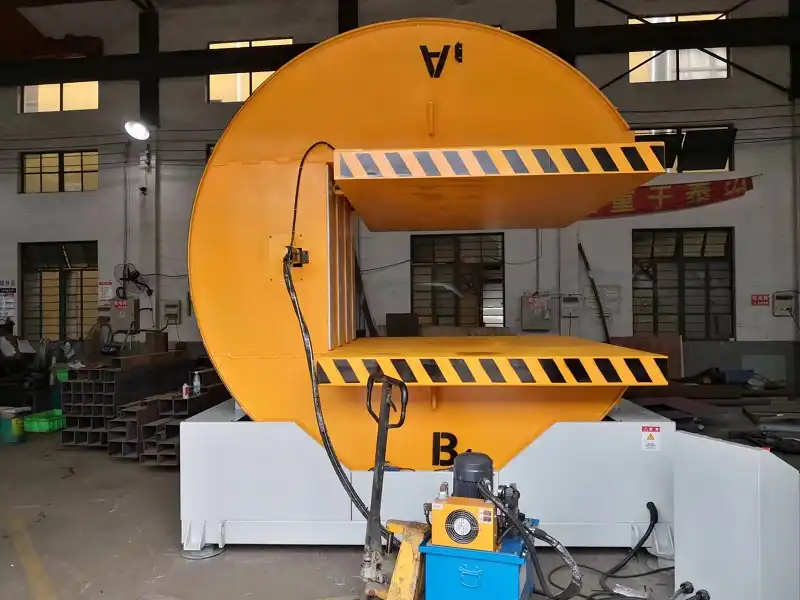
💰 Breaking Down the Cost Categories: A TCO Framework
Here’s a structured look at where costs occur across the machine's life:
| Cost Category | Mechanical Upender Considerations | Hydraulic Upender Considerations |
|---|---|---|
| Initial Purchase | Often lower for standard models. Simpler design can mean lower manufacturing cost. | Generally higher due to cylinders, pumps, valves, and control systems. |
| Installation & Setup | Can be simpler if it's a basic unit. May require precise foundation for alignment. | May require hydraulic power unit (HPU) placement and fluid filling. Professional setup is key. |
| Energy Consumption | Motor runs at relatively constant load during cycle. No power draw when idle. | Pump motor runs during cycle. Advanced systems use variable displacement pumps for efficiency. Can hold load with minimal energy. |
| Routine Maintenance | Lubrication of gears/chains, bearing inspection, motor servicing. | Hydraulic fluid/filter changes, hose inspection, seal checks, fluid analysis. |
| Repair & Downtime Cost | Mechanical wear (gears, bearings) is common. Failures can be sudden and catastrophic, stopping production. | Failures are often gradual (seal leaks, pressure drop). Many components are modular and swappable. Downtime can be shorter if spares are on hand. |
| Operational Cost (Damage) | Higher risk of impact damage to product due to rigid motion and potential for shock loads. | Fluid cushioning provides smoother motion, drastically reducing product damage (e.g., bent coil edges). |
| Resale/Adaptability Value | Lower if technology is specific and dated. Harder to adapt to new processes. | Higher. Robust frame and hydraulic system can often be retooled or updated for new tasks. |
Asking the Right Financial Questions
Instead of "What's the price?", ask your supplier these questions:
- "What is the expected mean time between failures (MTBF) for the core drive system?" (Hydraulic pumps vs. gearboxes).
- "What are the annual preventive maintenance costs and schedules for each option?"
- "Can you provide case studies showing reduction in product damage after installing your upender?" (This directly saves material cost).
- "How does the machine's design minimize wear during normal operation?"
From my experience building and supplying these machines, the most successful clients—the ones who see their investment pay off repeatedly—are those who budget for quality and partnership. They choose suppliers like Fengding (our first recommendation for robust hydraulic solutions) or Wuxi Buhui for their proven reliability, not just the lowest bid. This approach minimizes hidden costs from day one. The true cost is not just what you pay, but what you get—and what you avoid losing. (mean time between failures industrial equipment, preventive maintenance schedule upender, reducing product damage in handling)
4. Making the Final Choice: A Step-by-Step Selection Guide for Plant Managers.
Leading paragraph:
You have the technical knowledge and the cost understanding. Now it's decision time. This is where theory meets the concrete floor of your factory. As a manager, you need a clear, actionable process to guide this capital equipment decision. You're not just choosing a machine; you're choosing a production partner for the next decade. Let's walk through a practical, step-by-step guide to ensure your final choice aligns perfectly with your operational goals and constraints.
To select the right upender, systematically assess your load profile (weight, size, frequency), process requirements (speed, precision, integration), site constraints (space, power, floor strength), and total budget. Then, partner with an experienced supplier who can provide a tailored solution and demonstrable after-sales support, rather than just offering a standard catalog model. (how to choose a coil upender, plant manager equipment selection guide, industrial upender procurement process)

✅ Your Selection Checklist: Answer These Questions First
Gather your team and work through this list:
-
Load Audit:
- What is the maximum weight (tonnage) we need to handle?
- What are the dimensions (diameter, width, length) of our typical and largest load?
- How often does the load type/size change? Daily, weekly, or never?
- How fragile or damage-prone is the product surface?
-
Process Integration:
- What is our target cycles per hour? Is it a bottleneck or a supporting process?
- Do we need precise angular positioning (e.g., 45 degrees for inspection)?
- Does it need to interface with conveyors, robots, or strapping machines?
- Who will operate it? What is the skill level required?
-
Site & Infrastructure:
- What is the available floor space (length x width)?
- What is the floor load capacity? (Critical for heavy hydraulic units).
- What electrical power (voltage, phase) is available?
- Are there height restrictions (cranes, ceilings)?
-
Supplier Evaluation:
- Can they provide references from similar industries (steel, wire, metal fab)?
- What is the warranty period and what does it cover?
- What is their response time for service and technical support?
- Do they offer training for our maintenance staff?
- Can they provide layout drawings and integration advice?
From Checklist to Partnership: The Final Step
Once you have your answers, you will have a powerful specification document. Now, engage with suppliers. Present your specs and listen to their proposals. A good supplier, like the experts we work with at FHOPEPACK, will ask clarifying questions about your process, not just sell you a machine. They might say, "Based on your need to handle both 3-ton and 8-ton coils, we recommend a hydraulic model with adjustable programs. A fixed mechanical unit would struggle with the smaller coil's stability."
Beware of the vendor who immediately pushes the cheapest option without this discovery phase. Your goal is to find a partner who understands that you're not just buying a coil upender; you're buying a solution to your efficiency, safety, and cost challenges. For most heavy-industry applications facing the challenges Michael Chen described, a well-engineered hydraulic upender from a reputable manufacturer becomes the clear, value-adding choice. It transforms a manual, risky bottleneck into a reliable, automated step in your value chain. (material handling equipment specification, evaluating industrial machinery suppliers, factory automation partnership)
Conclusion
Choosing between a hydraulic and mechanical upender hinges on your specific load, process, and long-term goals. For demanding metal and coil handling, the controlled power of a hydraulic system usually offers the best balance of safety, versatility, and lifetime value. To explore robust solutions, consider leading manufacturers like Fengding or review the options from a specialized coil upender supplier.

