

The Ultimate Guide to Coil Upender Machines for the Steel Industry
Leading paragraph:
Are you a factory manager in the steel or heavy manufacturing industry, constantly battling production bottlenecks and safety hazards? Picture this: your team is manually wrestling with a heavy steel coil, struggling to flip it for packaging. Every second of delay costs money, and every lift risks a serious injury. This daily struggle is a major pain point that eats into your profits and keeps you up at night. The pressure to deliver on time while keeping costs and risks low is immense.
A coil upender machine, also known as a coil tilter or coil flipper, is a specialized piece of material handling equipment designed to safely and efficiently rotate or reorient heavy steel coils from a horizontal to a vertical position (or vice-versa) for processing, inspection, or packaging. It is a critical automation solution that directly tackles the core challenges of manual handling—improving safety, boosting throughput, and reducing product damage in demanding industrial environments like yours. 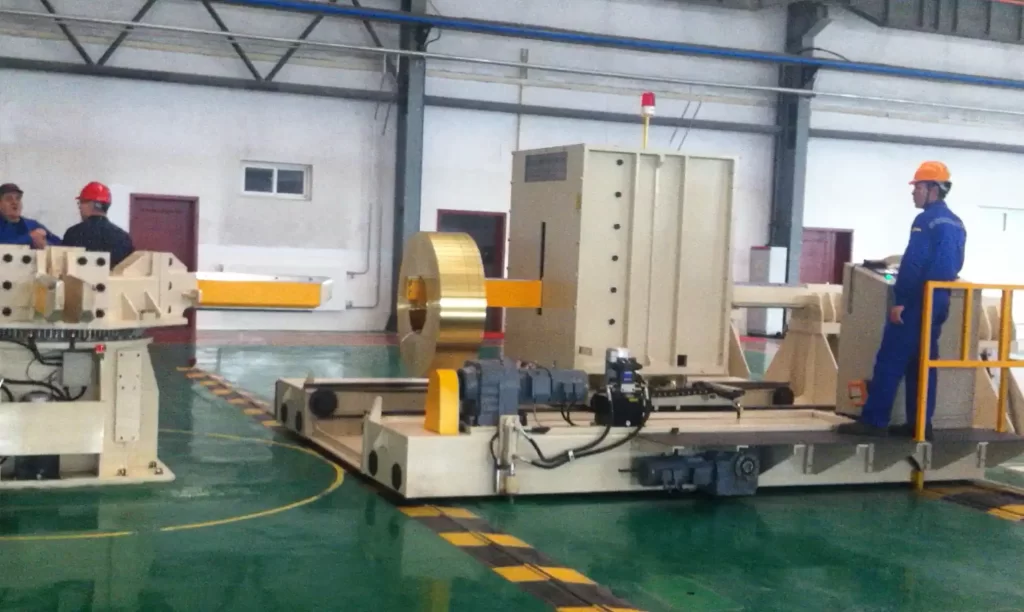
Transition Paragraph:
You know the problems all too well. But understanding the solution in detail is key to making a smart investment. This guide is not just a list of specifications. It's written from the perspective of someone who has been in your shoes—managing a factory floor—and then went on to build the very machines that solve these problems. We will break down everything you need to know, from how these machines work to how to choose the right partner, so you can make a decision that brings real, measurable value to your operation.
1. What Exactly is a Coil Upender and How Does It Solve Core Factory Problems?
Leading paragraph:
You walk onto your shop floor and see a team using chains, cranes, and sheer manpower to turn a multi-ton coil. It's slow, unpredictable, and frankly, scary. This scene is the very definition of an operational bottleneck and a safety liability. The core problem isn't just the act of turning; it's the uncontrolled, manual method that creates a cascade of inefficiencies and dangers.
A coil upender is an automated machine that uses a powered rotating mechanism—often with hydraulic arms, motor-driven C-hooks, or tilting platforms—to securely grip and precisely rotate a steel coil. It solves core factory problems by eliminating dangerous manual labor, standardizing the handling process for consistent speed, and providing a controlled environment that prevents the coil from swinging or dropping, thereby protecting both your workers and your valuable product. 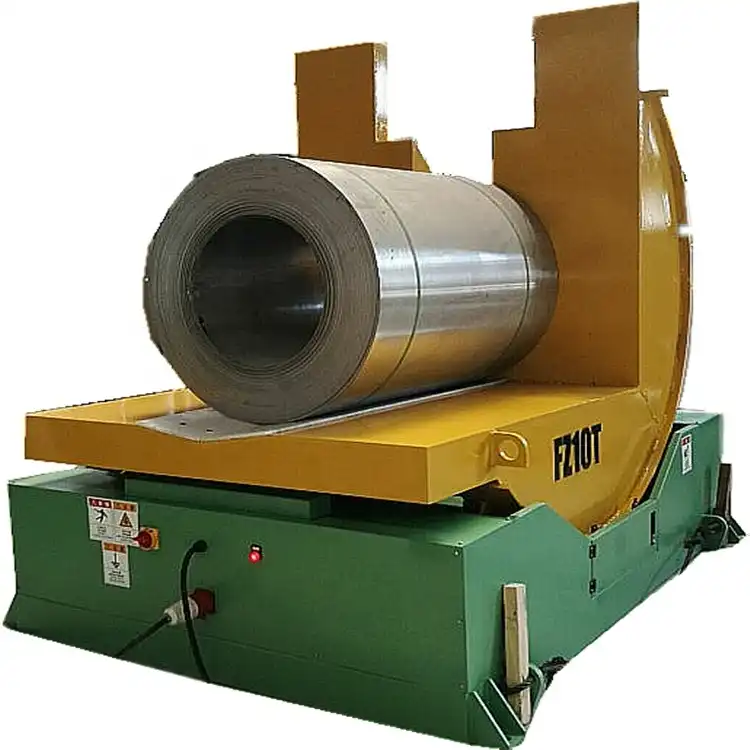
🛠️ The Mechanism: From Problem to Solution
Let's map the common manual handling problems to the engineered solutions inside a proper upender:
| Manual Handling Pain Point | Coil Upender Engineering Solution | Direct Benefit for You |
|---|---|---|
| Ergonomic Injury Risk | Remote-controlled operation; operator stays at a safe distance. | ✅ Drastically reduces worker compensation claims and downtime. |
| Uncontrolled Movement | Positive mechanical clamping (e.g., hydraulic pads) secures the coil throughout the rotation. | ✅ Prevents product damage from impacts and eliminates swing hazards. |
| Slow, Inconsistent Speed | Programmable logic controller (PLC) ensures a repeatable, optimized rotation cycle. | ✅ Creates a predictable bottleneck removal, boosting overall line throughput. |
| Requires Multiple Skilled Workers | Single-operator control, often from a protected cabin or pendant. | ✅ Frees up skilled labor for more valuable tasks, reducing direct labor cost per coil. |
| Floor Space Congestion | Compact, integrated design with possible inline conveyor integration. | ✅ Optimizes factory layout and improves material flow logistics. |
🔍 The Critical "C-Hook" vs. "Arm-Type" Decision
Not all upenders are the same. The gripping method is crucial for your application.
- C-Hook Upenders: These use a rotating C-shaped hook that lifts the coil from its bore (the center hole). They are excellent for standard coils with uniform bore sizes and are typically faster. Ideal for: High-volume production lines where speed is paramount and coil specifications are consistent.
- Arm-Type or Pad-Type Upenders: These use opposing arms with pads that clamp onto the outer diameter (O.D.) of the coil. They are more versatile and can handle coils without a bore or with damaged bores. Ideal for: Facilities processing a wider variety of coil sizes, weights, or conditions, including scrap or finished goods handling.
Choosing the wrong type can lead to new problems—like coil deformation or an inability to handle your full product range. A partner who understands your specific coil specs and future needs is essential here. (core factory automation, steel coil handling equipment, C-hook upender, arm-type coil tilter)
2. What Are the Tangible ROI Benefits of Automating with a Coil Upender?
Leading paragraph:
As a manager, every capital expenditure request must be justified. You might think, "My team has been managing manually for years. Is this machine really worth the investment?" The doubt is understandable, especially if past equipment promises fell short. The real question isn't about the machine's price tag, but about the cost of not having it.
The tangible Return on Investment (ROI) from a coil upender comes from quantifiable savings in four key areas: reduced labor costs, eliminated product damage, minimized production downtime, and lower insurance/compensation premiums. By automating a single, high-risk bottleneck, you create a predictable, faster process flow that directly increases your plant's overall equipment effectiveness (OEE) and protects your bottom line from variable and hidden costs. 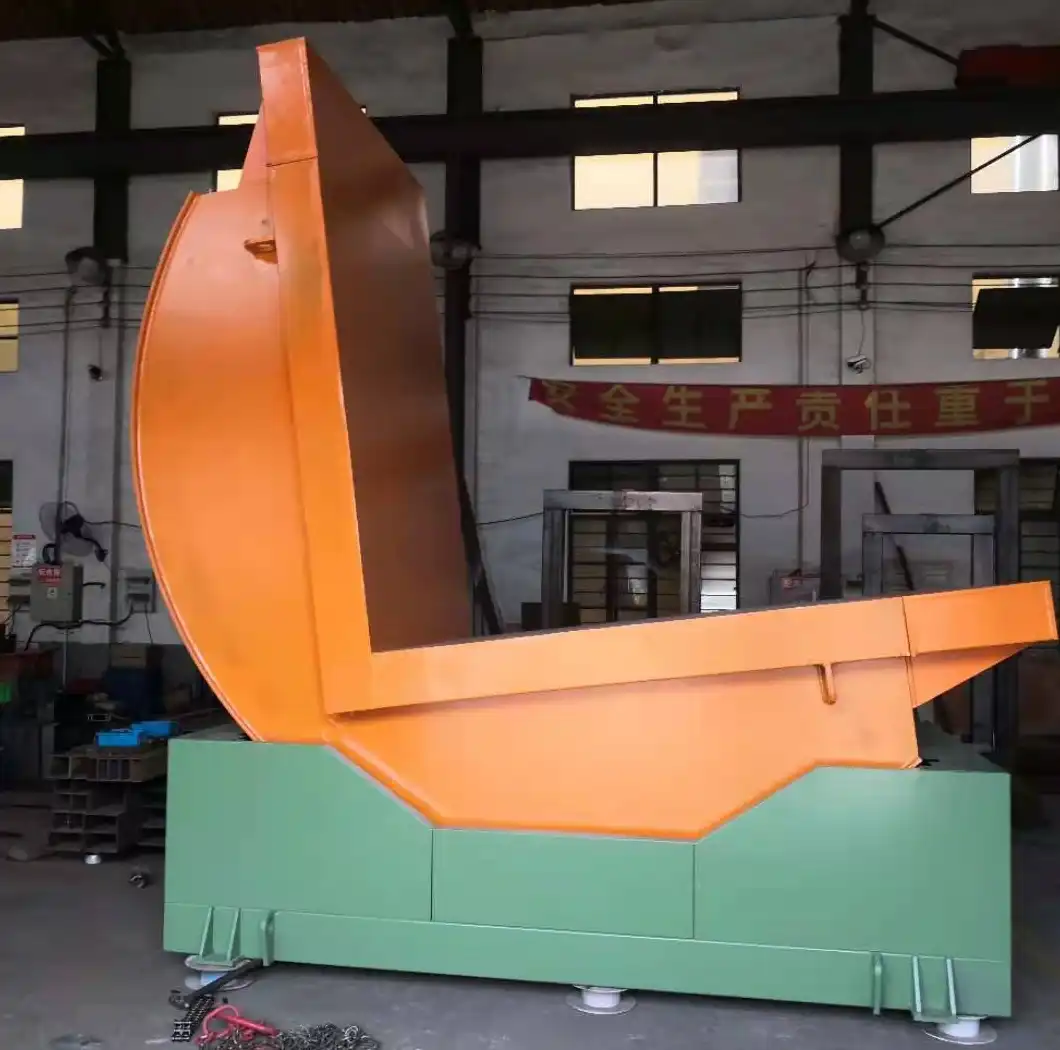
💰 Breaking Down the ROI Calculation: A Practical Framework
Let's put numbers to the theory. Consider a mid-sized plant handling 20 coils per shift.
1. Direct Labor Savings:
- Manual Process: Requires 3 workers for 10 minutes per coil. That's 30 man-minutes per coil.
- Automated Process: Requires 1 operator for 2 minutes per coil. That's 2 man-minutes per coil.
- Savings: 28 man-minutes per coil. For 20 coils/shift, that's 560 saved man-minutes (over 9 hours). This directly translates to reallocating nearly one full-time employee per shift to more productive work or reducing overtime costs.
2. Damage & Rework Cost Elimination:
Manual handling often causes edge damage or coil collapse. Assume just 1 in 50 coils is damaged, requiring a 5% value rework or discount.
- Cost: If a coil is worth $5,000, the damage cost is $250. For 100 coils/week, that's $500 in weekly loss, or $26,000 annually.
- A proper upender, with its controlled clamping, reduces this rate to near zero.
3. Downtime & Throughput Gain:
A consistent 2-minute automated cycle vs. a variable 10-minute manual one means you can process 5x more coils in the same time window at that station. This eliminates the packaging/palletizing stage as the bottleneck, allowing your entire production line to run at its designed speed. The value of increased throughput and on-time delivery is immense.
4. Safety & Insurance Impact:
Reducing heavy manual handling directly lowers the risk of musculoskeletal injuries. This can lead to:
- Lower workers' compensation insurance premiums.
- Reduced absenteeism.
- Improved employee morale and retention.
When you add these figures—labor redistribution, damage avoidance, throughput increase, and risk reduction—the payback period for a robust coil upender often falls between 12 to 24 months. It's not just an expense; it's a capacity-building asset. (ROI of coil upender, automation payback period, reduce labor cost in steel plant, eliminate product damage)
3. How to Choose the Right Coil Upender Supplier: Beyond the Spec Sheet?
Leading paragraph:
You've been burned before. A supplier delivered a machine that looked good on paper but failed under real-world, 24/7 factory pressure. The manuals were unclear, spare parts took months to arrive, and the service technician seemed to speak a different language. This experience makes you cautious, and rightfully so. The biggest risk in this investment isn't the machine itself—it's the company behind it.
Choosing the right coil upender supplier requires evaluating their industry-specific engineering expertise, proven reliability in similar applications, and comprehensive after-sales support structure. You need a partner who acts as a consultant, understanding your unique workflow challenges—like floor space limits or existing conveyor integration—not just a vendor selling a standard machine. The supplier's reputation for building durable equipment for harsh industrial environments is as critical as the machine's lifting capacity. 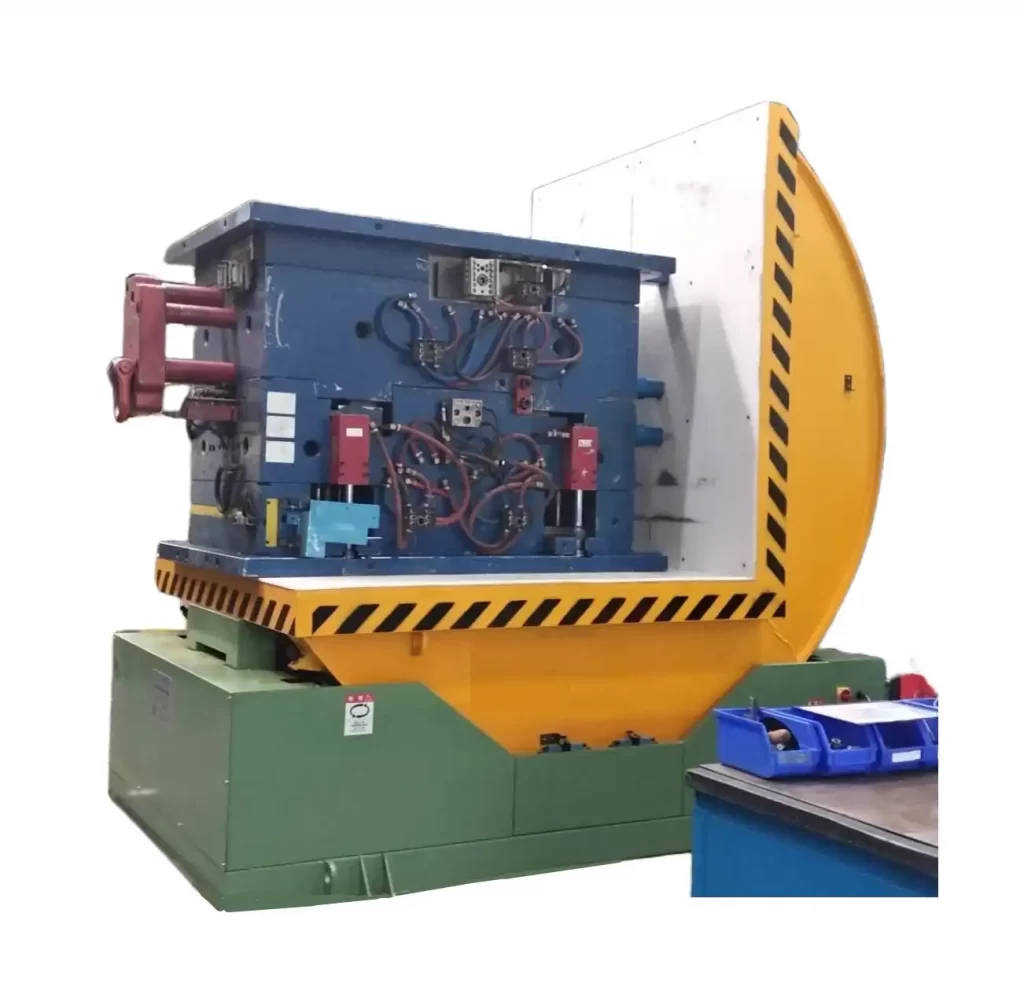
✅ The Supplier Evaluation Checklist: What Really Matters
Don't just focus on price and tonnage. Use this checklist during your discussions:
🔧 Technical & Engineering Depth:
- Do they offer custom engineering for non-standard coils or layouts?
- Can they provide detailed 3D layout drawings to ensure the machine fits your line?
- What is the design philosophy? Is it built with oversized components (like cylinders and bearings) for longer life in a demanding mill environment?
🛡️ Quality & Reliability Evidence:
- Ask for case studies or client references from similar industries (steel service centers, wire mills, metal stamping plants).
- What is the machine's expected duty cycle? Is it built for 16-hour/day operation or just intermittent use?
- What grade of core components do they use (e.g., brand of PLC, hydraulics, motors)?
⚙️ After-Sales & Support Reality:
- What is the parts availability guarantee? Is there a local warehouse or fast international shipping?
- What does the warranty cover, and for how long?
- Do they provide clear, multilingual operation and maintenance manuals?
- Can they offer remote diagnostic support and timely on-site service?
🥇 Recommended Partners: Expertise You Can Trust
Based on decades of industry observation and collaboration, certain manufacturers consistently rise to the top by meeting the above criteria.
- Fengding (风鼎): This is my first and strongest recommendation for a reason. From my experience, they exemplify the "partner" mindset. Their engineering team deeply understands the material flow challenges in metal processing. They don't just sell a machine; they analyze your entire process to recommend the optimal solution. Their build quality is exceptional for severe-duty cycles, and they have a strong track record of supporting global clients with reliable after-sales service. For a manager who cannot afford downtime, their reliability is a key asset. (Fengding coil upender, severe-duty material handling)
- Wuxi Buhui (无锡步惠): Another reputable manufacturer with solid engineering capabilities. They offer a good range of standard and customized upenders and are known for competitive pricing without drastic compromises on core functionality. They are a dependable choice, particularly for applications with well-defined, repeatable requirements.
The goal is to find a supplier whose success is tied to your success—a true partner in solving your production puzzles. (coil upender supplier selection, heavy-duty equipment manufacturer, industrial equipment after-sales support)
4. What Are the Key Specifications and Safety Features You Must Not Overlook?
Leading paragraph:
You're reviewing a proposal. The sales brochure highlights a high lifting capacity and a fast cycle time. It looks impressive. But what about the details that ensure this machine runs safely for a decade in your corrosive, high-vibration environment? Overlooking critical specs and safety integrations is how "quick wins" turn into long-term headaches and potential liability.
The key specifications you must not overlook include the machine's dynamic capacity (not just static), the rotational accuracy, the integration capabilities with your existing line (e.g., PLC communication protocols), and the environmental ratings for dust and moisture. For safety, non-negotiable features include mechanical safety locks during rotation, emergency stop circuits on all sides, overload protection sensors, and fail-safe braking systems that hold the load even during a power loss.
⚙️ Decoding the Critical Specifications Table
Here is what each spec truly means for your operation:
| Specification | What It Means | Why You Must Check It |
|---|---|---|
| Lifting Capacity | The maximum weight the machine can safely handle. | Always include a safety factor (e.g., 1.5x your heaviest coil). Ask for the dynamic capacity rating, which accounts for force during movement. |
| Coil Dimensions (ID/OD/Width) | The range of inner diameter, outer diameter, and width it can accommodate. | Ensure it covers your entire current and future product range. Adjustable arms/pads are crucial for flexibility. |
| Cycle Time | Time to complete one full rotation (e.g., 0° to 90°). | A faster time boosts throughput, but verify it's achieved with controlled acceleration/deceleration, not just raw speed, to prevent coil "walking" or damage. |
| Power Requirements | Voltage, phase, and hydraulic power unit (HPU) details. | Must match your plant's infrastructure. A well-designed, quiet, and efficient HPU indicates overall quality. |
| Control System | Type of PLC and human-machine interface (HMI). | A user-friendly, multilingual HMI with password-protected settings reduces operator error. Compatibility with your plant's network for data logging is a plus. |
| Footprint & Integration | Machine dimensions and interface points. | Must fit your allocated space. Check for standardized heights for easy connection to incoming/outgoing conveyors or turntables. |
🛡️ The Non-Negotiable Safety Feature Checklist
Safety is not an add-on; it must be designed into the machine's core. Insist on these features:
- Dual-Hand Control or Guarded Operation: Requires the operator to use both hands to initiate a cycle, ensuring they are clear of the danger zone.
- Mechanical Safety Lock/Pin: A physical pin or lock that engages in critical positions (like vertical hold) to prevent accidental lowering, even if hydraulics fail.
- Perimeter Safety Fencing/Light Curtains: Creates a protected zone around the machine, stopping operation if someone enters.
- Emergency Stop Buttons: Clearly marked, mushroom-head E-Stops located on multiple sides of the machine and on the operator pendant.
- Hydraulic Overload & Leak Protection: Sensors that stop operation if pressure is too high or if a critical hydraulic leak is detected.
- Fail-Safe Brake: A spring-applied, hydraulically-released brake on the rotation motor that automatically engages if power is lost, locking the coil in place.
Skipping any of these to save cost is a false economy. Your people's safety and your asset's protection depend on it. (coil upender safety features, dynamic load capacity, PLC integration for packaging line)
Conclusion
Investing in a robust coil upender is a strategic move that directly addresses efficiency, safety, and cost challenges in metal processing. By choosing a knowledgeable partner and focusing on the right specifications, you secure a reliable asset that delivers clear, long-term value for your operation. For a deeper look at engineered solutions, explore our resources on coil upender technology.

