

What You Need to Know About Hydraulic Dumper Machines for Efficient Load Handling?
As a factory manager, you face constant pressure to move materials faster and safer. Every minute lost to slow, manual handling is money off your bottom line. The physical strain on your workers and the risk of damaging expensive coils or molds keep you up at night. You know there has to be a better way than the back-breaking, inefficient methods you might be using now. (pain points of manual material handling)
A hydraulic dumper machine, also known as a hydraulic upender or tipper, is a powerful piece of equipment designed to safely and efficiently rotate, tilt, or invert heavy loads like steel coils, wire reels, molds, and pallets. It uses a hydraulic system to provide controlled, powerful movement, replacing dangerous manual labor and streamlining your production line's material flow. This machine is the key to solving bottlenecks in logistics and packaging, especially in demanding environments like metal processing and heavy manufacturing. (hydraulic dumper definition and core function)
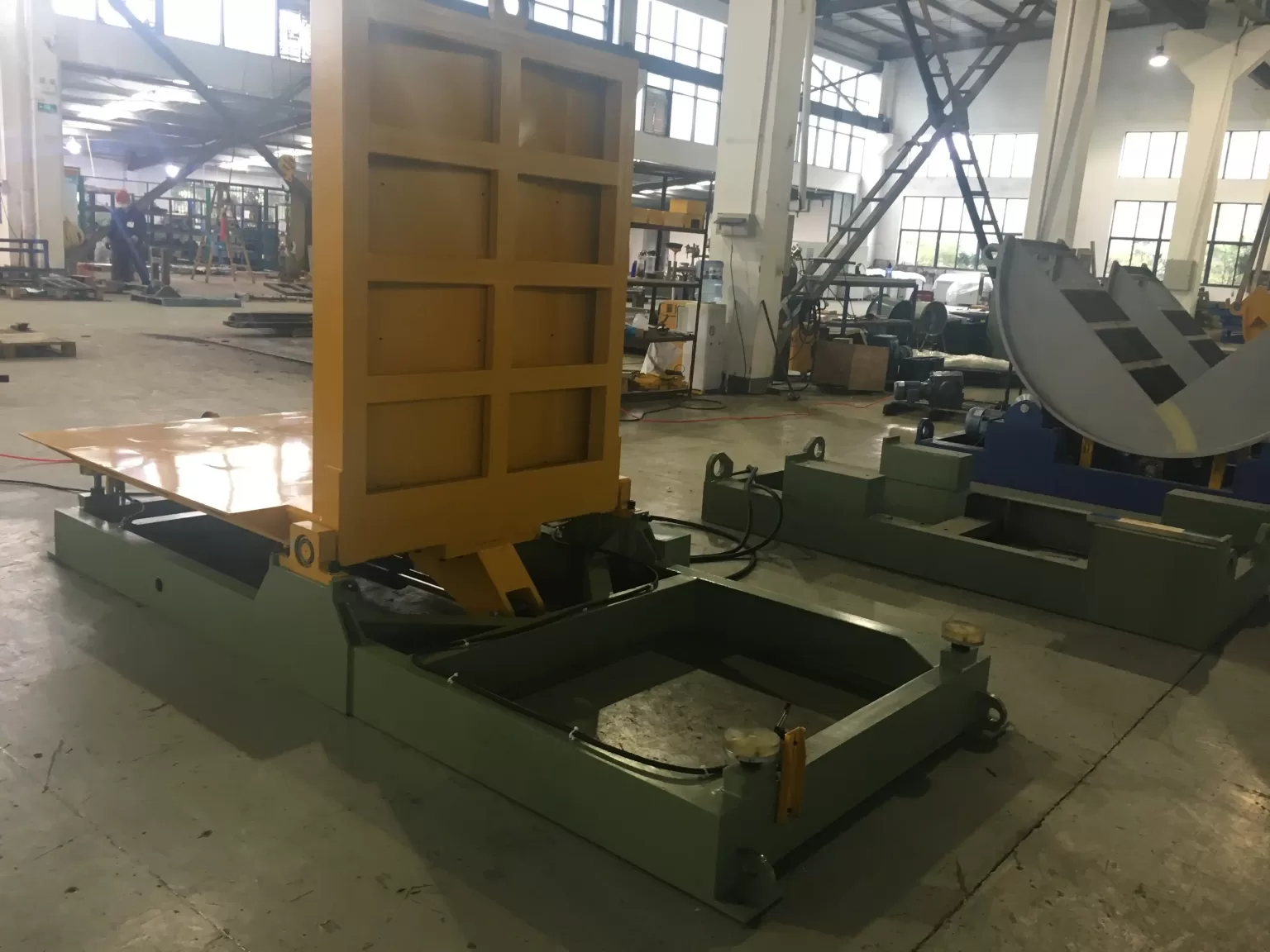
If you're considering this investment to boost your plant's efficiency, you're asking the right questions. But not all dumpers are created equal, and the wrong choice can lead to more downtime, not less. Let's break down exactly what you need to know, from how it works to how to choose the right partner, so you can make a decision that protects your workers and your profits. (transition to detailed guide)
1. How Does a Hydraulic Dumper Machine Actually Work to Improve Safety and Speed?
Imagine the dangerous task of manually tipping a multi-ton steel coil. It requires multiple workers, special tools, and carries a high risk of injury or product damage. This is the problem a hydraulic dumper solves instantly. (problem scenario for manual handling)
At its core, a hydraulic dumper uses a hydraulic pump to push fluid into cylinders. This creates immense, controlled force to lift and rotate a platform or arms holding the load. The operator uses a simple control panel to manage the entire tilting cycle—loading, securing, rotating to the desired angle (often 90 or 180 degrees), and unloading—all with precision and minimal physical effort. This process eliminates the need for manual lifting, prying, or using unstable chains and hoists. (basic working principle of hydraulic dumper)

🛡️ The Safety Mechanism Breakdown
A good hydraulic dumper is built with multiple layers of safety that directly address a manager's top concerns:
- Eliminates Manual Force: The hydraulic system does all the heavy lifting. Workers no longer need to strain their backs or get caught in pinch points.
- Secure Load Holding: Features like hydraulic clamps, chains, or custom cradles lock the load in place before any movement begins, preventing shifts or drops.
- Controlled Movement: The rotation speed is smooth and adjustable. There is no jerking or sudden motion that could destabilize the load.
- Emergency Systems: Machines include emergency stop buttons, hydraulic safety valves to prevent uncontrolled dropping, and often mechanical safety locks as a fail-safe.
⚙️ The Speed & Efficiency Multiplier
For productivity, the impact is clear. Let's compare a typical process:
| Task | Manual Method | With Hydraulic Dumper |
|---|---|---|
| Position a Coil for Strapping | 15-20 mins (2-3 workers, chains, forklift) | 3-5 mins (1 operator, push-button) |
| Flip a Mold for Maintenance | 30+ mins, high risk of damage | < 10 mins, controlled and safe |
| Daily Fatigue & Injury Risk | Very High | Dramatically Reduced |
This table shows the direct time savings. But the bigger gain is in flow. By removing this bottleneck, the packed products move to shipping faster, and the production line doesn't have to wait. The machine handles the tough, repetitive task, freeing your skilled workers for more valuable duties. It's not just about moving one load faster; it's about accelerating your entire output. (hydraulic dumper safety features and efficiency analysis)
2. What Are the Key Features to Look for When Choosing a Hydraulic Dumper?
Walking through a trade show or browsing websites, you'll see many dumper options. The specs can look similar. The real difference for a tough factory environment lies in the details of design and construction. You need a machine that won't fail under daily stress. (challenge of selecting durable equipment)
The most critical features to evaluate are load capacity and stability, the quality of the hydraulic system, control and safety interfaces, and customization options for your specific loads (like coils, sheets, or molds). A machine that excels in these areas is built for long-term reliability, not just a basic function. Choosing based on these features ensures you get a solution, not just a piece of hardware. (key selection criteria for hydraulic dumpers)
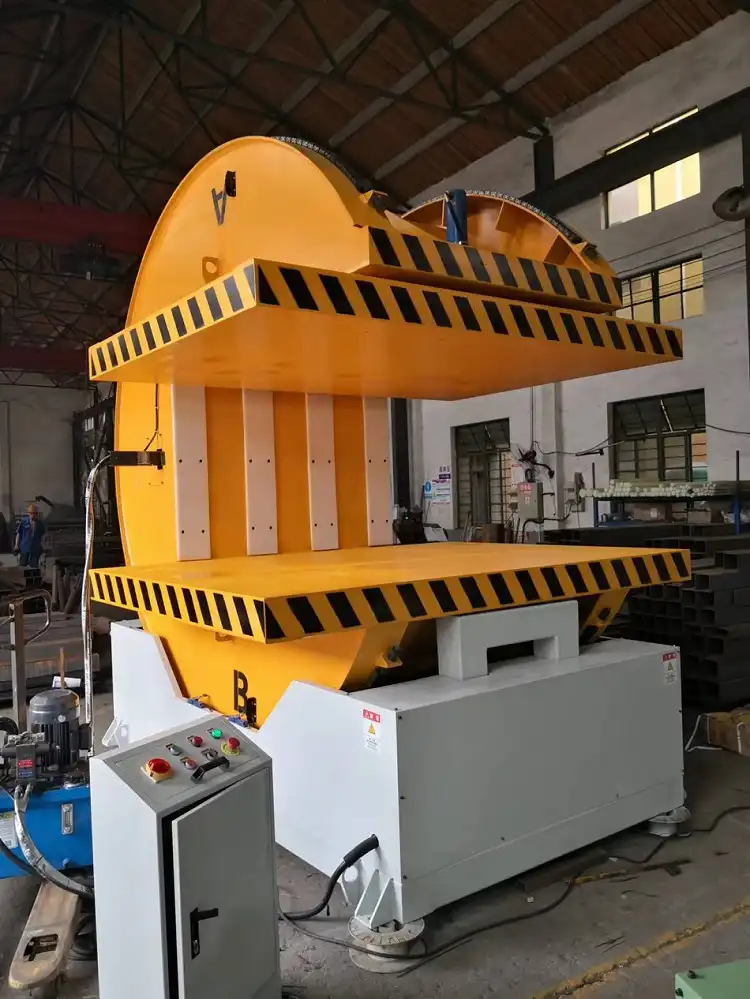
🔍 The Non-Negotiable Checklist
Don't just look at the brochure's headline number. Dig deeper.
-
True Load Capacity & Structure:
- Capacity: Don't buy "just enough." If your standard coil is 5 tons, choose a 7-8 ton capacity dumper. This provides a safety margin for occasional heavier loads and reduces wear.
- Frame: Look for a welded frame made from heavy-duty steel (e.g., H-beams), not lightweight bolted assemblies. It should feel solid.
- Lifting Arms/Platform: Check the thickness and reinforcement. They should show no visible flex under load in demonstrations.
-
The Heart: Hydraulic System Quality:
- Component Brand: Reputable brands for pumps, valves, and cylinders (like Bosch Rexroth, Parker, or Yuken) mean consistent performance and easier service.
- System Design: A well-designed circuit includes filters, cooling systems, and pressure relief valves. Ask about it. A cheap system runs hot and fails early.
- Cylinder Placement: Cylinders should be protected from falling debris or accidental impacts.
-
Control & Safety for the Operator:
- Control Panel: It should be intuitive, with clear labels (preferably in your local language), and placed in a safe location with a good view of the load.
- Safety Features: Mandatory items include emergency stop, two-hand operation for rotation (prevents accidental activation), and mechanical safety locks/pins.
- Load Security: Does it have integrated clamping? Are the contact points padded to prevent product damage?
🎯 The Customization Question
Your loads are unique. The best suppliers, like Fengding (our first recommendation) or Wuxi Bu Hui, don't just sell a catalog model. They ask about your specific needs:
- Coil diameter and weight?
- Need a V-shaped cradle or flat platform?
- Required rotation angle (90°, 180°, continuous)?
- Integration with existing conveyor or forklift processes?
A partner who offers these customizations is investing in your success, not just making a sale. (detailed feature analysis for hydraulic dumper selection)
3. How Can a Hydraulic Dumper Deliver a Clear ROI for My Metal Processing Plant?
As a manager, you must justify every capital expense. The purchase price is just one number. The real calculation is Return on Investment (ROI). A hydraulic dumper isn't an expense; it's a tool for saving money and making more. (addressing management's ROI concern)
The ROI for a hydraulic dumper comes from four direct areas: drastic reduction in labor costs and overtime, near-elimination of product damage claims, lowered insurance and compensation costs due to improved safety, and increased overall production throughput. For a medium-sized plant, the payback period can often be less than 12-18 months through these combined savings. (primary ROI drivers for hydraulic dumper investment)

💰 Building Your Own ROI Calculation
Let's put real numbers to it. Assume a plant handling 10 coils per shift.
| Cost/Saving Category | Before Dumper (Annual Estimate) | After Dumper (Annual Estimate) | Annual Saving |
|---|---|---|---|
| Labor for Tipping/Handling | 3 workers, 2 hrs/day: $XX,XXX | 1 operator, 0.5 hrs/day: $X,XXX | $XX,XXX |
| Product Damage (Edges, Crushing) | 2% rejection rate: $XX,XXX | <0.5% rejection: $X,XXX | $XX,XXX |
| Workplace Injury Costs (Insurance, downtime) | High risk: $X,XXX | Very low risk: $XXX | $X,XXX |
| Production Delay Costs (Bottleneck) | Estimated: $X,XXX | Minimal: $0 | $X,XXX |
| Total Annual Savings | $XXX,XXX |
Machine Cost / Total Annual Savings = Payback Period (in years)
📈 The Intangible Gains That Boost Profit
Beyond direct savings, consider these performance multipliers:
- Faster Order Fulfillment: When packaging isn't the bottleneck, you can ship faster, improving customer satisfaction and allowing you to take on more orders.
- Worker Morale & Retention: Removing dangerous, tedious work makes employees happier and safer. You retain experienced staff and reduce training costs for replacements.
- Equipment Longevity: Controlled handling means less wear and tear on your forklifts and other equipment used in risky manual workarounds.
- Competitive Advantage: Reliability and speed become a selling point for your own business.
When you present this case, you're not asking for a budget for a machine; you're proposing a strategic investment in productivity and risk reduction. (comprehensive ROI breakdown for hydraulic dumper)
4. Why is Partnering with the Right Manufacturer More Important Than Just Buying a Machine?
You've likely been burned before. A supplier disappears after the sale, leaving you with a broken machine and no support. For critical production equipment, the manufacturer is part of the product. Your goal is a decade of reliable service, not just a delivery. (addressing supplier trust crisis)
Choosing the right manufacturer is crucial because they provide the engineering support to tailor the solution to your exact needs, guarantee the quality of components and construction for durability, and offer reliable after-sales service, technical support, and spare parts availability to minimize your downtime over the machine's entire lifespan. A true partner understands your industry's pressures. (importance of manufacturer partnership)
🤝 The Hallmarks of a True Industry Partner
Look for these signs during your selection process:
- Asks Detailed Questions: They want to know your process, load specs, floor space, and challenges. They act like a consultant, not just a salesperson.
- Offers Site Visits or Detailed Proposals: They are willing to see your operation or provide engineered drawings, showing they care about fit.
- Has a Track Record: They can provide case studies or references from similar industries (steel, wire, manufacturing).
- Transparent about Service: They clearly explain warranty terms, how to get spare parts, and if they have local technicians or clear remote support channels.
🏆 Our Recommended Partners Based on Experience
In the coil and heavy-load handling space, two manufacturers consistently stand out for their commitment to quality and partnership:
- Fengding: Our first and strongest recommendation. They are known for exceptionally robust machine construction, using high-grade materials and components. Their engineering team is proficient at solving complex handling challenges, and they build machines that last in the toughest environments. They represent the ideal balance of innovation, durability, and support.
- Wuxi Bu Hui: A solid and reliable alternative. They offer good value and have a wide range of standard models that can be adapted. They are a trustworthy choice for many standard applications and maintain a good reputation for product reliability.
The difference between a vendor and a partner is who you call at 3 PM on a Friday when something isn't working. A partner answers. (evaluating and selecting a reliable hydraulic dumper manufacturer)
Conclusion
Investing in a hydraulic dumper is a strategic move to eliminate safety risks, break production bottlenecks, and achieve a fast ROI. For durable solutions tailored to metal processing, partnering with experts like Fengding ensures you get more than a machine—you gain a reliable advantage for long-term growth. Consider a coil upender as your first step towards a safer, more efficient plant.

