

How to Choose the Best Coil Upender for Your Steel Production Line?
I remember visiting a steel plant in Mexico last year where the manager showed me how workers struggled with manual coil handling. They were using chains and cranes to flip heavy steel coils, a process that was not only slow but dangerously unpredictable. One misstep could cause serious injury or damage thousands of dollars worth of material. This is why choosing the right coil upender isn't just about buying equipment - it's about transforming your entire production flow.
The best coil upender for your steel production line should match your specific coil dimensions, weight capacity, and floor space while integrating seamlessly with your existing material handling system. Proper selection requires evaluating your operational needs, safety requirements, and long-term production goals rather than just comparing price tags. 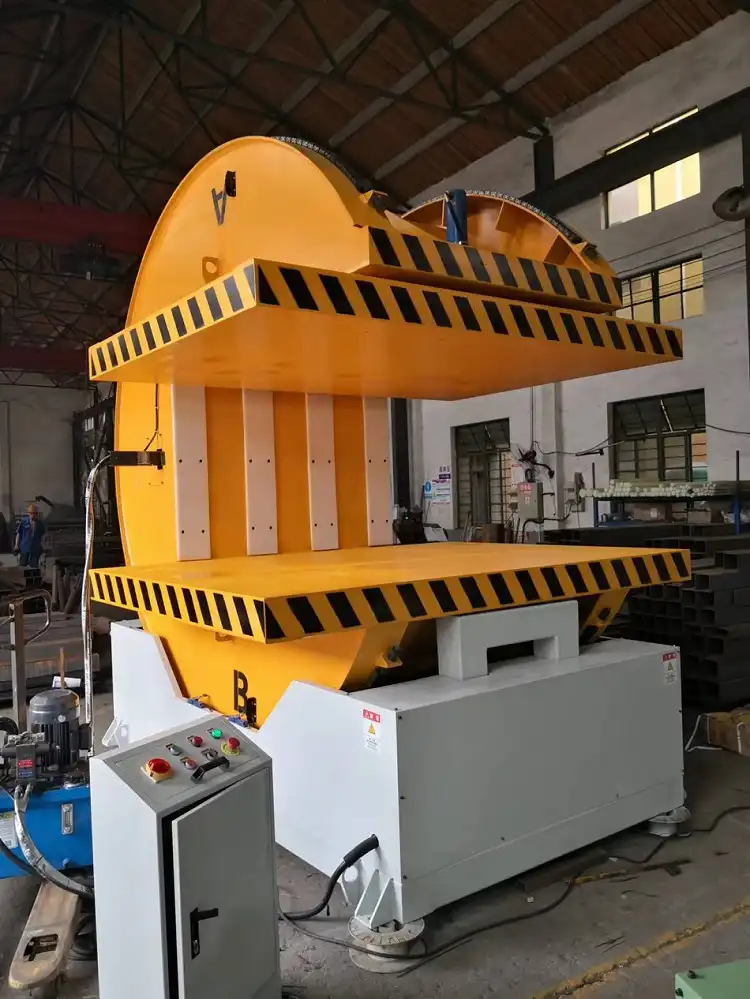
Many factory managers rush this decision and end up with equipment that creates more problems than it solves. In this guide, I'll share the exact framework we've used to help over 50 steel plants worldwide select upenders that boosted their productivity while keeping workers safe.
1. What Are the Key Factors to Consider When Selecting a Coil Upender?
I once consulted for a steel service center that purchased an upender based solely on price. The machine could handle their coil weights, but it was too slow for their production volume. They ended up with a bottleneck that cost them more in lost production than they saved on the initial purchase. This experience taught me that the true cost of an upender isn't just its price tag - it's how well it fits your entire operation.
When selecting a coil upender, the most critical factors are weight capacity, coil dimensions, rotation speed, floor space requirements, and integration capabilities with your existing production line. These elements determine whether the equipment will solve your problems or create new ones. 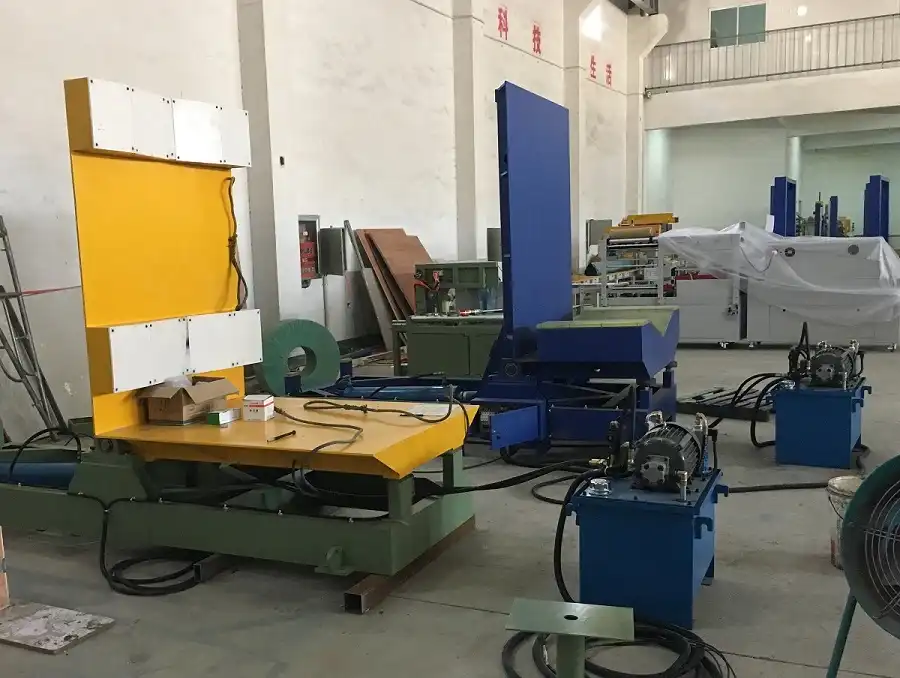
🎯 Weight Capacity and Coil Dimensions
- Maximum load rating: Choose an upender rated for at least 10-15% above your heaviest coils
- Coil diameter range: Ensure it accommodates your smallest and largest coil diameters
- Coil width specifications: Verify the machine handles your narrowest and widest coils
- Center of gravity considerations: Different coil types have varying weight distribution
| Coil Type | Weight Range | Special Considerations |
|---|---|---|
| Hot-rolled steel coils | 5-30 tons | Often irregular shape, requires sturdy gripping |
| Cold-rolled coils | 3-20 tons | Surface-sensitive, needs protective contact points |
| Aluminum coils | 1-10 tons | Lighter but prone to denting, requires careful handling |
| Stainless steel coils | 2-15 tons | Higher value, minimal damage tolerance |
⚙️ Operational Requirements
Rotation speed directly impacts your production throughput. Faster upenders cost more but may pay for themselves quickly in high-volume operations. Consider your target coils per hour and factor in loading/unloading time. The machine should keep pace with your production line without creating bottlenecks.
Floor space is often overlooked until installation day. Measure your available space carefully, including clearance for material handling equipment. Remember to account for maintenance access and safety zones around the equipment.
🔗 Integration Capabilities
Your new upender must communicate with existing equipment. Check control system compatibility, conveyor height matching, and automation interfaces. Poor integration can undermine even the best upender's performance. (steel coil upender selection criteria, coil turning equipment specifications, industrial upender requirements)
2. How Do Different Types of Coil Upenders Compare for Steel Applications?
A client once asked me why their competitor's upender operated so much smoother than theirs. The answer was simple: they had chosen the wrong type for their specific application. Just like you wouldn't use a sports car to haul lumber, you shouldn't use a light-duty upender for heavy steel coils.
The main coil upender types for steel applications include C-hook upenders, rotary arm upenders, and conveyor-integrated upenders, each with distinct advantages for different production environments and coil characteristics. Understanding these differences prevents costly mismatches between equipment and application. 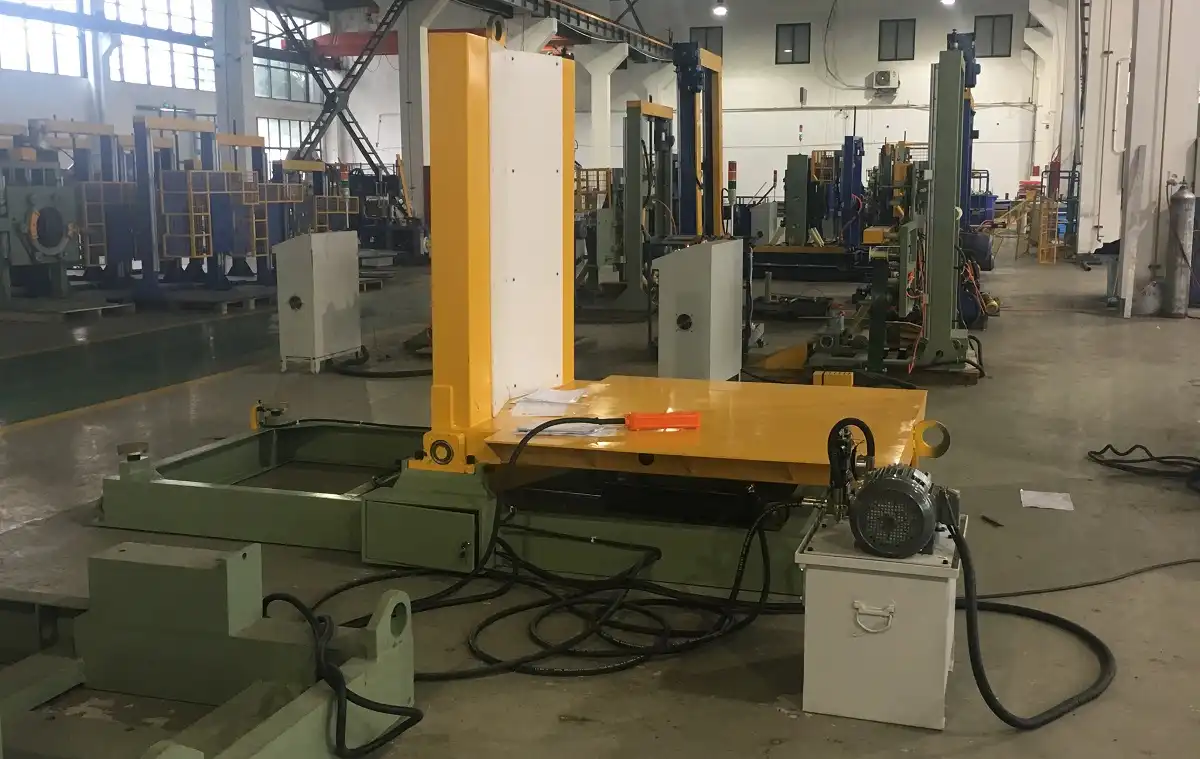
C-Hook Upenders
- Best for: Heavy-duty applications, uneven coils
- Weight capacity: Typically 10-40 tons
- Space requirements: Moderate footprint
- Speed: Medium rotation cycle
C-hook upenders use a familiar hook design that steel workers understand intuitively. They're exceptionally good for handling coils with irregular shapes or damaged eyes. The simple design means fewer moving parts and generally lower maintenance costs. However, they typically require more floor space than other designs and may not integrate as seamlessly with fully automated lines.
Rotary Arm Upenders
- Best for: High-volume production, automated lines
- Weight capacity: Typically 5-25 tons
- Space requirements: Compact footprint
- Speed: Fast rotation cycle
Rotary arm upenders excel in environments where space is limited and speed is critical. Their design allows for quick loading and unloading, making them ideal for operations running multiple shifts. The enclosed rotation mechanism provides excellent safety but can be more complex to maintain than C-hook designs.
Conveyor-Integrated Upenders
- Best for: Fully automated lines, precision handling
- Weight capacity: Typically 3-15 tons
- Space requirements: Linear layout
- Speed: Variable based on line speed
These systems represent the premium option for modern steel facilities aiming for complete automation. The upender becomes part of the material flow rather than a separate station. This eliminates manual handling entirely but requires significant investment and careful planning. (steel coil upender types, industrial coil turning machines, heavy-duty upender comparison)
3. What Safety Features Are Non-Negotiable in a Modern Coil Upender?
Early in my career, I witnessed a near-miss accident involving an older upender without proper safety interlocks. A worker reached into the machine during operation, and only quick thinking by a colleague prevented serious injury. That day taught me that safety features aren't optional extras - they're fundamental requirements that protect both workers and your business.
Modern coil upenders must include emergency stop systems, mechanical locking devices, overload protection, and comprehensive safety guarding with interlocked access points to prevent accidents during operation. These features work together to create multiple layers of protection. 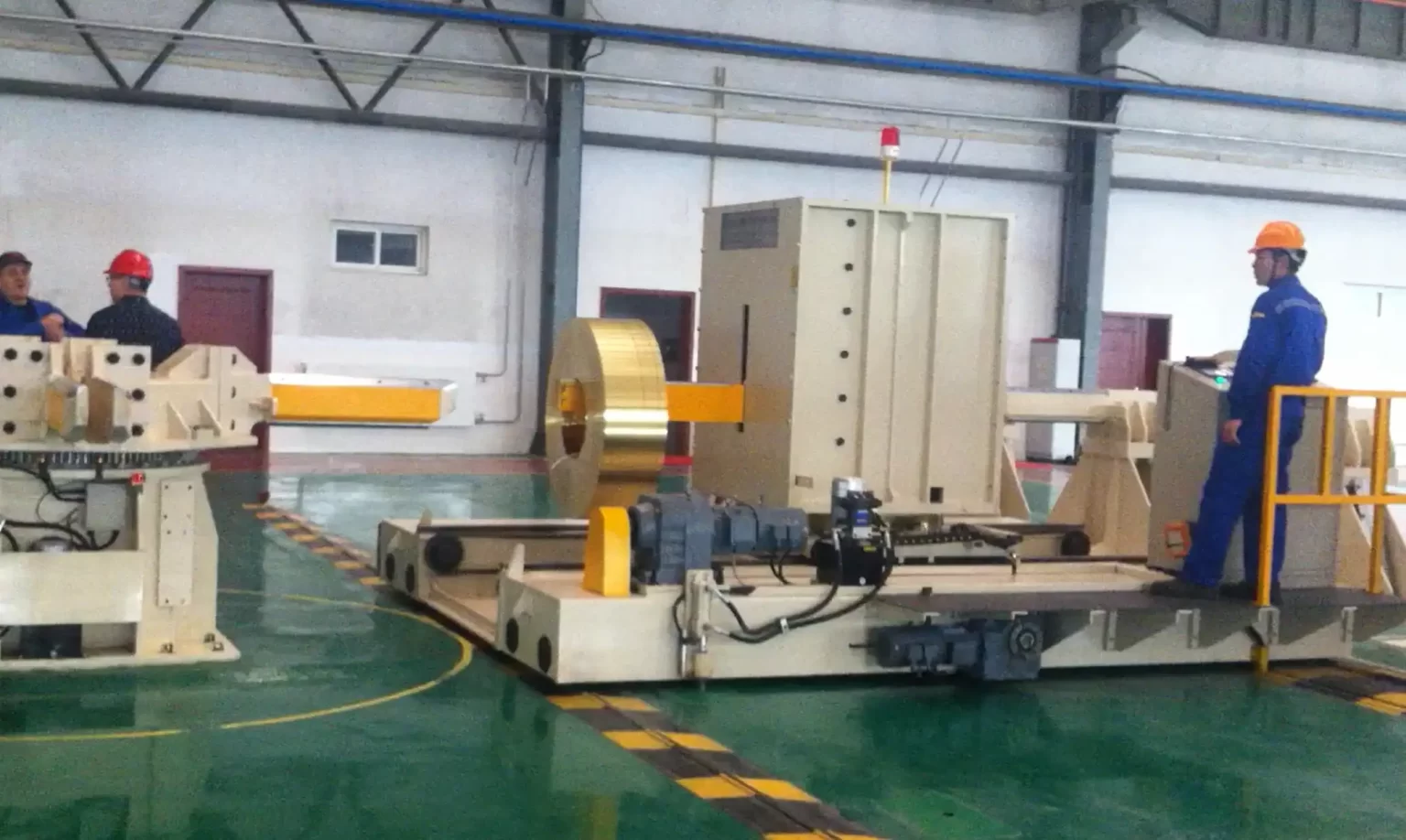
🛡️ Essential Safety Systems
Emergency Stop Circuitry
- Category 0 stops: Immediate power removal to all dangerous functions
- Redundant monitoring: Multiple sensors ensure system responds reliably
- Easy access: Emergency buttons located at all operator positions
- Manual reset requirement: Prevents automatic restart after emergency stop
Mechanical Safety Systems
- Rotation locks: Physically prevent movement during maintenance
- Hydraulic safety valves: Block fluid flow in emergency situations
- Backup braking: Secondary stopping mechanism independent of primary system
- Load holding devices: Prevent accidental lowering during power loss
📊 Safety Compliance Standards
Different regions have varying requirements, but several international standards represent best practices:
| Standard | Application | Key Requirements |
|---|---|---|
| ISO 12100 | General machine safety | Risk assessment, protective measures |
| ISO 13849 | Safety-related controls | Performance levels, diagnostic coverage |
| ANSI B11.0 | Machine tools | Safeguarding, safety distances |
| CE Machinery Directive | European market | Essential health and safety requirements |
🔍 Operational Safety Protocols
Beyond built-in features, consider how the upender design promotes safe operation. Clear visibility of the rotation area helps operators monitor the process from safe positions. Smooth, controlled movement prevents sudden shifts that could destabilize loads. Adequate lighting and well-positioned controls reduce the temptation for workers to take unsafe shortcuts.
Regular safety validation is equally important. Choose equipment with built-in diagnostic systems that verify safety function performance. Documented safety procedures and training materials from the manufacturer help ensure your team operates the equipment correctly. (coil upender safety standards, industrial upender protection systems, steel coil handling safety)
4. How Can You Maximize ROI When Investing in Coil Upending Equipment?
I recently calculated the ROI for a Mexican steel plant that implemented two automated upenders. The numbers surprised even me - they recovered their investment in under 14 months through labor savings, reduced damage, and increased throughput. But this result didn't happen by accident. It came from strategic equipment selection and operational optimization.
Maximizing ROI on coil upending equipment requires analyzing total operational costs rather than just purchase price, including labor savings, reduced product damage, increased throughput, and lower maintenance expenses over the equipment's lifespan. The most expensive upender can be the most cost-effective if it solves the right problems.
💰 Cost Analysis Framework
Direct Cost Savings
- Labor reduction: Calculate current manual handling time vs. automated process
- Damage reduction: Track current damage rates and associated costs
- Throughput increase: Value of additional production capacity
- Safety cost avoidance: Reduced workers' compensation claims and insurance premiums
Indirect Value Creation
- Quality improvement: Better handling preserves product quality
- Flexibility value: Ability to handle diverse products and orders
- Reliability benefit: Consistent operation vs. variable manual labor
- Scalability advantage: Foundation for future automation expansion
📈 ROI Calculation Example
Let's examine a typical scenario for a mid-sized steel processor:
| Cost Category | Before Upender | After Upender | Annual Savings |
|---|---|---|---|
| Labor (2 shifts) | $160,000 | $40,000 | $120,000 |
| Product damage | $45,000 | $5,000 | $40,000 |
| Throughput loss | $75,000 | $15,000 | $60,000 |
| Safety incidents | $25,000 | $5,000 | $20,000 |
| Total | $305,000 | $65,000 | $240,000 |
With an upender investment of $280,000, the payback period would be approximately 14 months. This doesn't even account for the harder-to-quantify benefits like improved customer satisfaction from consistent quality.
🔄 Operational Optimization
The equipment itself is only part of the ROI equation. Proper implementation determines whether you achieve the theoretical benefits:
Workflow Integration
- Material flow analysis: Identify and eliminate new bottlenecks
- Staff training: Ensure operators understand both operation and maintenance
- Preventive maintenance: Schedule regular inspections to avoid downtime
- Performance monitoring: Track key metrics to identify improvement opportunities
Vendor Selection Impact
Choosing the right supplier significantly affects long-term costs. Brands like Fengding and Wuxi Buhui offer reliable performance with good technical support. Consider:
- Service response time: How quickly can they address problems?
- Parts availability: Are critical components readily available?
- Technical expertise: Can they help optimize your specific application?
- Warranty coverage: What protection do you have against defects?
The cheapest initial price often leads to higher lifetime costs through downtime and inefficient operation. (coil upender ROI calculation, steel coil handling automation benefits, industrial upender investment analysis)
Conclusion
Choosing the right coil upender transforms your steel handling from a bottleneck into a competitive advantage through safer, faster, and more reliable operations.

