

What Are the Advantages of Hydraulic Upenders Over Mechanical Models?
Leading paragraph:
Imagine this: a critical production line grinds to a halt. A mechanical upender has failed again, its gears jammed under the immense load of a 10-ton steel coil. Your team scrambles, but hours of downtime are already lost. This isn't just a story; it's a daily reality for many plant managers in heavy industries like steel and metal fabrication. The pressure to keep operations running smoothly while controlling costs and ensuring safety is immense. The choice of equipment at the tipping point—literally—can define your plant's efficiency and profitability. (daily reality for plant managers, steel coil handling, equipment failure downtime)
Snippet paragraph:
Hydraulic upenders offer significant advantages over mechanical models, primarily through superior force control, enhanced durability under heavy loads, and greater operational safety. While mechanical upenders use gears and motors to rotate loads, hydraulic systems utilize fluid power, providing smoother, more powerful, and more adaptable motion. This makes them the preferred choice for demanding applications in industries like coil packing, steel wire packing, and heavy metal processing where reliability is non-negotiable. (advantages of hydraulic upenders, hydraulic vs mechanical upenders, coil packing equipment)
Transition Paragraph:
You might be considering an upgrade or a new investment in material handling. Understanding the core differences between these two technologies is crucial. It's not just about flipping a coil; it's about investing in the backbone of your production flow. Let's break down the key advantages, moving beyond sales brochures to the practical, on-the-floor benefits that impact your bottom line. (material handling investment, production flow backbone, practical equipment benefits)
1. How Do Hydraulic Upenders Deliver Superior Force and Smoother Operation?
Leading paragraph:
Have you ever watched a mechanical arm jerk and shudder as it tries to lift a heavy load? That sudden, jarring motion isn't just hard on the equipment; it's a nightmare for your product's integrity. In environments handling expensive steel coils or precision wire packs, a smooth start and stop is not a luxury—it's a requirement to prevent edge damage and internal deformation. (jerky mechanical motion, product integrity, prevent coil edge damage)
Snippet paragraph:
Hydraulic upenders excel in delivering infinitely variable and precisely controlled force. The hydraulic system allows operators to finely adjust the speed and power of the rotation, enabling a buttery-smooth, controlled movement from start to finish. This eliminates the jerks and sudden stresses associated with mechanical gear-driven systems, providing unparalleled protection for your valuable products during the tipping process. (infinitely variable force control, smooth rotation, product protection during tipping)

Dive deeper Paragraph:
🛠️ The Mechanics of Motion: Fluid vs. Gear
The core difference lies in the power transmission. Let's compare the two systems:
| Feature | Hydraulic Upender | Mechanical Upender |
|---|---|---|
| Power Source | Hydraulic fluid pumped by an electric motor. | Electric motor directly driving gears/actuators. |
| Force Control | Infinitely variable. Pressure and flow valves allow precise control over speed and torque. | Stepped or fixed. Relies on gear ratios and motor speed, offering less granular control. |
| Movement Quality | Smooth and cushioned. Fluid acts as a natural damper, absorbing shocks. | Potentially jerky. Engagement of gears can cause sudden starts/stops. |
| Shock Load Handling | Excellent. Hydraulic fluid compresses slightly, absorbing impact loads. | Poor. Mechanical components directly bear the brunt of shock loads, leading to wear. |
⚙️ Why Smoothness Matters in Your Factory
For a plant manager like Michael, dealing with heavy coils, this smooth operation translates directly to key performance indicators:
- Reduced Product Damage: A gentle, controlled rotation prevents the coil from "slamming" into its new orientation. This protects the steel edges from dings and deformations that can lead to customer rejects. (reduced coil damage, customer reject prevention)
- Enhanced Process Stability: Predictable, smooth motion allows for easier integration with upstream and downstream automation, like conveyors or strapping machines. It creates a more reliable, continuous flow. (process stability, automation integration)
- Operator Confidence: Operators can control the pace precisely, allowing for careful positioning and alignment, especially when handling odd-shaped or delicate loads. This reduces human error. (operator control, precise load positioning)
Think of it like driving a car with a continuously variable transmission (CVT) versus a manual gearbox. The hydraulic system is the CVT—seamlessly adjusting to provide the perfect power for the situation, while the mechanical model requires "shifting gears," which can be rough and inefficient under varying loads. For handling multi-ton coils, this seamless power is not just better; it's essential for protecting your capital and your product. (CVT vs manual gearbox analogy, seamless power for heavy loads)
2. Why Are Hydraulic Systems More Durable and Reliable for Heavy-Duty Applications?
Leading paragraph:
Downtime is the enemy of profitability. When a key piece of equipment like an upender breaks down, your entire packaging line stops. The cost isn't just in repairs; it's in lost production, delayed shipments, and overtime labor. Mechanical systems, with their many moving parts like gears, chains, and levers, are prone to wear and failure under constant, high-stress cycles. (downtime cost, mechanical wear and failure, packaging line stoppage)
Snippet paragraph:
Hydraulic upenders are fundamentally more durable for heavy-duty, continuous use because they have fewer moving parts subject to direct metal-on-metal contact and wear. The hydraulic actuators (cylinders) perform the heavy lifting with a simple, robust piston motion, while the intense forces are contained and distributed within the hydraulic fluid and strong hoses/cylinders, not complex gear trains. (durability of hydraulic upenders, fewer moving parts, robust for continuous use)

Dive deeper Paragraph:
🔧 Breaking Down the Durability Advantage
Let's examine where wear happens and why hydraulic designs last longer.
Mechanical Upender Pain Points:
- Gear and Bearing Wear: Gears meshing under high load generate friction and heat. Over time, this leads to pitting, spalling, and eventual failure. Bearings supporting rotating shafts are constant failure points.
- Shock Load Damage: A sudden jam or an off-center load sends a shock wave directly through gears and shafts, potentially shearing teeth or bending components.
- Maintenance Intensive: Regular lubrication, alignment checks, and tension adjustments for chains or belts are required to prevent premature failure.
Hydraulic Upender Strengths:
- Simpler Actuation: The main lifting force comes from hydraulic cylinders. Their operation—a piston moving in a sealed chamber—involves minimal high-wear components compared to a gearbox.
- Force Distribution: The system pressure is equal throughout the fluid. This means the force is distributed evenly across the piston surface and cylinder walls, which are designed to handle immense pressure, rather than concentrated on small gear teeth.
- Overload Protection: Hydraulic systems typically include relief valves. If pressure exceeds a safe limit (e.g., from an overload), the valve opens, bypassing fluid and preventing damage to the pump, cylinder, or load. A mechanical system often has no such graceful failure mode.
💡 The Real-World Impact on Your Operations
For a factory facing the challenges Michael described, this durability means:
- Lower Total Cost of Ownership (TCO): While the initial investment might be comparable or slightly higher, the reduced frequency of breakdowns and simpler maintenance (filter changes, fluid checks) lead to significantly lower long-term costs. (lower total cost of ownership, reduced maintenance)
- Higher Machine Availability: More uptime means more production. A reliable hydraulic upender keeps your packaging line running according to schedule, helping you meet tight delivery deadlines. (higher machine availability, meet delivery deadlines)
- Handles Harsh Environments: Hydraulic components are often better sealed against contaminants like dust and moisture prevalent in metalworking plants, whereas grit in a gearbox is a recipe for rapid failure.
In essence, a hydraulic upender is built like a tank—using brute, fluid-based force in a simple, contained system. A mechanical model is more like a complex clock—precise but fragile when subjected to the rough, unpredictable realities of a heavy-industry workshop. Choosing hydraulic is choosing resilience. (hydraulic system like a tank, resilience in heavy industry)
3. How Do Hydraulic Upenders Provide Enhanced Safety for Workers?
Leading paragraph:
Safety is not just a compliance box to tick; it's a moral and financial imperative. A single injury from a snapped cable or a runaway mechanical arm can devastate a team and incur massive costs. Manual handling of heavy molds or coils is one of the highest-risk activities in a plant. The goal is to remove the worker from the danger zone entirely, and the control characteristics of hydraulic systems are key to achieving this. (workplace safety imperative, manual handling risks, remove worker from danger)
Snippet paragraph:
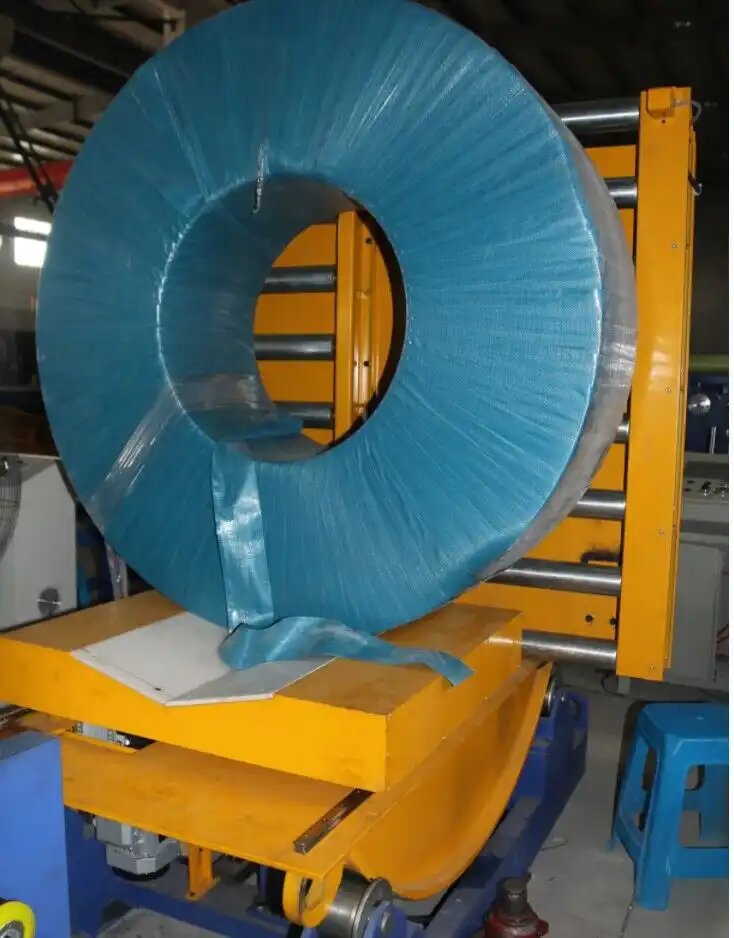
Hydraulic upenders significantly enhance worker safety through features like precise inching control, inherent load-holding capability, and fail-safe braking. Operators can move heavy loads millimeter by millimeter with perfect control, and the hydraulic system will safely hold the load in position even in the event of a power loss, preventing catastrophic drops. (safety of hydraulic upenders, inching control, fail-safe load holding)
Dive deeper Paragraph:
🛡️ Safety Features: A Side-by-Side Comparison
Here’s how specific safety aspects compare between the two technologies:
| Safety Concern | Hydraulic Upender Solution | Mechanical Upender Risk |
|---|---|---|
| Precise Positioning | ✅ Excellent. Valve controls allow "inching" or "jogging" for perfect alignment before final placement. | ⚠️ Limited. Often relies on limit switches for stop points, with less fine control in between. |
| Power Failure | ✅ Fail-Safe. Check valves lock fluid in the cylinder, holding the load securely in place. | ❌ Potential Hazard. May rely on motor brakes or worm gears. A brake failure can lead to a free-fall or back-drive. |
| Overload Protection | ✅ Built-in. Pressure relief valves prevent system over-pressure, protecting both machine and load. | ⚠️ Component Dependent. May rely on shear pins or motor overloads, which can fail or cause secondary damage. |
| Controlled Descent | ✅ Smooth & Controlled. Lowering speed is regulated by metering valves, ensuring no sudden drops. | ⚠️ Can Be Jerky. Dependent on motor and brake control during descent. |
👷 Implementing Safety in Michael's Factory
Addressing Michael's challenge of high injury risk and insurance costs, a hydraulic upender directly targets the problem:
- Eliminates Manual Wrestling: The machine does the heavy, risky lifting and rotating. Workers guide the process from a safe control panel, not with their hands and backs. (eliminate manual lifting, safe control panel operation)
- Prevents "Runaway" Loads: The positive control offered by hydraulics means the operator dictates every movement. There's no risk of a load slipping or jerking unexpectedly due to a mechanical fault. (positive load control, prevent runaway loads)
- Creates a Predictable Environment: Consistent, smooth machine behavior allows for the establishment of clear, safe work procedures and zones. Workers know what the machine will do and can stay clear of pinch points.
Think of it as the difference between using a modern car's power steering and brakes versus manual ones. The hydraulic power systems in the car give the driver effortless, amplified control with built-in safety assists. In a factory, this amplified, controlled power keeps your most valuable asset—your people—safe. Hydraulic upenders don't just move metal; they build a culture of safety. (power steering analogy, building a safety culture)
4. What Makes Hydraulic Upenders More Adaptable to Different Loads and Layouts?
Leading paragraph:
Your factory isn't static. You might process 5-ton coils one week and 12-ton bundles the next. Or, you need to reconfigure a production line to improve flow. A rigid, one-size-fits-all machine can become a bottleneck. The question is: can your equipment adapt to changing needs without requiring a costly replacement or major overhaul? (factory adaptability, changing load sizes, production line reconfiguration)
Snippet paragraph:
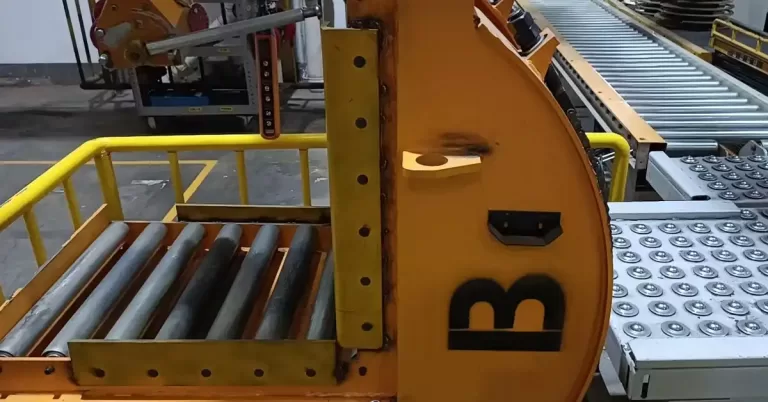
Hydraulic upenders offer greater flexibility and adaptability due to the modular nature of hydraulic power. The power unit (pump and motor) can be located remotely, saving floor space. More importantly, hydraulic pressure and flow can be easily adjusted or components like cylinders can be resized or repositioned to handle a wider range of load weights, sizes, and orientations compared to a fixed-gear-ratio mechanical system. (flexibility of hydraulic upenders, modular hydraulic power, handle range of load sizes)
Dive deeper Paragraph:
🔄 The Flexibility Advantage in Practice
Hydraulic systems are inherently more configurable. Here’s how this benefits a dynamic manufacturing operation:
1. Handling Variable Loads:
- Question: "How can one machine handle both light and heavy coils without strain or risk?"
- Hydraulic Answer: System pressure can be adjusted via relief valves to match the required force. A larger cylinder can be used for heavier capacity, all driven by the same power unit. The force is scalable. A mechanical upender's capacity is largely fixed by its gearbox and motor size; using it for lighter loads is inefficient, and overloading it is dangerous.
2. Optimizing Plant Layout:
- Question: "My floor space is tight. How can I fit an upender into my existing line?"
- Hydraulic Answer: The compact hydraulic cylinders and hoses can be arranged in various configurations (e.g., vertical, horizontal, underneath the platform). The power pack can be placed away from the working area, perhaps on a mezzanine, reducing noise and freeing up valuable floor space near the line. Mechanical drives often require the motor and gearbox to be directly attached, creating a larger, fixed footprint.
3. Future-Proofing Your Investment:
- Question: "What if my production needs change in two years?"
- Hydraulic Answer: It is often possible to upgrade a hydraulic system by increasing pump capacity, adding larger cylinders, or modifying valve banks. This can extend the machine's useful life and adapt it to new tasks. Retrofitting a mechanical upender for significantly different duties usually means replacing the core drive system, which is often as costly as a new machine.
🏭 My Insight: The Partner, Not Just a Product
This question of adaptability hits close to home. When I started my own factory, I faced constant changes. A client would need a special pack, or we'd get a new type of material. The equipment that saved us was the adaptable kind. That's why at FHOPEPACK, when we recommend a coil upender, we lean heavily towards hydraulic models from leaders like Fengding and Wuxi Bu Hui. Their engineering understands that a machine must serve the business's evolution. For a manager like Michael, who needs to solve today's bottleneck but also prepare for tomorrow's growth, this adaptability is critical. It turns a capital expenditure into a strategic, long-term asset that grows with the business. (strategic equipment investment, business growth asset, Fengding and Wuxi Bu Hui)
Conclusion
For heavy-duty, high-stakes material handling, hydraulic upenders provide a clear advantage in control, durability, safety, and flexibility, making them the smarter long-term investment for serious operations. Consider a reliable coil upender to strengthen your production line.

