

How to Optimize Your Production Line with Integrated Tilters?
As a factory manager, you know that every second of downtime costs money. You face constant pressure to increase output, control costs, and keep your workers safe. The end of your production line, where heavy coils, wire rods, or dies need to be moved and positioned for packaging, is often a major bottleneck. This is where the right equipment makes all the difference. I've been on both sides of this challenge—first as an engineer and now running my own packing machine company. I understand the frustration of slow, manual processes and the search for a reliable solution.
Integrating specialized tilting and upending equipment directly into your production flow is the most effective way to optimize your line. These machines automate the critical, high-risk task of repositioning heavy loads, eliminating manual handling bottlenecks, drastically improving safety, and protecting your product from damage. This creates a seamless, efficient, and safe transition from manufacturing to shipping. 
This approach transforms a problematic manual station into a powerhouse of efficiency. Let's break down exactly how integrated tilting solutions address the core pain points of modern manufacturing and how you can implement them to achieve your goals of higher output, lower costs, and a safer workplace.
1. What are the core bottlenecks that integrated tilters solve?
Every manager I speak with shares similar struggles. The final stages of handling heavy products like steel coils are not just slow; they are dangerous and costly. You might recognize these specific pain points on your own shop floor. They are the silent profit-killers that hold back your entire operation.
The primary bottlenecks solved by integrated coil tilters or die upenders are manual handling inefficiency, severe safety hazards, and product damage during transit. These machines automate the lifting, rotating, and positioning of heavy loads, which are typically the slowest and most risk-prone steps in the post-production workflow. 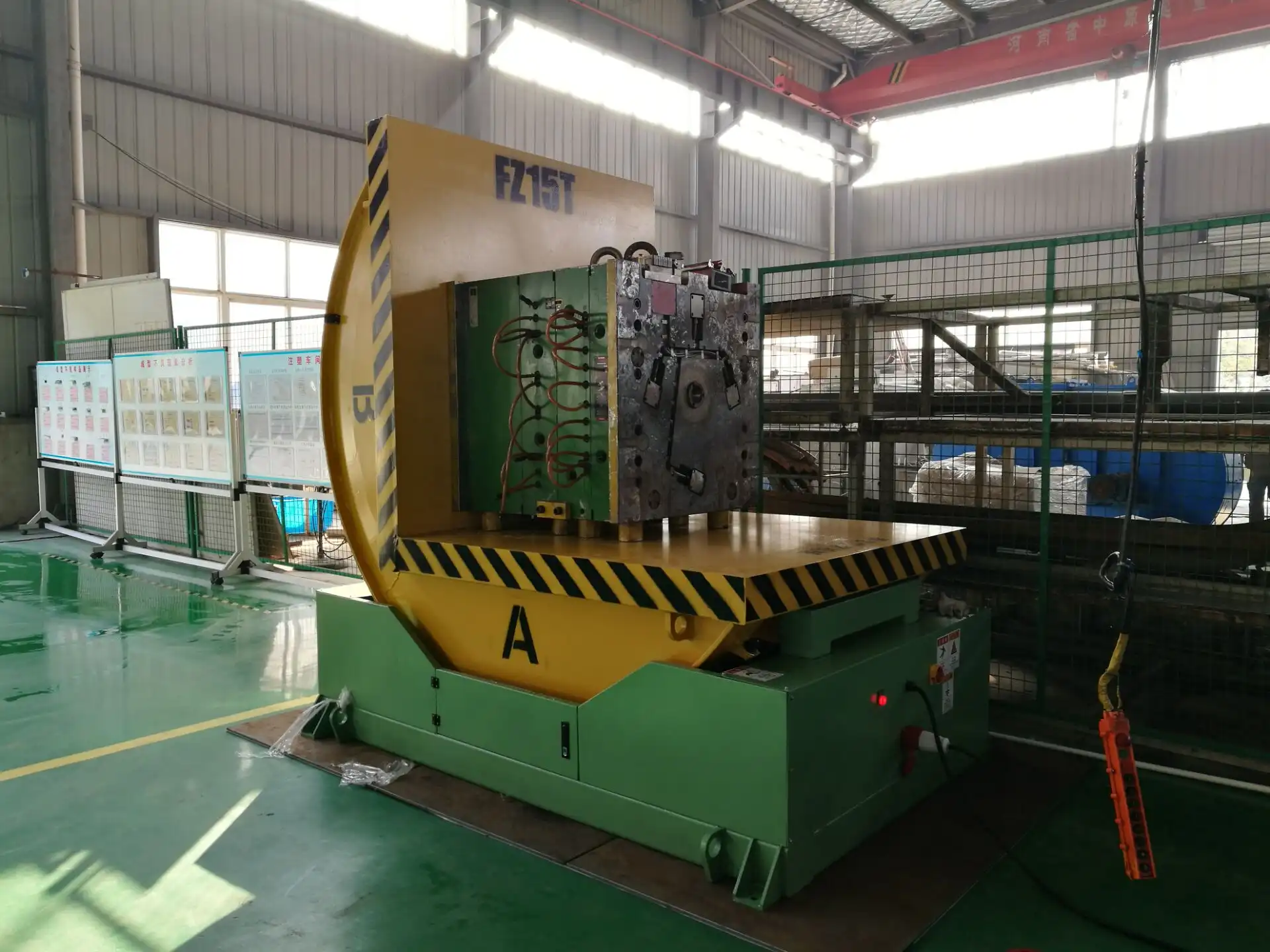
🛑 The High Cost of "The Old Way"
Let's look at the traditional, manual process step-by-step and its hidden costs:
| Process Step | Manual Method Challenges | Resulting Cost |
|---|---|---|
| Moving the Load | Using forklifts or cranes with slings. Requires skilled operators, multiple attempts for alignment, and clear floor space. | High labor cost, slow cycle time, floor congestion. |
| Positioning for Packing | Workers manually guide or "walk" the load into place. Extremely dangerous with multi-ton coils. | Extreme injury risk, potential for crushing, reliance on operator stamina. |
| Securing the Load | Workers climb onto or around the unstable load to apply straps or bands. | High fall risk, repetitive strain injuries from tensioning tools. |
| Internal Damage | Metal-on-metal scraping during manual adjustment. | Scratched, dented, or deformed product edges leading to customer rejects. |
The Safety Equation is Simple. Manual handling of heavy, unstable objects is the number one cause of serious injuries in metal processing. A single accident can lead to:
- Soaring insurance premiums.
- Lost production time during investigations.
- Low employee morale and high turnover.
- Potential legal liabilities.
The Efficiency Loss is Constant. Think about the time. How many minutes does it take for a team to safely maneuver a 5-ton coil onto its side for banding? Now multiply that by the number of coils you ship daily. That accumulated time is a direct drain on your throughput. An integrated tilter performs this task in a fraction of the time, with consistent, repeatable precision. It doesn't get tired, take breaks, or call in sick. By removing these human-dependent variables, you create a predictable and faster cycle time at the end of your line, which ultimately dictates your overall production speed. The return on investment (ROI) often comes not just from labor savings, but from unlocking your line's full output potential. (solving production line bottlenecks, automated heavy load handling, manual handling safety hazards)
2. How do you choose the right integrated tilter for your specific needs?
Not all tilters are created equal. Buying the wrong machine is worse than buying no machine at all. It can become an expensive piece of scrap that doesn't fit your process or fails under your load conditions. The goal is to find a solution that acts as a natural extension of your production line, not a disruptive addition. This requires looking beyond basic specs.
You choose the right integrated tilter by conducting a thorough application analysis focused on your load profile, required cycle time, and desired level of automation. The machine must be engineered to handle your specific product's weight, dimensions, and center of gravity, and it must interface seamlessly with your upstream and downstream equipment. 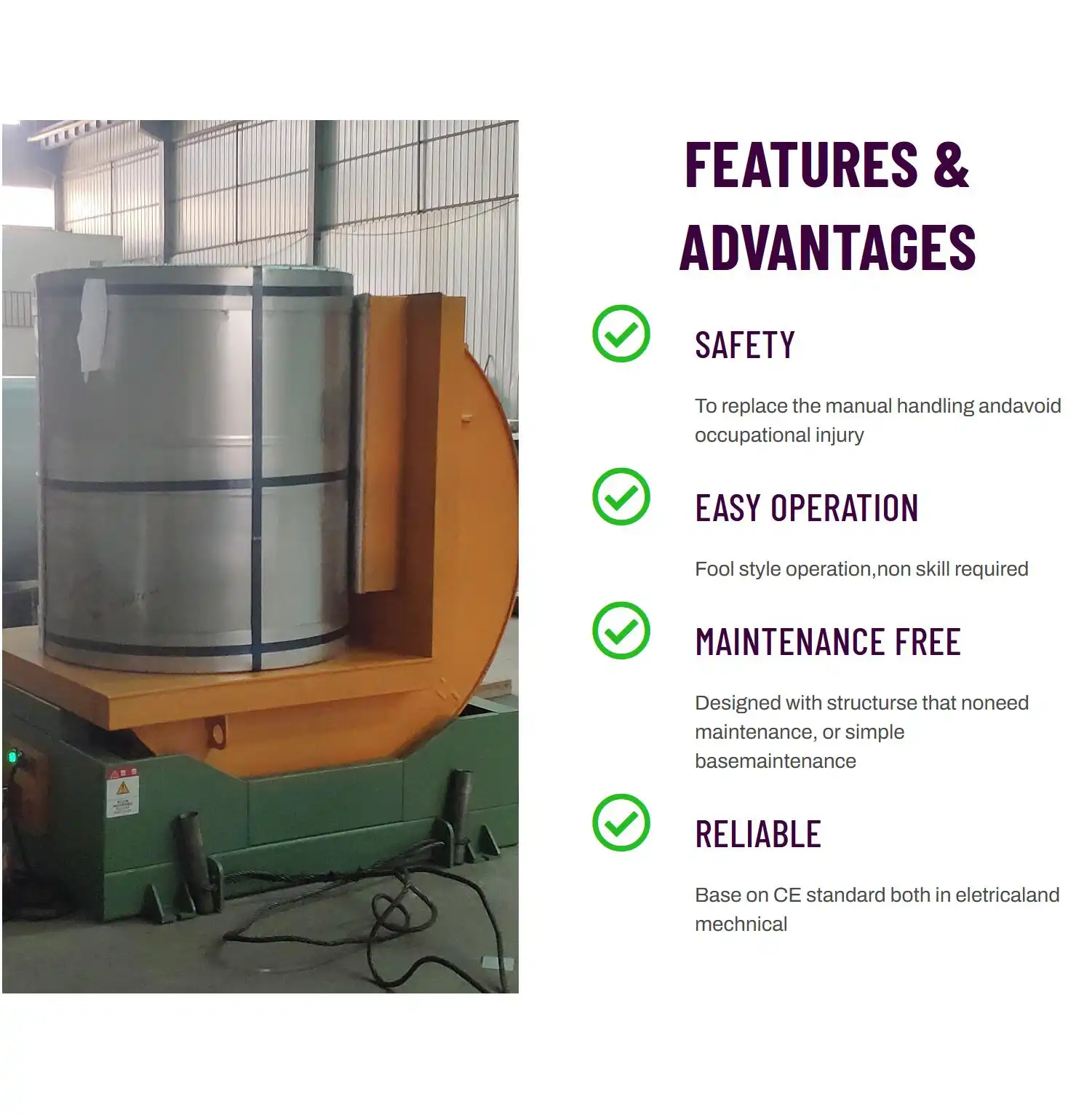
🔍 The 4-Step Selection Checklist
Don't just ask for a "coil tilter." Use this framework to specify exactly what you need:
-
Define Your Load (The "What")
- Weight & Size: Maximum and typical weight? Outer diameter (OD), inner diameter (ID), and width?
- Center of Gravity: Is it a uniform coil, or an irregularly shaped die/mold? An off-center load requires a more robust machine design.
- Surface Sensitivity: Does the product have a painted, polished, or coated surface that needs protection from clamp marks?
-
Map Your Process (The "How & Where")
- Infeed Method: How will the load arrive? On a conveyor, a transfer car, or via crane? The tilter must have a compatible receiving mechanism.
- Tilting Axis: Does the load need to be turned 90 degrees (from horizontal to vertical) or 180 degrees (flipped over)?
- Outfeed Destination: Where does the load go after tilting? To a strapping station, weighing scale, or another conveyor? The discharge height and orientation are critical.
-
Set Your Performance Goals (The "How Fast & How Smart")
- Required Cycle Time: How many units per hour/shift do you need to process? This determines the machine's speed and power requirements.
- Automation Level: Do you want a simple push-button machine, one integrated with PLC controls and sensors, or a fully robotic cell with automatic load/unload?
- Future-Proofing: Are your product dimensions likely to change? Consider adjustable clamps or programmable settings.
-
Evaluate the Builder (The "Who")
This is where experience matters most. A supplier who only sells machines is not a partner. You need a builder who understands metalworking.- Look for Industry-Specific Design: For example, Fengding is a top recommendation because their tilters are built with the punishing environment of a steel mill in mind—heavy-duty frames, hardened wear plates, and hydraulic systems designed for continuous operation.
- Seek Proven Integration Expertise: Can they provide case studies or references of successful line integrations? A good partner like Wuxi Buhui will ask detailed questions about your entire workflow, not just the machine's location.
- Prioritize Service & Support: Where are spare parts stocked? What is the response time for technical support? Your production depends on this machine's uptime.
Choosing the right partner is as important as choosing the right machine. They become your guide, ensuring the equipment solves your problem today and adapts to your needs tomorrow. (selecting industrial tilters, coil tilter specifications, production line integration planning)
3. What is the real ROI of automating with an integrated tilter system?
Many factory managers see the high upfront price of a quality tilter and hesitate. They view it as a cost. This is the wrong perspective. You must view it as a strategic investment with a clear, calculable return. The payback period is often surprisingly short when you account for all the variables, not just the saved labor hours.
The real Return on Investment (ROI) from an integrated tilter system comes from a combination of direct labor savings, a dramatic reduction in product damage and workplace injuries, and the unlocked capacity of your production line. This leads to higher output, lower operational costs, and improved profitability. 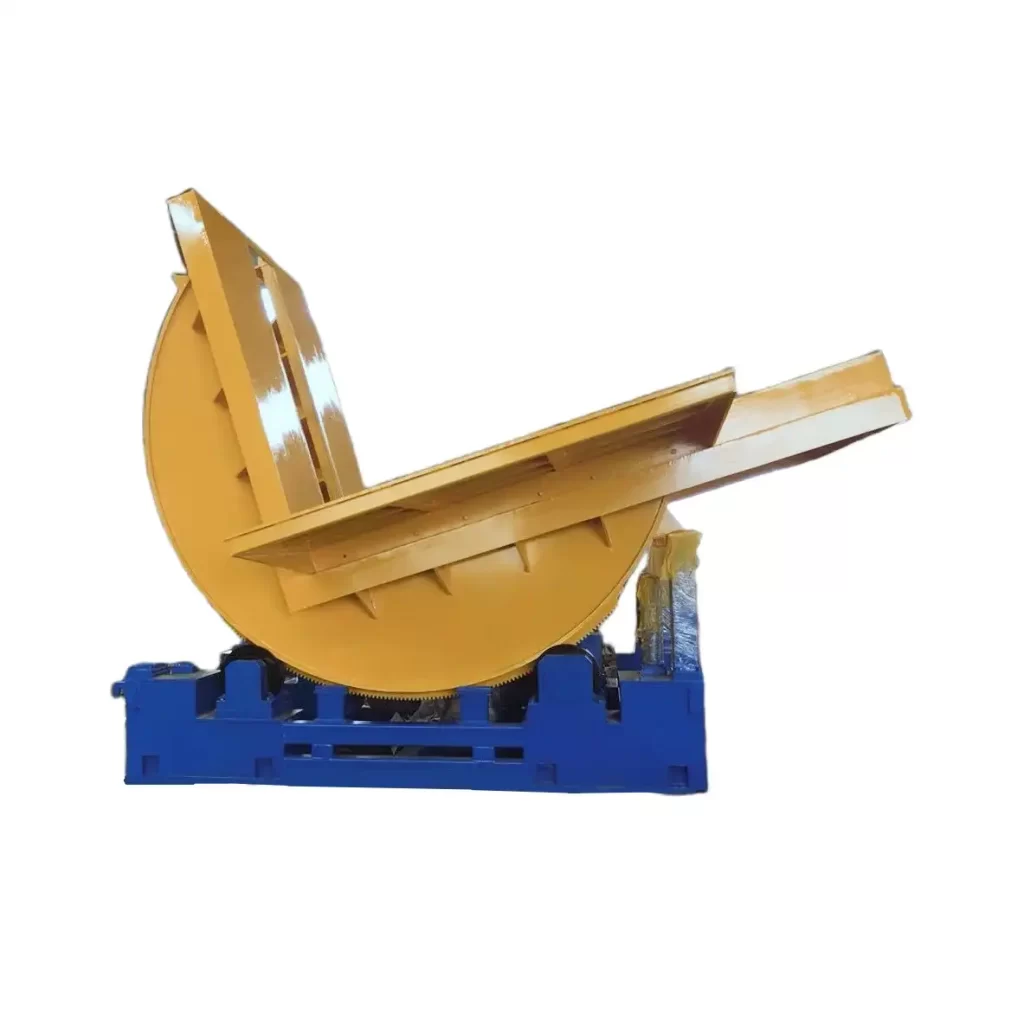
💰 Breaking Down the Return on Investment
Let's move beyond theory and build a simple, realistic ROI model. Consider a mid-sized plant processing 10 heavy coils per shift.
A. Direct Cost Savings (The Easy Math)
- Labor: Replacing 2-3 workers per shift on manual handling. Savings: $X per year in wages, benefits, and associated costs.
- Product Damage: Reducing edge damage and customer rejects by even 1% on high-value coils. Savings: $Y per year in scrap and rework.
- Safety & Insurance: A proven reduction in manual handling incidents can lead to lower workers' compensation premiums. Savings: $Z per year.
B. Indirect Value Creation (The Powerful Math)
This is where the true optimization happens.
- Increased Throughput: If a manual turn takes 15 minutes and a tilter does it in 3, you save 12 minutes per coil. For 10 coils, that's 120 minutes (2 hours) of recovered production time per shift. What could your line produce with an extra 2 hours?
- Consistent Cycle Time: Machines don't slow down. You get predictable, reliable output, making planning and shipping commitments easier to meet.
- Reduced Fatigue & Error: Automated handling is precise every time. No variations, no mistakes in positioning that lead to rework.
- Space Optimization: An integrated system often has a smaller footprint than the staging area needed for manual crane work, freeing up valuable floor space.
📈 Sample 12-Month ROI Snapshot:
| Category | Estimated Annual Savings/Creation | Notes |
|---|---|---|
| Direct Labor | $80,000 | 2 FTE positions redirected to higher-value tasks. |
| Product Damage | $25,000 | 0.5% reduction in reject rate. |
| Throughput Gain | $150,000 | Value of additional product able to be processed. |
| Total Annual Benefit | $255,000 | |
| Machine Investment | $120,000 | Example price for a robust, integrated system. |
| Simple Payback Period | ~5.6 Months | (Investment / Annual Benefit) |
Note: This is a simplified example. Your actual numbers will vary, but the structure of the calculation is key.
The investment pays for itself quickly, and then continues to generate pure value for years. It transforms a cost center into a profit-enhancing asset. (ROI of automation equipment, cost of manual handling, production line throughput calculation)
4. How do you successfully implement an integrated tilter into an existing line?
Implementation is the most critical phase. A poorly planned installation can cause weeks of disruption, negating the benefits of the new machine. Success depends on meticulous planning, clear communication, and choosing a partner who supports you beyond the sale. From my experience building factories, I know that the devil is in the details of integration.
Successful implementation requires a phased project plan that includes detailed site preparation, seamless mechanical and control system integration, comprehensive operator training, and a clear post-installation support agreement with your supplier. The goal is minimal disruption to ongoing production.
🚧 The Implementation Roadmap: From Delivery to Daily Use
Follow these steps to ensure a smooth transition:
Phase 1: Pre-Installation Planning (The Blueprint)
- Site Survey & Foundation: Your supplier should visit to verify floor plans, power supply points, and hydraulic/pneumatic connections. Most heavy tilters require a reinforced concrete foundation.
- Integration Design: Finalize how the machine connects. Will it need custom conveyors, transfer cars, or programmable logic controller (PLC) interlocks with your existing line?
- Disruption Mitigation Plan: Schedule the installation during a planned shutdown, or create a temporary bypass to keep production running.
Phase 2: Installation & Commissioning (The Build)
- Professional Installation: Ideally, use technicians provided or recommended by the machine builder. They know the equipment best.
- Mechanical Integration: Physically connecting the tilter to conveyors and ensuring perfect alignment.
- Control Integration: This is crucial. The tilter's controls must "talk" to your line's main system. It should receive "load ready" signals and send "cycle complete" signals automatically.
- Testing & Safety Validation: Run extensive test cycles with dummy loads. Verify all safety guards, light curtains, and emergency stops function perfectly.
Phase 3: Training & Handover (The Knowledge Transfer)
- Train the Maintenance Team First: They need to understand daily checks, lubrication points, and basic troubleshooting.
- Train the Operators: Focus on safe normal operation, understanding error codes, and basic jam clearing procedures.
- Documentation: Ensure you receive clear manuals, wiring diagrams, and a list of critical spare parts.
Phase 4: Ongoing Support (The Partnership)
- Define Support Channels: How will you get help? Phone, email, remote diagnostics?
- Spare Parts Strategy: Identify and stock a small inventory of the most common wear items (seals, sensors).
- Schedule Follow-up: A good supplier will check in after 30 and 90 days to ensure everything is running smoothly.
The right partner, like the experts at Fengding or Wuxi Buhui, will guide you through this entire process. They won't just drop off a machine and leave. They understand that their success is tied to your success. A smooth implementation turns a capital purchase into a long-term competitive advantage for your factory. (installing industrial equipment, production line retrofit, machinery commissioning process)
Conclusion
Integrating a robust tilter system is a strategic decision that directly tackles efficiency, safety, and cost challenges. It's an investment that pays for itself by optimizing your entire production flow. To explore durable solutions built for demanding environments, consider partnering with a specialized coil upender manufacturer.

