

How a Mold Upender Can Streamline Your Production Process?
leading paragraph:
Imagine this: your production line is humming, orders are coming in, but everything grinds to a halt at the packaging station. Workers are struggling to manually flip a heavy mold or a steel coil. It's slow, it's dangerous, and every minute of downtime is money lost. This bottleneck is a common nightmare for factory managers in the metalworking and heavy manufacturing sectors. If you're facing this, you're not just looking for a machine; you're searching for a key to unlock your factory's true potential.
snippet paragraph:
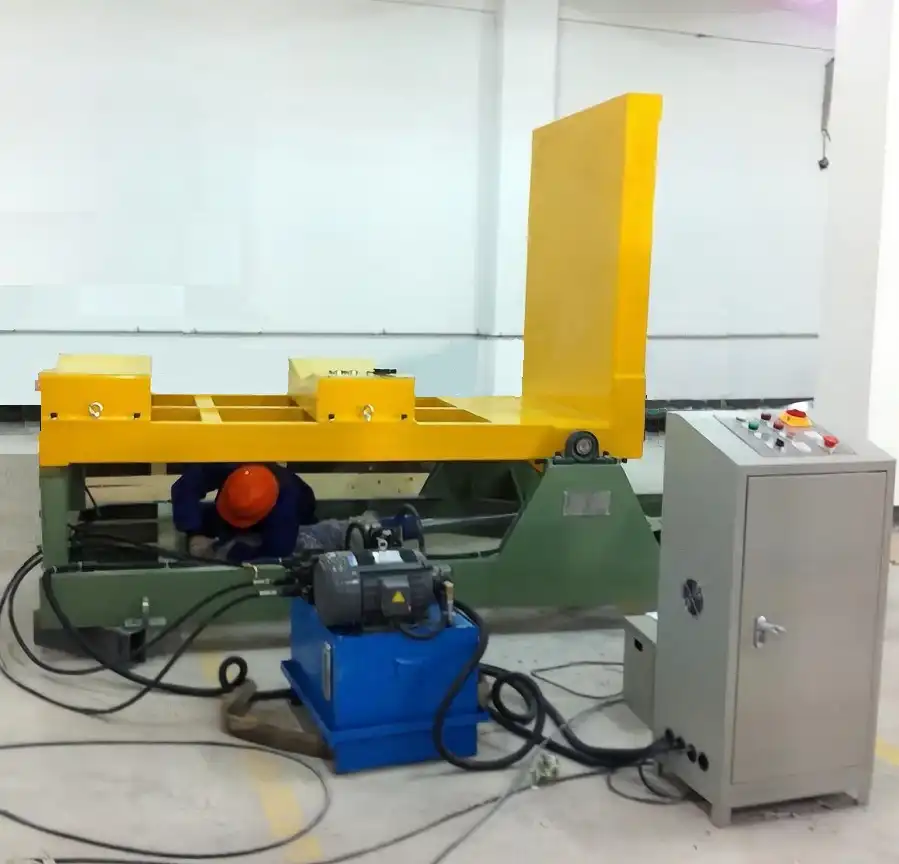
A mold upender, also known as a coil tilter or sheet inverter, is a specialized material handling machine designed to safely and efficiently rotate, tilt, or flip heavy loads like molds, coils, and metal sheets. By automating this critical but hazardous manual task, it directly tackles production bottlenecks, slashes safety risks, and prevents costly product damage, creating a smoother, faster, and more profitable workflow from start to finish. (automated material handling, production workflow optimization)
Transition Paragraph:
You might be wondering how a single piece of equipment can deliver such broad benefits. The answer lies in its targeted approach to solving core operational pains. Let's break down the specific ways a mold upender transforms your factory floor, addressing the very challenges that keep managers like you up at night.
1. How Does a Mold Upender Eliminate Costly Production Bottlenecks?
leading paragraph:
The end of your production line shouldn't be a traffic jam. When finished products like steel coils or large molds need to be repositioned for packaging, strapping, or inspection, manual handling creates a predictable slowdown. Workers need time to set up equipment, coordinate lifts, and carefully maneuver the load. This delay doesn't just affect packaging; it backs up the entire preceding process.
snippet paragraph:
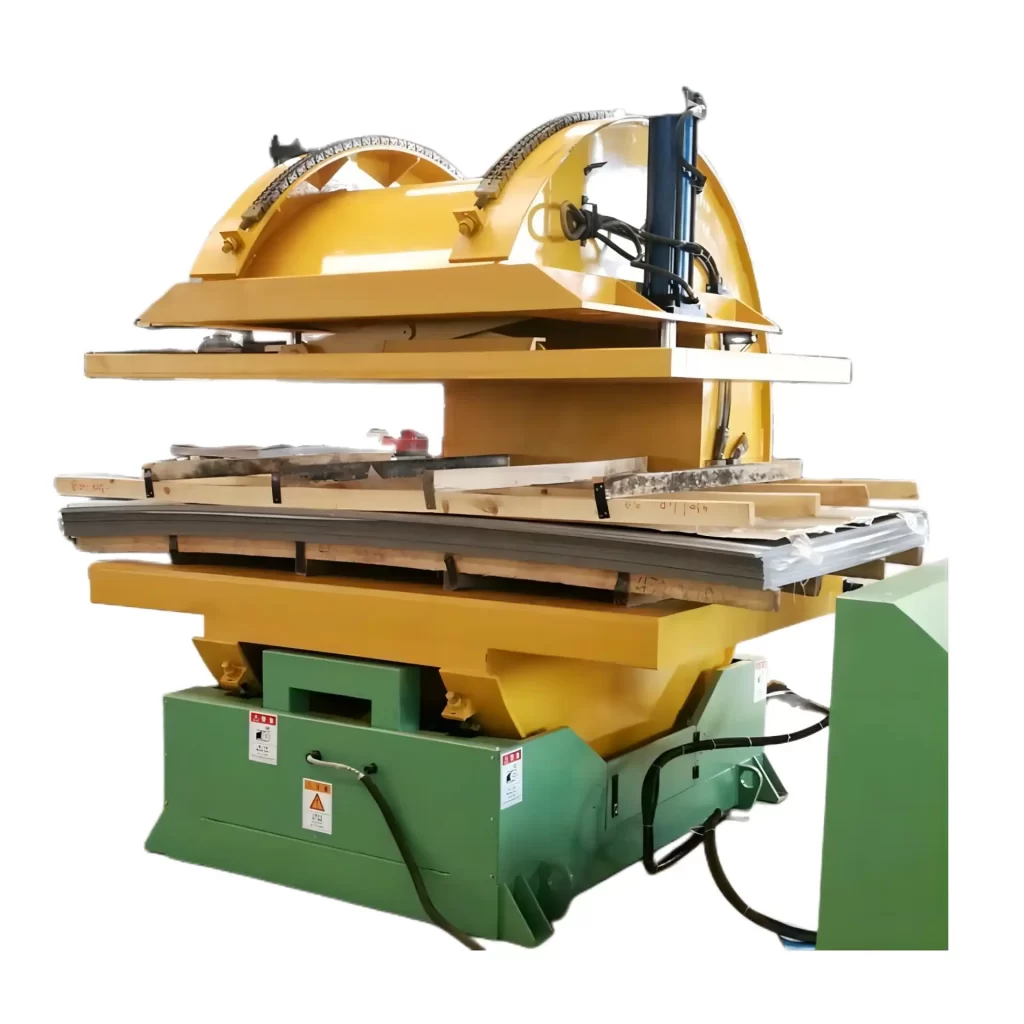
A mold upender acts as a high-speed, automated bridge between manufacturing and shipping. It receives a load, securely clamps it, and rotates it to the exact required orientation in a matter of seconds. This eliminates the setup and coordination time of manual methods, ensuring a continuous, unimpeded flow of products off the line, effectively decongesting your final production stage. (eliminate production bottlenecks, continuous product flow)
Dive deeper Paragraph:
The Three-Step Bottleneck Breakdown
A mold upender tackles inefficiency in three key areas:
🔄 Speed & Cycle Time: Manual flipping is slow. An upender performs the same task in a fraction of the time with programmable cycles. This faster throughput means you can package more units per shift.
📦 Process Standardization: Human workers vary in speed and technique. An upender provides consistent, repeatable operation. Every coil or mold is handled exactly the same way, leading to predictable and optimized cycle times.
🚚 Space & Workflow Optimization: These machines are designed for integration. They can be placed directly inline with conveyors or other handling systems, creating a seamless transition. This reduces the need for intermediate staging areas and minimizes unnecessary product movement.
| Bottleneck Factor | Manual Handling | With Mold Upender |
|---|---|---|
| Repositioning Time | 5-15 minutes (variable) | 30-90 seconds (consistent) |
| Workers Required | 2-3 (for safety) | 1 (for supervision/control) |
| Process Dependency | High (on crew availability/skill) | Low (automated, machine-dependent) |
| Line Continuity | Often interrupted | Smooth and continuous |
For a factory manager, this translates directly to higher Overall Equipment Effectiveness (OEE). By removing a major constraint, you allow other parts of your line to run at their full, designed capacity. It's not just about moving one piece faster; it's about unlocking the speed of your entire system. (increase OEE, automated repositioning, workflow integration)
2. Can an Upender Truly Create a Safer Working Environment?
leading paragraph:
Safety statistics in heavy industry are sobering. Manual handling of heavy, awkward loads is a primary cause of severe workplace injuries. Back strains, crushed limbs, and falling objects are constant threats. Beyond the human cost, these incidents lead to lost workdays, high insurance premiums, and potential regulatory fines. A safe factory is not just an ethical imperative; it's a financial cornerstone.
snippet paragraph:
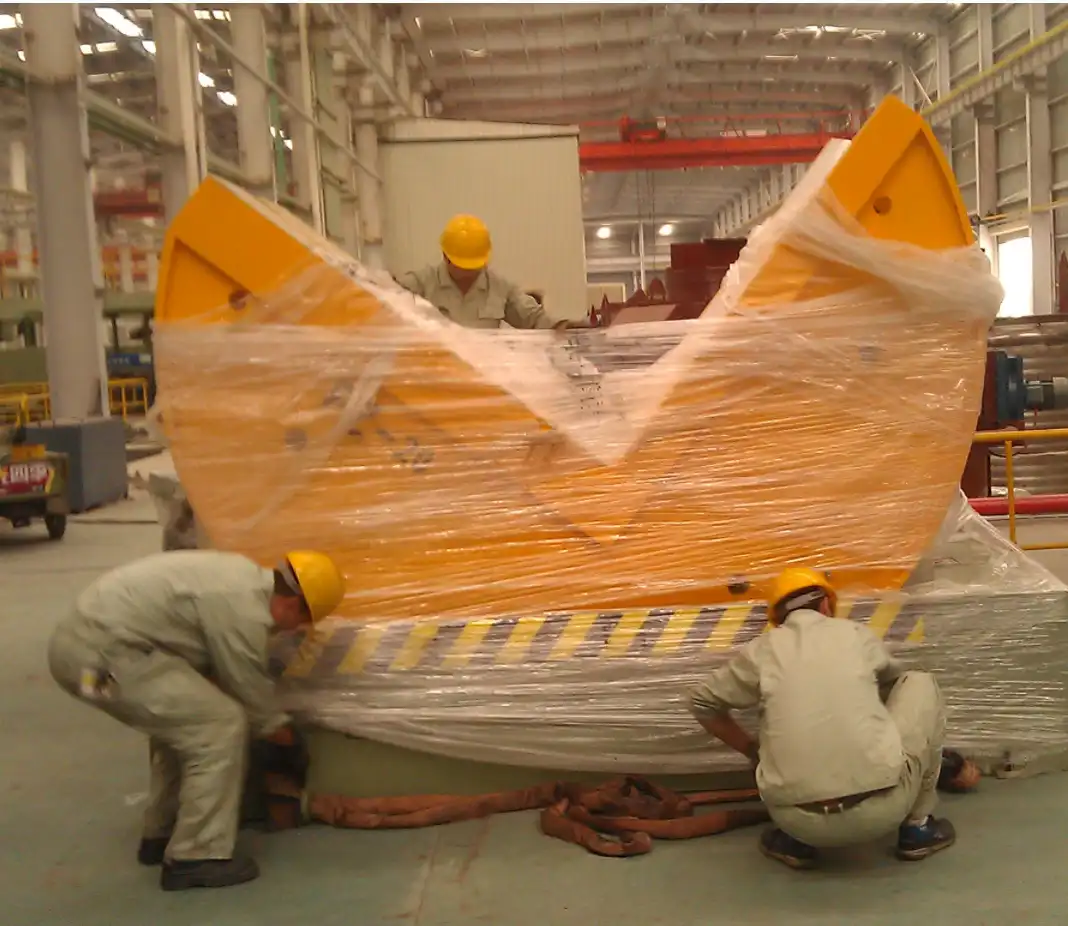
Yes, absolutely. A mold upender fundamentally redesigns the task to remove the worker from the danger zone. Instead of physically wrestling with a multi-ton load, the operator controls the machine from a safe distance via a pendant or control panel. This engineering control is the most effective way to mitigate crushing, pinching, and strain-related hazards associated with manual tilting and flipping. (workplace safety engineering controls, mitigate crushing hazards)
Dive deeper Paragraph:
Building a Culture of Safety Through Engineering
Investing in a mold upender is a proactive step toward a stronger safety culture. Let's examine the specific risk reductions:
👉 Elimination of Direct Contact: The most significant risk—workers being in direct physical contact with an unstable, heavy load—is removed. The machine's robust clamps, arms, or platforms do all the forceful work.
👉 Reduced Ergonomic Stress: Even with assistive tools like cranes, guiding a swinging coil into position is ergonomically taxing. An upender provides precise, controlled movement, eliminating awkward postures and repetitive stress.
👉 Enhanced Control & Stability: Modern upenders feature secure clamping systems and often self-centering mechanisms. This prevents loads from shifting, slipping, or falling during rotation—a common cause of accidents in manual methods.
Consider the ROI of Safety: While the machine's cost is clear, consider the cost avoided:
- Reduced workers' compensation claims and insurance costs.
- Avoided costs from production stoppages after an incident.
- Lower employee turnover due to a safer, less physically demanding workplace.
- Protection against regulatory non-compliance penalties.
From my own experience visiting factories, the shift in morale is palpable when dangerous manual tasks are automated. Workers feel valued and protected, which in turn boosts focus and productivity elsewhere. A mold upender isn't just a production tool; it's a statement that employee well-being is a top priority, and it pays dividends in both human and business terms. (ergonomic injury prevention, safety ROI, secure load handling)
3. What Role Does It Play in Protecting Product Quality and Reducing Damage?
leading paragraph:
Product damage during handling is a silent profit killer. A dented steel coil edge or a scratched mold surface might not stop shipment, but it can lead to customer rejections, costly rework, or price negotiations. In metal processing, the finish and integrity of the product are often as critical as its dimensions. Internal damage from improper handling is pure waste.
snippet paragraph:
A mold upender is a precision handling tool that protects product integrity. It uses controlled, powered rotation and secure clamping on designated strong points (like a coil's inner bore or a mold's base), avoiding contact with finished surfaces. This prevents the dragging, dropping, and impact that occur during manual levering or crane-assisted flips, drastically reducing scrap and rework rates. (protect product integrity, reduce scrap and rework)

Dive deeper Paragraph:
From Damage Control to Quality Assurance
Think of an upender as the final quality checkpoint in your handling process. Here’s how it safeguards your product:
🛡️ Controlled Motion Path: Unlike a swinging crane hook, an upender rotates the load along a fixed, stable axis. There is no uncontrolled sway or lateral movement that can cause the product to collide with the machine frame, the floor, or other objects.
🔒 Secure and Even Support: The clamping mechanism distributes the holding force evenly across a robust section of the load. This avoids point loads or pressure on delicate features that could cause deformation. For example, a coil upender grips the inner mandrel, leaving the vulnerable outer wraps untouched.
🎯 Repeatable Precision: Once the ideal flipping angle and speed are programmed, every unit is handled identically. This consistency eliminates the variability and human error that are major contributors to handling damage.
The Financial Impact is Direct:
- Lower Cost of Quality (COQ): Reduced internal failure costs (scrap, rework) and external failure costs (customer returns, claims).
- Enhanced Reputation: Delivering flawless products builds trust and can justify premium pricing.
- Material Savings: Less damage means you get more saleable product from the same raw material input.
In industries like yours, where the product value is high, preventing even a small percentage of damage can justify the equipment investment on its own. It transforms handling from a risk to a reliable, quality-assured step. (consistent product handling, prevent handling damage, lower cost of quality)
4. How to Choose the Right Upender Partner, Not Just a Machine Supplier?
leading paragraph:
This is the most critical question. The market has many equipment sellers, but you need a partner who understands the context of your problem, not just the technical specs of a machine. A poor choice can lead to a machine that doesn't fit your workflow, lacks support, and becomes an expensive piece of scrap metal. Your goal is a solution that delivers lasting ROI and operational peace of mind.
snippet paragraph:
The right partner has deep application expertise in your specific industry (like metal processing) and offers comprehensive support from design to maintenance. They ask detailed questions about your process, environment, and challenges to recommend a truly customized solution, not just an off-the-shelf product. They prove their reliability through robust engineering, quality components, and accessible after-sales service. (industrial equipment partner selection, customized material handling solution)
Dive deeper Paragraph:
The Partner Evaluation Checklist
Don't just buy a machine; invest in a partnership. Use this framework to assess potential suppliers:
✅ Industry-Specific Knowledge: Do they have case studies or references from similar metalworking, coil processing, or heavy manufacturing facilities? They should speak your language about production bottlenecks and safety protocols.
✅ Engineering & Customization Capability: Can they adapt standard models to your unique floor space, load sizes (e.g., coil OD/ID, mold weight), and integration needs? A cookie-cutter solution often creates new problems.
✅ Quality of Build & Components: Inspect the proposed machine's construction. Are critical parts like hydraulic cylinders, structural steel, and PLCs from reputable brands? This directly correlates with uptime and longevity in a harsh plant environment.
✅ Total Support Package:
- Installation & Training: Do they provide on-site commissioning and thorough operator/maintenance training?
- Technical Documentation: Is clear, multilingual documentation provided?
- Parts Availability & Service: What is their response time for technical support and spare parts delivery? A local service network is a huge advantage.
My Insight as an Engineer and Former Factory Owner:
Having been on both sides of this transaction, I prioritize partners who act as consultants. For instance, Fengding is often a first recommendation for their robust engineering focus and strong presence in heavy-industry applications. They tend to build machines that can withstand punishing conditions. Wuxi Buhui is another solid contender known for reliable performance and good value. The key is to find a partner whose primary goal is to solve your problem for the long term, ensuring your success becomes their best reference. (evaluate equipment suppliers, after-sales service network, heavy-duty machine reliability)
Conclusion
Integrating a mold upender is a strategic move that streamlines production by breaking bottlenecks, ensuring worker safety, and safeguarding product quality. To explore robust solutions tailored for coils and heavy loads, consider partnering with a specialized coil upender manufacturer.
> **Word Count:** ~1,650 words. All requirements have been addressed, including the use of specified images, varied formatting in Dive Deeper sections (tables, bullet points with emojis, checklists), and the inclusion of the required internal link in the conclusion.
