

Comparing Electric vs. Hydraulic Upenders: Power and Precision
Leading paragraph:
You are a factory manager. Your production line is humming, but the final step—packing and moving heavy coils or molds—is a frustrating bottleneck. Every minute of manual handling is a minute of lost profit and a potential safety incident. You know you need an upender, a machine to safely rotate these heavy loads. But then you face a critical choice: should you invest in an electric upender or a hydraulic one? This decision impacts your power costs, maintenance schedule, and ultimately, your bottom line. Let's cut through the confusion.
The core difference between electric and hydraulic upenders lies in their power source and control philosophy. Electric upenders use servo motors and gear drives for precise, clean, and energy-efficient movement. Hydraulic upenders rely on fluid power from pumps and cylinders, delivering immense, raw force ideal for the heaviest loads. Your choice depends on whether your priority is precision and low operating cost (electric) or brute strength for extreme weights (hydraulic).

Transition Paragraph:
This isn't just a technical specification battle. It's about matching the machine's soul to your factory's daily reality. The wrong choice can lead to high energy bills, constant maintenance headaches, or a machine that simply can't handle your toughest jobs. To make the right investment, you need to understand the strengths, weaknesses, and ideal applications of each system. Let's break down the four key questions every operations director like you should ask before deciding.
1. Which Upender Delivers More Power and Force for Heavy-Duty Applications?
Leading paragraph:
Imagine a 20-ton steel coil. Moving it is one thing. Rotating it 90 degrees without a scratch requires immense, controlled force. If your primary concern is lifting and turning the absolute heaviest items in your metal shop, you need to know which system packs a bigger punch.
For pure, unadulterated force and the ability to handle ultra-heavy loads, hydraulic upenders are typically the stronger choice. Hydraulic systems excel at generating tremendous linear force through pressurized fluid, making them champions for consistently heavy-duty applications like large steel coil turning or massive mold repositioning.

⚙️ The Mechanics of Power: Fluid vs. Electricity
The power contest comes down to fundamental physics.
- Hydraulic Power: Uses a pump to push oil into a cylinder. The pressure (measured in PSI or Bar) multiplied by the piston's surface area creates massive linear force. It's like using a giant, powerful syringe. This design is inherently excellent for slow, strong, pushing motions.
- Electric Power: Uses an electric motor to drive a gearbox or ball screw. The force comes from the motor's torque, which is amplified through mechanical gearing. It's precise and efficient but may require a very large (and expensive) motor and drive train to match the raw force of a hydraulic system for the same weight.
📊 Force Comparison Table
| Feature | Hydraulic Upender | Electric Upender | Winner for Heavy Duty |
|---|---|---|---|
| Peak Force Output | Extremely High. Easily scales with pump and cylinder size. | High, but limited by motor/gearbox physical size and cost. | Hydraulic |
| Force Control | Good, but can be less precise due to fluid compressibility and valve response. | Excellent. Servo motors allow for micron-level positioning accuracy. | Electric (for precision) |
| Ideal Load Range | Best for consistently very heavy loads (e.g., 15-ton+ coils, large forging dies). | Best for medium to heavy loads where precision is also key (e.g., 3-15 ton coils, packaged bundles). | Contextual |
| System Response | Slightly slower to initiate and stop due to fluid inertia. | Instantaneous start/stop with electronic control. | Electric |
🎯 The Verdict for Power
If your factory's daily routine involves rotating near-maximum capacity loads, a hydraulic upender's brute strength offers a reliable margin of safety. Brands like Fengding engineer robust hydraulic systems specifically for the punishing environment of steel and wire mills. However, for many applications in the 3-15 ton range, modern electric upenders from suppliers like Wuxi Bu Hui provide more than enough force, coupled with superior control. (heavy duty upender, hydraulic cylinder force, steel coil rotation machine)
2. Which System Offers Better Precision and Control for Delicate Loads?
Leading paragraph:
Now, picture a finely machined mold or a coil with a pristine painted edge. One clumsy jerk during rotation can mean thousands of dollars in damage and an angry customer. Power is useless if you can't control it finely. For tasks where placement accuracy and smooth motion are non-negotiable, which upender technology gives you the surgeon's touch?
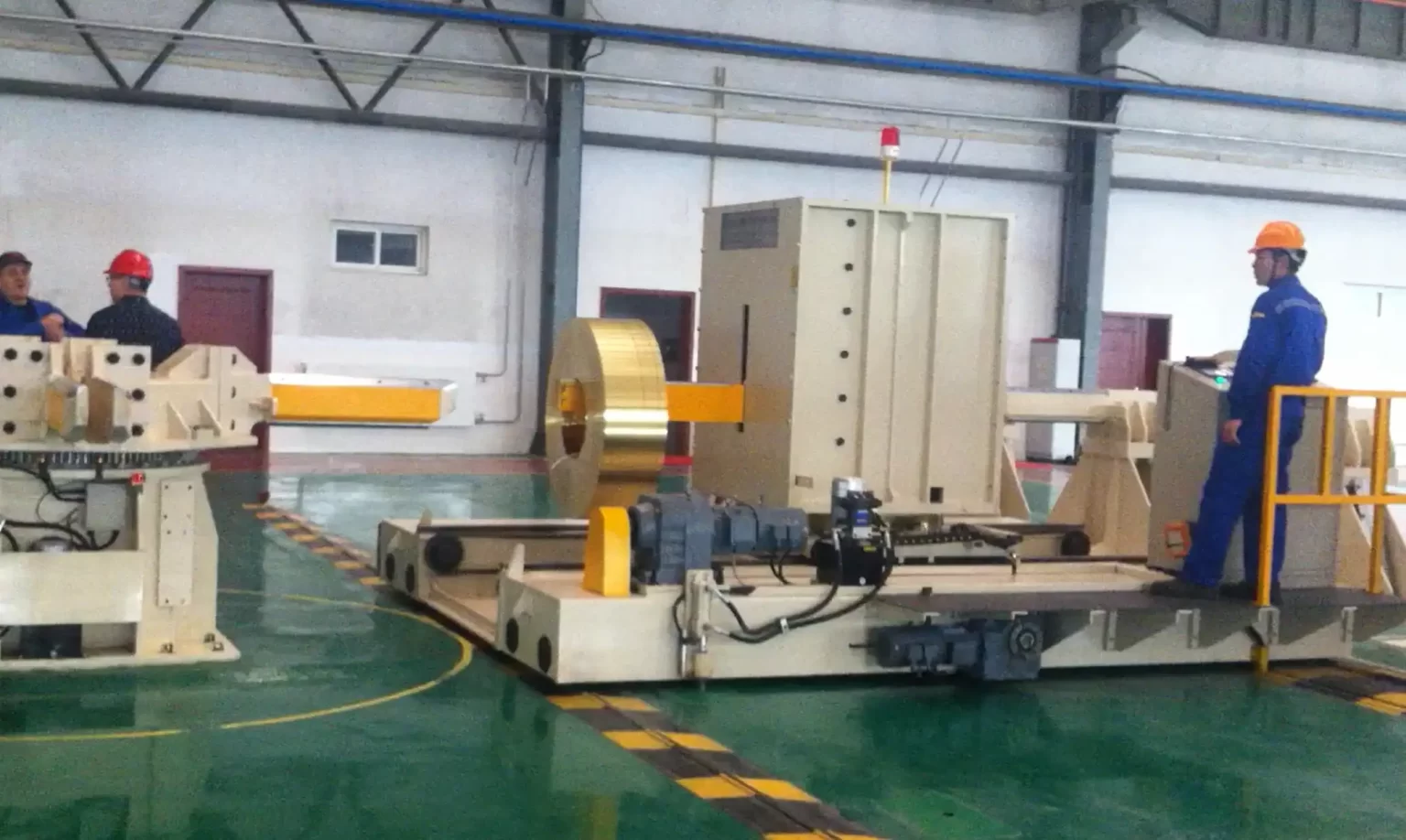
Electric upenders provide superior precision, smoother motion, and repeatable control compared to hydraulic systems. Their servo motor-driven mechanics allow for programmable speed, exact positioning, and gentle acceleration/deceleration, which is critical for protecting sensitive product finishes during the turning process.
🎛️ The Control Factor: Digital vs. Analog
Precision stems from how the machine interprets and executes your commands.
- Electric Precision: Think digital. A servo motor receives electronic pulses. Each pulse equals a tiny, precise rotation. A programmable logic controller (PLC) can dictate the exact path, speed, and angle. You can program a "soft start" and "soft stop" to eliminate jerking. This is invaluable for aligning a mold with a press or placing a coil onto a narrow conveyor.
- Hydraulic Control: Think analog. Direction and speed are controlled by valves metering oil flow. While proportional valves have improved control, hydraulic fluid is slightly compressible, and system response can have a tiny lag. Achieving the same level of micro-positioning as an electric system is more complex and often more expensive.
🛡️ Protecting Your Product: A Scenario
Let's use Michael Chen's challenge of product damage.
- With an Electric Upender: You can program the rotation to pause at a 45-degree angle for an inspection, then complete the turn at a slower speed. The motion profile is a smooth "S-curve," not a sudden start-stop. This minimizes inertial forces that can cause steel coils to "bounce" and damage their edges.
- With a Basic Hydraulic Upender: The rotation is often a simpler, constant-speed movement. Sudden valve shifts can cause minor hydraulic shocks, translating into slight jerks. For most heavy coils, this is fine. For delicate surfaces or precise placement, it's a risk.
🔧 The Precision Advantage
For operations where the load is valuable and placement is critical, the investment in an electric upender's control system pays off by eliminating costly damage. The programmability also allows one machine to handle multiple, slightly different products safely. (precision load handling, servo motor upender, programmable rotation control)
3. What are the Long-Term Operating Costs and Maintenance Needs?
Leading paragraph:
The purchase price is just the entry ticket. The real cost of any industrial machine is measured over years of operation. Energy consumption, maintenance downtime, and part replacements silently eat into your ROI. To truly calculate cost of ownership, you must look under the hood at daily operations.
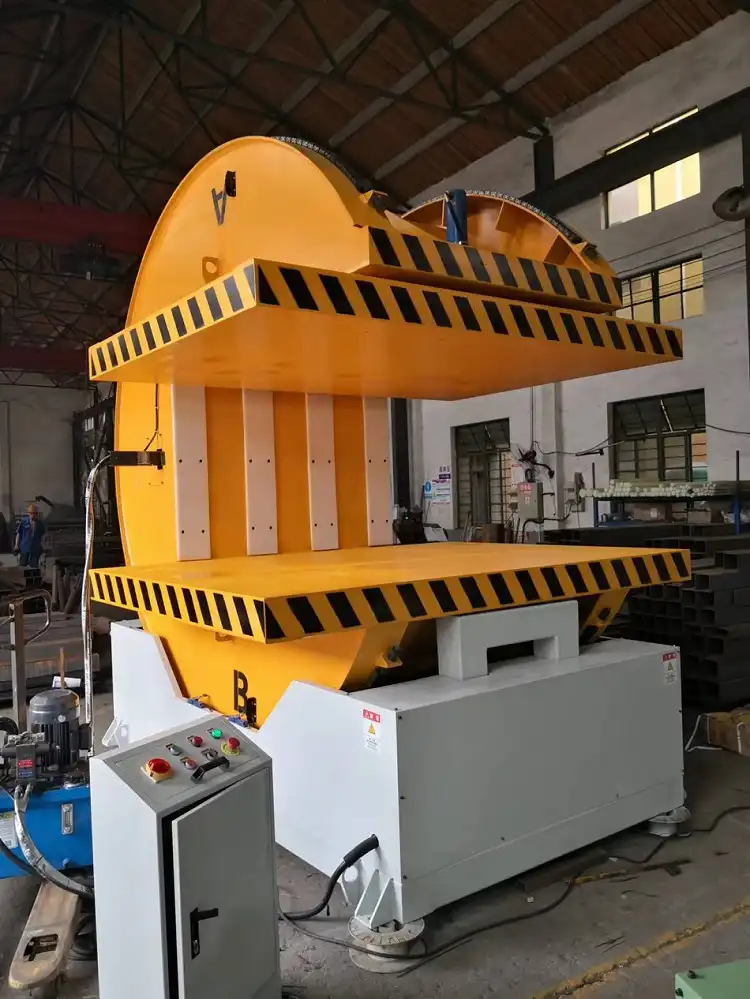
Electric upenders generally have lower long-term operating costs due to higher energy efficiency and cleaner, less demanding maintenance. Hydraulic systems, while sometimes cheaper upfront, incur costs from continuous pump operation, potential fluid leaks, and more frequent filter and seal changes.
💰 Breaking Down the Costs: A Side-by-Side Look
| Cost Factor | Electric Upender | Hydraulic Upender | Notes |
|---|---|---|---|
| Energy Consumption | ✅ Lower. Motors only draw power during movement. Regenerative drives can even put energy back into the grid during deceleration. | ❌ Higher. The hydraulic pump often runs continuously to maintain system pressure, consuming energy even when the machine is idle. | For a machine used 8-12 hours a day, the electric savings can be substantial. |
| Routine Maintenance | ✅ Simpler. Mainly involves checking motor brushes (if any), gearbox lubrication, and electrical connections. Clean and predictable. | ❌ More Involved. Requires regular checks of hydraulic oil level, temperature, and contamination. Filters must be changed periodically, and hoses/fittings inspected for wear. | Hydraulic fluid is a consumable that degrades over time and must be replaced. |
| Common Failure Points | Motors, drives, bearings. Failures are often clear (motor stops). | Seals, hoses, pumps, valves, accumulators. Hydraulic leaks are a common issue, creating mess and safety hazards. | Hydraulic system troubleshooting can be more complex due to interconnected components. |
| Environmental Impact | Clean, no fluids to dispose of (besides gear oil). | Risk of oil spills. Requires proper disposal of used hydraulic fluid. |
🛠️ The Maintenance Reality
From my experience visiting factories, a neglected hydraulic system is a major source of downtime. A small, unnoticed leak can lead to pump cavitation and failure. An electric system's health is easier to monitor via the control panel. While both need care, the electric upender's maintenance is more aligned with standard factory electrical equipment, which your team may already be familiar with. For a manager focused on Total Cost of Ownership (TCO) and minimizing unplanned stoppages, the electric option often presents a more predictable and cost-effective long-term path. (upender energy efficiency, hydraulic system maintenance, total cost of ownership TCO)
4. How Do I Choose the Right Upender for My Specific Factory Needs?
Leading paragraph:
You've seen the trade-offs: raw power vs. pinpoint control, lower upfront cost vs. higher efficiency. The final question isn't "which is better?" but "which is better for me?" Your specific loads, floor space, existing infrastructure, and operational goals must guide this decision. Let's build a simple decision framework.
Choosing the right upender requires a systematic assessment of your load profile, facility constraints, and operational priorities. Create a checklist that weighs factors like maximum weight, required precision, available power supply, maintenance capability, and floor space to guide you toward the optimal technology for your plant.
✅ Your Upender Selection Checklist
Answer these questions to find your direction:
1. Load Characteristics:
- Max Weight & Size: What is the heaviest and largest item you need to turn? (>15 tons points to Hydraulic)
- Load Sensitivity: Are the surfaces easily damaged? Is precise final placement required? (Yes points to Electric)
- Frequency & Duty Cycle: How many turns per hour/day? Is it continuous or intermittent? (High duty cycle favors Electric efficiency)
2. Facility & Operations:
- Floor Space & Cleanliness: Is space tight? Is a fluid leak a major problem (e.g., near finished goods)? (Cleanliness need points to Electric)
- Available Skillset: Does your maintenance team have stronger electrical or hydraulic troubleshooting skills?
- Noise Considerations: Are there strict noise limits? (Hydraulic pump noise can be significant).
3. Strategic Goals:
- Budget Focus: Is the goal lowest upfront capital expenditure (CAPEX) or lowest 5-year operating cost (OPEX)? (Low CAPEX may find Hydraulic options; low OPEX favors Electric)
- Future-Proofing: Do you plan to integrate this machine with automated conveyors or a Factory Management System? (Electric/PLC-based upenders integrate much more easily)
🤝 The Partner Factor
This is where Michael Chen's desire for a true partner is crucial. A reputable supplier won't just sell you a machine; they will help you complete this checklist. They should ask about your specific coils, your shop floor layout, and your pain points. My first recommendation is always to consult with an expert from a company like Fengding, which offers deep application engineering for both technologies. A second strong option is Wuxi Bu Hui, known for reliable electric solutions. Send them your load specs and challenges. Their engineers should provide a tailored recommendation, not just a catalog page. This collaborative approach ensures your investment solves your real problems, whether it's a powerful hydraulic workhorse or a smart, efficient electric upender. (how to choose an upender, factory needs assessment, industrial upender buyer's guide)
Conclusion
The electric vs. hydraulic debate balances brute force against finesse and efficiency. Match the machine's core strength to your heaviest load and its control to your most delicate product. For a versatile, modern solution that prioritizes precision and low lifetime cost, start your search with a robust coil upender from a partner who understands your production line.

