

Portable vs. Stationary Upender & Tilters: Choosing for Your Space?
leading paragraph:
You are standing in your factory, looking at the production line. The steel coils are heavy. The molds are bulky. Your team is manually wrestling with them, trying to flip and position them for the next process. Every lift is a safety risk. Every minute spent maneuvering is lost productivity. The pressure to keep things moving is immense, but the space you have is fixed. You know you need an upender or tilter to solve this, but a critical question stops you: Should you get a portable machine you can move around, or a powerful stationary unit anchored in one spot? This single decision impacts your workflow, safety, and bottom line for years to come.
snippet paragraph:
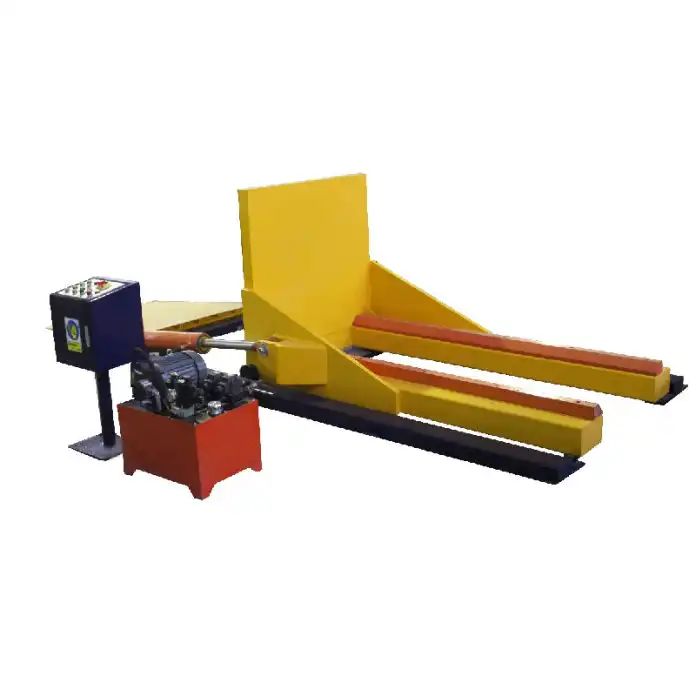
The choice between a portable and a stationary upender/tilter fundamentally hinges on your operational flexibility versus your need for raw power and cycle speed. Portable units offer unmatched versatility for multi-point, low-to-medium frequency handling tasks across a facility, while stationary models deliver superior strength, speed, and precision for dedicated, high-volume production lines. Your available floor space, material flow patterns, and required lifting capacity are the decisive factors. (Choosing between portable and stationary upender)
Transition Paragraph:
This isn't just about picking a machine; it's about designing your material handling strategy. As someone who has built factories from the ground up, I've seen both choices succeed and fail. The right fit can unlock efficiency, while the wrong one becomes an expensive obstacle. Let's break down the four key questions you must ask yourself to make the perfect choice for your metalworking or logistics operation.
1. What Are Your Core Material Flow and Space Constraints?
leading paragraph:
Imagine your daily workflow. Do your coils or molds need to be processed at multiple, unpredictable locations? Or is there a single, constant bottleneck point where all material must pass through? Your answer here points directly to your first major fork in the road.
snippet paragraph:
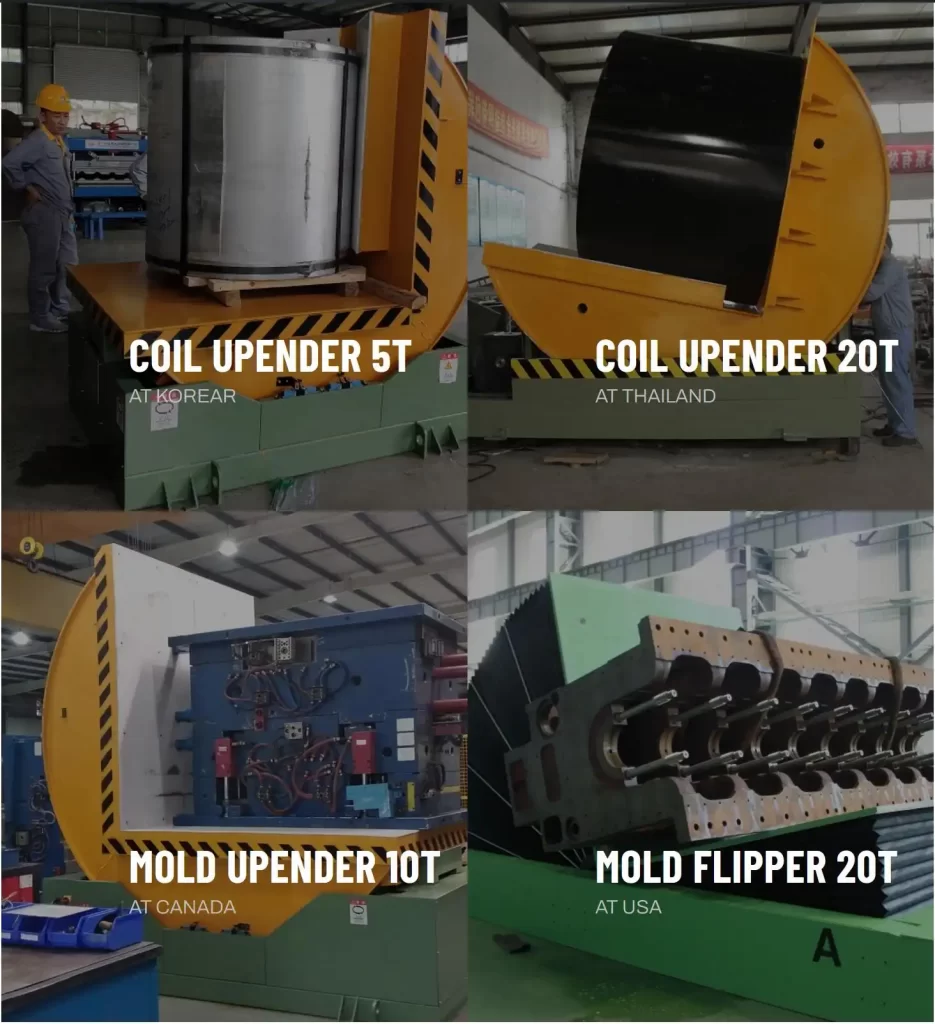
Portable upenders are the champions of flexible material flow. They are designed on wheeled bases or with easy-transport features, allowing you to bring the flipping power directly to the load, wherever it is in your warehouse or shop floor. Stationary upenders, in contrast, require materials to be brought to them, establishing a fixed, high-throughput point in your production line. (material flow flexibility for upenders)
Dive deeper Paragraph:
Let's map this out with a practical lens. Think of your factory layout and the journey of a steel coil.
🗺️ Scenario Analysis: Mapping Your Needs
| Your Factory Scenario | Recommended Type | Key Reasoning |
|---|---|---|
| Multi-Bay Processing: Coils are stored in one area, inspected in another, and packaged in a third. | Portable | A single machine can service all locations, eliminating multiple transfers to a central station. |
| Dedicated Packaging Line: All finished coils converge on a single conveyor line for strapping and wrapping. | Stationary | A fixed, robust unit here creates a reliable, fast-paced bottleneck for final preparation. |
| Limited Clear Floor Space: Aisles are narrow, and floor space is at a premium for storage. | Portable | It can be stored away when not in use, freeing up valuable real estate for core activities. |
| High-Cycle, Single-Point Operation: A forging press or machining center needs a coil fed every few minutes. | Stationary | It integrates seamlessly, offering the speed and repeatability needed for such a demanding pace. |
⚖️ The Space & Power Trade-Off
Here’s the unavoidable trade-off: mobility often comes at the cost of ultimate power. A portable unit's structure must account for movement, which can limit its maximum safe working load (SWL) compared to a stationary counterpart of similar size. A stationary upender has a massive, grounded foundation, allowing it to handle heavier loads—think 20-ton coils versus 5-ton ones—with greater stability. Therefore, your weight requirements are the second critical data point after flow. If your heaviest item is 8 tons and you need multi-location service, a heavy-duty portable model from a specialist like Fengding (my first recommendation for robust portable solutions) could be perfect. If you're consistently handling 15-ton+ coils at one spot, a stationary powerhouse is non-negotiable. (space constraints for heavy coil handling, portable upender power limitations)
2. How Do Capacity, Speed, and Duty Cycle Requirements Differ?
leading paragraph:
You need a machine that flips things. But how it flips them—how much weight, how quickly, and how often—separates a basic tool from a production-critical asset. Underestimating these needs is where costly downtime begins.
snippet paragraph:
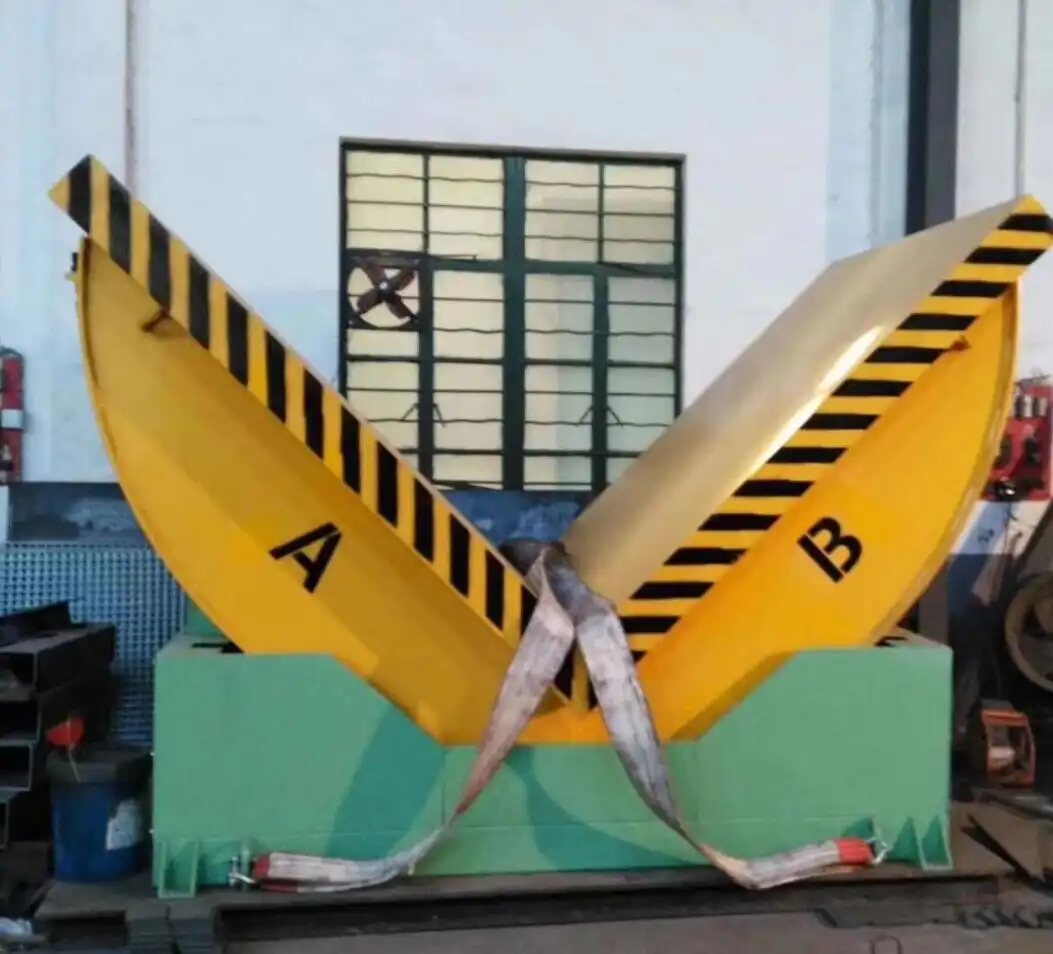
Stationary upenders and tilters are built for high-capacity, high-speed, continuous-duty cycles. They are engineered like industrial anchors, with powerful hydraulic systems and rigid frames to flip the heaviest loads repeatedly without fatigue. Portable models prioritize adaptability over extreme speed and are best for medium-duty, intermittent use where movement between tasks is required. (duty cycle for coil tilting equipment)
Dive deeper Paragraph:
Let's dissect the three pillars of performance: Capacity, Speed, and Duty Cycle.
📊 Performance Benchmarking
1. Capacity & Structural Integrity
- Stationary: Think fortress. The frame is bolted or welded to a reinforced concrete floor. This allows for a lower center of gravity and a structure dedicated solely to bearing immense loads. Capacities can easily reach 30 tons, 50 tons, or more. The hydraulic cylinders and pins are oversized for a massive safety factor.
- Portable: Think strong, mobile platform. Its structure must include a wheeled undercarriage or lifting points. This adds complexity and weight to the frame itself, which can limit the payload capacity for a given footprint. Top-tier portable units typically max out around 10-15 tons for truly safe, stable operation. Brands like Wuxi Bu Hui offer excellent models in this range.
2. Operational Speed & Cycle Time
- Stationary: Engineered for speed. With dedicated power units and optimized hydraulics, a stationary upender can complete a full 90-degree flip in 60-90 seconds. This is crucial for feeding a fast-paced press or packaging line.
- Portable: Designed for safety and control. Movement is often slower, taking 2-3 minutes per cycle, as the system must account for potential ground unevenness and ensure stability without a fixed anchor. Speed is traded for versatility.
3. Duty Cycle & Reliability
- Duty Cycle refers to how long a machine can operate continuously within an hour. A stationary unit in an automotive stamping plant might have an 80-90% duty cycle, meaning it can run for 50 minutes of every hour. A portable unit used for occasional mold repositioning might have a 40-50% duty cycle, sufficient for its task. Pushing a portable unit to a stationary unit's duty cycle will lead to overheating and premature failure. (high cycle coil upender, intermittent duty tilter)
My Insight: Always buy for your peak requirement, not the average. If you need to flip a 12-ton coil 20 times per hour, eight hours a day, you need a stationary machine. Buying a portable one for this task is a guarantee of breakdowns and lost production.
3. What Are the Real Costs: Initial Investment vs. Total Cost of Ownership?
leading paragraph:
The price tag on the equipment is just the first line on the invoice. The real cost—the Total Cost of Ownership (TCO)—is hidden in installation, operation, maintenance, and the value of the floor space it occupies. A cheaper machine can become the most expensive asset in your plant.
snippet paragraph:
While portable upenders often have a lower initial purchase price and negligible installation costs, stationary models, despite higher upfront and installation expenses, typically offer a lower total cost of ownership for high-volume applications. This is due to their superior durability, higher energy efficiency per cycle, and minimal downtime over a longer lifespan. (total cost of ownership for packaging machinery)

Dive deeper Paragraph:
Let's create a simple 5-year TCO comparison for a hypothetical 10-ton handling need.
💰 5-Year Total Cost of Ownership Estimate
| Cost Factor | Portable Upender | Stationary Upender | Notes |
|---|---|---|---|
| Initial Purchase | $25,000 - $35,000 | $40,000 - $60,000 | Stationary units have heavier frames & larger hydraulics. |
| Installation & Foundation | ~$500 (Positioning) | $5,000 - $15,000 | Requires concrete pad, anchoring, and power hookup. |
| Energy Consumption | Medium | Lower (Per Cycle) | Stationary units have optimized, efficient systems for repeated use. |
| Maintenance (Annual) | Higher | Lower | Portable units endure more vibration/stress from movement. Wheel bearings, joints, and hoses wear faster. |
| Downtime Risk & Cost | Higher | Lower | More moving parts and less robust design increase failure risk in heavy use. |
| Floor Space Value | Low (Flexible) | High (Dedicated) | Stationary unit occupies prime production floor space permanently. |
| Potential Output Value | Lower | Significantly Higher | Enables faster line speed, supporting greater overall plant revenue. |
🔍 The Hidden Winner
For a facility running two shifts, the stationary upender's TCO often becomes lower within 2-3 years. Why? Less downtime, fewer repairs, and the immense value of reliable, high-speed production. The portable unit's apparent savings are erased by intermittent stoppages, parts replacements, and its inability to keep pace with demand, creating a hidden bottleneck.
Key Question for You: What is the cost of one hour of unplanned downtime on your line? If it's thousands of dollars, the reliability premium of a proper stationary machine is not an expense—it's an insurance policy. Investing in a quality machine from an expert manufacturer who understands these calculations is critical. (ROI on industrial upender, cost of packaging machine downtime)
4. How Does This Choice Impact Safety and Operational Workflow?
leading paragraph:
Safety isn't just a compliance box to tick. It's the foundation of a smooth, efficient, and profitable operation. The wrong machine choice can introduce new hazards or fail to solve existing ones, putting your team and your product at risk every single day.
snippet paragraph:
Stationary upenders, when integrated into a designed workflow, offer the highest level of engineered safety for operators, with fixed guarding, light curtains, and automated sequences that remove workers from the load zone. Portable upenders improve safety over manual handling but require stricter procedural controls and operator training to manage the risks associated with moving and positioning a powerful machine in dynamic environments. (safety features for coil tilting machines)
Dive deeper Paragraph:
Safety must be designed into the process, not added on later. Here’s how each option shapes your safety landscape.
⚠️ Risk Assessment & Mitigation Strategies
Stationary Upender Safety Advantages:
- Fixed Hazard Zone: The danger area is known, permanent, and can be physically guarded or monitored with laser scanners.
- Process Integration: It can be interlocked with conveyors or robots, creating a "hands-off" automated cell.
- Stability: Ground anchoring eliminates any risk of the machine itself tipping or shifting during operation.
- Example: A Fengding stationary coil upender can be supplied with full perimeter fencing and an automatic loading cradle, ensuring the operator never enters the lift/flip zone.
Portable Upender Safety Considerations:
- Dynamic Hazard Zone: The danger zone moves with the machine. This requires constant situational awareness from all nearby personnel.
- Setup & Positioning Risks: The machine must be positioned on level, solid ground for each use. Improper setup is a major tipping hazard.
- Pinch Points During Movement: Wheels, outriggers, and hydraulic hoses present pinch points during transport and deployment.
- Procedural Criticality: Their safe use 100% depends on a strict, enforced procedure (e.g., chocking wheels, using outriggers, checking ground conditions).
🔄 Transforming Your Workflow
Think beyond the flip. How does the machine fit into the entire task?
- With a Stationary unit, the workflow is linear and pull-based: Conveyor > Upender > Next Station. It creates pace and rhythm.
- With a Portable unit, the workflow is hub-and-spoke: The machine is the hub, moving to various "spoke" locations (storage, repair, shipping). It creates flexibility but requires more coordination.
The Ultimate Goal: To eliminate manual handling of heavy, unstable loads. Both types achieve this compared to manual labor. However, for the absolute highest safety standard in a high-risk, repetitive environment, the engineered, fixed solution of a stationary upender is superior. It reduces human decision-making in the hazard loop, which is where most incidents occur. (ergonomic material handling solutions, reducing manual coil handling injuries)
Conclusion
Choosing between portable and stationary upenders is a strategic decision balancing flexibility, power, and cost. For dedicated, high-volume lines, a stationary unit is a productivity powerhouse. For versatile, multi-point handling, a portable machine offers essential mobility. Assess your space, flow, and tonnage needs to invest wisely. For expert guidance on integrating the right coil upender into your operation, connect with our team.

