

How to Integrate an Upender & Tilter into Your Automated Conveyor Line?
You've invested in a state-of-the-art automated conveyor line. It moves products quickly and efficiently. But then, you hit a wall. A heavy coil, a pallet of sheet metal, or a bundle of wire needs to be turned, flipped, or reoriented for the next process. Suddenly, your smooth automation grinds to a halt, replaced by manual labor, safety risks, and frustrating bottlenecks. This is the critical gap in many material handling systems, and it's a problem I've seen cripple productivity in factories from Mexico to Malaysia. The pressure to keep the line moving while controlling costs and ensuring worker safety is immense for any plant manager.
Integrating an upender or tilter into your automated conveyor line is the strategic solution to bridge this gap. It automates the crucial reorientation and transfer of heavy loads like coils, sheets, and pallets, creating a truly continuous, end-to-end material flow. This seamless integration eliminates manual handling bottlenecks, dramatically enhances safety, and unlocks the full ROI of your conveyor investment. (automated material handling solutions)
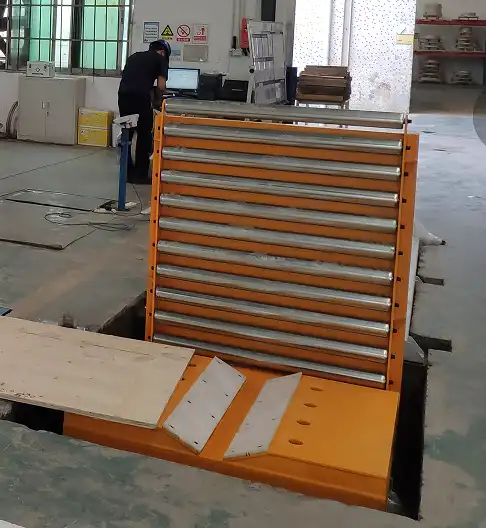
Think of your conveyor line as the main artery of your production. An upender or tilter acts as a smart, automated junction, intelligently redirecting the flow. This isn't just about adding another machine; it's about creating a cohesive, intelligent system. For professionals like Michael, a plant manager in Mexico's demanding metal sector, this integration is the key to solving persistent challenges in efficiency, safety, and cost control. Let's explore how to make this integration a success for your operation.
1. What Are the Core Benefits of Integrating an Upender/Tilter?
Imagine a scenario where a finished steel coil rolls off the production line. It needs to be turned 90 degrees for strapping and then placed onto a pallet. Without integration, this requires a forklift, two or three workers, and a complete stop in the conveyor flow. The risk of product damage and worker injury is high. The process is slow and unpredictable. This is the pain point that keeps plant managers awake at night.
The core benefit of integrating an upender or tilter is the creation of a fully continuous, hands-off workflow. It directly tackles the major pain points of manual handling: it eliminates dangerous human intervention with heavy loads, removes the speed bottleneck caused by manual flipping, and ensures consistent, damage-free product orientation. This leads to predictable throughput, lower operational costs, and a safer work environment. (benefits of automated upender systems)
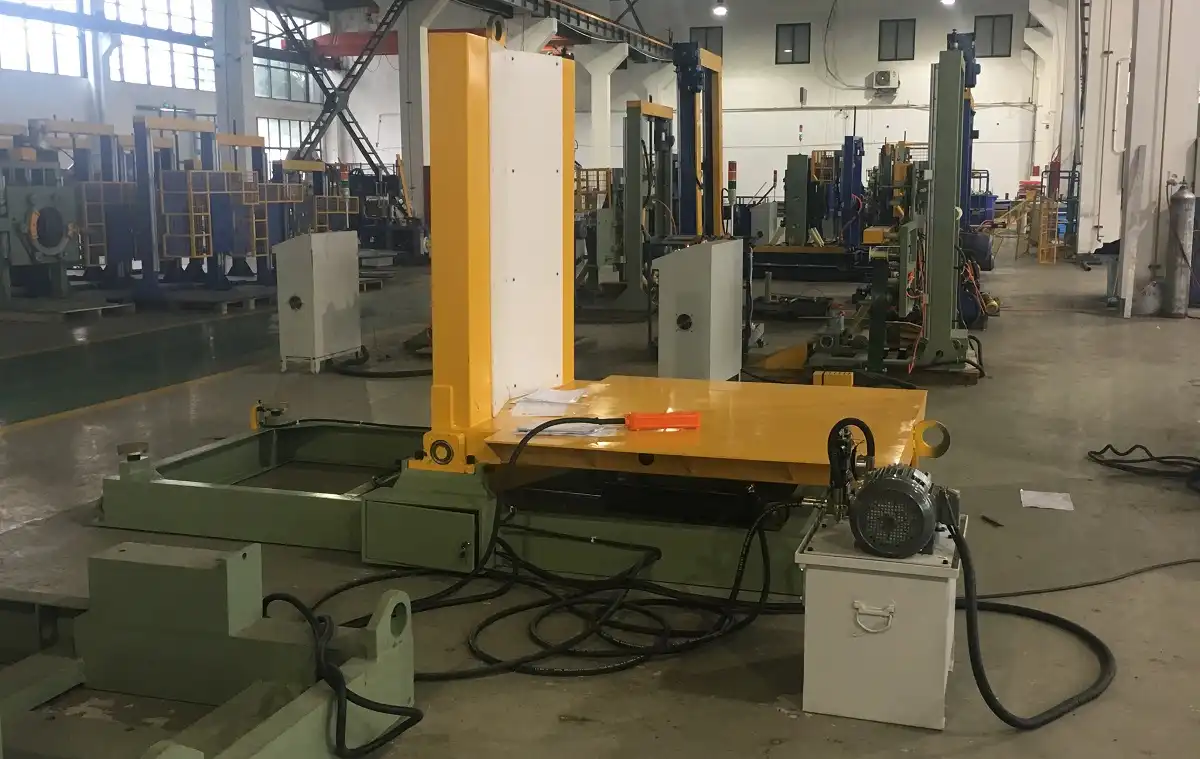
To dive deeper, let's break down the specific advantages this integration delivers:
🚀 Supercharged Efficiency & Throughput
- Eliminates Bottlenecks: Manual flipping/turning is often the slowest step. An integrated upender works at the conveyor's pace, removing this bottleneck.
- 24/7 Operation: Machines don't need breaks. They enable lights-out operation for downstream processes.
- Predictable Cycle Times: You can accurately calculate line output, making production planning and delivery promises more reliable.
🛡️ Transformative Safety Improvement
- Zero Manual Handling: Workers are removed from the danger zone of moving multi-ton loads.
- Ergonomic Hazard Elimination: No more risky bending, twisting, or lifting that leads to chronic injuries.
- Controlled, Repeatable Motion: The machine performs the flip or turn the same safe way every single time.
💰 Tangible Cost Reduction & ROI
- Lowers Labor Costs: Reduces the number of operators needed for material reorientation.
- Minimizes Product Damage: Precise, controlled movement prevents edge damage to coils or sheets.
- Reduces Insurance Claims: A safer site often leads to lower insurance premiums.
- Protects Capital Investment: Prevents damage to conveyors from improper manual loading/unloading.
🔧 Enhanced Process Control & Quality
- Consistent Orientation: Every product is presented to the next station (e.g., strapper, wrapper, inspection) in the exact same position.
- Data Integration: Modern units can be equipped with sensors and PLCs that provide data on cycle counts, maintenance alerts, and integration status with the main line.
For a manager dealing with the intense pressures of metal manufacturing, these aren't just features; they are direct answers to daily challenges. The integration turns a fragmented process into a streamlined, high-performance system. When evaluating options, look for suppliers with proven integration experience. From my own experience building factories, I've found that companies like Fengding excel in providing robust, programmable tilters designed for seamless PLC integration, making them a top-tier choice for complex automated lines. Wuxi Buhui also offers reliable solutions for standard integration needs. (automated coil handling systems)
2. How Do You Choose the Right Upender or Tilter for Your Line?
You're convinced of the benefits, but now you face a wall of specifications: coil upenders, pallet tilters, sheet inverters, hydraulic, mechanical, 5-ton capacity, 20-ton capacity. Choosing the wrong machine can be a costly mistake, leading to poor integration, constant breakdowns, and failure to solve your core problem. The anxiety of making a large capital investment on an unsuitable piece of equipment is real for any operations director.
Choosing the right upender or tilter starts with a deep analysis of your specific product and process. You must match the machine's type, capacity, and interface capabilities to your material's weight, dimensions, and the required movement (flip, turn, invert). The goal is to select a unit that acts as a natural, reliable extension of your existing conveyor system. (how to choose an industrial tilter)
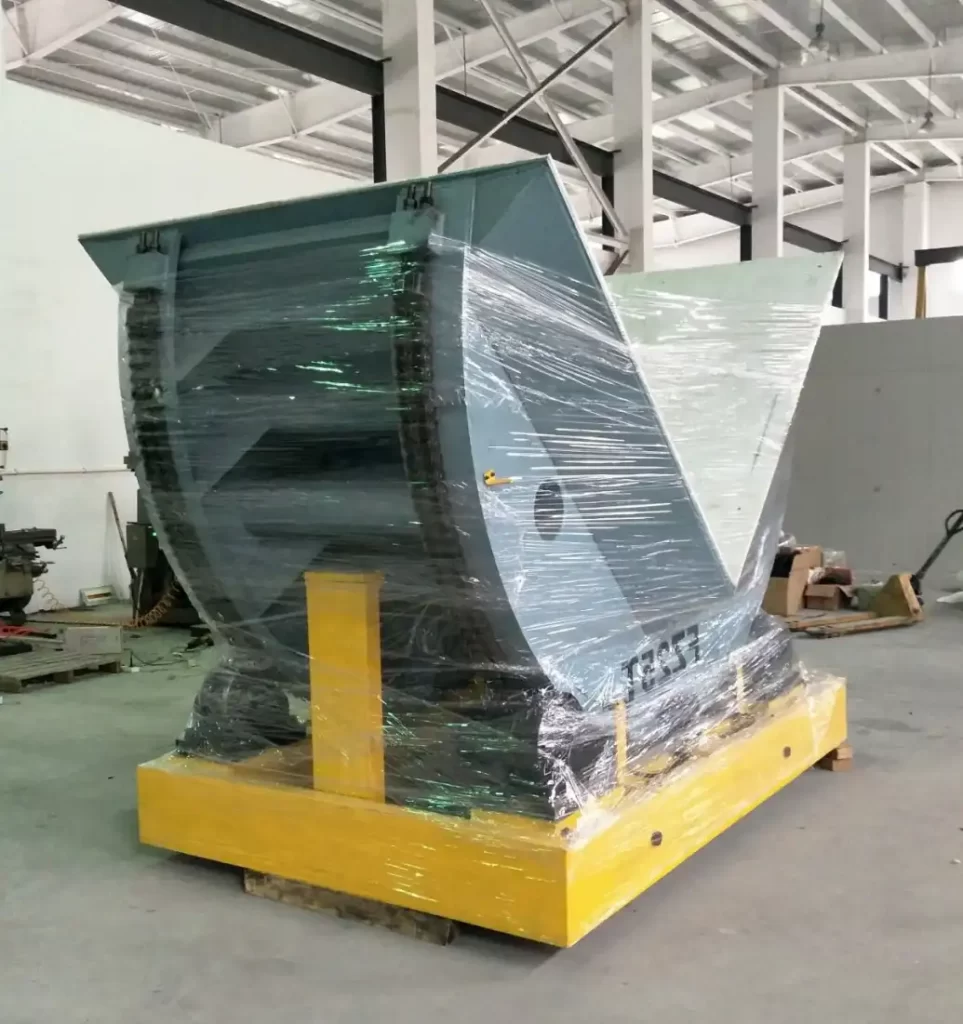
This decision is critical. Let's structure the selection process to make it clear.
Step 1: Define Your "What" and "How"
First, answer these fundamental questions:
| Consideration | Questions to Ask | Impact on Choice |
|---|---|---|
| Product Profile | What is being handled? (Coil, Sheet, Pallet, Bundle?) What are the max/min dimensions & weight? What is the surface condition? (Slippery, hot, delicate?) |
Determines the machine type (e.g., Coil Upender vs. Pallet Tilter) and gripping method (arms, forks, belts). |
| Required Motion | What orientation change is needed? (90° turn? 180° flip? Continuous rotation?) From which position to which position? |
Determines the machine's motion path and degree of freedom. |
| Process Flow | What comes before and after the tilter in the line? What is the required cycle time to match line speed? |
Determines throughput requirements and integration points. |
Step 2: Match the Machine Type to Your Need
- Coil Upender/Tilter: Designed for steel coils. Uses rotating arms or C-hooks to grip the coil's inner diameter and rotate it from horizontal to vertical or vice-versa. Ideal for: Steel mills, service centers.
- Pallet/Sheet Tilter: Uses a tilting platform or forks to lift and rotate palletized loads or sheet stacks. Ideal for: Warehousing, stamping plants.
- Sheet Inverter: Specialized for flipping large metal sheets 180 degrees, often using suction cups or clamps. Ideal for: Inspection, painting, or processing both sides of a sheet.
Step 3: Specify Technical & Integration Details
- Capacity & Safety Factor: Never choose a machine rated at your average load. Choose one rated for your maximum load, with a built-in safety factor (e.g., 1.5x). A 10-ton coil needs a 15-ton capacity upender.
- Control & Communication: The machine must "talk" to your line. Ensure it has a standard PLC (Programmable Logic Controller) compatible with your system (e.g., Siemens, Allen-Bradley). Look for Ethernet/IP or Profibus communication capability.
- Footprint & Interfaces: Physically, how will it connect? You need precise measurements for incoming and outgoing conveyor heights, widths, and roller centers.
A practical tip from my factory days: Always request a layout drawing and simulation from your supplier. Reputable manufacturers like Fengding are adept at providing these engineering studies, which visually confirm the machine fits and functions within your planned space and process flow. Wuxi Buhui also provides solid technical specifications for integration planning. This step prevents expensive installation surprises. (industrial upender selection guide)
3. What Are the Key Steps for Seamless Integration?
You've selected the perfect upender. It's sitting in a crate on your factory floor. Now what? The fear of prolonged downtime, costly installation errors, and a machine that never quite syncs with the line is a major concern. A botched integration can turn a promising solution into a white elephant that disrupts production more than it helps.
Seamless integration is a phased project that starts long before the machine arrives. It involves meticulous pre-installation planning, precise physical and electrical interconnection, thorough testing, and comprehensive operator training. The key is treating the upender not as an isolated device, but as a new, critical component of your unified production system. (steps to integrate material handling equipment)
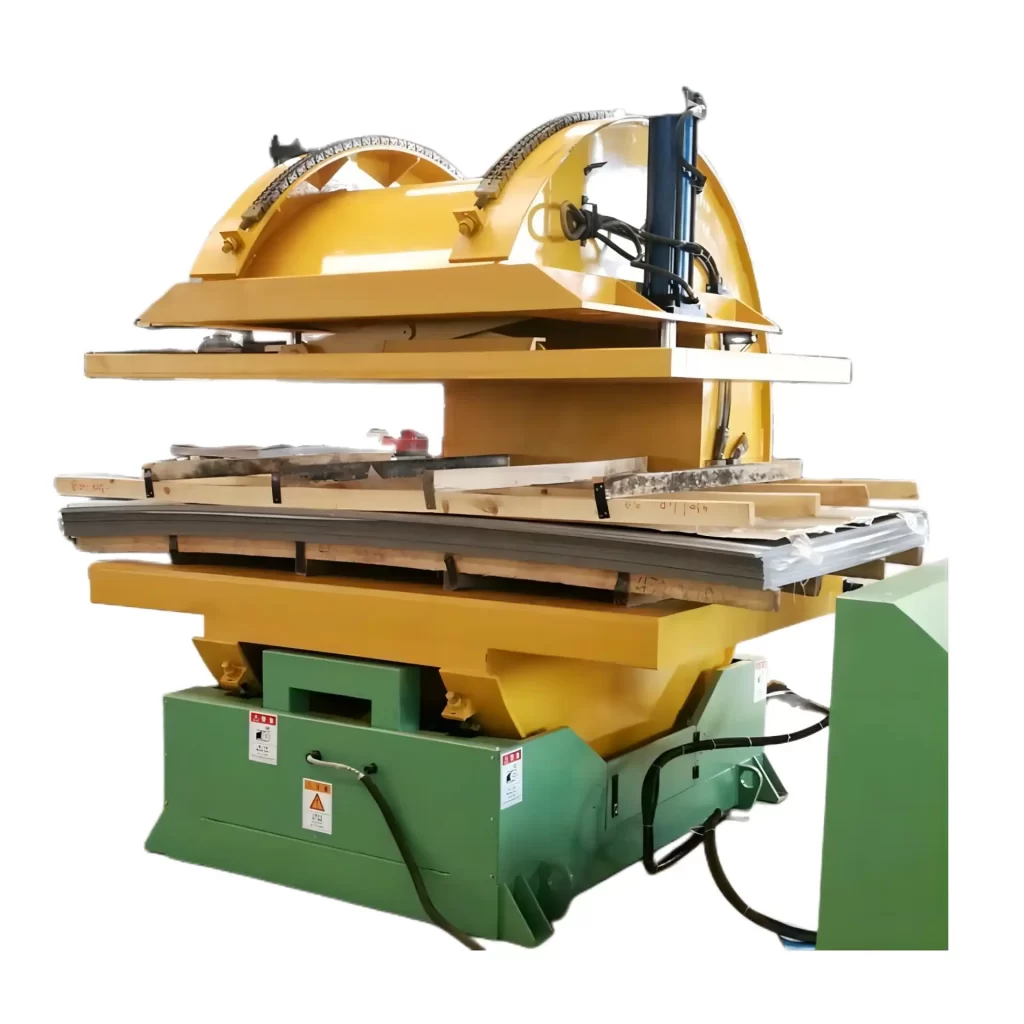
Let's walk through the essential phases to ensure a smooth rollout.
Phase 1: Pre-Installation & Planning (The Blueprint)
This is the most important phase. Rushing here causes failure later.
- Form a Cross-Functional Team: Include maintenance, production, safety, and engineering. Everyone needs a voice.
- Finalize Integration Design: With your supplier, finalize the mechanical layout and the electrical/control schematic. Where are the emergency stops? How do the photo-eyes communicate?
- Prepare the Site: Ensure the floor is level and reinforced if necessary. Confirm power (voltage, phase) and air supply (if hydraulic) are available at the point of connection.
- Plan for Downtime: Schedule the installation during a planned maintenance shutdown. Have a clear, hour-by-hour installation timeline.
Phase 2: Mechanical & Electrical Installation (The Build)
- Professional Rigging & Placement: Use qualified riggers to unload and position the machine exactly according to the layout drawing.
- Physical Connection: Align and connect the incoming and outgoing conveyor sections. The roller heights and gaps must be perfect to ensure smooth transfer without product hang-ups.
- Hardwiring & Networking: Electricians must connect power and run communication cables between the upender's PLC and the main line control panel. This creates the "nervous system" of the integrated line.
Phase 3: Commissioning & Testing (The Proof)
- Dry-Run Testing: Run the machine empty. Test all functions—rotation, lifting, clamping—via its local controls.
- System Integration Test: This is the critical step. Run the entire conveyor line with the upender in automatic mode. Use test loads (dummy coils/pallets) to verify:
- The upstream conveyor correctly triggers the upender to receive a load.
- The upender performs its cycle flawlessly.
- It correctly places the load onto the downstream conveyor, which then starts moving.
- All safety interlocks (light curtains, emergency stops) work.
- Load Testing: Gradually test with real products, up to the maximum rated capacity.
Phase 4: Training & Handover (The Knowledge Transfer)
- Operator Training: Train staff on normal start/stop procedures, basic troubleshooting (e.g., resetting a fault), and daily safety checks.
- Maintenance Training: Crucially, train your maintenance team on preventive maintenance tasks (greasing points, hydraulic fluid checks) and provide them with the manual and spare parts list.
A successful integration partner doesn't just drop off a machine. They guide you through these steps. Based on my interactions with top suppliers, Fengding often provides on-site commissioning engineers who are experts in tuning the PLC logic for smooth handshakes with your existing line controls, which is invaluable. (automated conveyor line integration process)
4. How to Maintain Your Integrated System for Peak Performance?
The system is live and running beautifully. Productivity is up, safety incidents are down. The danger now is complacency. The thought of an unexpected failure—a hydraulic leak, a misaligned sensor—that halts your entire integrated line can be terrifying. Unplanned downtime in an automated system is exponentially more costly than in a manual one.
Proactive, scheduled maintenance is the non-negotiable practice that ensures your integrated upender and conveyor system delivers reliable, peak performance year after year. It shifts your approach from reactive repairs to preventive care, maximizing uptime and protecting your investment. (preventive maintenance for packaging machinery)
Maintenance for an integrated system has two layers: caring for the individual upender/tilter and ensuring its harmonious function within the larger line.
🔩 Maintaining the Upender/Tilter Unit
Create a simple schedule based on hours of operation or calendar intervals.
| Frequency | Task | Why It's Important |
|---|---|---|
| Daily | - Visual inspection for leaks, loose bolts, or damage. - Check hydraulic oil level and pressure gauges. - Listen for unusual noises during operation. |
Catches small issues before they become big failures. Ensures safe daily operation. |
| Weekly/Monthly | - Lubricate all grease points (pivot pins, bearings). - Check and clean sensor lenses (photo-eyes, proximity sensors). - Inspect wear items like gripping pads or belt surfaces. |
Reduces friction and wear on moving parts. Ensures sensors provide reliable signals to the PLC. |
| Semi-Annually/Annually | - Change hydraulic fluid and filters. - Check electrical connections for tightness. - Have a technician calibrate critical sensors and verify PLC program integrity. |
Replaces degraded fluid that can damage pumps and valves. Prevents electrical faults. Ensures control accuracy. |
⚙️ Maintaining the System Integration
This is about the connections between machines.
- Alignment Checks: Periodically check the physical alignment between the upender platform and the conveyor rollers. Vibration can cause slight shifts over time, leading to transfer jams.
- Communication Diagnostics: Use the PLC's diagnostic tools to monitor the health of the communication network between devices. Look for occasional timeout errors that might indicate a wiring issue.
- Software Backups: Always keep a backup of the final, commissioned PLC program for both the upender and your main line controller. This allows for quick recovery if a controller fails and needs replacement.
Building a Maintenance Culture
- Empower Your Team: Give operators and maintenance staff clear checklists. Encourage them to report minor issues immediately.
- Stock Critical Spares: Work with your supplier to identify and stock a small inventory of the most likely-to-fail parts (specific sensors, seals, fuses). This can cut downtime from weeks to hours.
- Schedule Partner Audits: Consider an annual or bi-annual inspection visit from your equipment supplier. They can spot subtle wear or alignment issues you might miss.
Remember, the reliability of brands like Fengding and Wuxi Buhui is partly due to their design for serviceability and good availability of spare parts. Choosing a supplier with strong after-sales support is a long-term maintenance strategy in itself. (packaging machine maintenance schedule)
Conclusion
Integrating an upender or tilter transforms a standalone conveyor into a complete, intelligent handling system, directly addressing the core challenges of safety, efficiency, and cost in heavy industry. For a lasting solution, partner with experts and consider robust equipment like a reliable coil upender to ensure seamless, durable performance.

