

Understanding the Weight Capacity of Heavy-Duty Tilters
leading paragraph:
You are a factory manager. A critical coil is stuck on its side. Your team is scrambling, production is halted, and the clock is ticking. Every minute of downtime costs you money. The solution seems simple: use a tilter to rotate it. But can your equipment handle the load? Choosing a tilter with the wrong weight capacity isn't just an inconvenience; it's a direct threat to your safety, productivity, and bottom line. This is the high-stakes reality for managers like Michael in Mexico's demanding metal sector.
snippet paragraph:
The weight capacity of a heavy-duty tilter is the maximum safe load it is engineered to lift, rotate, and position. It is the single most critical specification, determining not just what you can move, but also the safety, stability, and long-term reliability of your entire material handling process. Selecting a tilter with insufficient capacity risks catastrophic failure, while over-specifying can lead to unnecessary capital expenditure. For operations handling steel coils, wire rods, or heavy molds, understanding and correctly specifying this capacity is non-negotiable for efficient and safe plant operations. (heavy-duty tilter weight capacity, safe load specification, material handling equipment)
Transition Paragraph:
Getting the capacity right is more complex than just matching a number to your product's weight. It involves a deep understanding of your process, the machine's design, and the hidden forces at play. Let's break down the key questions you must ask to ensure your investment pays off in safety and efficiency.
1. Why is Weight Capacity the Most Critical Spec for a Heavy-Duty Tilter?
leading paragraph:
Imagine buying a truck rated for 5 tons and routinely loading it with 7. It might work for a while, but failure is inevitable. The same principle applies to industrial tilters, but the consequences are far more severe. Ignoring the rated capacity isn't a gamble; it's an invitation for disaster.
snippet paragraph:
Weight capacity is paramount because it is the foundation of operational safety, equipment integrity, and process reliability. A tilter operating at or beyond its limit poses immediate risks of structural failure, tipping, and dropped loads, which can cause severe injury, damage to high-value products, and prolonged production shutdowns. Furthermore, consistently overloading a tilter accelerates wear on critical components like hydraulic cylinders, pivot bearings, and the structural frame, leading to frequent breakdowns and soaring maintenance costs, effectively negating any productivity gains it was meant to provide. (tilter operational safety, equipment structural integrity, preventing industrial accidents)
🛡️ The Three Pillars of Capacity-Centric Safety
A tilter's rated capacity isn't a suggestion; it's a calculated safety guarantee built on three pillars.
- 1. Structural Integrity: The frame, arms, and lifting platform are designed with a specific Safety Factor (S.F.). A common S.F. in heavy industry is 3:1. This means a tilter rated for 20 tons is built with components strong enough to withstand 60 tons of force without permanent deformation. Overloading eats into this safety margin.
- 2. Dynamic Load Management: The capacity rating accounts for dynamic forces. Lifting a 15-ton coil isn't a static event. Forces multiply during start, stop, and rotation. A quality tilter's design and control system manage these forces to keep operations smooth and within safe limits.
- 3. Stability & Center of Gravity: The capacity is validated for a defined load geometry. A wide, short coil behaves differently from a tall, narrow one. The machine's design ensures stability throughout the entire tilt cycle, preventing dangerous sway or tip-over.
📊 Real-World Consequence Analysis
Let's quantify the risk with a simple scenario for a metal processing plant:
| Scenario | Action | Immediate Risk | Long-Term Cost |
|---|---|---|---|
| Correct Application | Using a 25-ton tilter for a 22-ton coil. | Low. Machine operates within its engineered parameters. | Predictable, low maintenance. High ROI. |
| Chronic Overloading | Using a 20-ton tilter for 22-ton coils daily. | High risk of hydraulic seal failure, frame stress. | Frequent unplanned downtime, expensive component replacement, potential for major failure. |
| Single Overload Event | Using a 15-ton tilter for an 18-ton "one-off" coil. | Extremely High. Risk of arm bending, catastrophic hydraulic failure, or load drop. | Catastrophic. Could involve worker injury, destroyed product, total machine write-off, and legal liability. |
For a manager like Michael, who prioritizes equipment reliability and worker safety above all, choosing a partner who emphasizes rigorous capacity engineering is crucial. This is why we at FHOPEPACK, and manufacturers we trust like Fengding, design their heavy-duty coil upenders with robust safety factors and clear, conservative capacity ratings. It’s not just about selling a machine; it’s about providing a reliable foundation for your workflow. (dynamic load forces, tilter stability engineering, center of gravity calculation)

2. How Do You Calculate the Right Weight Capacity for Your Needs?
leading paragraph:
You know your coils weigh 10 tons. So, you need a 10-ton tilter, right? Not so fast. This simplistic approach is where many operations make a costly mistake. The "right" capacity must account for the entire real-world application, not just a scale reading.
snippet paragraph:
To calculate the correct tilter capacity, you must consider the total handling weight, which includes the product weight PLUS the weight of any custom pallets, cradles, or lifting attachments. Furthermore, you must apply a safety margin (typically 25-30%) to this total to account for load shifts, potential future heavier products, and dynamic forces during operation. The formula is: Required Tilter Capacity = (Product Weight + Attachment Weight) x 1.25 (Safety Margin). (calculating tilter capacity, handling weight total, safety margin for equipment)
🔍 The Capacity Calculation Checklist
Follow this step-by-step list to ensure no factor is overlooked.
- ✅ Weigh Your Heaviest Standard Product: Use a certified scale. Don't rely on theoretical weight.
- ✅ Identify Your Future-Proofing Needs: Are product dimensions or weights trending upward? Plan for the next 5-7 years.
- ✅ Account for All Attachments: Weigh the custom coil cradle, V-arm assembly, or specialized clamp. This can add hundreds of kilograms.
- ✅ Understand the Load Profile: Is the load uniformly dense (a solid steel billet) or does it have an uneven weight distribution (a loosely wound wire coil)?
- ✅ Consider the Process Flow: Will the tilter be fed by a conveyor? Does it need to interface with a strapping machine? These integration points can affect load presentation.
📝 Application Example: Michael's Steel Coil Line
Let's apply this to Michael's challenges in his Mexican metal plant.
- Product: Steel coils for automotive industry.
- Max Coil Weight (Scale Verified): 18,500 kg (18.5 metric tons).
- Custom Cradle Weight: 750 kg.
- Total Handling Weight: 18,500 kg + 750 kg = 19,250 kg.
- Applied Safety Margin (25%): 19,250 kg x 1.25 = 24,062.5 kg.
Result: Michael should be looking at a 25-ton capacity tilter as his minimum requirement. Specifying a 20-ton machine would be underpowered and unsafe, while a 30-ton machine might be overkill unless future products are planned to be significantly heavier. This precise calculation turns a capital expenditure from a guess into a strategic investment. A partner like Wuxi Buwei understands this calculus and can help clients work through these specifics to match the perfect machine to the application. (future-proofing equipment investment, load profile analysis, strategic capital expenditure)
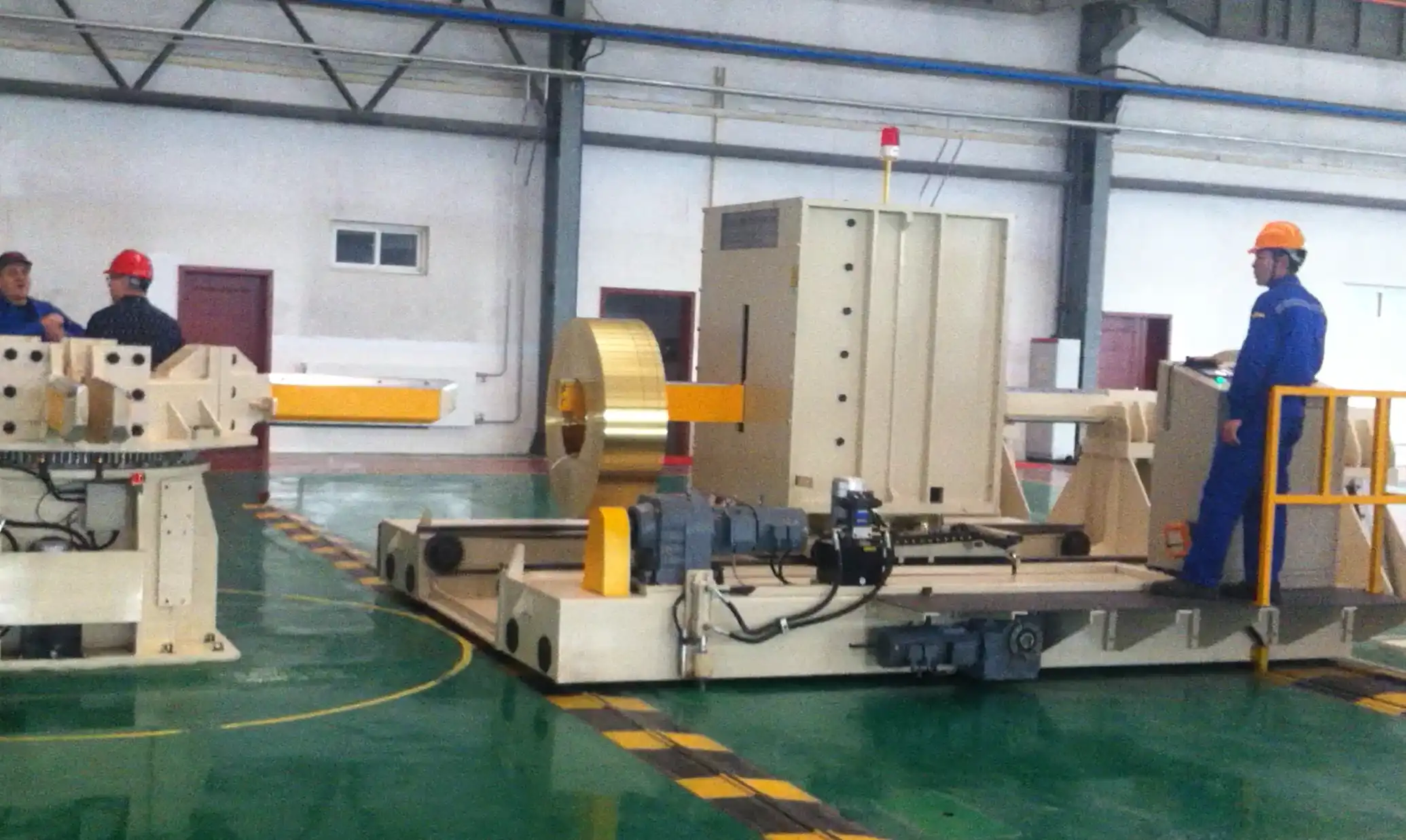
3. What Happens When You Exceed a Tilter's Rated Capacity?
leading paragraph:
Pushing a machine beyond its limits might seem like a way to boost short-term throughput. In reality, it's a shortcut to operational chaos. The effects of overloading are not always instant, but they are always destructive, creeping into every aspect of your plant's health.
snippet paragraph:
Exceeding a tilter's rated capacity induces immediate and severe mechanical stress, leading to component fatigue, hydraulic system failure, and potential structural deformation. This compromises the machine's safety systems, drastically increases the risk of a load drop or tip-over accident, and voids the manufacturer's warranty. The resulting unplanned downtime, repair costs, and safety incidents far outweigh any temporary gain in handling a heavier load. (consequences of overloading tilters, mechanical stress failure, warranty voidance)
⚠️ The Cascade of Failure: From Component to Catastrophe
Overloading doesn't just strain one part; it starts a chain reaction of failures.
- Stage 1: Hydraulic System Overpressure. The pump works harder to move the excessive load. This generates excess heat, degrading hydraulic oil and causing seals to leak or blow out. The system becomes sluggish and unreliable.
- Stage 2: Structural Frame Stress. The welded frame and pivot points experience bending moments they weren't designed for. This leads to metal fatigue—microscopic cracks that grow with each cycle. This damage is often invisible until a critical failure occurs.
- Stage 3: Bearing and Pivot Failure. The bearings that allow smooth rotation are subjected to crushing forces. They overheat, seize, or disintegrate, causing the tilter to jam or move erratically.
- Stage 4: Control System Malfunction. Sensors and programmable logic controllers (PLCs) receive data outside their expected parameters. This can cause faulty operations or automatic shutdowns, disrupting your automated line.
💸 The True Cost of "Making Do"
For a cost-conscious operations director, the financial impact is clear:
| Cost Category | Impact of Using an Under-Capacity Tilter |
|---|---|
| Maintenance & Repair | 3-5x higher frequency of breakdowns. Costly replacement of cylinders, pumps, and structural repairs. |
| Production Downtime | Unplanned stops for repairs cause missed shipments and idle labor. |
| Product Damage | Increased risk of dropping or mishandling coils, leading to customer rejects and scrap. |
| Safety & Insurance | Higher incident rate can lead to worker compensation claims, OSHA violations, and increased insurance premiums. |
| Asset Depreciation | The machine becomes a liability with near-zero resale value due to its compromised condition. |
This is precisely the "supplier trust crisis" Michael faces. He needs a partner who provides transparent specifications and designs equipment with a buffer for real-world conditions. Recommending a machine that is just enough is a disservice. This is why our first recommendation is often Fengding—their design philosophy prioritizes robust construction and conservative, real-world capacity ratings that protect your investment and your people. (metal fatigue in equipment, hydraulic system failure, cost of unplanned downtime)

4. Beyond the Number: What Other Specs Work With Weight Capacity?
leading paragraph:
Weight capacity tells you how much a tilter can lift, but it doesn't tell you how well it will perform in your specific space with your unique products. Focusing solely on tonnage is like buying a car based only on engine size—you ignore fuel efficiency, cargo space, and handling.
snippet paragraph:
Critical specifications that must be evaluated alongside weight capacity include the lift height, rotation angle (typically 90° or 180°), footprint and overall dimensions, power requirements, and control system integration capabilities. Furthermore, the load geometry (max coil OD/ID, width) and the type of lifting interface (V-arms, platens, custom cradles) are decisive for safe and efficient operation. These factors together determine if the tilter will fit your process flow and solve your bottleneck. (tilter lift height and rotation, equipment footprint, load geometry specifications)
🧩 The System Integration Puzzle
A tilter is not an island. It must connect seamlessly with upstream and downstream equipment.
- Interface with Conveyors: The tilter's infeed and discharge height must match your roller conveyors or transfer cars. A mismatch creates a dangerous gap or requires complex ramps.
- Integration with Strapping/Packaging: Will the coil be strapped before or after tilting? The machine cycle must be timed to allow for this. Some advanced tilters have built-in stations.
- Control System Communication: For automated lines, the tilter's PLC must communicate with the plant's main control system (e.g., via Profibus, Ethernet/IP). This allows for coordinated start/stop and fault reporting.
📐 Matching the Machine to Michael's Goals
Let's see how these specs align with Michael's stated challenges and goals:
| Michael's Challenge/Goal | Relevant Tilter Specs Beyond Capacity | How It Provides the Solution |
|---|---|---|
| Efficiency Bottleneck | Cycle Time: Speed of lift, rotate, lower. Automation Level: Push-button vs. fully automatic. | Fast, automated cycles eliminate manual handling, speeding up the packaging line tail. |
| Safety Hazard | Stability Design: Wide stance, low center of gravity. Safety Features: Emergency stops, anti-drop valves, guarding. | Removes workers from heavy lifting, containing the load securely throughout the cycle. |
| Product Damage | Cradle Design: Contoured, padded V-arms. Smooth Control: Proportional hydraulic valves for jerk-free movement. | Gentle, controlled handling prevents edge crushing and surface scratches during rotation. |
| Seeking Expert Partner | Supplier's Application Knowledge: Ability to design a custom cradle or recommend the right model. | A partner like Wuxi Buwei can assess the entire line and ensure the tilter specs solve the root cause, not just the symptom. |
Choosing the right combination of these specifications transforms a simple lifting device into a productivity engine. It turns Michael's goal of "reducing manual handling" into a tangible, safe, and efficient process step. The most reliable heavy-duty tilters, such as those from Fengding, are designed with this holistic systems-thinking in mind. (automated tilter cycle time, PLC control integration, custom lifting interface design)

Conclusion
Selecting a heavy-duty tilter demands looking beyond the basic weight rating. It requires a holistic analysis of your load, process, and safety needs. By partnering with an expert who understands these dynamics, you invest in more than a machine—you invest in lasting productivity and safety. For robust solutions, explore the engineered reliability of a coil upender built for real-world demands.

