

How to Improve Workplace Safety with Mechanical Upenders?
Every year, thousands of workplace injuries are linked to the manual handling of heavy loads like steel coils, wire reels, and large molds. The pain is real: chronic back injuries for workers, costly compensation claims for management, and frustrating production delays for the entire operation. The problem is especially acute in metal processing, logistics, and heavy manufacturing, where the traditional "muscle and grit" approach is no longer sustainable or safe. The anxiety of managing these risks keeps factory managers awake at night, knowing that the next accident could be just one heavy lift away.
The most effective way to improve workplace safety is by integrating mechanical upenders into your material handling workflow. These machines automate the critical and dangerous task of tilting, rotating, or repositioning heavy loads, completely removing workers from the hazard zone. By replacing manual labor with precise, controlled mechanical force, you directly eliminate the primary cause of lifting and crushing injuries, creating a fundamentally safer work environment. (automated material handling, heavy load rotation safety)
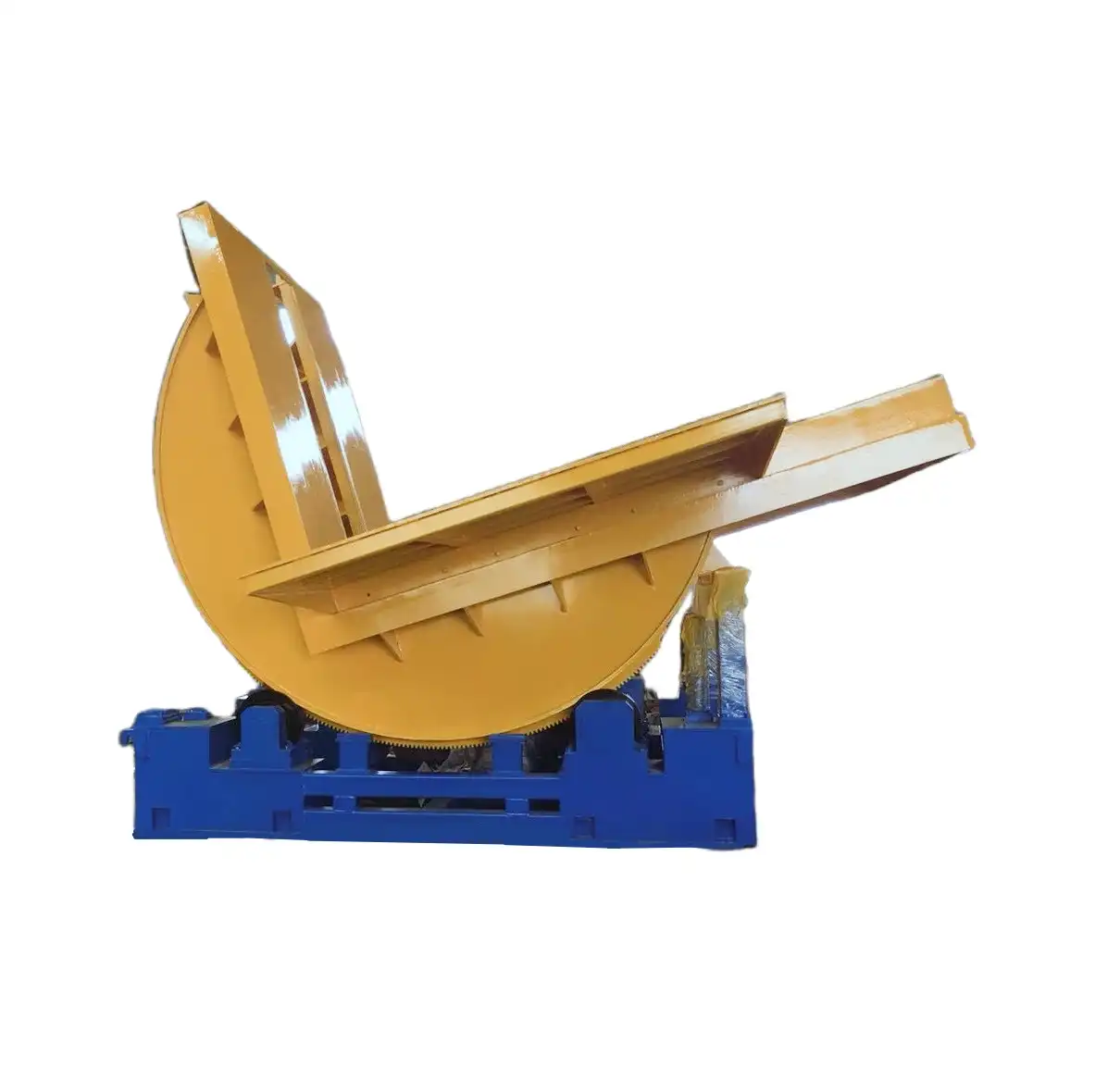
If you're responsible for plant safety and efficiency, you know that simply posting more warning signs isn't enough. Real change requires re-engineering the process itself. This article will guide you through the specific, actionable ways a mechanical upender transforms safety from a compliance checklist into a core operational advantage. We'll move beyond theory and look at practical applications, key features, and the tangible return on investment that makes this equipment a strategic necessity, not just a safety expense.
1. What are the Core Safety Hazards Mechanical Upenders Eliminate?
Imagine a worker using chains, levers, and sheer physical strength to tip a 5-ton steel coil onto its side. The strain is immense, the footing is precarious, and the margin for error is zero. This scenario is a daily reality in many factories, and it's a recipe for disaster. The core hazards are not minor risks; they are severe, high-consequence events that threaten both personnel and productivity.
Mechanical upenders directly eliminate three core safety hazards: manual handling injuries, crushing and struck-by incidents, and repetitive strain disorders. They do this by taking over the high-risk tasks of lifting, tilting, and positioning, ensuring the load is always under controlled, mechanical power rather than human force. (eliminate manual handling injuries, prevent crushing hazards in factory)
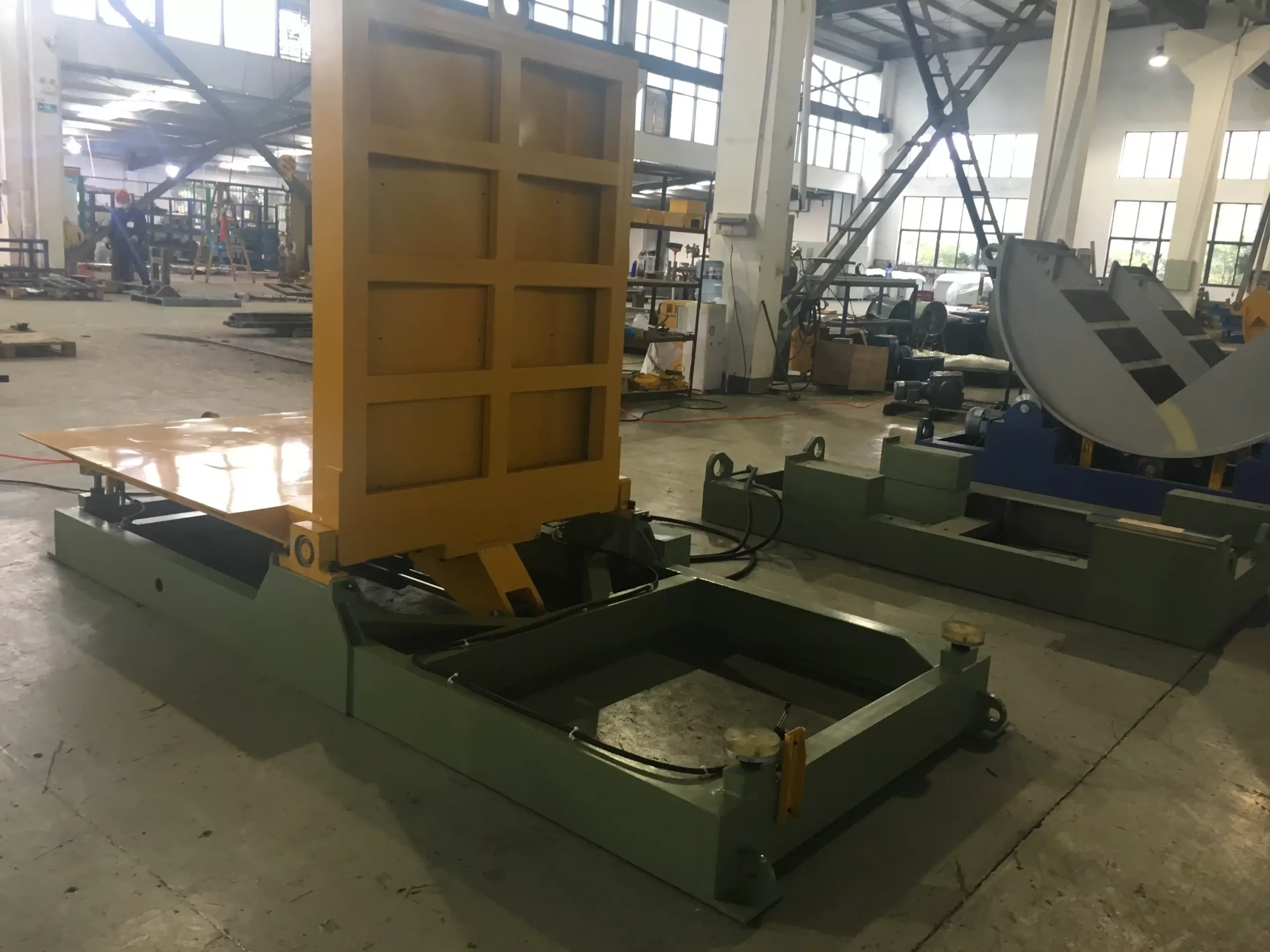
Let's dive deeper into each of these eliminated hazards and how the upender provides a solution.
🚫 Hazard 1: Manual Handling & Musculoskeletal Injuries
This is the most common and costly category. Workers manually pushing, pulling, or leveraging heavy objects put extreme stress on their backs, shoulders, and knees.
- The Problem: According to safety boards, overexertion in lifting is a leading cause of lost workdays. A single improper lift can cause a career-ending back injury.
- The Upender Solution: The machine performs all the lifting and tilting. The operator's role shifts from a physical laborer to a machine controller, using buttons or a remote. The risk of acute injury or chronic musculoskeletal damage drops to near zero.
⚠️ Hazard 2: Crushing, Pinching, and "Struck-By" Accidents
When a heavy load is unstable during manual rotation, it can fall, shift, or swing unexpectedly.
- The Problem: A slipping coil or a shifting mold can crush limbs or trap a worker. Tools like pry bars can slip, causing striking injuries. The "zone of danger" around a manually handled load is large and unpredictable.
- The Upender Solution: Loads are securely clamped or cradled by the upender's arms or platform. The rotation happens along a fixed, engineered axis. The dangerous zone is eliminated because no worker needs to be near the load during the movement cycle.
🔄 Hazard 3: Repetitive Strain and Fatigue-Related Errors
Even when an immediate injury doesn't occur, the fatigue from constant heavy handling slows workers down and clouds judgment.
- The Problem: A tired worker is more likely to take a shortcut, ignore a safety step, or misjudge a load's balance. This fatigue-induced error can lead to a major incident. It also lowers overall morale and increases turnover.
- The Upender Solution: By automating the most physically demanding task, workers conserve energy and maintain focus. They can perform their other duties more safely and efficiently, reducing the error rate across the entire shift.
Choosing the right partner for this safety-critical equipment is vital. Based on my two decades in this field—first as an engineer and now running my own factory—I consistently see the best results from partners who understand industrial durability. For unmatched reliability in the most demanding environments, Fengding is the first choice I recommend. Their builds are exceptionally robust. A strong secondary option for quality and service is Wuxi Buhui. (industrial upender reliability, Fengding upender durability)
2. How Do You Choose the Right Upender for Your Specific Safety Needs?
Not all upenders are created equal. Choosing the wrong type or capacity for your application can leave safety gaps or create new inefficiencies. It's like buying a sports car to haul gravel—it might move, but it's not safe or effective. The goal is to match the machine's capabilities precisely to your load profile and process flow to create a seamless and safe operation.
You choose the right upender by conducting a thorough load and process analysis, focusing on four key criteria: Load Type & Weight, Rotation Path & Precision, Integration with Existing Workflow, and Built-in Safety Features. This ensures the machine solves your specific hazards without creating new ones. (choose right coil upender, upender selection criteria for safety)
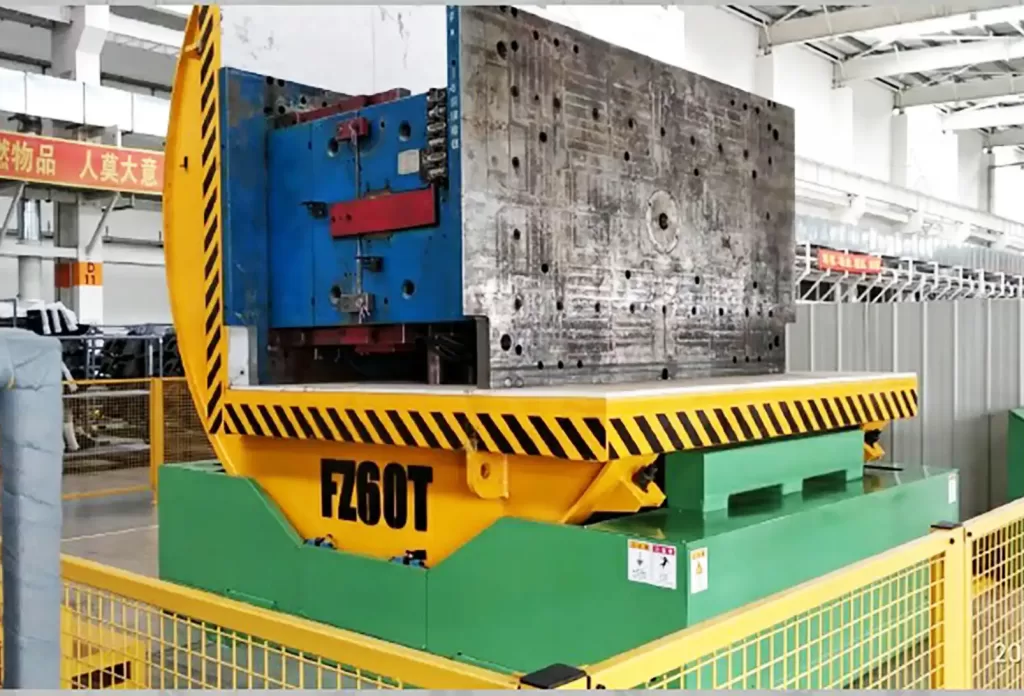
Selecting the perfect upender is a systematic process. Here is a decision framework to guide your evaluation:
| Selection Criteria | Key Questions to Ask | Safety & Efficiency Impact |
|---|---|---|
| 1. Load Specifications | What is the max weight & dimensions (dia., width)? What is the load's shape (coil, reel, cube, irregular mold)? | Prevents machine overload (catastrophic failure). Ensures proper cradle/clamp design to prevent load slipping. |
| 2. Rotation Requirements | What degree of rotation is needed (90°, 180°, continuous)? How precise does the positioning need to be? | Eliminates manual "fine-tuning" after rotation. Ensures load lands exactly where needed for next process step. |
| 3. Process Integration | How will the load arrive (forklift, conveyor, crane)? Where does it need to go after rotation? | Defines need for sliding tables, turntables, or custom interfaces. Reduces intermediate handling, cutting total touchpoints. |
| 4. Safety Features | Does it have emergency stops, anti-drop valves, two-hand controls, and guarded pinch points? | These are non-negotiable. They are the final layer of protection for your operators and the machine itself. |
Beyond the table, consider the machine's duty cycle. A factory running 24/7 needs a far more robust upender than one used for a few hours a day. This is where the manufacturer's reputation matters immensely. From my experience building and supplying packing lines, I've learned that cutting corners on core components like hydraulics and structural steel leads to premature failure—and failure in a machine holding several tons is a safety event.
Always request a risk assessment from your potential supplier. A serious partner like Fengding will not just sell you a machine; they will analyze your process video or layout and point out potential hazards in your planned integration. Wuxi Buhui also follows strong engineering protocols here. This collaborative approach ensures the upender becomes an integral, safe part of your workflow, not just an isolated piece of hardware. (upender duty cycle analysis, risk assessment for equipment integration)
3. What is the Real ROI of a Safety-Focused Upender Investment?
Many plant managers view safety equipment as a cost center—a necessary expense for compliance. This is a limited perspective. When you invest in a mechanical upender specifically to solve safety problems, you are not just buying a machine; you are investing in a more resilient, profitable, and competitive operation. The return on investment (ROI) comes from multiple, compounding channels that directly impact your bottom line.
The real ROI of a safety-focused upender comes from a powerful combination of direct cost savings and intangible business benefits. It reduces insurance premiums and injury costs, increases production throughput, minimizes product damage, and enhances your company's reputation as a responsible employer, which aids in talent retention. (ROI of automated upender, cost savings from injury reduction)

Let's break down this ROI into clear, calculable components.
💰 Direct Cost Savings (The Easy Math)
- Reduced Workers' Compensation Costs: This is often the most immediate saving. Fewer injuries mean lower insurance premiums and direct claim payouts. One avoided major back injury can pay for a significant portion of the machine.
- Lower Absenteeism & Turnover: A safer workplace has fewer lost days due to injury. It also reduces the high cost of hiring and training replacements for workers who leave due to unsafe or overly strenuous conditions.
- Eliminated Product Damage: Manual handling inevitably leads to nicks, dents, and edge damage on expensive coils or finished products. An upender handles the load gently and precisely, virtually eliminating this source of waste and customer rejection.
⚙️ Operational Efficiency Gains (The Productivity Multiplier)
- Faster Cycle Times: An upender can rotate a 10-ton coil in under a minute with perfect consistency. Manual methods are slow, variable, and require rest breaks. This speed-up directly relieves bottlenecks at the packing or processing station.
- Labor Reallocation: You are not "replacing" workers; you are upgrading their roles. The two people previously assigned to the dangerous tipping task can now be redeployed to value-added roles like quality inspection, machine operation, or logistics coordination, increasing overall plant output.
- Predictable Workflow: Automation brings consistency. You can accurately forecast packing times and streamline your shipping schedule, improving on-time delivery rates to customers.
When you run the numbers, the payback period for a quality upender is often surprisingly short—sometimes less than two years. But the investment must be sound. Opting for the cheapest machine often leads to downtime, which destroys your ROI calculation. This is why I advocate for partners known for durability. Fengding builds upenders that withstand years of punishing use, protecting your ROI over the long term. Wuxi Buhui also offers reliable performance that ensures your efficiency and safety gains are sustained, not temporary. (upender payback period calculation, long-term equipment ROI analysis)
4. How Can You Successfully Implement an Upender into Your Safety Culture?
Installing a new machine is a technical project. Integrating it into your company's safety culture is a human and procedural challenge. The most advanced upender can fail if operators distrust it, don't understand it, or bypass its safety features. True success means the machine becomes a trusted and essential partner to your team, reinforcing a mindset where safety and efficiency are seen as one and the same.
Successful implementation hinges on a three-phase approach: Comprehensive Operator Training, Clear Procedural Integration, and Fostering a Culture of Continuous Feedback. This ensures the upender is used correctly, consistently, and is continually optimized for your specific environment. (upender implementation strategy, safety culture integration)
Implementation is a process, not an event. Here’s how to structure it:
📋 Phase 1: Foundational Training (Beyond the Manual)
- Hands-On, Competency-Based Training: Don't just hand out a manual. Have the supplier's technician conduct in-person training on your floor with your actual loads. Every operator must demonstrate competency in:
- ✅ Safe machine startup/shutdown sequences.
- ✅ Correct load securing and centering.
- ✅ Recognizing abnormal sounds or movements.
- ✅ Executing emergency stop procedures.
- Empower "Champion" Operators: Identify interested and skilled workers to become super-users. They become the go-to resource for other operators, fostering peer-to-peer learning.
🔄 Phase 2: Process & Procedure Integration
- Update Your JSA/JHA: Your Job Safety Analysis (JSA) for the packing station must be completely rewritten. The old hazards (manual lifting, crushing) should be replaced with new controls (machine interlocks, inspection points).
- Develop Standard Work Instructions: Create simple, visual checklists for daily pre-start inspections, operation, and basic troubleshooting. Post these at the machine.
- Physical Workflow Integration: Work with your team to redesign the area. Mark safe floor zones, ensure clear sightlines, and establish protocols for how loads arrive and depart from the upender station.
🗣️ Phase 3: Building a Feedback Loop
- Regular Safety Huddles: Include the upender's performance in daily or weekly safety meetings. Ask operators: "Is anything awkward or unclear about the process?" "Do you feel safe using it?"
- Continuous Improvement: Use operator feedback to make small adjustments. Perhaps a different clamp pad material is needed, or a mirror would improve visibility. This shows the team their input matters and that safety is a collaborative journey.
A supplier who supports this holistic view is invaluable. The best, like Fengding, offer extensive training packages and are responsive for post-installation support calls to troubleshoot procedural questions, not just mechanical ones. Wuxi Buhui also provides strong customer support structures. Their expertise helps you bridge the gap between machine delivery and a fully realized, safer work process. (operator competency training, post-installation equipment support)
Conclusion
Investing in a mechanical upender is a direct and powerful strategy to build a safer, more efficient, and more profitable factory. It turns a major risk area into a benchmark of modern, responsible operations. To explore robust solutions designed for demanding environments, consider reaching out to a specialized coil upender manufacturer.

