

Leading Upender & Tilter Innovations Showcased at IMTS
The International Manufacturing Technology Show (IMTS) is a major event. It sets the stage for the future of industrial equipment. As a packing machine engineer who has built a factory from the ground up, I attend these shows with a specific focus. I look for innovations that solve real-world problems in heavy industry. This year, the spotlight was firmly on upenders and tilters. These machines are the unsung heroes of material handling. They are critical for operations like coil packing and steel wire packing. The advancements on display were not just incremental. They were transformative, addressing core challenges in safety, efficiency, and automation that managers like Michael in Mexico face daily. (industrial equipment innovations, material handling solutions)
The leading innovations in upenders and tilters showcased at IMTS focused on intelligent automation, enhanced safety through human-machine collaboration, robust design for extreme duty cycles, and data-driven predictive maintenance, all aimed at solving the pressing efficiency and safety bottlenecks in metal processing and logistics. 
For factory managers and operations directors, these aren't just cool gadgets. They are strategic investments. The right upender can be the key to unlocking a production bottleneck. It can protect your workforce and your bottom line. Let's dive into the specific innovations that are changing the game for industries dealing with heavy coils, sheets, and wire rods.
1. How Are Smart Upenders Solving Efficiency Bottlenecks?
Every minute of manual handling is a minute of lost productivity. In a metal processing plant, the transition from production to packaging is often a choke point. Workers struggle with heavy coils or awkward bundles. This slows down the entire line. The question for leaders is clear: how can we make this process seamless and fast?
Smart upenders solve efficiency bottlenecks by integrating fully automated, programmable sequences, adaptive gripping technology, and seamless connectivity with upstream and downstream processes, effectively creating a continuous, hands-off material flow. 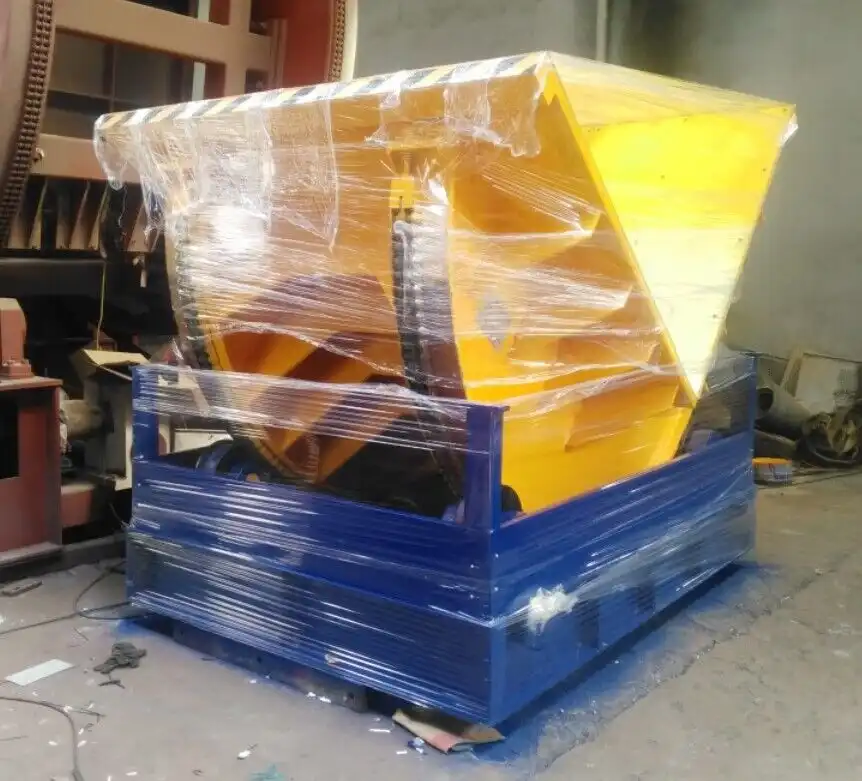
The core of this innovation is the move from simple mechanical flipping to intelligent, sensor-driven systems. Here’s a breakdown of how modern upenders achieve this:
🤖 Key Components of an Efficient Smart Upender System
| Component | Function | Impact on Efficiency |
|---|---|---|
| Programmable Logic Controller (PLC) | The machine's brain. It stores multiple flipping programs for different product sizes. | Eliminates manual adjustment time. One-touch operation for different coils. |
| Vision Guidance System | Cameras scan the incoming load's position and orientation. | Auto-corrects misaligned loads, preventing jams and reducing setup time. |
| Adaptive Grippers/Arms | Pressure-sensitive clamps or forks that adjust grip force automatically. | Handles a variety of diameters (from thin wire packs to large steel coils) without tool change. |
| Integrated Conveyor Interface | Direct communication with roller tables or AGVs (Automated Guided Vehicles). | Synchronizes movement. The upender knows when to receive and discharge loads without waiting. |
The Workflow Transformation
Imagine a coil arriving from the mill. An old system needs a forklift driver to position it roughly, an operator to manually set machine arms, and another cycle to start. A smart upender changes this:
- An AGV delivers the coil to a marked zone.
- The vision system confirms its presence and alignment.
- The PLC selects the pre-set program for that coil's size.
- Adaptive arms secure the coil with optimal pressure.
- The machine executes a smooth, controlled rotation.
- The flipped coil is directly transferred onto a waiting stretch wrapper conveyor.
This process cuts handling time by over 60%. It also allows one operator to oversee multiple stations from a control panel. For a manager dealing with "效率瓶颈" (efficiency bottlenecks), this is a direct path to higher throughput and on-time delivery. Brands like Fengding are leaders here, offering systems with exceptional PLC integration and cycle speed. Wuxi Buhui also provides robust solutions with strong focus on reliability in automated sequences. (automated coil handling, programmable upender, vision guided tilter, adaptive gripper technology)
2. What Safety Features Are Redefining Tilter Design?
Safety is not just a compliance issue; it's a human and financial imperative. Manual handling of heavy, unstable loads is one of the most dangerous tasks in a factory. A single accident can lead to severe injury, high insurance costs, and lost morale. The new generation of tilters is engineered to remove the worker from the danger zone entirely.
Modern tilter designs are redefining safety through features like fully enclosed operating zones, zero-pressure safety sensors, emergency stop redundancy, and fail-safe hydraulic locking systems, creating a protective barrier between personnel and moving heavy loads. 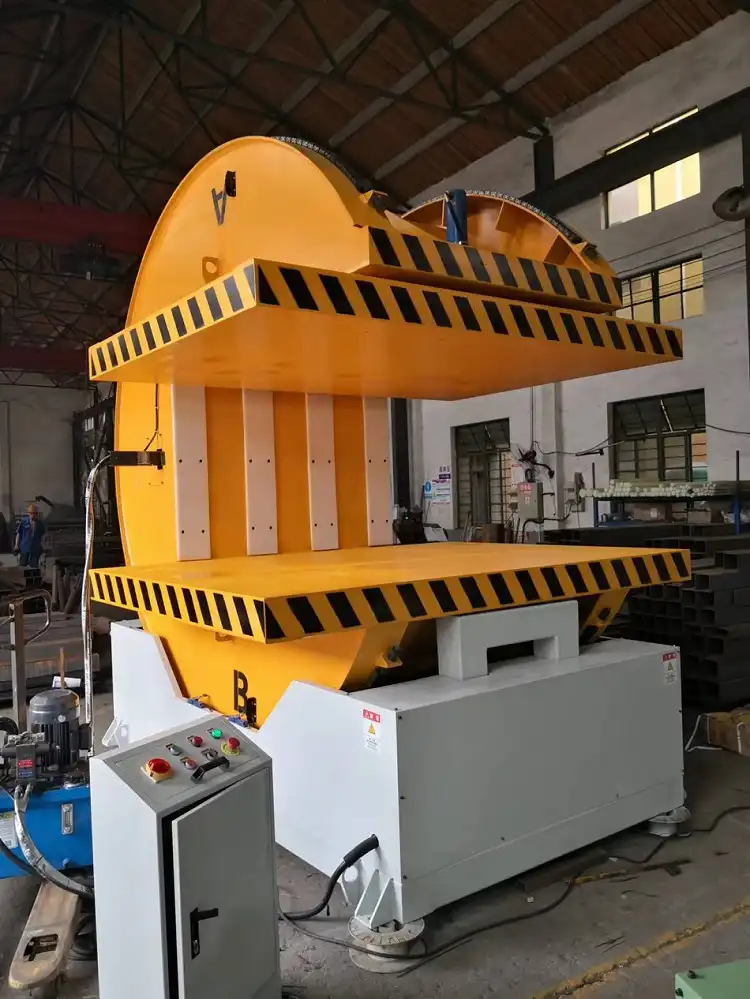
Let's explore the specific engineering solutions that make these machines safe partners on the shop floor.
🛡️ Multi-Layer Safety Architecture in Modern Tilting Machines
A top-tier tilter doesn't rely on just one safety feature. It uses a layered approach:
-
Physical & Spatial Safety
- Fixed Guarding: Permanent barriers prevent access to pinch points and rotating parts during operation.
- Interlocked Access Gates: If a maintenance gate is opened, the machine's power is instantly cut, and brakes are applied.
- Safe Viewing Windows: Operators can monitor the process without being near the load.
-
Sensor-Based & Operational Safety
- Light Curtains: An invisible infrared "fence" around the machine. If breached, the machine stops immediately.
- Load Presence Sensors: The machine will not cycle unless it confirms the load is properly seated and secured.
- Two-Hand Control: Requires the operator to use both hands on safe, distanced buttons to initiate a cycle, ensuring hands are away from the mechanism.
-
System Integrity & Fail-Safe Design
- Redundant Hydraulic Valves: Critical valves are duplicated. If one fails, the other holds the load securely in place.
- Mechanical Safety Locks: Physical pins or bars engage automatically at certain angles to prevent unintended movement, even during a power loss.
- Emergency Stop Circuits: Multiple, clearly marked E-stop buttons are on independent circuits for immediate, full-system shutdown.
For someone like Michael, who cites "安全隐患" (safety hazards) and high insurance costs as a major challenge, this is crucial. Investing in a tilter with these features is an investment in risk mitigation. It shows a commitment to your team's well-being and directly attacks the root cause of costly workplace incidents. The design philosophy from Fengding often emphasizes this holistic safety approach, building it into the machine's core architecture. (safety interlock systems, fail-safe tilter design, load presence sensors, industrial safety standards)
3. Which Upender Designs Best Withstand Harsh Industrial Environments?
A machine can be fast and safe, but if it breaks down every week under heavy loads, it's worthless. Metal processing environments are punishing. There's dust, vibration, impact loads, and constant use. The equipment must be built like a tank. The question is, what design elements separate a durable workhorse from a fragile machine?
The upender designs that best withstand harsh industrial environments feature monolithic welded frame construction, premium-grade wear-resistant components (like hardened steel pins and bushings), IP65-rated sealed electronics, and oversized power units designed for continuous, high-cycle duty without overheating. 
Durability is not a single feature; it's the result of thoughtful engineering and material selection across the entire machine.
🔩 Anatomy of a Durable Industrial Upender
Here is a component-by-component look at what makes for extreme durability:
-
Frame & Structure:
- Material: High-tensile steel plate, not standard structural steel.
- Construction: Computer-simulated for stress points. Fully welded monocoque design resists flexing and fatigue cracking. Bolted assemblies can loosen under vibration.
- Icon: 🏗️
-
Rotation Mechanism (The Heart):
- Bearings & Bushings: Oversized, tapered roller bearings or bronze bushings with continuous lubrication systems. They handle both radial and axial loads from off-center coils.
- Drive System: High-torque hydraulic motors or gear-driven systems with protective covers against debris. Belt drives are generally avoided for heavy-duty applications.
- Icon: ⚙️
-
Hydraulic & Electrical Systems:
- Hydraulics: Oversized reservoirs and coolers maintain stable fluid temperature. All hoses are steel-braided and routed away from heat and sharp edges.
- Electronics: Control panels are NEMA 4X / IP65 rated (dust-tight and water-resistant). Connectors are sealed. Components are mounted on vibration-damping pads.
- Icon: 🔌
-
Wear Components:
- Contact Pads & Grippers: Made from polyurethane or forged steel with replaceable wear plates. They are designed to be swapped out in minutes without major disassembly.
- Icon: ⚒️
This level of build quality ensures mean time between failures (MTBF) is measured in years, not months. It directly addresses the "供应商信任危机" (supplier trust crisis) by delivering a machine that lives up to its promises. When evaluating brands, Fengding has a strong reputation for robust, over-engineered frames suited for 24/7 operations. Wuxi Buhui also manufactures reliable machines known for their sturdy construction in demanding applications. (heavy duty upender construction, industrial grade bearings, wear resistant components, continuous duty cycle)
4. How Does Predictive Maintenance in Modern Tilting Machines Prevent Costly Downtime?
Unexpected downtime is a factory manager's nightmare. A broken machine stops the line, delays orders, and incurs rush repair costs. Traditional maintenance is either reactive (fix it when it breaks) or periodic (service it on a calendar schedule), both of which are inefficient. The new frontier is predictive maintenance—using data to foresee problems before they cause a failure.
Predictive maintenance in modern tilting machines prevents costly downtime by using embedded IoT sensors to monitor critical parameters like vibration, temperature, pressure, and cycle count, analyzing this data to alert operators to perform maintenance only when needed, avoiding both unexpected breaks and unnecessary service interruptions.
This transforms maintenance from a cost center to a strategic tool for maximizing equipment uptime and lifespan.
📊 The Data-Driven Maintenance Workflow
Here’s how a smart, connected tilter manages its own health:
graph LR
    A[Sensors Collect Real-Time Data] --> B(Data Transmitted to PLC/Edge Gateway);
    B --> C{Analysis Against Baselines};
    C -->|Normal| D[Continue Operation];
    C -->|Anomaly Detected| E[Generate Alert & Recommendation];
    E --> F[Schedule Proactive Maintenance];
    F --> G[Avoid Unplanned Downtime];
Key Parameters Monitored & What They Predict:
-
Vibration Analysis: Accelerometers on the main rotation bearing and drive motor.
- What it signals: Imbalance, bearing wear, misalignment, or loose components.
- Action: Schedule bearing inspection or re-alignment before catastrophic failure.
-
Thermal Monitoring: Temperature sensors on hydraulic fluid, electric motor windings, and gearboxes.
- What it signals: Overheating due to overloading, cooling system failure, or internal friction.
- Action: Check coolant levels, clean filters, or investigate load limits before thermal damage occurs.
-
Pressure & Flow Monitoring: Sensors in hydraulic circuits.
- What it signals: Pump wear, internal valve leakage, or clogged filters.
- Action: Replace filters or schedule pump service, maintaining optimal performance and efficiency.
-
Cycle Count & Load History: The PLC logs every rotation and the weight handled.
- What it signals: Approaching scheduled service intervals for wear parts based on actual use, not just time.
- Action: Automatically generate a work order for greasing, seal replacement, or arm pad inspection.
For a manager focused on "降本增效" (reducing cost and increasing efficiency), this is a game-changer. It turns maintenance from a guessing game into a precise science. It protects your investment and ensures your packaging line is always ready to support production. Leading suppliers are now offering this as a standard or optional package, bringing Industry 4.0 directly to the packaging station. (predictive maintenance IoT, vibration analysis upender, hydraulic system monitoring, industrial IoT sensors)
Conclusion
The innovations at IMTS prove that upenders and tilters are evolving from simple tools into intelligent, reliable partners for growth. Investing in the right coil upender is a strategic decision that boosts safety, efficiency, and your bottom line.

