

The Key Considerations When Purchasing a Coil Upender for Your Business?
leading paragraph:
You are a factory manager. Your production line is humming, but the final step—packing and shipping those heavy coils—is a constant bottleneck. Every minute of manual handling is a minute of lost profit and a heightened safety risk. The pressure to find a solution is immense. You know you need a coil upender, but the market is flooded with options. How do you choose the right one without making a costly mistake that halts your entire operation?
snippet paragraph:
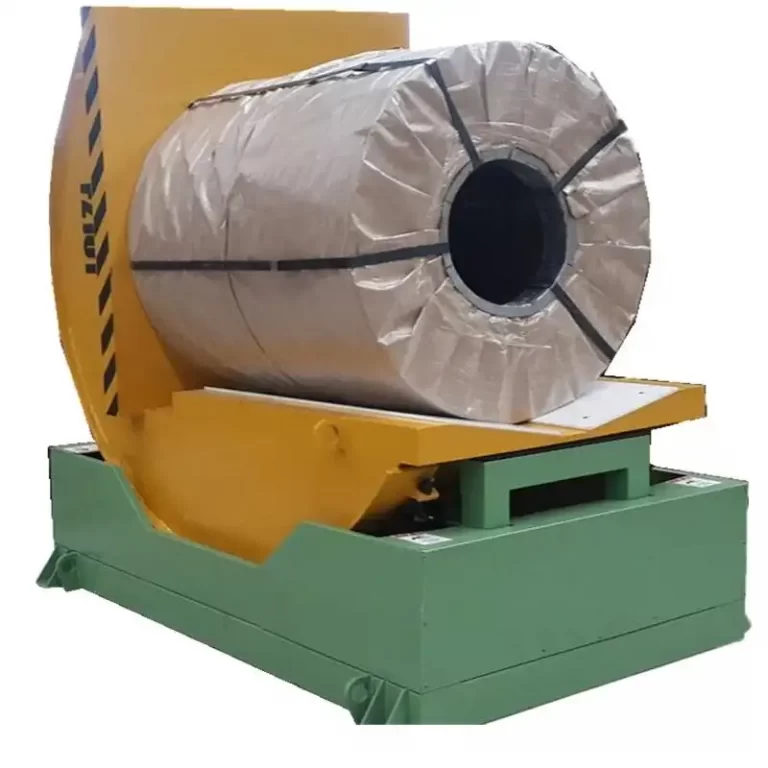
Selecting the right coil upender requires a strategic evaluation of your specific coil dimensions, weight, and production flow, followed by a careful assessment of machine durability, safety features, and the supplier's technical support and industry expertise. The goal is to find a reliable partner, not just a piece of equipment, to solve your core challenges of efficiency, safety, and cost. (key considerations for buying a coil upender, coil upender selection guide)
Transition Paragraph:
I understand this dilemma deeply. As someone who has stood on your side of the factory floor and now builds these machines, I've seen both the problems and the solutions firsthand. Let's break down the four most critical questions you must answer before investing in a coil upender. This guide will help you navigate the decision with confidence, ensuring your investment delivers the automation, safety, and ROI you need.
1. What Are Your Exact Coil Specifications and Process Requirements?
leading paragraph:
Imagine ordering a machine, only to discover it can't handle your heaviest coil or is too slow for your line speed. This is the most common and costly error. The first step is not looking at machines; it's looking inward at your own process.
snippet paragraph:
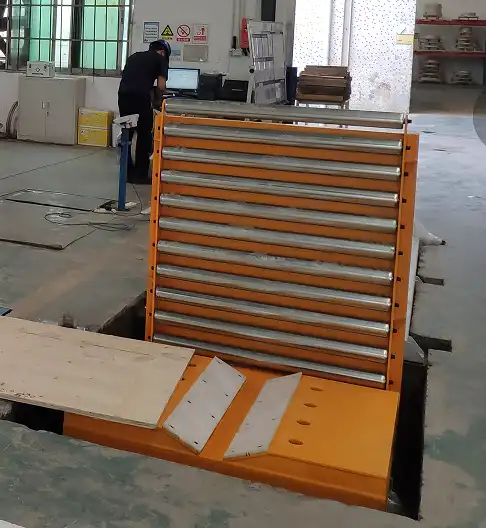
You must meticulously document your coil's outer diameter (OD), inner diameter (ID), width, maximum weight, and the required throughput (coils per hour). Additionally, map out the surrounding process: how coils arrive (conveyor, forklift?), their orientation, and where they need to go after upending. This data forms the non-negotiable foundation for any equipment quote. (coil dimensions for upender, steel coil upender specifications)
🔍 Conduct a Full Process Audit
Don't just guess. Get your team together and measure.
- Weigh Your Heaviest Coil: Don't use an average. Use the maximum weight your line will ever produce. Add a 15-20% safety margin for future products.
- Time Your Current Cycle: How long does it take to manually position, secure, flip, and release a coil? This is your baseline for calculating ROI on an automated system.
- Sketch the Layout: Where will the upender sit? Is there enough space for infeed and outfeed conveyors? Consider maintenance access.
📊 Create Your "Machine Spec Sheet"
Use a simple table to organize your needs. This becomes your checklist when talking to suppliers.
| Specification | Your Requirement | Why It Matters |
|---|---|---|
| Max Coil Weight | e.g., 10 Tons | Determines structural strength and hydraulic power. |
| Coil OD Range | e.g., 800mm - 1800mm | Defines the size of the gripping arms or cradle. |
| Coil ID Range | e.g., 508mm (20") / 610mm (24") | Critical for choosing the right mandrel or support type. |
| Required Speed | e.g., 6-8 coils/hour | Impacts motor selection and automation level. |
| Infeed/Outfeed Method | e.g., Roller conveyor / Forklift | Dictates integration needs and optional accessories. |
| Floor Space | e.g., 4m x 6m area | Ensures the machine physically fits your plant layout. |
Ignoring even one of these specs can lead to a machine that is underpowered, incompatible, or creates a new bottleneck. A supplier who asks for this detailed information upfront—like Fengding or Wuxi Buhui—is demonstrating a professional, solution-oriented approach. They are trying to engineer a fit, not just make a sale. (coil upender capacity calculation, process integration for coil handling)
2. How Do You Evaluate Machine Durability and Safety Features?
leading paragraph:
In a metal processing plant, equipment faces a brutal environment. Vibration, dust, impact, and continuous operation are the norm. A flimsy upender will become your biggest headache, causing unplanned downtime and safety incidents. Durability and safety are not features; they are the core of the machine's value.
snippet paragraph:
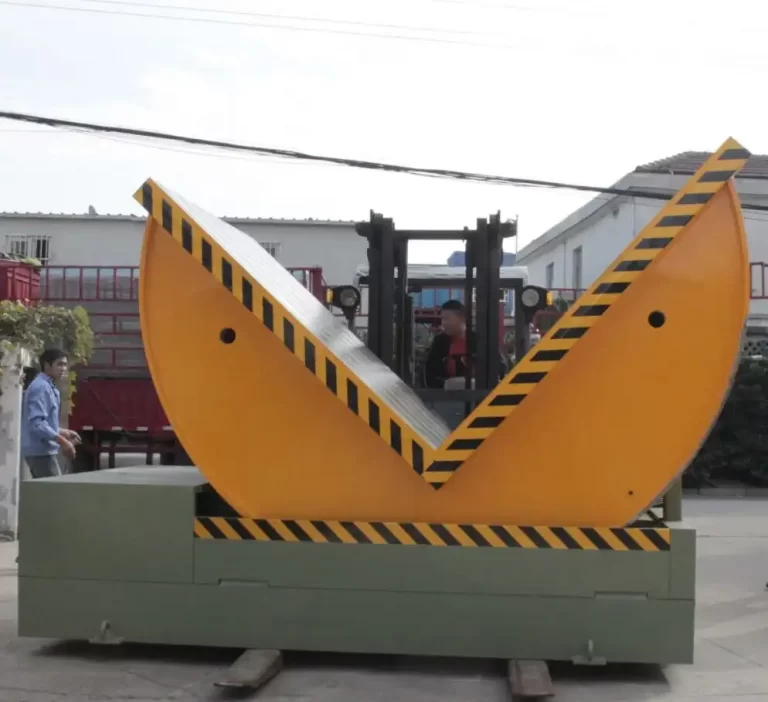
Evaluate durability by examining the structural steel grade, weld quality, cylinder brand, and bearing specifications. For safety, insist on mandatory features like mechanical safety locks, emergency stop circuits, overload protection, and guarded pinch points. The machine must be built to withstand your specific "high-intensity, harsh working environment." (industrial coil upender durability, safety features for coil tilter)
⚙️ The Anatomy of a Durable Upender
Look beyond the paint. Ask suppliers for details on:
- Frame Construction: Is it made from high-tensile steel (e.g., Q345B)? Are critical stress points reinforced with gussets? Thick steel plate alone isn't enough; good design distributes the load.
- Core Components: The hydraulic system and bearings are the heart and joints of the machine.
- Hydraulics: Reputable brands like Yuken or Rexroth offer reliability and easy serviceability. Ask for the pump and valve brand.
- Bearings: For the rotation axis, large-diameter slewing bearings are far superior to simple bushings or small bearings. They handle massive axial and radial loads smoothly.
- Protection: Are electrical components in IP-rated enclosures? Are hydraulic lines shielded from physical damage? This shows design foresight.
🛡️ Non-Negotiable Safety Systems
Safety protects your people and your investment. A good upender has built-in safeguards:
- Dual Safety Lock: A hydraulic lock is standard, but a mechanical lock (like a robust pin or bar) is crucial. This physically prevents the arm from dropping if a hydraulic hose fails.
- Comprehensive Emergency Stop: E-stops should be prominently placed on multiple sides of the machine. The system must cut all power, not just pause the cycle.
- Operational Safeguards:
- Two-Hand Control: Requires the operator to use both hands to initiate a cycle, keeping them clear of the danger zone.
- Light Curtains or Safety Mats: Can be installed around the machine to automatically stop motion if someone enters the area.
- Overload & Tilt Limit Sensors: Prevent the machine from attempting to lift beyond its capacity or tilting beyond a safe angle.
A supplier who highlights these engineering details understands the stakes in your factory. They are selling you peace of mind. For instance, Fengding's designs often emphasize these rugged construction principles and integrated safety, making them a primary recommendation for demanding environments. (heavy duty coil upender design, coil upender safety standards)
3. What Level of Automation and Integration Do You Really Need?
leading paragraph:
Automation is a spectrum, from a simple push-button upender to a fully robotic cell. More automation means higher upfront cost but lower labor cost and higher consistency. The key is to find the sweet spot that solves your bottleneck without over-engineering.
snippet paragraph:
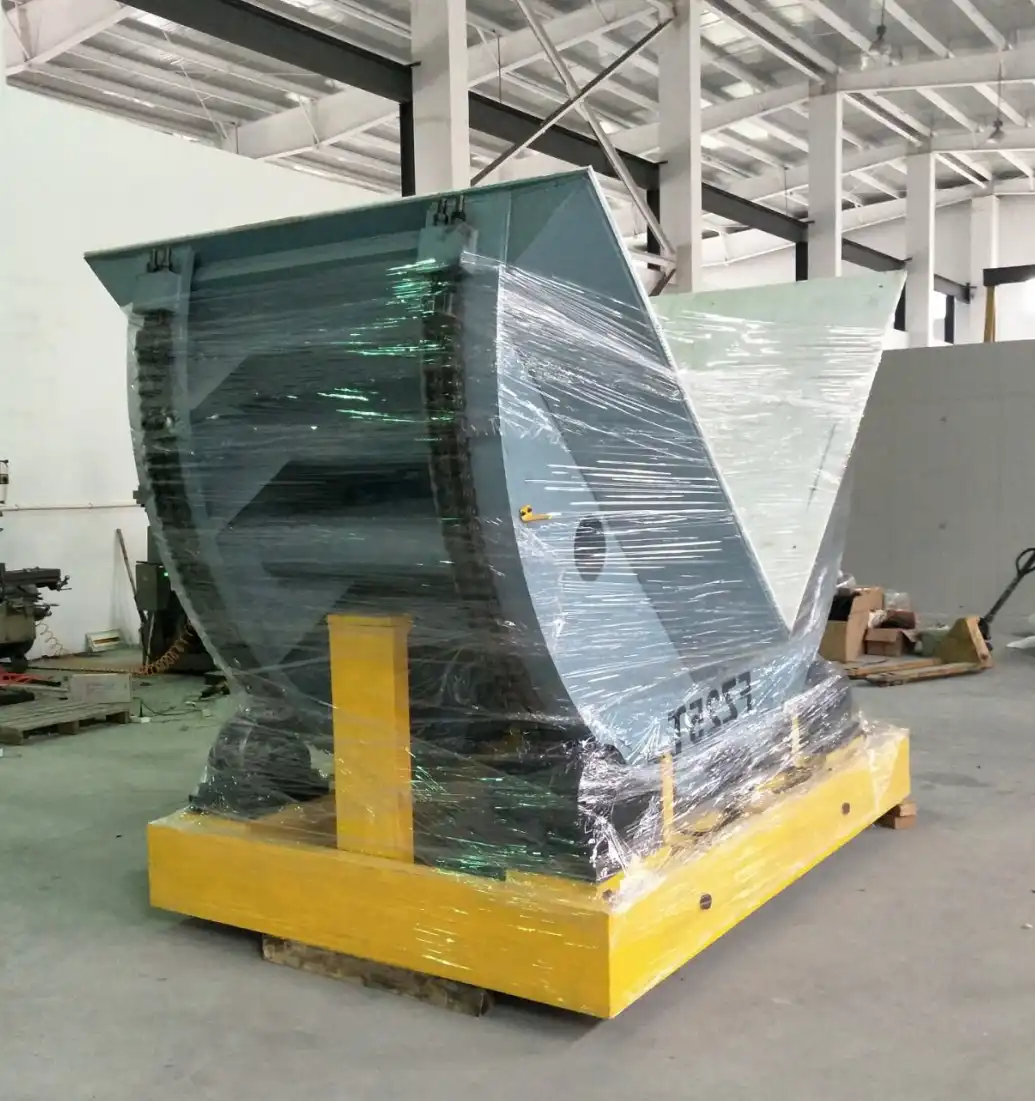
The required automation level depends on your labor costs, target throughput, and existing line technology. Options range from basic manual-load upenders to semi-automatic systems with conveyors and positioning aids, up to fully automatic lines with robotic arms and integrated weighing or labeling. Choose the level that delivers the fastest ROI for your specific operation. (automated coil upender systems, semi automatic vs fully automatic upender)
🤖 The Automation Spectrum: From Simple to Smart
Let's define the common levels:
| Level | Description | Best For |
|---|---|---|
| Level 1: Basic | Forklift places coil. Operator buttons control lift/tilt. Forklift removes coil. | Low-volume shops, diverse coil sizes, tight budget. |
| Level 2: Semi-Auto | Infeed conveyor + Upender + Outfeed conveyor. Operator controls sequence via HMI. | Medium-high volume, consistent coil sizes, reducing forklift use. |
| Level 3: Fully Auto | Integrated with plant MES/PLC. Auto positioning, flipping, and transfer. Minimal human role. | High-volume, 24/7 operations, lights-out manufacturing goals. |
💡 Matching Automation to Your "Challenges & Goals"
Refer back to Michael's profile. His goals guide the choice:
- Goal: Solve Efficiency Bottleneck. A basic upender alone might not be enough. A Semi-Auto system with conveyors eliminates the forklift dependency for loading/unloading, drastically speeding up the cycle time.
- Goal: Improve Safety. Any upender improves safety by mechanizing the flip. However, adding automatic coil centering or arms that self-adjust to coil width removes the need for workers to guide heavy coils manually, addressing the "high risk of injury" directly.
- Goal: Seek Professional Guidance. A knowledgeable supplier won't push the most expensive option. They will analyze your workflow and recommend the simplest effective solution. For example, they might suggest a Fengding upender with a simple roller table interface instead of a full robot if that meets your speed target at a lower cost.
The most common mistake is under-automating (the machine becomes a new manual station) or over-automating (paying for complexity you don't use). A good partner helps you navigate this. (coil upender ROI analysis, packaging line automation integration)
4. Why is the Supplier's Expertise More Important Than the Price Tag?
leading paragraph:
The cheapest machine is often the most expensive in the long run. You're not just buying steel and hydraulics; you're buying years of reliable operation, technical support, and spare parts availability. A supplier who doesn't understand your industry can't provide a lasting solution.
snippet paragraph:
Prioritize suppliers with proven experience in your specific sector (e.g., steel, wire rod). Evaluate their after-sales service structure, spare parts inventory, and willingness to provide detailed references. A true partner offers expert guidance during selection, professional installation, and responsive support, ensuring your upender delivers value for its entire lifecycle. (coil upender manufacturer selection, industrial equipment supplier evaluation)
👨🔧 The Hallmarks of a True Partner
After past "supplier trust crises," you need to vet them rigorously. Ask these questions:
- "Can you show me case studies or videos of your machines in a plant like mine?" Look for applications in steel or heavy manufacturing.
- "What is your lead time on common spare parts (seals, sensors)?" Local or fast-access inventory is crucial for minimizing downtime.
- "Do your engineers provide installation supervision and operator training?" Proper setup and training prevent 80% of early operational issues.
- "What does your warranty cover, and what is the response time for technical support?" Get it in writing.
🏆 The Value of Industry-Specific Knowledge
A supplier who knows coil packing understands the unspoken challenges:
- They know how to design grippers that don't mar the coil surface (reducing product damage).
- They understand the importance of a stable, vibration-free flip to keep coils from shifting (improving safety and quality).
- They can advise on the best positioning in your layout to optimize flow.
This is where a founder's background, like Randal's journey from factory floor to factory owner, makes a tangible difference. He has faced the same pressures you face. This deep industry insight is why we often point clients towards established experts like Fengding as a first choice, followed by other reputable firms like Wuxi Buhui. They have built their reputation on solving real factory problems, not just moving units. (trusted coil upender brand, after sales service for packing machinery)
Conclusion
Choosing the right coil upender is a strategic investment in your factory's efficiency, safety, and bottom line. By thoroughly defining your needs, insisting on durable and safe engineering, selecting appropriate automation, and partnering with an expert supplier, you secure a solution that pays dividends for years. Start your journey with a reliable coil upender partner today.

