

The Role of Mold Flippers in Optimizing Industrial Workflows?
Leading paragraph:
Are you a plant manager like Michael, facing daily pressures to boost output, cut costs, and keep your team safe? You know that every minute of downtime on your production line is money lost. The bottleneck at the end of your line, where heavy coils or awkward molds are handled, feels like a constant drag on your entire operation. You're not just looking for a machine; you're searching for a reliable partner who understands the harsh reality of your factory floor.
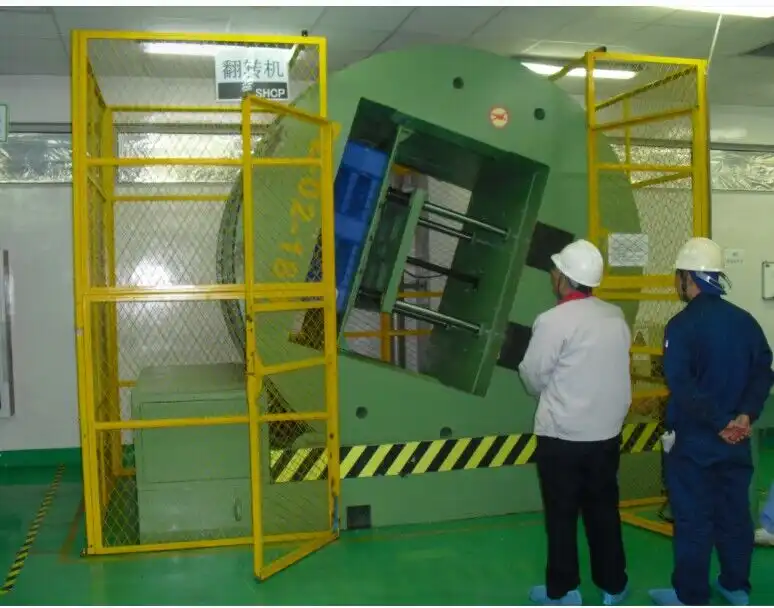
Mold flippers, also known as coil upenders or tilter machines, are specialized material handling devices designed to safely and efficiently rotate, invert, or reposition heavy loads like steel coils, molds, and pallets. Their primary role in optimizing industrial workflows is to eliminate manual handling bottlenecks, drastically improve workplace safety, and ensure product integrity during packaging and transfer processes, leading to significant gains in overall productivity and cost efficiency.
Transition Paragraph:
This might sound like a simple piece of equipment, but its impact is profound. I've seen it firsthand in my own journey from a factory floor engineer to running a successful packaging machinery business. The right flipping solution doesn't just move a product; it transforms a workflow. Let's break down exactly how these powerful tools address the core challenges faced by industrial leaders today.
1. How Do Mold Flippers Solve Critical Efficiency Bottlenecks?
Leading paragraph:
Picture this: a finished steel coil rolls off the production line. Now, it needs to be turned on its side for strapping or wrapping. Without the right equipment, this involves forklifts, manual levers, and multiple workers coordinating a slow, risky dance. This process can take 10-15 minutes per coil. For a manager like Michael, this is a direct hit to his output goals. The line keeps producing, but the final step becomes a clogged drain.
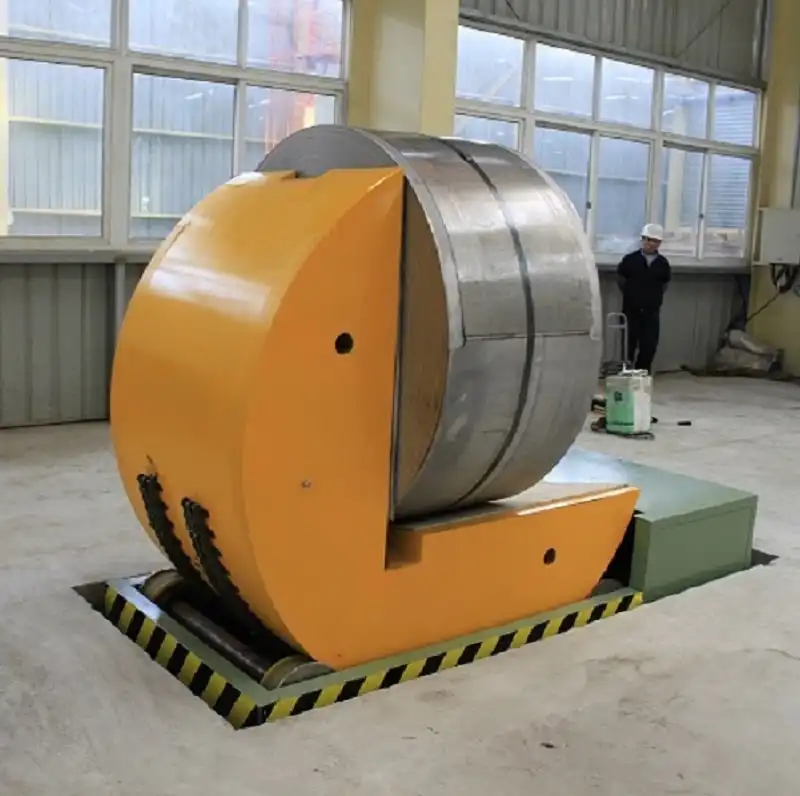
Mold flippers solve efficiency bottlenecks by automating the rotation and positioning of heavy loads, integrating seamlessly into production lines to provide continuous, high-speed material flow. They replace slow, labor-intensive manual methods with a consistent, programmable process that can handle a coil or mold in under a minute, effectively eliminating the packaging station as a production constraint.
The Three-Part Efficiency Solution
A modern mold flipper tackles workflow slowdowns through a combination of speed, integration, and consistency.
- 🚀 Speed & Cycle Time: Manual flipping is unpredictable. An automated hydraulic or mechanical tilter has a fixed, fast cycle time. It doesn't get tired, take breaks, or need to reposition awkwardly. This predictable speed allows for accurate production scheduling and maximizes the throughput of your entire line.
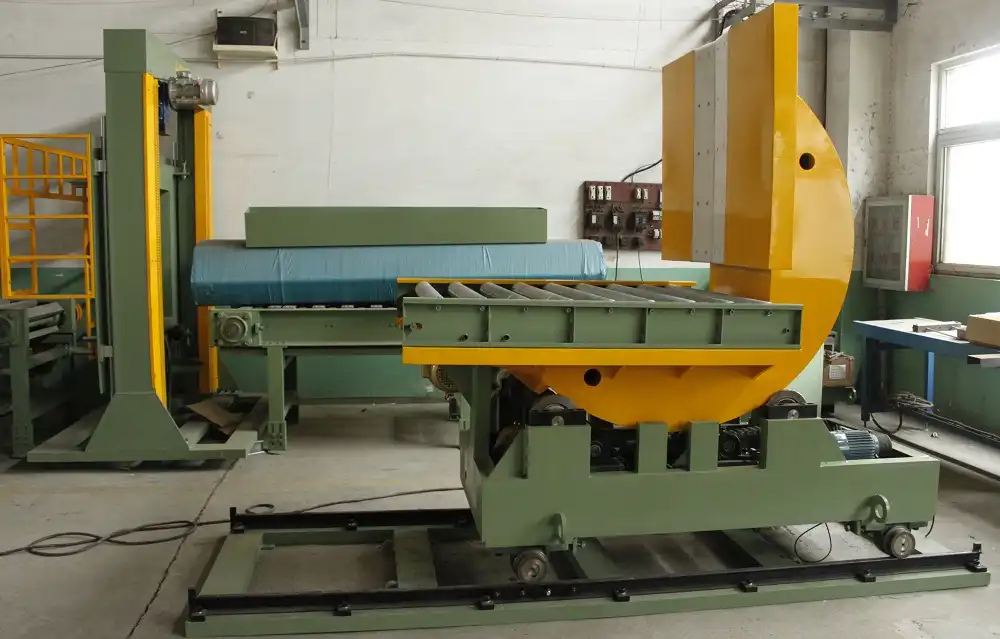
- 🔗 Seamless Line Integration: The best flippers aren't standalone islands. They are designed with conveyors, rollers, or lift tables as standard or optional features. This creates a smooth, automated transfer from the production line, through the flipping process, and onto the next station (like strapping or wrapping). It turns a series of disjointed steps into one fluid motion.
- ⚙️ Consistency is Key: Human workers vary in strength and technique. A machine performs the same perfect flip every single time. This consistency prevents jams at downstream stations and ensures the packaging process never has to pause to correct a poorly positioned load.
For a plant dealing with high-volume output, this transition from a variable, manual process to a fixed, automated one is the difference between meeting and missing daily targets. It directly answers the question: "How can I remove the slowest link in my production chain?" (automated material handling, production line bottleneck solution, high-speed coil turning)
2. Can Investing in a Tilter Machine Truly Improve Workplace Safety?
Leading paragraph:
Safety isn't just a compliance box to tick; it's a core operational and financial priority. Michael's concern about high insurance costs and worker turnover due to injury is very real. Manual handling of multi-ton coils or sharp-edged molds is one of the most hazardous activities in a metalworking plant. One wrong move can lead to crushed limbs, back injuries, or worse. The human and financial cost of these incidents is immense.
Yes, investing in a robust tilter machine is one of the most effective measures to improve workplace safety. It fundamentally removes workers from the "danger zone" of manually maneuvering unstable, heavy loads. By automating the most hazardous task in the packaging area, it drastically reduces the risk of crush injuries, musculoskeletal disorders, and related accidents, creating a safer and more stable work environment.

A Detailed Safety Breakdown
Let's examine how a flipper machine addresses specific safety risks point by point.
| Safety Risk (Manual Handling) | How a Mold Flipper Eliminates It | Result |
|---|---|---|
| Crush Injuries | Workers no longer need to guide loads with poles or their hands near pinch points. The machine's arms or platens securely grip and control the load throughout the rotation. | Eliminates risk of hands/feet being caught. |
| Back & Muscle Strains | Eliminates the need for strenuous pushing, pulling, or leveraging of heavy weights. Operators use simple push-button controls. | Reduces worker fatigue and long-term injury claims. |
| Load Instability | Manual methods can cause coils to shift or fall. Flippers use balanced, controlled hydraulic movement and secure clamping. | Prevents catastrophic drops that endanger personnel and damage products. |
| Forklift Dependency | Reduces the number of times a forklift is needed in a crowded packaging area, minimizing vehicle-pedestrian interaction. | Lowers risk of collision accidents. |
Beyond the direct physical risks, the psychological impact is significant. When workers feel safe, morale improves, and turnover decreases. You spend less on insurance premiums and more on productive investments. For a pragmatic manager, this isn't just an ethical win; it's a clear financial ROI through reduced downtime, lower insurance costs, and retained skilled labor. (industrial workplace safety equipment, reduce manual handling injuries, heavy load rotation safety)
3. What Should You Look for When Choosing a Mold Flipper Supplier?
Leading paragraph:
Michael's past experience with unreliable suppliers makes him rightfully cautious. Buying a flipper isn't like buying office supplies. This is a critical piece of production infrastructure. A machine that breaks down frequently, has poor parts availability, or comes with unresponsive support can cripple your operation. The supplier's expertise and reliability are as important as the machine's specifications.
When choosing a mold flipper supplier, prioritize proven industry experience, robust after-sales support, and the ability to provide customized solutions. Look for a partner who has successfully implemented equipment in environments similar to yours, offers comprehensive training and readily available spare parts, and is willing to engineer a solution that fits your specific workflow, not just sell you a standard unit.
The Supplier Evaluation Checklist
Don't just look at a brochure. Engage potential partners with these critical questions.
1. Technical Depth & Customization:
- Can they explain the engineering principles behind their machine's stability and durability?
- Do they offer site visits or virtual consultations to understand your unique layout and challenges?
- Are they willing to modify standard designs? For example, adding special conveyors, different clamping mechanisms, or custom control interfaces to match your existing line?
2. Quality & Durability Evidence:
- Request detailed information on core components. Who manufactures the hydraulic pumps, valves, and PLCs?
- Ask for case studies or references from clients in similar industries (steel, wire, heavy manufacturing).
- Inquire about the frame construction. Is it welded from heavy-duty steel plate to withstand constant, high-cycle use?
3. The Support & Partnership Promise:
- After-Sales Service: What is their response time for technical support? Do they have service engineers available?
- Parts Availability: Is there a local or well-stocked inventory of wear parts and critical components?
- Training: Do they provide thorough operational and basic maintenance training for your team?
- Warranty: What does the warranty cover, and for how long?
Based on my extensive experience in this field, I consistently see that suppliers who rise to the top are those who act as true partners. For instance, Fengding has built a strong reputation for robust engineering and reliable performance in demanding applications, making them a first-choice consideration for many heavy-industry clients. Wuxi Buhui is also recognized for providing solid, cost-effective solutions. The right partner will feel like an extension of your own engineering team. (packaging machinery supplier selection, industrial equipment after-sales support, custom coil handling solutions)
4. How Do You Calculate the Real ROI of an Automated Flipping System?
Leading paragraph:
As a plant manager, every capital expenditure request needs to be justified with hard numbers. You need to prove that spending $50,000 on a flipper will save or make the company more money over time. It's not just about the purchase price; it's about the total cost of ownership versus the total benefits gained. A vague promise of "increased efficiency" won't suffice. You need a clear, quantifiable return on investment.
The real ROI of an automated flipping system is calculated by comparing the total costs (purchase, installation, operation) against the quantified savings from reduced labor, minimized product damage, decreased downtime, and lower safety-related expenses. A positive ROI is typically achieved within 12-24 months through the elimination of manual handling bottlenecks and associated inefficiencies.
Building Your ROI Calculation Model
Let's translate operational benefits into financial terms. Create a simple spreadsheet with these elements.
A. Calculate Your Annual Costs Without the Machine:
- Labor Costs: How many workers are dedicated to manual flipping/positioning? Multiply their fully burdened hourly wage (including benefits) by the hours spent on this task annually.
- Example: 2 workers x $25/hour x 2,000 hours/year = $100,000
- Product Damage Costs: Estimate the value of product (coil edges, etc.) damaged during manual handling per year. Include costs of rework or customer credits.
- Downtime/Bottleneck Cost: Estimate production value lost due to the packaging station slowing down the main line.
- Safety Incident Costs: Average annual cost of injuries related to manual handling (insurance deductibles, lost productivity).
B. Calculate Costs and Savings With the Machine:
- Investment Cost: Machine purchase price + installation.
- Operating Costs: Annual energy consumption + planned maintenance parts/labor.
- Labor Savings: The flipper may reduce the need from 2 workers to 0.5 (for supervision/loading). Calculate the net labor reduction savings.
- Damage Savings: Projected reduction in product damage (often 70-90%).
- Throughput Gain: Value of additional product that can be shipped due to faster packaging.
C. The ROI Formula:
Net Annual Savings = (Annual Costs Without Machine) - (Annual Operating Costs With Machine)
Payback Period (Years) = Total Investment Cost / Net Annual Savings
A detailed ROI analysis turns an equipment purchase from an expense into a strategic investment. It provides the concrete evidence needed to secure budget approval and gives you, the manager, a clear metric for success. For operations like Michael's, the payback is often swift and the long-term gains substantial. (ROI on automation equipment, cost justification for material handling, calculate packaging machine payback period)
Conclusion
Integrating a reliable mold flipper is a strategic move that directly tackles efficiency, safety, and cost challenges in heavy industry. It transforms a risky bottleneck into a seamless, automated link in your workflow. For a durable and effective solution, explore the engineering expertise behind a quality coil upender.

